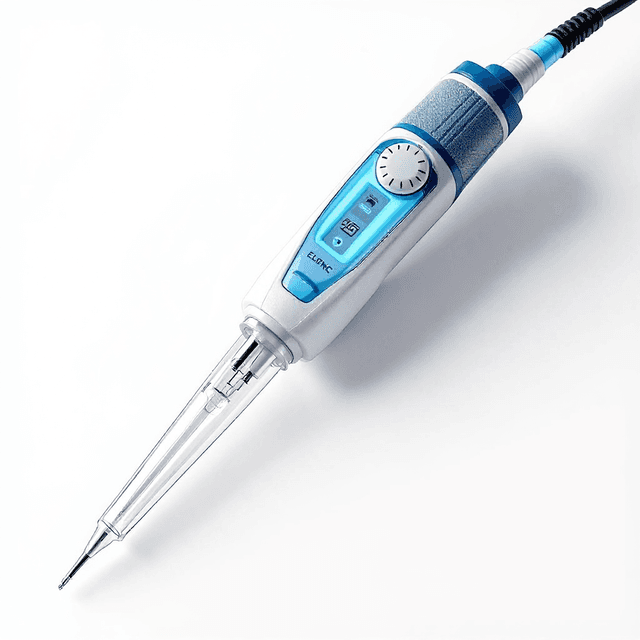
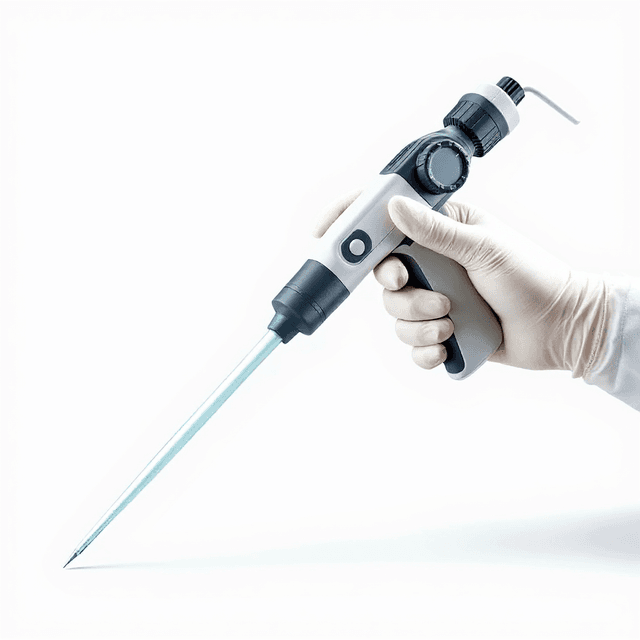
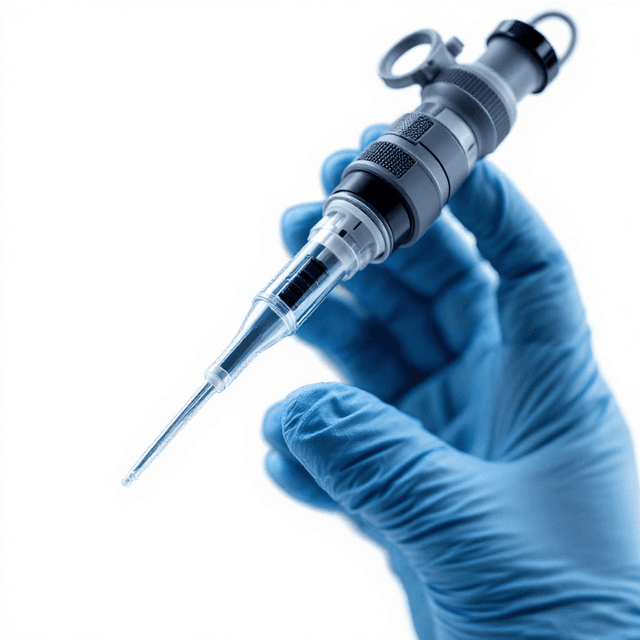
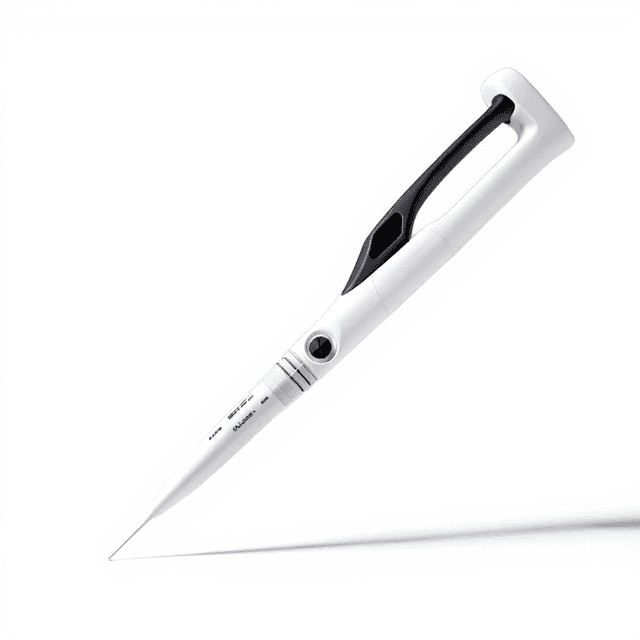
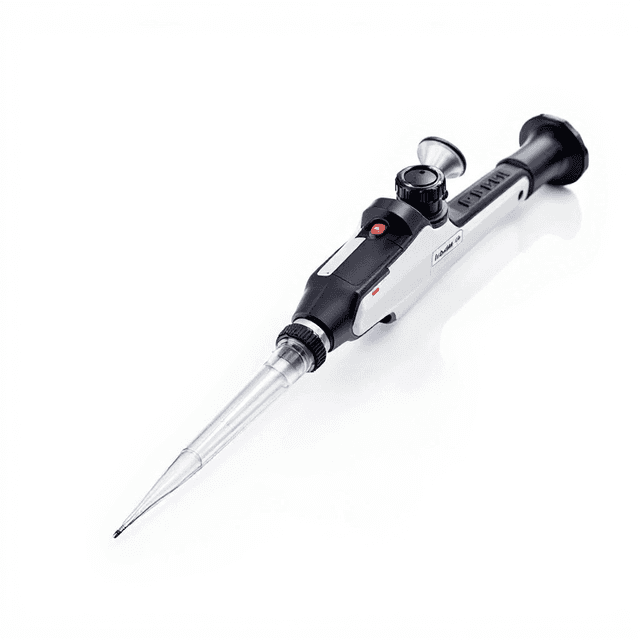
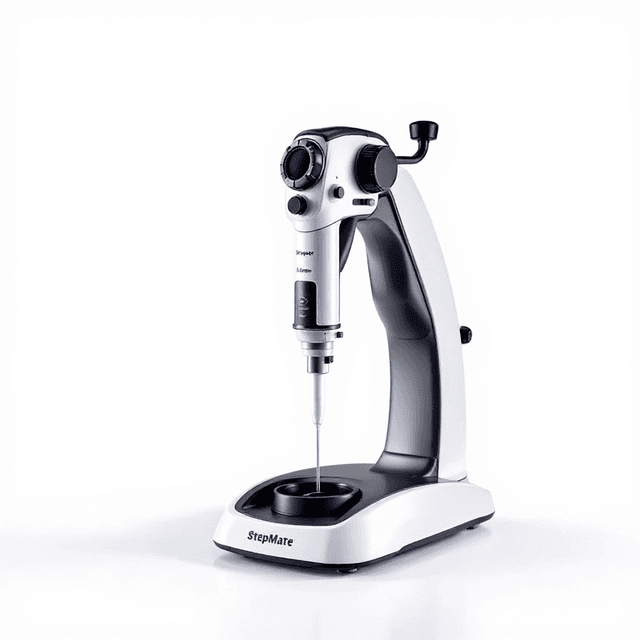
Classic Single Channel Adjustable Pipette
Single channel adjustable mechanical pipette available in three volume ranges (0.1-2.5 μL, 0.5-10 μL, 2-20 μL) with specified accuracy tolerances for precise microvolume liquid handling.

Louise Corscadden, PhD
Director of Science · ConductScience
Ask Louise about Classic Single Channel Adjustable Pipette fit, setup, configuration, or quote prep.
Already working with us? Sign in to connect this with My Scientist.
Key Specifications
Full details →- Model fit
- Configured during quote
- SKU family
- BIO-0615
- Shipping box
- 42.0 x 43.6 x 38.0 cm
- Ordering
- Online checkout and quote request available
- Category
- Liquid Handling
- Build notes
- Confirm accessories, station layout, and support needs before purchase
The Classic Single Channel Adjustable Pipette provides precise liquid handling for microvolume applications across multiple volume ranges. This mechanical pipette features adjustable volume settings with increment controls for accurate dispensing in laboratory workflows requiring consistent liquid transfer.
Available in three model configurations (BK-AP2.5, BK-AP10, BK-AP20), the pipette accommodates volumes from 0.1 μL to 20 μL with specified systematic error tolerances. The instrument incorporates standard pipette mechanics with volume adjustment capabilities suitable for routine laboratory procedures requiring precise liquid measurement and transfer.
How It Works
The adjustable pipette operates on positive displacement principles using a precision piston-cylinder mechanism. Volume selection involves rotating the adjustment mechanism to set the desired volume within the specified range, with increment markings providing visual confirmation of the selected volume.
During operation, the piston creates controlled vacuum and positive pressure phases. The aspiration stroke draws liquid into the disposable tip through vacuum generation, while the dispensing stroke uses positive pressure to expel the measured volume. The mechanical precision of the piston travel directly correlates to the accuracy and reproducibility of the dispensed volume.
Volume accuracy is maintained through calibrated piston displacement corresponding to the selected volume setting. The systematic error tolerances specified for each model reflect the mechanical precision achievable at different volume ranges, with smaller volumes typically exhibiting higher relative error percentages due to the physical limitations of mechanical systems at microvolume scales.
Features & Benefits
Automation Level
- manual
Cat.No.
- Model
Volume Range
- Increment
Test Volume
- Maximum Permissible Systematic Error
23010100002
- BK-AP2.5
0.1~2.5μl
- 0.05μl
2.5μl
- ±2.50%
1.25μl
- ±3.00%
0.25μl
- ±12.00%
23010100010
- BK-AP10
0.5~10μl
- 0.1μl
10μl
- ±3.00%
5μl
- ±2.00%
1μl
- ±2.50%
23010100020
- BK-AP20
Brand
- ConductScience
Research Domain
- Analytical Chemistry
- Cell Biology
- Clinical Diagnostics
- Food Science
- Immunology
- Materials Science
- Microbiology
- Pharmaceutical QC
Shipping weight
- 4.41 lb
Shipping box
- L: 42.0 cm
- W: 43.6 cm
- H: 38.0 cm
| Feature | This Product | Typical Alternative | Advantage |
|---|---|---|---|
| Volume Range Coverage | Three models covering 0.1-20 μL with optimized ranges | Single fixed ranges or fewer model options | Allows selection of optimal accuracy range for specific application volumes |
| Volume Increment Resolution | 0.05 μL increments (BK-AP2.5) to 0.1 μL increments (larger models) | Coarser increment steps in entry-level models | Enables precise volume selection for critical applications requiring fine adjustments |
| Accuracy Specifications | Defined systematic error tolerances at multiple test volumes per model | Single accuracy specification or unspecified tolerances | Provides quantified performance data for method validation and quality control protocols |
| Mechanical Design | Single channel manual operation with volume adjustment | Fixed volume or limited adjustment range | Balances precision with operational flexibility for diverse laboratory workflows |
| Model Selection Options | Three distinct models with overlapping ranges | Fewer model choices or larger volume gaps | Allows optimization of accuracy by selecting model closest to typical working volumes |
This pipette series provides systematic volume range coverage with defined accuracy specifications and fine increment control. The three-model approach allows researchers to optimize accuracy by selecting the appropriate range for their typical working volumes while maintaining mechanical reliability and operational simplicity.
Practical Tips
Verify accuracy gravimetrically using distilled water at room temperature with 10 replicate measurements at multiple volumes within the working range.
Why: Provides statistical validation of pipette performance and identifies any systematic drift requiring service.
Inspect and replace O-rings annually or when volume accuracy degrades beyond specified tolerances.
Why: Worn seals are the primary cause of volume accuracy loss in mechanical pipettes.
Pre-wet tips with 2-3 aspiration cycles before critical measurements, especially with viscous solutions.
Why: Ensures tip wetting and eliminates air bubbles that can affect volume accuracy.
Check tip attachment and pipette angle if dispensed volumes appear inconsistent between replicates.
Why: Improper tip sealing or non-vertical pipetting technique introduces variability in volume delivery.
Record environmental temperature and humidity during precision work as these affect air column behavior.
Why: Temperature and pressure variations can introduce systematic errors in air displacement pipettes.
Use appropriate pipette tips rated for the chemicals being handled and never pipette by mouth.
Why: Chemical compatibility prevents tip degradation while proper technique eliminates contamination risks.
Store pipettes in vertical position with tips removed to prevent internal contamination.
Why: Proper storage prevents dust accumulation and maintains internal mechanism alignment.
Use the smallest volume range that encompasses your typical working volumes for optimal accuracy.
Why: Accuracy is typically best in the upper portion of each model's volume range due to mechanical precision limits.
Setup Guide
What’s in the Box
- Single channel adjustable pipette (selected model)
- User manual and operation instructions
- Initial calibration documentation (typical)
- Tip compatibility guide (typical)
Warranty
ConductScience provides standard manufacturer warranty coverage including technical support for calibration guidance and operational assistance. Warranty terms cover manufacturing defects and mechanical component functionality under normal laboratory use conditions.
Compliance
References
Background reading relevant to this product:
What factors affect pipette accuracy at different volumes?
Accuracy varies with volume due to mechanical precision limits. Smaller volumes exhibit higher relative errors (±12.00% at 0.25 μL vs ±2.50% at 2.5 μL) because the same absolute mechanical tolerance represents a larger percentage of the target volume.
How often should pipette calibration be verified?
Calibration verification frequency depends on usage intensity and accuracy requirements. Monthly verification is typical for routine use, while critical applications may require weekly or daily checks using gravimetric methods with analytical balance verification.
Which model should be selected for different volume ranges?
Select the model whose range encompasses your typical volumes: BK-AP2.5 for 0.1-2.5 μL applications, BK-AP10 for 0.5-10 μL work, and BK-AP20 for 2-20 μL requirements. Choose the smallest range that covers your needs for optimal accuracy.
What tip compatibility considerations apply?
Use tips specifically designed for the selected model's volume range and shaft diameter. Proper tip sealing is critical for accuracy, and tip material should be compatible with the solutions being pipetted to prevent chemical interactions.
How does temperature affect pipetting accuracy?
Temperature differences between the pipette, tip, and liquid can cause volume variations due to air expansion/contraction and liquid density changes. Allow pipette and solutions to equilibrate to room temperature before critical measurements.
What maintenance is required for consistent performance?
Regular cleaning of external surfaces, periodic O-ring inspection, and mechanical component lubrication as specified in the user manual. Avoid exposing the mechanism to corrosive vapors or excessive moisture that could affect internal components.
How do these compare to electronic pipettes?
Mechanical pipettes offer reliability without battery dependence and are typically more cost-effective. Electronic pipettes provide programmable protocols and potentially higher precision, but mechanical units are often preferred for basic applications due to simplicity and durability.
Have a question about this product?
Have a question? Just ask.
Send it over and we'll email you a personalized answer — no call, no scheduling.
Prefer to talk it through?
Accessories
Enhance your setup with compatible accessories
Replacement Parts & Consumables