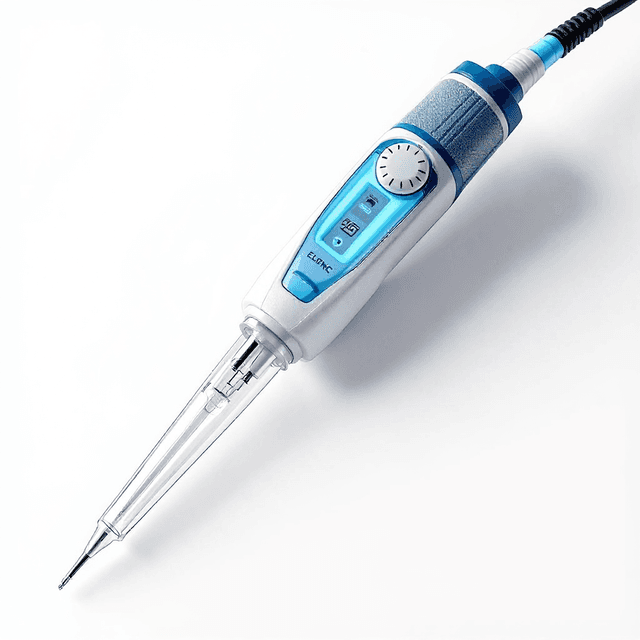
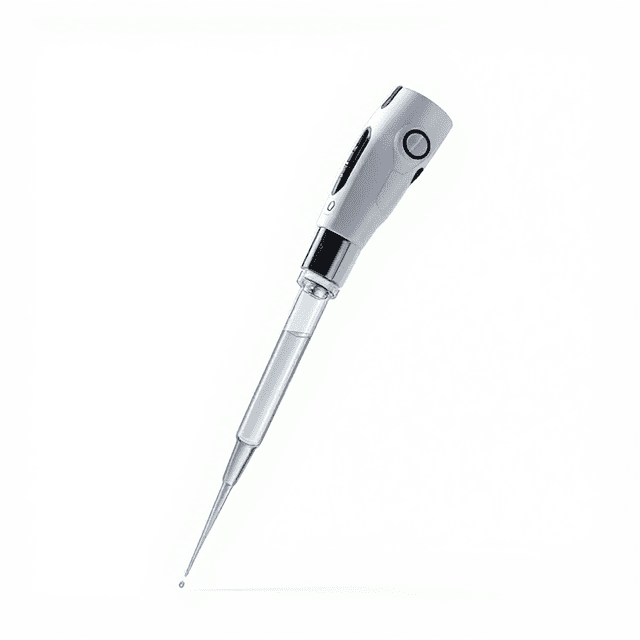
8-Channel Pipettes
Multi-channel micropipettes enabling simultaneous dispensing of eight independent volumes with defined accuracy specifications for high-throughput laboratory applications.

Louise Corscadden, PhD
Director of Science · ConductScience
Ask Louise about 8-Channel Pipettes fit, setup, configuration, or quote prep.
Already working with us? Sign in to connect this with My Scientist.
Key Specifications
Full details →- Model fit
- Configured during quote
- SKU family
- BIO-0622
- Shipping box
- 42.0 x 43.6 x 38.0 cm
- Ordering
- Online checkout and quote request available
- Category
- Liquid Handling
- Build notes
- Confirm accessories, station layout, and support needs before purchase
The ConductScience 8-Channel Pipettes provide precise, parallel liquid handling for high-throughput laboratory workflows. These micropipettes enable simultaneous dispensing of eight independent volumes, reducing processing time and improving experimental consistency across sample batches. The multi-channel design maintains individual accuracy specifications for each channel while allowing coordinated operation.
Each channel operates with defined volume ranges and maintains systematic and random error specifications appropriate for quantitative analytical work. The pipettes are designed for repetitive dispensing applications where throughput and precision are critical requirements, such as sample preparation, reagent addition, and serial dilution protocols.
How It Works
Multi-channel micropipettes operate on the positive displacement principle, where each channel contains an independent piston-cylinder system connected to a disposable tip. When the plunger is depressed, air displacement creates negative pressure that draws liquid into the tip. The volume dispensed is determined by the stroke length of each piston, which is mechanically controlled through the volume adjustment mechanism.
The 8-channel configuration maintains separate fluid pathways for each channel, preventing cross-contamination between samples while ensuring coordinated operation. Each channel's accuracy depends on the precision of its mechanical components, sealing integrity, and the consistency of tip attachment. The systematic and random error specifications reflect the combined variability from these mechanical factors across the specified volume ranges.
Proper operation requires consistent tip sealing, uniform plunger depression speed, and appropriate tip immersion depth. The parallel geometry allows simultaneous aspiration from microplate wells or tube arrays, maintaining the spatial relationship between samples throughout the dispensing process.
Features & Benefits
Automation Level
- manual
Cat. No.
- Volume Range
Increment
- Test Volume(μl)
Maximum Permissible Systematic Error
- Maximum Permissible Random Error
0.1μl
- 1
1.0%
- 0.01μl
1.8%
- 0.018μl
5
- 0.4%
0.02μl
- 0.4%
10
- 0.5%
0.05μl
- 1.1%
0.5μl
- 5
2%
- 0.1μl
1.1%
- 0.055μl
25
- 1.3%
Brand
- ConductScience
Research Domain
- Analytical Chemistry
- Cell Biology
- Clinical Diagnostics
- Environmental Monitoring
- Microbiology
- Pharmaceutical QC
Shipping weight
- 4.41 lb
Shipping box
- L: 42.0 cm
- W: 43.6 cm
- H: 38.0 cm
| Feature | This Product | Typical Alternative | Advantage |
|---|---|---|---|
| Channel Count | 8 independent channels | Entry-level models often offer 2-4 channels | Processes larger sample batches in single operations, reducing overall pipetting time |
| Volume Range | 0.1 to 25 μL with defined increments | Fixed volume or limited range options | Covers both microvolume precision work and standard reagent addition protocols |
| Accuracy Specifications | Systematic error 0.4-1.3% depending on volume | Varies by model and manufacturer | Enables quantitative analytical work requiring traceable measurement accuracy |
| Error Control | Both systematic and random error specifications provided | Some models specify only accuracy or precision | Supports statistical analysis and quality control protocols requiring complete error characterization |
These 8-channel pipettes provide comprehensive volume coverage with defined accuracy specifications for both systematic and random errors. The combination of multiple channels, broad volume range, and specified performance metrics supports high-throughput analytical workflows requiring measurement traceability.
Practical Tips
Perform gravimetric calibration using distilled water at 20°C, weighing dispensed volumes on an analytical balance with 0.01 mg resolution.
Why: Provides direct traceability to mass standards and accounts for actual liquid handling conditions.
Inspect tip cones regularly for scratches or wear that could compromise sealing integrity across channels.
Why: Poor sealing leads to inconsistent volumes and increased random error between channels.
Maintain consistent immersion depth and aspiration speed across all channels to ensure uniform filling.
Why: Variations in technique between channels introduce systematic bias in multi-channel operations.
If one channel shows poor accuracy, check tip sealing first, then inspect the piston seal and cylinder for damage.
Why: Individual channel problems are typically mechanical and can be isolated to specific components.
Pre-wet tips with sample or reagent before critical measurements to eliminate surface tension effects.
Why: Initial liquid contact affects tip wetting and can introduce volume errors in the first dispensing cycle.
Use appropriate personal protective equipment when handling volatile organic solvents or hazardous reagents.
Why: Multi-channel operation increases surface area for solvent evaporation and potential exposure.
Allow thermal equilibration for 30 minutes when moving between different temperature environments.
Why: Temperature differences affect both pipette components and liquid properties, impacting volume accuracy.
Setup Guide
What’s in the Box
- 8-channel micropipettes (typical)
- User manual and calibration certificate (typical)
- Tip compatibility guide (typical)
- Calibration adjustment tools (typical)
Warranty
ConductScience provides a standard one-year manufacturer warranty covering mechanical defects and calibration stability. Technical support includes calibration guidance and maintenance protocols for optimal long-term performance.
Compliance
References
Background reading relevant to this product:
What calibration frequency is recommended for maintaining accuracy specifications?
Calibration frequency depends on usage intensity and accuracy requirements. Quarterly calibration is typical for routine use, with monthly calibration for high-precision quantitative work. Gravimetric calibration using distilled water at controlled temperature provides traceability to mass standards.
How do I ensure accuracy across all eight channels?
Verify each channel individually using gravimetric calibration. Check for consistent tip sealing, uniform plunger operation, and proper volume setting. Replace worn seals or damaged components that affect individual channel performance.
What maintenance is required for long-term accuracy?
Regular cleaning of external surfaces, periodic seal replacement, and lubrication of mechanical components according to manufacturer specifications. Inspect tip cones for wear and replace if sealing is compromised.
Can these pipettes handle different liquid types?
Yes, but viscosity and surface tension affect accuracy. Aqueous solutions perform within specifications. Organic solvents, oils, or high-viscosity solutions may require specialized tips or modified techniques. Consult product datasheet for specific compatibility.
What tip compatibility should I consider?
Use tips specifically designed for the volume range and channel spacing. Universal tips may not provide optimal sealing. Verify tip compatibility with your sample types and consider filter tips for contamination-sensitive applications.
How does temperature affect performance?
Accuracy specifications typically apply at 20°C with aqueous solutions. Temperature variations affect liquid density and viscosity, potentially impacting volume accuracy. Allow thermal equilibration when moving between temperature environments.
Have a question about this product?
Have a question? Just ask.
Send it over and we'll email you a personalized answer — no call, no scheduling.
Prefer to talk it through?
Accessories
Enhance your setup with compatible accessories
Replacement Parts & Consumables
Upgrade Options