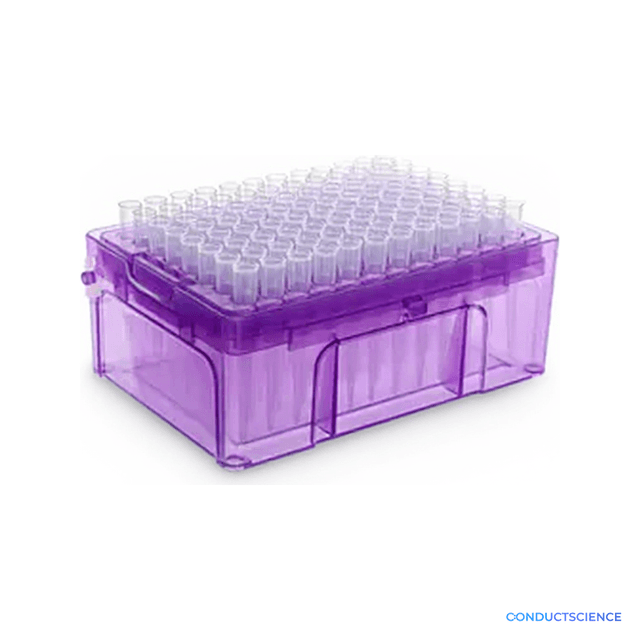
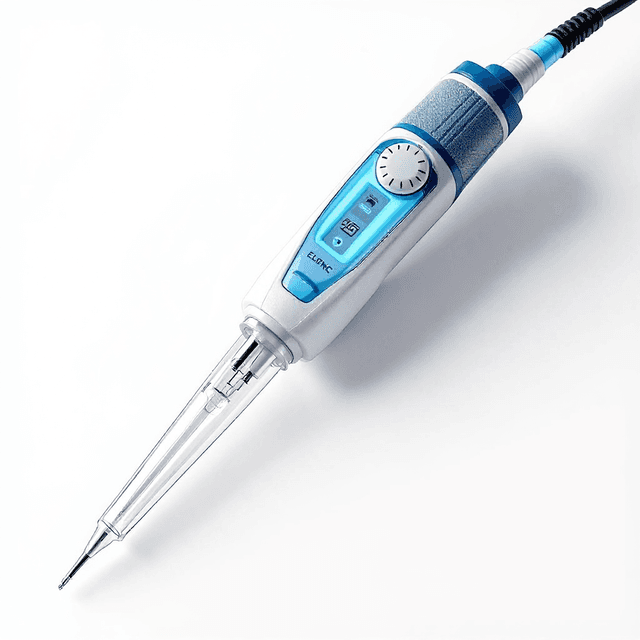
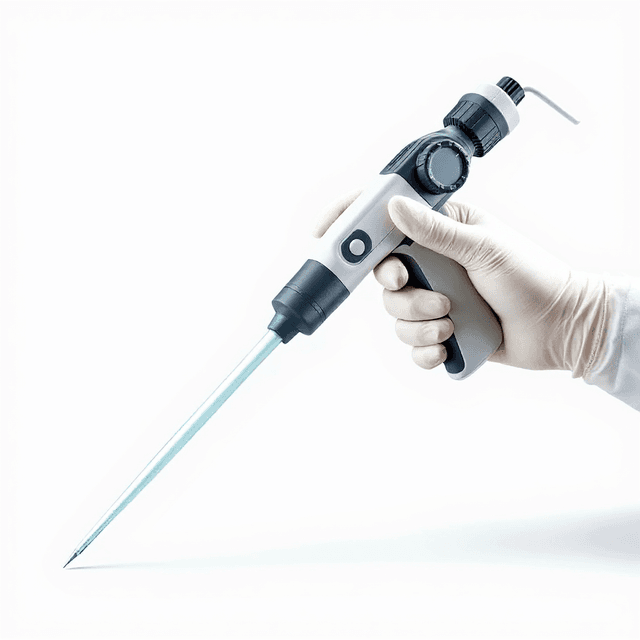
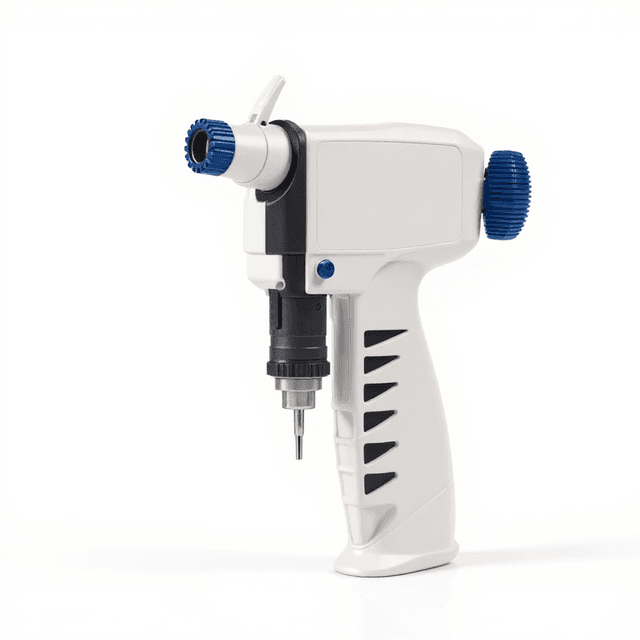
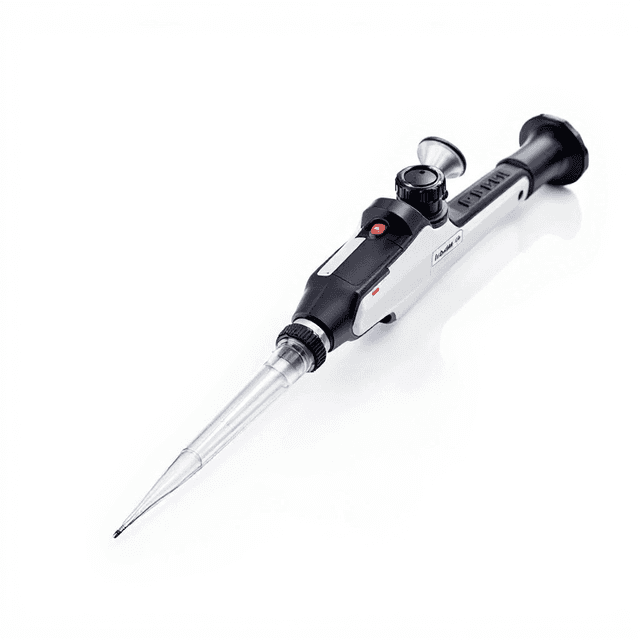
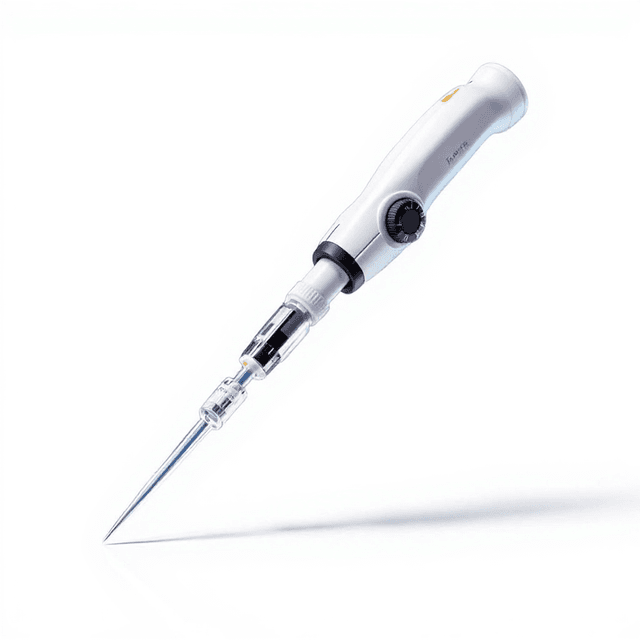
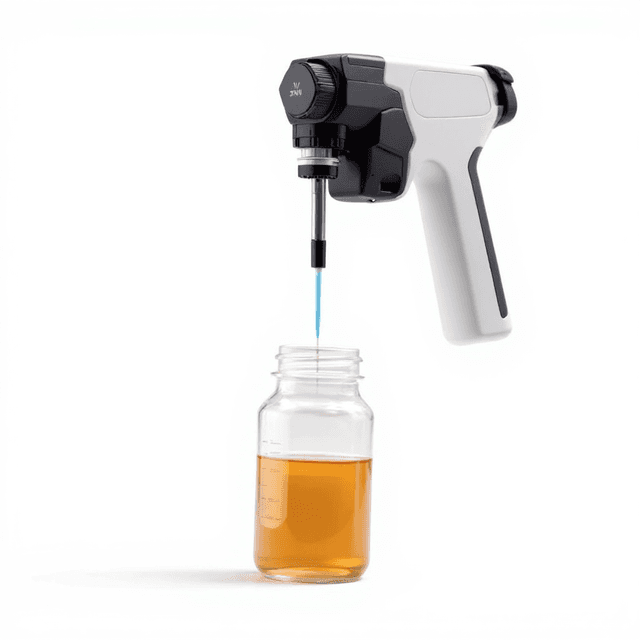
Single Channel Fixed Pipettes
Fixed volume pipettes providing precise liquid handling from 5 μL to 100 μL with volume-specific accuracy specifications for laboratory applications.

Louise Corscadden, PhD
Director of Science · ConductScience
Ask Louise about Single Channel Fixed Pipettes fit, setup, configuration, or quote prep.
Already working with us? Sign in to connect this with My Scientist.
Key Specifications
Full details →- Model fit
- Configured during quote
- SKU family
- BIO-0625
- Shipping box
- 42.0 x 43.6 x 38.0 cm
- Ordering
- Online checkout and quote request available
- Category
- Liquid Handling
- Build notes
- Confirm accessories, station layout, and support needs before purchase
Single Channel Fixed Pipettes provide precise liquid handling for laboratory applications requiring accurate volumetric transfers. These precision instruments feature fixed volume capacities ranging from 5 μL to 100 μL, with accuracy specifications tailored to each volume range. Each pipette model delivers consistent performance within defined tolerance limits, supporting quantitative protocols in analytical chemistry, molecular biology, and pharmaceutical research.
The pipettes incorporate ergonomic design principles to minimize operator fatigue during extended use. Volume-specific accuracy and precision specifications ensure reliable performance across the measurement range, with each model optimized for its designated volume capacity. The fixed volume design eliminates variable setting errors and provides consistent delivery characteristics essential for reproducible experimental protocols.
How It Works
Fixed volume pipettes operate on the air displacement principle, utilizing a piston mechanism to create controlled vacuum for liquid aspiration and positive pressure for dispensing. The piston moves through a predetermined stroke length calibrated to the specific volume capacity, ensuring consistent liquid transfer volumes. When the operating button is depressed, the piston creates negative pressure that draws liquid into the disposable tip through capillary action and atmospheric pressure differential.
Volume accuracy depends on proper tip attachment, consistent operating technique, and environmental factors including temperature and liquid properties. The fixed volume design eliminates mechanical variability associated with adjustable volume settings, providing enhanced repeatability for applications requiring identical transfer volumes. Each pipette undergoes factory calibration to meet specified accuracy and precision tolerances across its operational range.
Features & Benefits
Automation Level
- manual
Cat. No.
- Volume
μl
- ±%
±μl
- ±%
10102001
- 5μl
5
- 0.4
0.02
- 0.4
10102002
- 10μl
10
- 0.5
0.05
- 1.1
10102003
- 20μl
20
- 0.5
0.1
- 0.4
10102004
- 100μl
100
- 0.3
Brand
- ConductScience
Research Domain
- Analytical Chemistry
- Cell Biology
- Clinical Diagnostics
- Materials Science
- Microbiology
- Pharmaceutical QC
Shipping weight
- 4.41 lb
Shipping box
- L: 42.0 cm
- W: 43.6 cm
- H: 38.0 cm
| Feature | This Product | Typical Alternative | Advantage |
|---|---|---|---|
| Volume Range Coverage | Four discrete volumes (5, 10, 20, 100 μL) with optimized specifications | Entry-level models often offer fewer volume options or wider tolerance ranges | Volume-specific optimization ensures each model achieves optimal accuracy and precision for its designated range |
| Accuracy Specifications | ±0.3% to ±0.5% accuracy across volume range | Generic pipettes may have broader tolerance specifications | Tight accuracy control supports quantitative protocols requiring precise liquid delivery |
| Precision Control | ±0.02 μL precision for 5 μL model, graduated specifications for larger volumes | Standard pipettes often have less stringent precision requirements | Enhanced precision repeatability critical for dose-response studies and analytical protocols |
| Volume-Specific Design | Fixed volume construction with dedicated calibration | Adjustable pipettes offer flexibility but introduce mechanical variability | Eliminates setting errors and provides consistent performance for applications requiring identical volumes |
The pipette series provides volume-specific optimization with accuracy ranging from ±0.3% to ±0.5% and precision specifications from ±0.02 μL to ±1.1%. Fixed volume design eliminates adjustment errors while maintaining performance characteristics tailored to each volume capacity.
Practical Tips
Perform gravimetric calibration using distilled water at 20°C with density correction factors for temperature variations.
Why: Accurate calibration verification requires controlled environmental conditions and appropriate reference standards.
Disassemble and clean internal components monthly when used with protein solutions or viscous samples.
Why: Protein buildup and sample residues can affect piston movement and vacuum integrity over time.
Pre-wet pipette tips by aspirating and dispensing sample solution 2-3 times before critical measurements.
Why: Pre-wetting equilibrates tip surfaces with sample, improving volume accuracy particularly for aqueous solutions.
Check tip seal integrity if dispensed volumes appear inconsistent or if air bubbles appear during aspiration.
Why: Poor tip seal allows air leakage that compromises volume accuracy and creates measurement variability.
Maintain consistent plunger depression speed and hold pipette vertically during aspiration and dispensing.
Why: Consistent technique minimizes operator-induced variability and ensures reproducible volume delivery.
Use appropriate tip types rated for chemical compatibility when handling organic solvents or corrosive solutions.
Why: Chemical compatibility prevents tip degradation that could introduce contamination or affect volume accuracy.
Replace tips between samples to prevent cross-contamination, especially when working with trace-level analytes.
Why: Sample carryover can compromise analytical results and introduce systematic errors in quantitative protocols.
Setup Guide
What’s in the Box
- Single channel fixed pipette (volume-specific model)
- Operating manual with calibration specifications
- Tip compatibility guide (typical)
- Calibration certificate (typical)
Warranty
ConductScience provides standard 1-year manufacturer warranty covering mechanical defects and calibration drift beyond specified tolerances. Technical support includes troubleshooting guidance and calibration verification protocols.
Compliance
References
Background reading relevant to this product:
What accuracy can I expect across the volume range?
Accuracy varies by model: 5 μL achieves ±0.4%, 10 μL and 20 μL achieve ±0.5%, and 100 μL achieves ±0.3%. Precision ranges from ±0.02 μL (5 μL model) to ±1.1% (100 μL model).
How do I maintain calibration accuracy over time?
Perform regular gravimetric verification using distilled water at controlled temperature. Clean internal components periodically and replace worn seals to maintain vacuum integrity.
Are these pipettes compatible with standard tip systems?
Consult product datasheet for specific tip compatibility. Most fixed volume pipettes accommodate standard conical tips appropriate for the volume range.
What factors affect dispensing accuracy?
Temperature variations, liquid viscosity, tip fit, and operator technique influence accuracy. Pre-wet tips with sample solution and maintain consistent plunger speed for optimal performance.
How do fixed volume pipettes compare to adjustable models?
Fixed volume designs eliminate mechanical variability from adjustment mechanisms, providing enhanced repeatability for applications requiring identical transfer volumes but limiting flexibility.
What maintenance procedures are recommended?
Regular cleaning with appropriate solvents, periodic seal replacement, and annual calibration verification maintain performance. Avoid aggressive chemicals that may damage internal components.
Can these pipettes handle organic solvents?
Compatibility depends on seal materials and internal components. Consult product datasheet for chemical resistance specifications before use with organic solvents.
Have a question about this product?
Have a question? Just ask.
Send it over and we'll email you a personalized answer — no call, no scheduling.
Prefer to talk it through?
Accessories
Enhance your setup with compatible accessories
Replacement Parts & Consumables