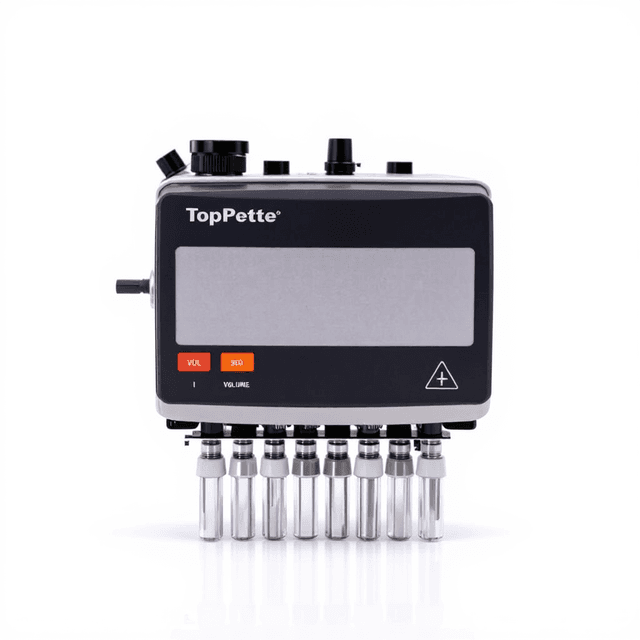
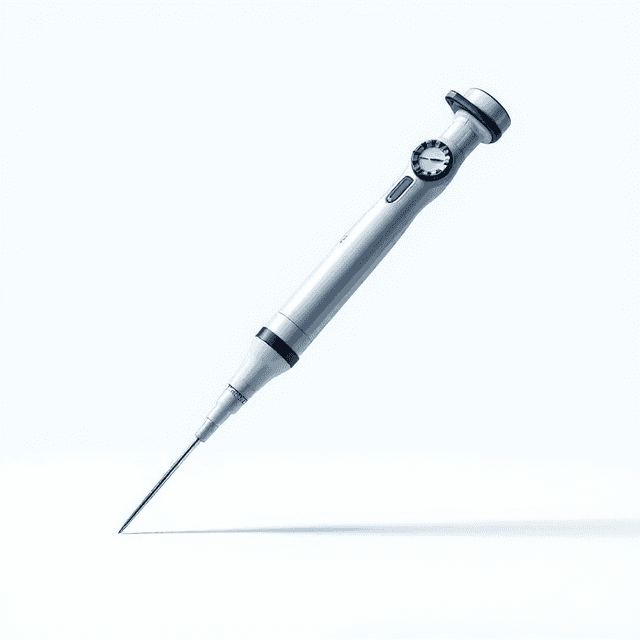
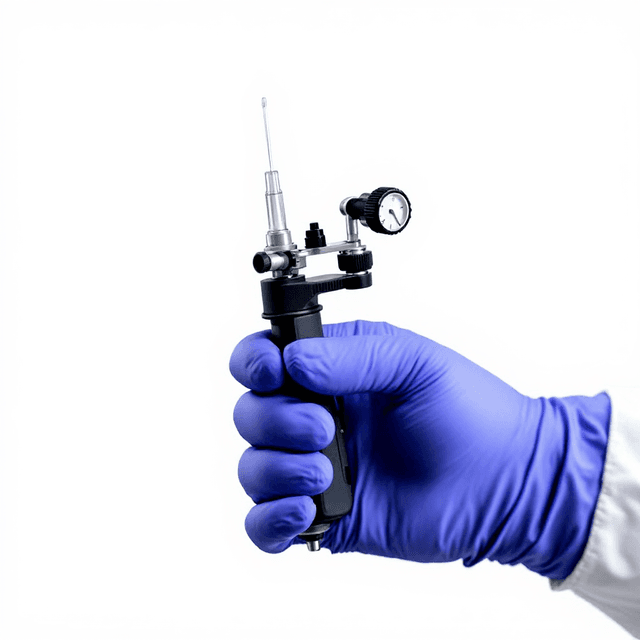
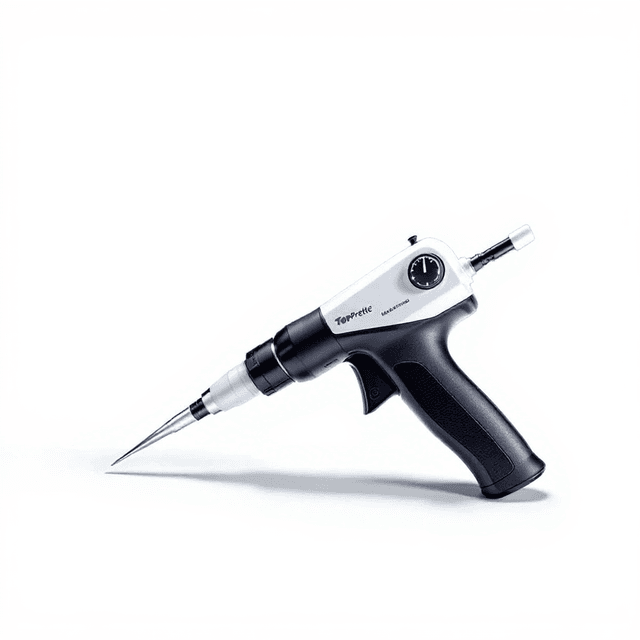
StepMate Stepper
Precision stepper syringe system for accurate microliter volume dispensing in analytical and research applications, available in three syringe volume configurations.

Louise Corscadden, PhD
Director of Science · ConductScience
Ask Louise about StepMate Stepper fit, setup, configuration, or quote prep.
Already working with us? Sign in to connect this with My Scientist.
Key Specifications
Full details →- Model fit
- Configured during quote
- SKU family
- BIO-0627
- Shipping box
- 98.43 x 49.21 x 19.69 cm
- Ordering
- Online checkout and quote request available
- Category
- Liquid Handling
- Build notes
- Confirm accessories, station layout, and support needs before purchase
The StepMate Stepper is a precision liquid handling instrument designed for accurate and repeatable dispensing of microliter volumes in research and analytical applications. This stepper syringe system provides controlled delivery of reagents, samples, and standards with multiple volume configurations to accommodate diverse experimental protocols.
Available in three syringe volume configurations (0.50 mL, 1.25 mL, and 2.50 mL), the StepMate Stepper enables precise dispensing of volumes ranging from 10 μL to 100 μL depending on the selected syringe size. The stepped dispensing mechanism ensures consistent volume delivery with defined accuracy and precision specifications for each configuration, supporting quantitative analytical workflows in laboratory environments.
How It Works
The StepMate Stepper operates on a positive displacement principle using a precision-machined syringe and plunger mechanism. The stepper motor-driven system advances the plunger in defined increments, creating controlled positive pressure to dispense accurate volumes. This displacement-based approach ensures volume accuracy independent of liquid viscosity, density, or vapor pressure variations.
The stepping mechanism provides discrete volume increments based on the syringe configuration and step size settings. Each step corresponds to a specific volume displacement calculated from the syringe barrel internal diameter and plunger travel distance. The mechanical precision of the stepper motor and syringe assembly maintains consistent volume delivery across repeated dispensing cycles.
Features & Benefits
Automation Level
- semi-automated
1
- 2
3
- 4
48
- 23
15
- 11
Cat. No.
- Syringe Volume(mL)
Sample Volume(μL)
- A %
P %
- Description
17900032
- 0.50
10
- 20
30
- 40
17900033
- 1.25
25
- 50
75
- 100
17900034
- 2.50
Brand
- ConductScience
Research Domain
- Analytical Chemistry
- Clinical Diagnostics
- Environmental Monitoring
- Food Science
- Materials Science
- Pharmaceutical QC
Shipping weight
- 731.67 lb
Shipping box
- L: 98.43 cm
- W: 49.21 cm
- H: 19.69 cm
| Feature | This Product | Typical Alternative | Advantage |
|---|---|---|---|
| Volume Range Coverage | Three configurations covering 10-100 μL range with optimized precision | Single fixed volume or limited range options | Provides flexibility to match syringe size to required precision and volume range for diverse analytical protocols. |
| Displacement Mechanism | Positive displacement stepper system | Air displacement or manual operation | Eliminates accuracy errors caused by liquid properties and environmental conditions. |
| Volume Selection | Stepped volume control with defined increments | Continuous adjustment or preset volumes only | Combines precision volume selection with reproducible step-wise dispensing for protocol standardization. |
| Operational Consistency | Mechanical precision with stepper motor control | Manual technique-dependent systems | Reduces operator variability and maintains consistent performance across users and time periods. |
The StepMate Stepper combines positive displacement accuracy with stepped volume control across three syringe configurations. The mechanical precision design provides consistent performance for analytical applications requiring reproducible microliter dispensing.
Practical Tips
Use distilled water at 20°C for gravimetric calibration and apply density corrections for other temperatures.
Why: Standard conditions ensure calibration accuracy and traceability to measurement standards.
Flush the syringe thoroughly with compatible solvent before switching between different liquid types.
Why: Prevents cross-contamination and maintains accuracy by eliminating residual liquid effects.
Allow the system to equilibrate to room temperature before critical measurements.
Why: Temperature variations can affect syringe dimensions and liquid properties, impacting volume accuracy.
Check for air bubbles in the syringe if dispensing volumes appear inconsistent.
Why: Air compressibility introduces volume errors in positive displacement systems.
Perform replicate dispensing cycles and monitor precision statistics for quality control.
Why: Statistical monitoring identifies system drift or maintenance needs before affecting analytical results.
Ensure proper ventilation when dispensing volatile solvents and use appropriate personal protective equipment.
Why: Minimizes exposure risks during routine liquid handling operations.
Setup Guide
What’s in the Box
- StepMate Stepper main unit
- Selected syringe configuration (0.50 mL, 1.25 mL, or 2.50 mL)
- Power adapter (typical)
- User manual and calibration certificate (typical)
- Maintenance accessories (typical)
Warranty
ConductScience provides a standard one-year manufacturer warranty covering defects in materials and workmanship, with technical support for calibration and operational guidance.
Compliance
What factors affect dispensing accuracy with different liquid types?
Liquid viscosity, surface tension, and vapor pressure can influence dispensing precision. The positive displacement design minimizes these effects, but calibration with the working liquid is recommended for highest accuracy.
How frequently should the system be calibrated?
Perform gravimetric calibration before each new analytical method or when changing liquid types. Daily verification is recommended for critical quantitative applications.
Can the system handle volatile or aggressive solvents?
Consult chemical compatibility specifications for the syringe materials. Most organic solvents are compatible, but highly aggressive reagents may require specialized syringe configurations.
What maintenance is required for optimal performance?
Regular cleaning of the syringe and plunger assembly, periodic lubrication of moving parts, and replacement of seals according to the maintenance schedule.
How do I select the appropriate syringe volume for my application?
Choose the syringe volume that provides the required dispensing range with optimal precision. Smaller syringes offer better precision at low volumes, while larger syringes accommodate higher volume requirements.
What data output options are available for documentation?
Consult product datasheet for available data logging and output capabilities to support analytical documentation requirements.
Have a question about this product?
Have a question? Just ask.
Send it over and we'll email you a personalized answer — no call, no scheduling.
Prefer to talk it through?