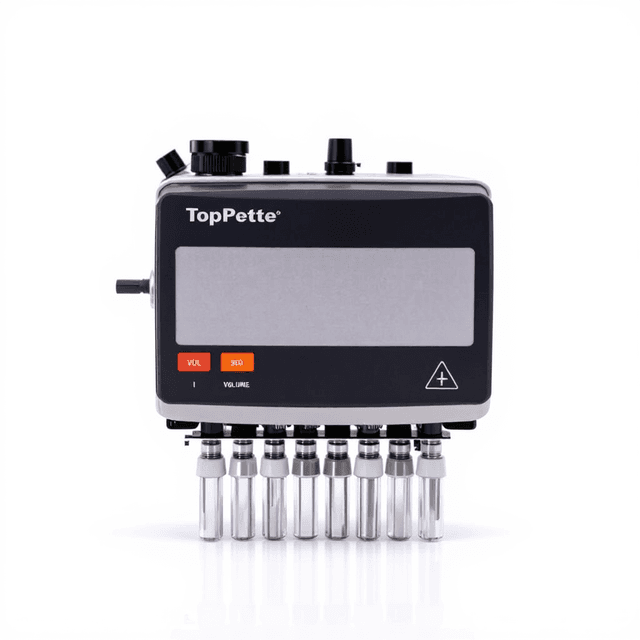
DispensMate-E Bottle-Top Dispenser
Precision bottle-top dispenser for accurate volumetric liquid handling with multiple volume ranges and specified error tolerances for quantitative laboratory applications.

Louise Corscadden, PhD
Director of Science · ConductScience
Ask Louise about DispensMate-E Bottle-Top Dispenser fit, setup, configuration, or quote prep.
Already working with us? Sign in to connect this with My Scientist.
Key Specifications
Full details →- Model fit
- Configured during quote
- SKU family
- BIO-0636
- Shipping box
- 42.0 x 43.6 x 38.0 cm
- Ordering
- Online checkout and quote request available
- Category
- Liquid Handling
- Build notes
- Confirm accessories, station layout, and support needs before purchase
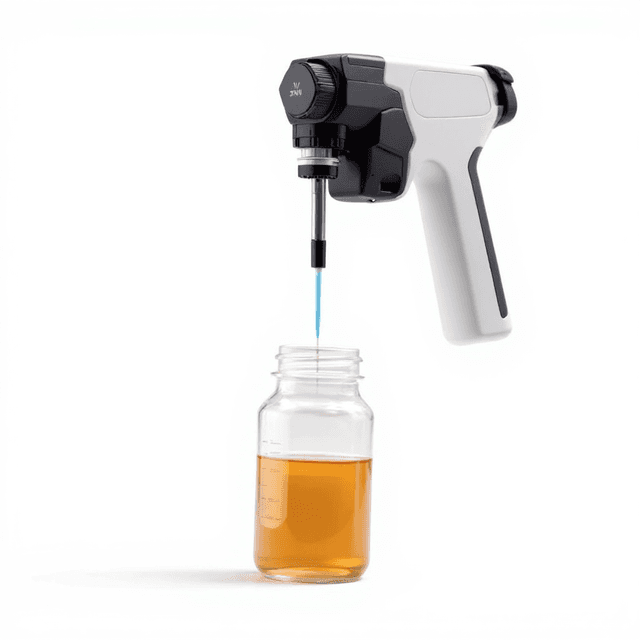
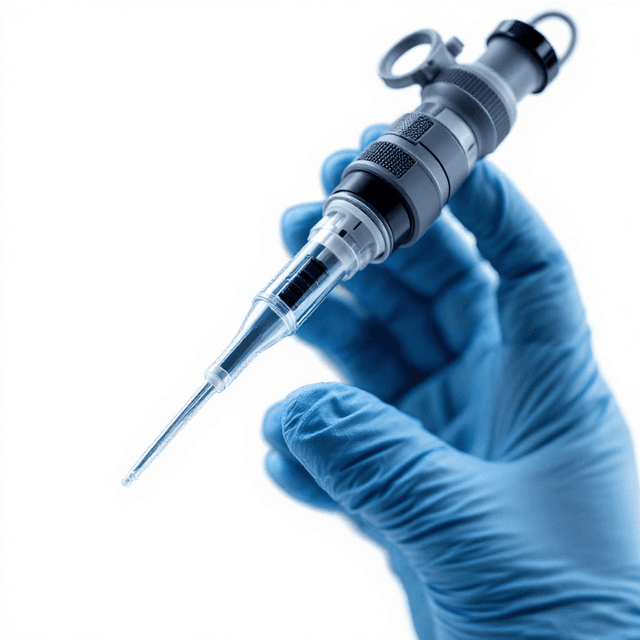
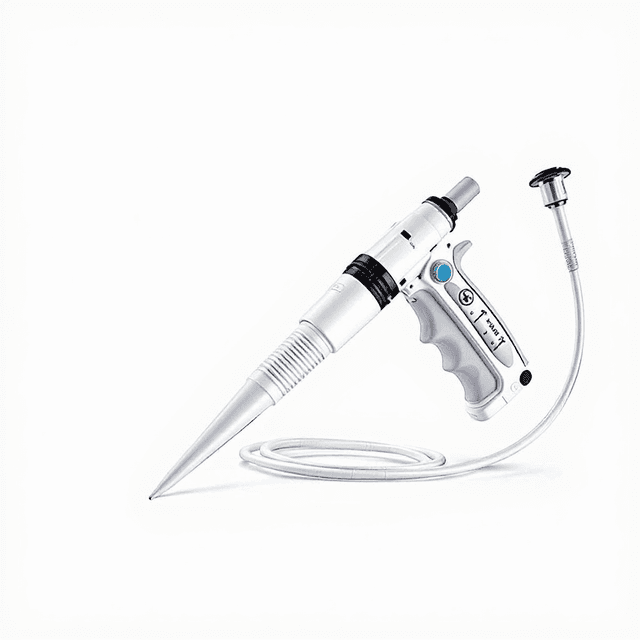
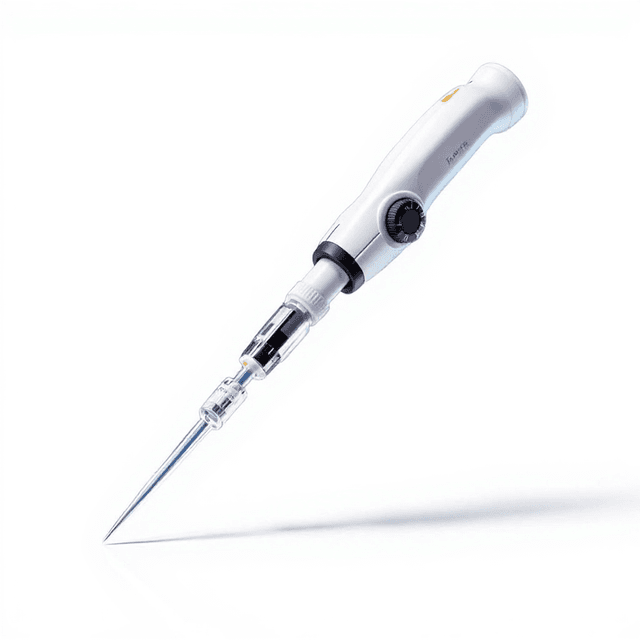
The DispensMate-E Bottle-Top Dispenser is a precision liquid handling instrument designed for repetitive volumetric dispensing in laboratory environments. This bottle-top dispenser provides accurate and reproducible volume delivery for reagent preparation, sample dilution, and analytical procedures requiring consistent liquid transfer. The instrument features multiple volume ranges with defined systematic and random error specifications to meet quantitative laboratory requirements.
The dispenser integrates directly with standard laboratory bottles and provides graduated volume control with specified accuracy limits. Each volume range maintains distinct error tolerances, with systematic errors and random variations documented for analytical quality control. The instrument supports various test volumes from microliters to milliliters, enabling applications across different scales of laboratory work where precise liquid handling is essential.
How It Works
The DispensMate-E operates on a positive displacement principle where a piston mechanism draws and dispenses precise volumes of liquid. The dispenser connects to standard laboratory bottles via a threaded bottle-top interface, creating a sealed system that prevents contamination and evaporation. Volume selection is achieved through a graduated adjustment mechanism that controls piston stroke length, directly correlating to dispensed volume.
The instrument's accuracy depends on precise mechanical tolerances and calibrated volume settings. Systematic error represents the bias between set volume and actual dispensed volume, while random error indicates the variability between repeated dispensing operations at the same setting. These error specifications enable users to calculate measurement uncertainty and maintain analytical quality standards.
The dispensing mechanism utilizes a valve system that separates the aspiration and dispensing phases, ensuring consistent volume delivery regardless of liquid viscosity within normal laboratory solvent ranges. The bottle-top design eliminates the need for separate liquid reservoirs and reduces contamination risk through direct connection to reagent bottles.
Features & Benefits
Automation Level
- manual
Graduation(ml)
- Test Volume(ml)
Systematic Error
- Random Error
±%
- ±μl
4080100000
- 0.5~2.5
0.05
- 0.5
5
- 500
1
- 100
1.25
- 1
12.5
- 0.1
2.5
- 1
4080100001
- 1~5
0.1
- 1
25
- 0.1
4080100002
- 2~10
Brand
- ConductScience
Research Domain
- Analytical Chemistry
- Clinical Diagnostics
- Environmental Monitoring
- Food Science
- Microbiology
- Pharmaceutical QC
Shipping weight
- 29.98 lb
Shipping box
- L: 42.0 cm
- W: 43.6 cm
- H: 38.0 cm
| Feature | This Product | Typical Alternative | Advantage |
|---|---|---|---|
| Volume Range Coverage | Three distinct ranges from 0.5-10 ml with optimized accuracy for each range | Entry-level dispensers often provide fewer ranges or single fixed volumes | Allows researchers to select the optimal accuracy range for their specific volume requirements |
| Systematic Error Specification | 0.05% for small volumes (0.5-2.5 ml), 0.1% for larger volumes | Basic dispensers may offer lower accuracy or unspecified error tolerances | Enables precise uncertainty calculations and method validation in analytical procedures |
| Random Error Documentation | Specified random error values of 0.5-1 μl depending on range | Many dispensers do not provide precision specifications | Supports statistical analysis and replicate measurement planning for quantitative work |
| Error Expression Methods | Provides both percentage and absolute error specifications | Simple dispensers may only specify accuracy as percentage or volume | Accommodates different uncertainty calculation methods and analytical standards |
| Volume Adjustment Mechanism | Graduated volume control with test volume specifications | Basic models may have limited adjustment precision or unclear graduations | Provides precise volume setting with visual feedback for reproducible operations |
The DispensMate-E offers comprehensive error specifications and multiple volume ranges optimized for analytical applications. The documented systematic and random error values support method validation and uncertainty calculations required in quantitative laboratory work.
Practical Tips
Verify accuracy using distilled water at room temperature and an analytical balance with 0.1 mg resolution for gravimetric calibration.
Why: Water density is well-characterized and provides the most reliable reference for volumetric calibration.
Clean the dispenser with compatible solvents after each use and replace seals when dispensing accuracy degrades beyond specifications.
Why: Prevents chemical residue buildup and maintains seal integrity for consistent volumetric performance.
Allow the mechanism to complete full dispensing cycles and maintain consistent operating speed for optimal accuracy.
Why: Incomplete cycles or variable operation speed introduces additional error sources beyond the specified tolerances.
If accuracy degrades, check for air bubbles in the system and verify the bottle-top seal integrity before recalibration.
Why: Air bubbles and seal leaks are common causes of volume inaccuracy that can be resolved without component replacement.
Record dispenser serial number and volume range settings in analytical records for traceability and uncertainty calculations.
Why: Documentation enables proper uncertainty propagation and supports analytical method validation requirements.
Ensure chemical compatibility with dispenser materials and use appropriate personal protective equipment when handling reactive reagents.
Why: Chemical incompatibility can cause seal failure or component degradation, creating safety hazards and accuracy loss.
Perform calibration checks at multiple volume settings within your working range rather than at a single point.
Why: Multi-point calibration reveals linearity issues and provides more comprehensive accuracy assessment across the operational range.
Pre-rinse the dispenser with your working solution before beginning analytical dispensing operations.
Why: Eliminates dilution effects from residual cleaning solvents and ensures consistent solution composition in dispensed volumes.
Setup Guide
What’s in the Box
- DispensMate-E dispenser unit
- Bottle-top adapter set (typical)
- Inlet tube assembly (typical)
- User manual and calibration certificate (typical)
- Maintenance kit with spare seals (typical)
Warranty
ConductScience provides standard 1-year manufacturer warranty covering defects in materials and workmanship. Technical support includes calibration guidance and troubleshooting assistance for optimal performance maintenance.
Compliance
How do I select the appropriate volume range for my application?
Choose the range that includes your target volume while minimizing relative error. The 0.5-2.5 ml range offers the highest accuracy at 0.05% systematic error, while larger ranges provide 0.1% accuracy for higher volumes.
What maintenance is required to preserve accuracy specifications?
Regular cleaning with compatible solvents and periodic seal replacement maintain accuracy. Verify calibration periodically using gravimetric or volumetric reference methods, especially after maintenance or solvent changes.
Can this dispenser handle organic solvents and acids?
Consult the chemical compatibility chart in the product datasheet for specific solvent compatibility. The sealing materials and internal components determine solvent compatibility limits for safe operation.
How do I calculate measurement uncertainty for analytical methods?
Combine the systematic error (bias) and random error (precision) specifications using standard uncertainty propagation methods. The specified error values provide the basis for analytical method validation uncertainty calculations.
What is the difference between systematic and random error specifications?
Systematic error represents the maximum expected bias between set and actual volume, while random error indicates the precision variation between repeated measurements at the same setting.
How often should I verify the dispenser accuracy?
Verification frequency depends on usage intensity and analytical requirements. Monthly checks are typical for routine use, with more frequent verification for critical analytical applications or after maintenance.
Can I use this dispenser with viscous solutions?
The positive displacement design accommodates moderate viscosity variations, but accuracy specifications apply to aqueous solutions. Highly viscous solutions may require longer equilibration times or accuracy verification.
Have a question about this product?
Have a question? Just ask.
Send it over and we'll email you a personalized answer — no call, no scheduling.
Prefer to talk it through?
Accessories
Enhance your setup with compatible accessories