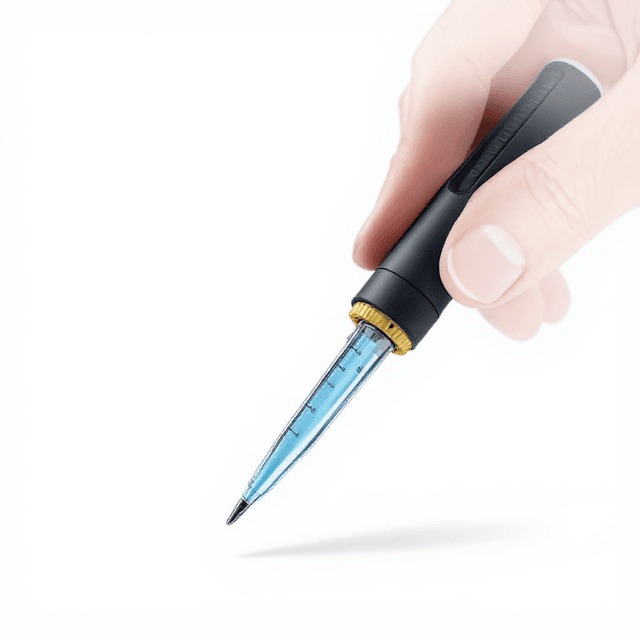
Electronic Bottle-Top Dispenser
Electronic bottle-top dispenser with 0.01-99.99 mL range, 0.2% accuracy, and external control capabilities including stirrer and burette programming functions.

Louise Corscadden, PhD
Director of Science · ConductScience
Ask Louise about Electronic Bottle-Top Dispenser fit, setup, configuration, or quote prep.
Already working with us? Sign in to connect this with My Scientist.
Key Specifications
Full details →- Model fit
- Configured during quote
- SKU family
- BIO-0637
- Shipping box
- 42.0 x 43.6 x 38.0 cm
- Ordering
- Online checkout and quote request available
- Category
- Liquid Handling
- Build notes
- Confirm accessories, station layout, and support needs before purchase
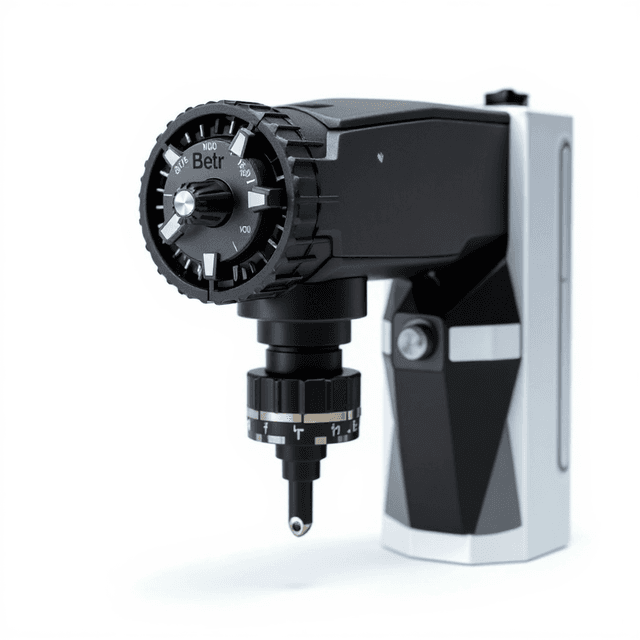
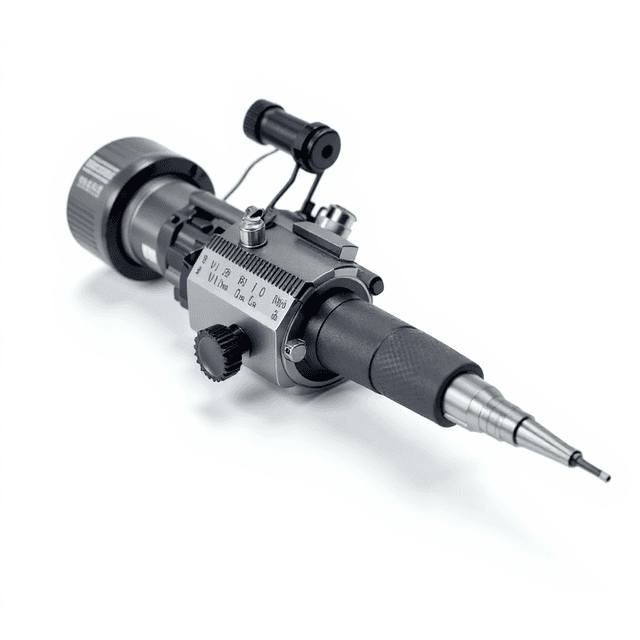
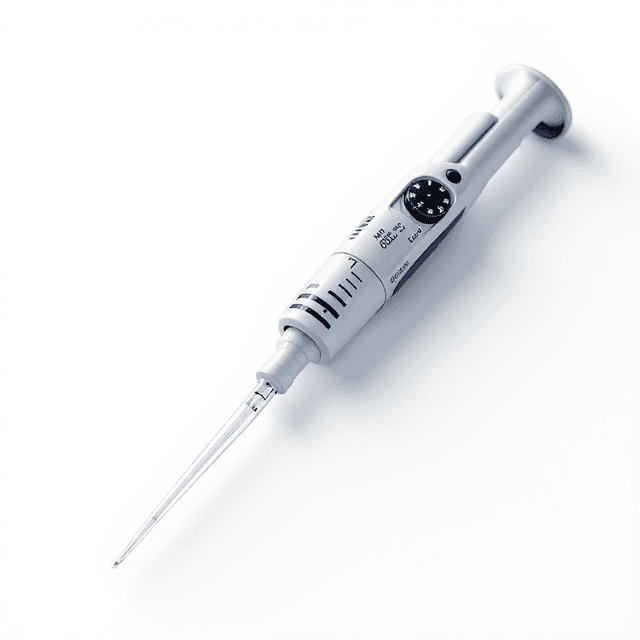
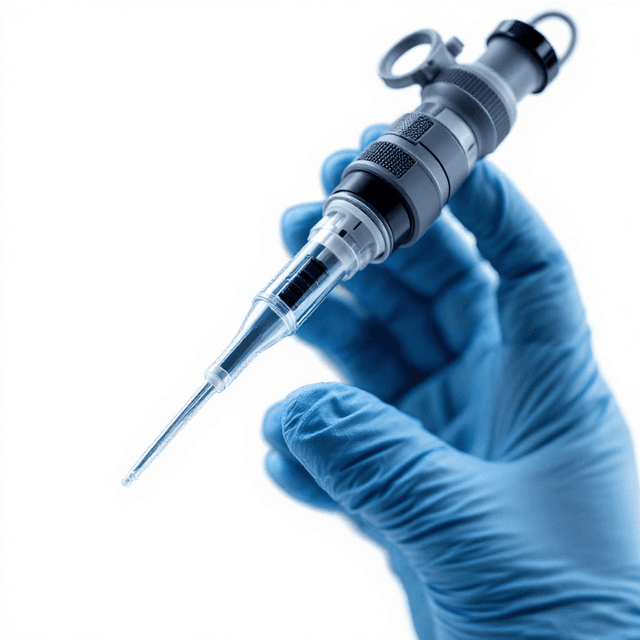
The Electronic Bottle-Top Dispenser is a precision volumetric liquid handling instrument designed for accurate dispensing of reagents and solutions in laboratory applications. This digital dispenser features a volume range of 0.01-99.99 mL with 10 μL resolution and exceptional accuracy specifications of 0.2% relative error and 0.07% coefficient of variation. The instrument incorporates external control capabilities, including integrated stirrer and burette program functions for enhanced workflow automation.
Operating reliably within a 10°C to 30°C temperature range, this dispenser is manufactured to DIN EN ISO 8655 quality standards, ensuring consistent performance for critical analytical procedures. The electronic control system provides precise volume setting and delivery, making it suitable for applications requiring reproducible liquid handling with minimal operator variability.
How It Works
The Electronic Bottle-Top Dispenser operates through a precision electronic piston mechanism that provides controlled volumetric delivery of liquids. The system utilizes a digital control interface to set the desired volume within the 0.01-99.99 mL range, with the piston mechanism capable of a maximum lift of 10 mL per stroke. For volumes exceeding 10 mL, the system automatically performs multiple piston cycles to achieve the programmed volume.
The electronic control system monitors piston displacement to ensure accurate volume delivery with 10 μL resolution. The external control capability allows integration with automated systems and includes programmable functions for stirring and burette operations. Temperature compensation algorithms maintain accuracy across the specified 10°C to 30°C operating range, accounting for thermal expansion effects on both the instrument and dispensed liquids.
Features & Benefits
Automation Level
- semi-automated
Item No.
- 7012300001
Volume Range
- 0.01~99.99ml, Max piston lift is 10ml, resolution is 10μl
Volume Accuracy
- R=0.2% CV=0.07%
Operating Temperature Range
- 10°C~30°C
Quality Control
- DIN EN ISO 8655
Control Type
- External control, including the stirrer and the burette program
Brand
- ConductScience
Research Domain
- Analytical Chemistry
- Clinical Diagnostics
- Environmental Monitoring
- Food Science
- Microbiology
- Pharmaceutical QC
Shipping weight
- 29.98 lb
Shipping box
- L: 42.0 cm
- W: 43.6 cm
- H: 38.0 cm
| Feature | This Product | Typical Alternative | Advantage |
|---|---|---|---|
| Volume Range and Resolution | 0.01-99.99 mL with 10 μL resolution | Basic models often offer limited resolution of 50-100 μL increments | Fine volume control enables precise microanalytical work and reduces reagent waste in expensive assays. |
| Accuracy Specification | 0.2% relative accuracy, 0.07% CV | Standard dispensers typically achieve 0.5-1.0% accuracy | Higher precision reduces measurement uncertainty in quantitative analytical procedures requiring tight tolerances. |
| Control System | Electronic digital control with external programming | Manual mechanical adjustment systems | Eliminates operator setting errors and enables automated integration with analytical workflows. |
| External Integration | Stirrer and burette program functions | Most basic models lack automation interfaces | Supports complex analytical procedures requiring synchronized stirring and programmed dispensing sequences. |
| Quality Standards | DIN EN ISO 8655 manufacturing compliance | Entry-level models may lack formal standard compliance | Provides documented traceability and performance specifications required for regulated analytical environments. |
| Temperature Compensation | 10°C to 30°C operational stability | Basic dispensers lack temperature specification | Maintains accuracy across varying laboratory conditions without requiring environmental control. |
This electronic dispenser combines precision volumetric control with automation capabilities, offering 0.2% accuracy across a broad volume range. The digital control system and external programming functions distinguish it from basic mechanical dispensers in analytical applications requiring documented precision and automated integration.
Practical Tips
Perform gravimetric calibration at the specific volumes used most frequently in your analytical procedures.
Why: Calibration at working volumes ensures optimal accuracy for your specific applications rather than relying on full-range specifications.
Clean liquid pathways with appropriate solvents after each reagent change to prevent cross-contamination.
Why: Residual reagents can affect subsequent dispensing accuracy and introduce analytical interference.
Allow temperature equilibration for 30 minutes when moving between different laboratory environments.
Why: Temperature stability ensures the compensation algorithms function properly for maintained dispensing accuracy.
If dispensing becomes erratic, check for air bubbles in the liquid pathway and re-prime the system.
Why: Air bubbles compress during dispensing cycles, causing volume delivery inconsistency and reduced accuracy.
Document calibration results and track dispensing performance over time to identify maintenance needs.
Why: Trending accuracy data helps predict when recalibration or component replacement is needed before analytical quality is compromised.
Use appropriate bottle adapters and ensure secure mounting before dispensing hazardous chemicals.
Why: Proper mounting prevents spills and exposure incidents when working with toxic or corrosive reagents.
Program frequently used volumes into the burette function memory for consistent operation across multiple operators.
Why: Standardized volume settings reduce operator variability and ensure reproducible results in routine analytical procedures.
Replace seals and wetted components according to the recommended service schedule based on chemical exposure.
Why: Degraded seals can cause volume delivery drift and potential contamination of sensitive analytical samples.
Setup Guide
What’s in the Box
- Electronic bottle-top dispenser unit (typical)
- Power adapter and charging cable (typical)
- Bottle adapter set for common bottle sizes (typical)
- External control cable for automation (typical)
- Calibration certificate (typical)
- User manual and operating instructions (typical)
- Cleaning and maintenance kit (typical)
Warranty
ConductScience provides a standard one-year manufacturer warranty covering defects in materials and workmanship. Technical support includes calibration guidance, troubleshooting assistance, and repair services for optimal instrument performance.
Compliance
What is the minimum dispensing volume and resolution capability?
The dispenser handles volumes from 0.01 mL minimum with 10 μL resolution, suitable for microanalytical applications requiring precise small-volume delivery.
How is volume accuracy maintained across the operating range?
The system achieves 0.2% relative accuracy and 0.07% coefficient of variation through electronic piston control and temperature compensation within the 10°C to 30°C operating range.
Can the dispenser integrate with automated analytical systems?
Yes, external control capabilities include stirrer functions and burette programming, allowing integration with automated systems and programmed dispensing sequences.
What calibration procedures are required for analytical work?
Gravimetric calibration using distilled water is recommended, following DIN EN ISO 8655 protocols to verify volume accuracy and traceability.
How does the maximum 10 mL piston lift affect larger volume dispensing?
For volumes exceeding 10 mL, the system automatically performs multiple piston cycles to achieve the programmed total volume up to 99.99 mL.
What solvents and reagents are compatible with the dispenser?
Consult product datasheet for chemical compatibility specifications and wetted materials information for your specific reagents.
How does temperature variation affect dispensing accuracy?
The 10°C to 30°C operating range specification ensures maintained accuracy across typical laboratory conditions, with internal temperature compensation algorithms.
What maintenance procedures are required for continued accuracy?
Regular cleaning of liquid pathways, periodic calibration verification, and replacement of seals according to usage frequency maintain optimal performance.
Have a question about this product?
Have a question? Just ask.
Send it over and we'll email you a personalized answer — no call, no scheduling.
Prefer to talk it through?
Accessories
Enhance your setup with compatible accessories
Frequently Bought Together