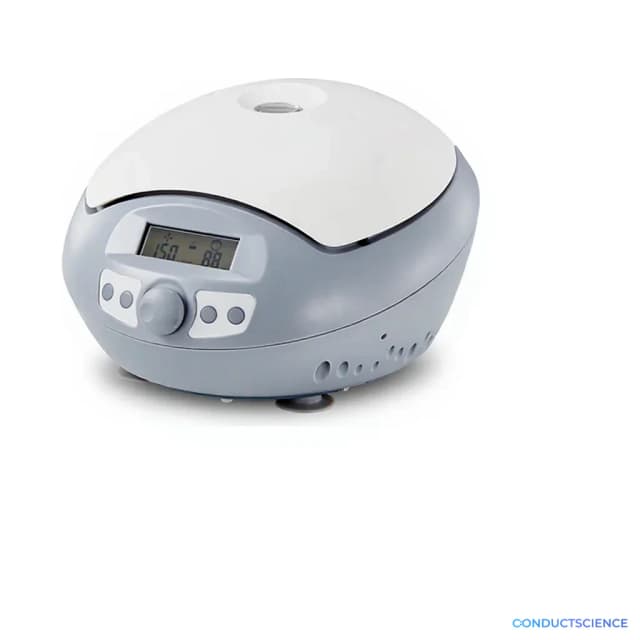
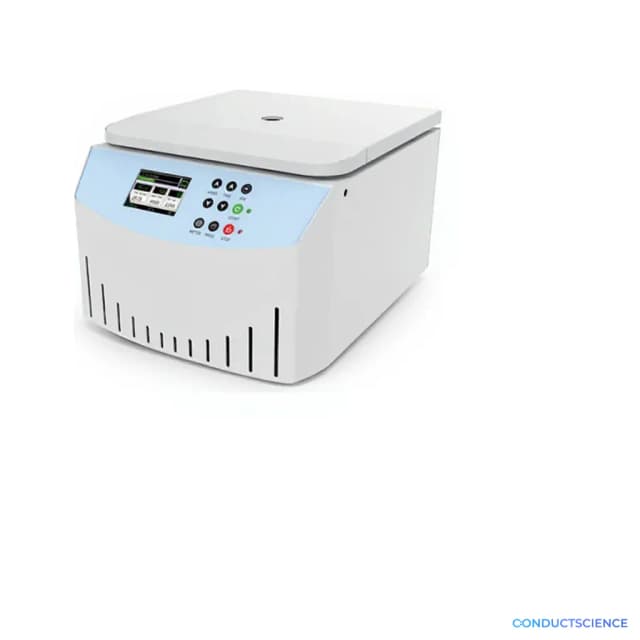
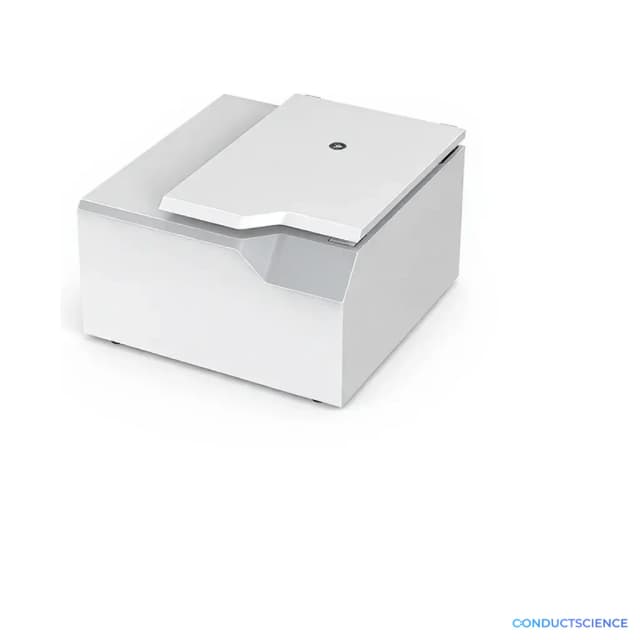
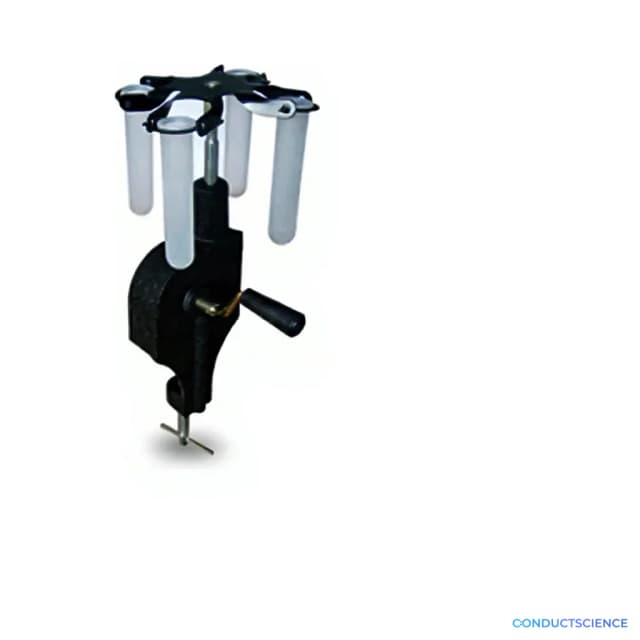
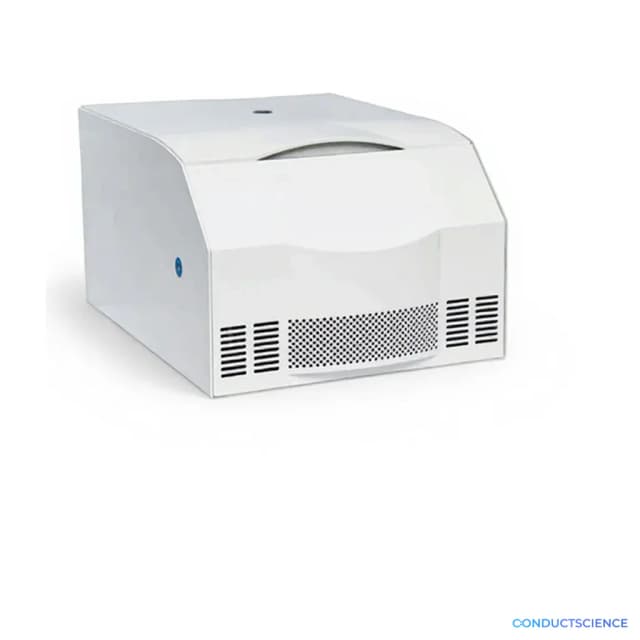
Single Speed Mini Centrifuge Mini-5 Mini-7 Mini-12
Compact benchtop centrifuge operating at 12,000 rpm with 7,776×g RCF for routine sample processing in molecular biology and clinical applications.

Louise Corscadden, PhD
Director of Science · ConductScience
Ask Louise about Single Speed Mini Centrifuge Mini-5 Mini-7 Mini-12 fit, setup, configuration, or quote prep.
Already working with us? Sign in to connect this with My Scientist.
Key Specifications
Full details →- Model fit
- Configured during quote
- SKU family
- BIO-0259
- Shipping box
- 17.8 x 17.8 x 11.5 cm
- Ordering
- Online checkout and quote request available
- Category
- Centrifuges
- Build notes
- Confirm accessories, station layout, and support needs before purchase
The Single Speed Mini Centrifuge Mini-5 Mini-7 Mini-12 is a compact benchtop centrifuge designed for routine sample processing in research and clinical laboratories. Operating at a maximum speed of 12,000 rpm with a maximum relative centrifugal force (RCF) of 7,776×g, this instrument provides sufficient separation capacity for standard microcentrifuge tube applications including cell pelletization, protein precipitation, and nucleic acid isolation.
The compact 178×178×115 mm footprint makes this centrifuge suitable for laboratories with limited bench space while maintaining the performance specifications required for routine molecular biology and biochemistry protocols. The single-speed design provides straightforward operation for applications requiring consistent centrifugal force without the complexity of variable speed programming.
How It Works
The mini centrifuge operates on the principle of centrifugal sedimentation, where samples are subjected to centrifugal force significantly greater than gravity to accelerate the separation of components based on density differences. When the rotor spins at 12,000 rpm, particles or cells within the sample experience an outward force proportional to their mass, density difference from the surrounding medium, and the square of the rotational velocity.
At the maximum RCF of 7,776×g, dense particles such as cells, protein aggregates, or precipitates migrate toward the bottom of the tube, forming a pellet, while lighter components remain in the supernatant. The separation efficiency depends on the density differential between phases, particle size, viscosity of the medium, and centrifugation time. The compact rotor design ensures uniform force distribution across all sample positions.
The single-speed operation eliminates the need for speed ramping protocols, making it ideal for routine applications where consistent, standardized centrifugation conditions are required. The fixed speed ensures reproducible results across multiple users and experimental sessions.
Features & Benefits
Automation Level
- manual
Max speed
- 12,000 rpm
External Size(W*D*H)
- 178*178*115mm
Package Size(W*D*H)
- 320*250*210mm
Brand
- ConductScience
Research Domain
- Analytical Chemistry
- Cell Biology
- Clinical Diagnostics
- Materials Science
- Microbiology
- Pharmaceutical QC
Max force
- 7,776 ×g
Shipping weight
- 1.7 lb
Shipping box
- L: 17.8 cm
- W: 17.8 cm
- H: 11.5 cm
| Feature | This Product | Typical Alternative | Advantage |
|---|---|---|---|
| Maximum Speed | 12,000 rpm | Entry-level models often provide 6,000-10,000 rpm | Higher speed capability enables faster processing times and more complete separation of dense particles. |
| Maximum RCF | 7,776×g | Compact units typically offer 3,000-6,000×g | Higher centrifugal force improves separation efficiency for challenging samples like small bacterial cells or protein aggregates. |
| Footprint | 178×178 mm base | Similar capacity units often require larger bench space | Minimal bench space requirement allows placement in crowded laboratory environments and shared workstations. |
| Operation Mode | Single fixed speed | Variable speed models with digital programming | Simplified operation reduces training requirements and eliminates programming errors in routine applications. |
| Design | Compact single-speed unit | Larger programmable centrifuges with multiple functions | Dedicated single-purpose design optimizes reliability and reduces complexity for laboratories requiring only standard centrifugation. |
This mini centrifuge offers higher speed and RCF capabilities than typical entry-level models while maintaining a compact footprint suitable for space-limited laboratories. The single-speed design provides operational simplicity and consistency for routine sample processing applications.
Practical Tips
Verify speed accuracy annually using a tachometer or strobe light to ensure the unit maintains 12,000 rpm under load.
Why: Speed accuracy directly affects RCF calculations and separation reproducibility across experiments.
Clean the rotor chamber weekly with mild detergent and dry thoroughly to prevent corrosion and contamination buildup.
Why: Accumulated debris can cause imbalance and contamination while moisture promotes corrosion of metal components.
Always use tube caps during centrifugation to prevent sample loss and aerosol formation, especially with biological materials.
Why: Capped tubes prevent evaporation, cross-contamination, and exposure to potentially hazardous aerosols.
If excessive vibration occurs, stop immediately and check for proper load balancing and tube positioning in the rotor.
Why: Unbalanced loads can damage bearings and create safety hazards through excessive vibration and potential rotor failure.
Record centrifugation time and confirm full speed is reached before starting the timer for each protocol.
Why: Acceleration time varies with load and can affect separation efficiency if not accounted for in protocol timing.
Never open the lid while the rotor is spinning and wait for complete stop before accessing samples.
Why: Moving rotors pose serious injury risk and samples may be redistributed if accessed before complete deceleration.
Pre-cool tubes and rotor for temperature-sensitive samples by refrigerating components before use.
Why: Centrifugal heating can denature proteins and affect sample integrity, particularly during extended runs.
Inspect tube adapters and rotor wells monthly for cracks or wear that could cause tube failure during operation.
Why: Damaged components increase risk of tube breakage and sample loss while potentially causing rotor damage.
Setup Guide
What’s in the Box
- Mini centrifuge main unit
- Fixed-angle rotor (typical)
- Power cord
- User manual
- Warranty documentation (typical)
Warranty
ConductScience provides a standard one-year manufacturer warranty covering defects in materials and workmanship. Technical support is available for installation guidance, troubleshooting, and maintenance procedures.
Compliance
What tube types and volumes are compatible with this centrifuge?
Consult product datasheet for specific rotor configuration and tube compatibility. Standard microcentrifuge tubes (0.5-2.0 mL) are typically accommodated in fixed-angle rotors of this size class.
How do I ensure proper load balancing for safe operation?
Load tubes in opposing positions with equal masses (within 0.1g). Use water-filled balance tubes if processing an odd number of samples. Never operate with unbalanced loads.
What is the typical centrifugation time for cell pelleting?
Most mammalian cells pellet effectively in 5-10 minutes at full speed (7,776×g). Bacterial cells may require 10-15 minutes depending on cell density and culture conditions.
Can this centrifuge be used for DNA/RNA precipitation protocols?
Yes, the 7,776×g RCF is sufficient for nucleic acid precipitation with isopropanol or ethanol. Typical protocols require 10-15 minutes at maximum speed.
What maintenance is required for reliable operation?
Regular cleaning of the rotor chamber, periodic inspection of the rotor for wear or damage, and annual calibration verification are recommended for consistent performance.
How does the fixed speed compare to variable-speed centrifuges?
The 12,000 rpm fixed speed covers the majority of routine applications. Variable-speed units offer more flexibility but add complexity for applications requiring only standard centrifugation conditions.
What safety features prevent operation with an unbalanced load?
Consult product datasheet for specific safety mechanisms. Most mini centrifuges include vibration detection that stops operation if excessive imbalance is detected.
Can the centrifuge operate continuously for multiple samples?
The unit is designed for intermittent use typical of laboratory applications. Allow cooling between extended runs and consult manufacturer guidelines for maximum duty cycle.
Have a question about this product?
Have a question? Just ask.
Send it over and we'll email you a personalized answer — no call, no scheduling.
Prefer to talk it through?
Accessories
Enhance your setup with compatible accessories
Frequently Bought Together