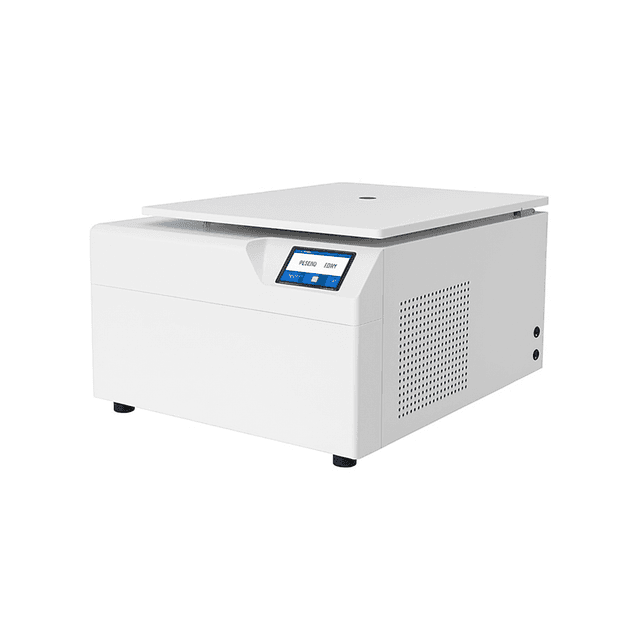
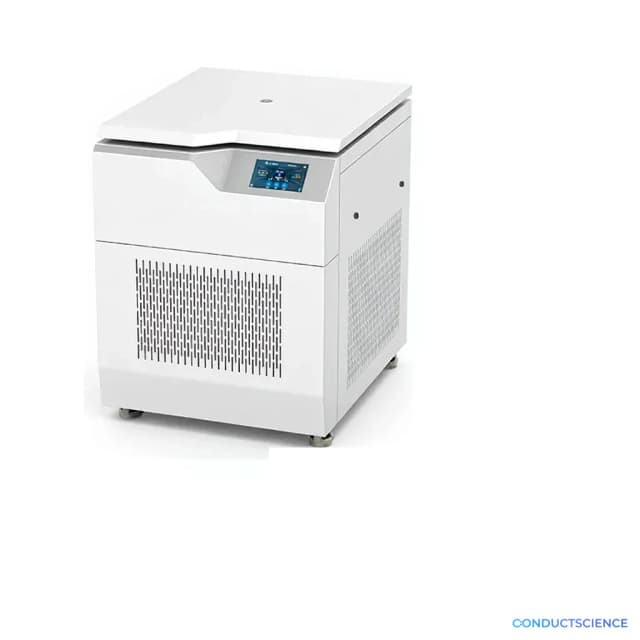
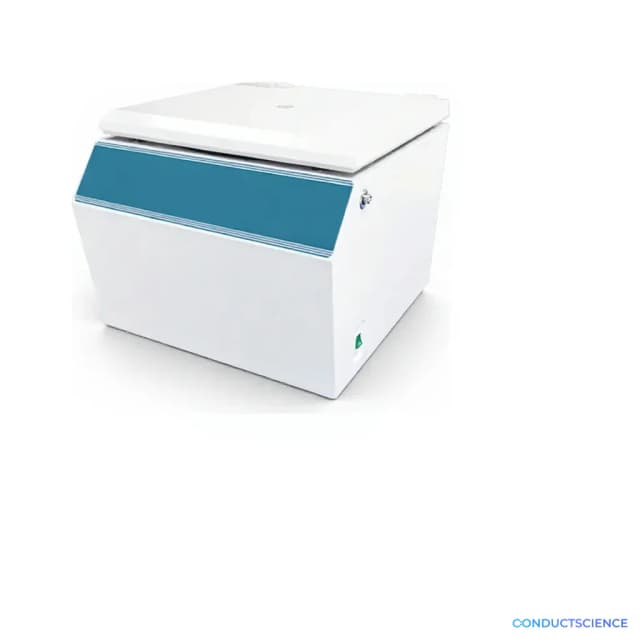
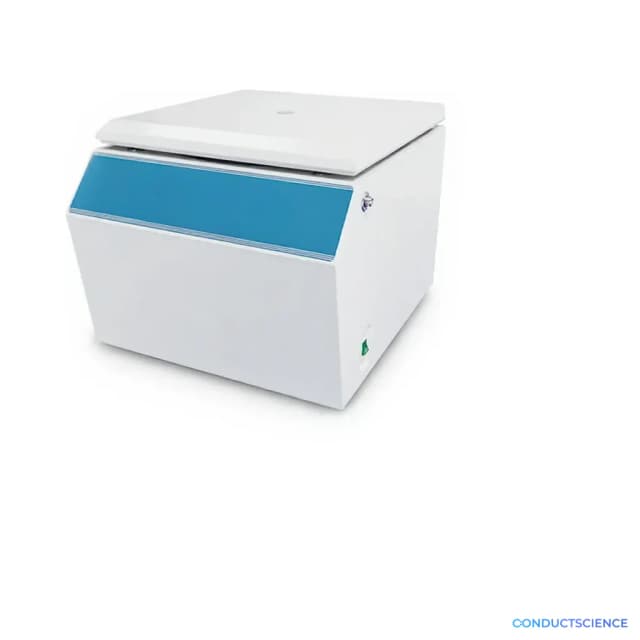
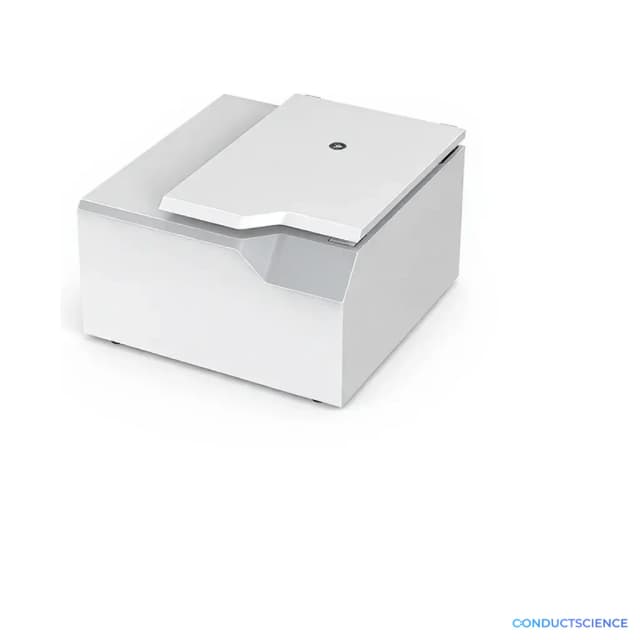
Automatic Uncovering Centrifuge
Medium-capacity benchtop centrifuge with automatic uncovering, 5000 rpm maximum speed, and 4×500ml rotor capacity for routine laboratory separations.

Louise Corscadden, PhD
Director of Science · ConductScience
Ask Louise about Automatic Uncovering Centrifuge fit, setup, configuration, or quote prep.
Already working with us? Sign in to connect this with My Scientist.
Key Specifications
Full details →- Model fit
- Configured during quote
- SKU family
- BIO-0268
- Shipping box
- 36.8 x 61.5 x 45.0 cm
- Ordering
- Online checkout and quote request available
- Category
- Centrifuges
- Build notes
- Confirm accessories, station layout, and support needs before purchase
The Automatic Uncovering Centrifuge () is a benchtop centrifugal separation system designed for medium-capacity laboratory applications requiring automated rotor uncovering functionality. Operating at maximum speeds up to 5000 rpm with precise speed control (±1% or ±20 rpm), this unit accommodates up to 4×500ml containers for batch processing of biological samples, cell cultures, and analytical preparations.
The centrifuge features programmable time control from 1 second to 999 minutes, enabling flexible protocol adaptation across diverse separation requirements. With noise levels maintained at ≤65dB and 500W power consumption, the system provides reliable operation in standard laboratory environments while minimizing acoustic interference with adjacent workstations.
How It Works
Centrifugal separation operates on the principle of differential sedimentation under applied centrifugal force. When samples are subjected to high-speed rotation, particles experience centrifugal acceleration proportional to their mass, density difference from the surrounding medium, and distance from the rotation axis. Denser components migrate toward the bottom of containers, while lighter materials remain in the supernatant layer.
The automatic uncovering mechanism allows programmable access to separated samples without manual intervention, reducing contamination risk and improving workflow efficiency. The rotor system accommodates various container formats up to 500ml capacity, with speed precision maintained within ±1% or ±20 rpm to ensure reproducible separation conditions across experimental replicates.
Temperature control during centrifugation prevents thermal degradation of heat-sensitive samples, while the low-noise design (≤65dB) enables operation in standard laboratory environments without acoustic interference.
Features & Benefits
Automation Level
- semi-automated
BKC-AU5BT
- BKC-AU5KT
Max speed
- 5,000 rpm
Max. RCF
- Adapter
Max. Capacity
- 4*500ml
Speed Precision
- ±1% or ±20rpm, take the highest value
Time Range
- 1s~999min
Noise
- ≤65dB
Consumption
- 500W
External Size(L*W*H)
- 615*450*368mm
Package Size(L*W*H)
- 780*600*650mm
NO.
- Rotors Type
Brand
- ConductScience
Research Domain
- Analytical Chemistry
- Cell Biology
- Clinical Diagnostics
- Immunology
- Microbiology
- Pharmaceutical QC
Power/Voltage
- AC110~220V, 50/60Hz
Weight
- 64.5kg
Shipping weight
- 44.0 lb
Shipping box
- L: 36.8 cm
- W: 61.5 cm
- H: 45.0 cm
| Feature | This Product | Typical Alternative | Advantage |
|---|---|---|---|
| Maximum Speed | 5000 rpm | Entry-level models often operate at 3000-4000 rpm | Higher speed capability enables more efficient separations and shorter processing times for routine applications |
| Sample Capacity | 4×500ml containers | Basic models typically accommodate smaller volumes or fewer positions | Medium-capacity design allows batch processing of multiple samples while maintaining benchtop footprint |
| Speed Precision | ±1% or ±20rpm accuracy | Standard models often offer ±2-3% speed accuracy | Enhanced precision ensures reproducible separation conditions critical for quantitative analyses |
| Automatic Uncovering | Programmable automated access | Most benchtop units require manual lid operation | Reduces contamination risk and enables integration into automated workflows |
| Noise Level | ≤65dB operation | Standard centrifuges often operate at 70-80dB | Lower acoustic output enables use in shared laboratory spaces without workflow disruption |
This centrifuge offers enhanced speed precision and automated uncovering functionality in a medium-capacity benchtop format. The combination of 5000 rpm performance with low-noise operation provides reliable sample processing for routine laboratory applications while minimizing workspace disruption.
Practical Tips
Verify speed accuracy periodically using a calibrated tachometer, particularly after rotor changes or service procedures.
Why: Speed precision directly affects separation reproducibility and experimental consistency.
Inspect rotor threads and mounting surfaces regularly for wear or damage, and clean with appropriate solvents after use.
Why: Proper rotor maintenance prevents vibration issues and ensures safe operation at high speeds.
Always balance sample loads within 0.1g to prevent excessive vibration and ensure smooth operation.
Why: Proper load balancing extends equipment life and prevents sample spillage or container breakage.
Allow the rotor to come to complete stop before opening the lid, even with automatic uncovering enabled.
Why: Residual rotation can cause sample disturbance and poses safety risks during sample retrieval.
If excessive noise occurs during operation, immediately stop the unit and check for proper rotor installation and load balance.
Why: Noise increases often indicate mechanical issues that can damage the centrifuge if not addressed promptly.
Record centrifugation parameters including speed, time, and rotor type for each sample batch to ensure protocol reproducibility.
Why: Consistent documentation enables troubleshooting and supports regulatory compliance in validated environments.
Pre-cool samples and rotor if processing heat-sensitive materials, even though temperature control specifications are not provided.
Why: Temperature management prevents sample degradation during extended centrifugation protocols.
Clean the chamber interior with mild detergent after each use and ensure complete drying before closing the lid.
Why: Regular cleaning prevents contamination buildup and maintains optimal operating conditions.
Setup Guide
What’s in the Box
- Automatic Uncovering Centrifuge main unit
- Standard rotor (typical)
- Power cord
- User manual and documentation
- Sample container adapters (typical)
- Safety covers and guards (typical)
Warranty
ConductScience provides a standard one-year manufacturer warranty covering defects in materials and workmanship, with technical support for operational guidance and troubleshooting assistance.
Compliance
What is the maximum relative centrifugal force (RCF) achievable with this centrifuge?
The maximum RCF depends on the rotor radius and is adapter-dependent. Consult the product datasheet and rotor specifications for specific RCF values at maximum speed.
How does the automatic uncovering mechanism function and can it be disabled?
The automatic uncovering mechanism provides programmable access to samples after centrifugation. Operational details and override options should be confirmed in the user manual.
What types of sample containers are compatible with the rotor system?
The system accommodates containers up to 500ml capacity in a 4-position configuration. Specific container types and adapter requirements should be verified with the rotor documentation.
Is temperature control available during centrifugation cycles?
Temperature control specifications are not provided in the basic specifications. Consult product datasheet for thermal management capabilities and optional cooling systems.
What maintenance procedures are required for optimal performance?
Regular maintenance typically includes rotor inspection, drive system lubrication, and calibration verification. Specific maintenance schedules should be followed per the user manual.
Can the centrifuge be integrated with laboratory information management systems?
Data connectivity and LIMS integration capabilities are not specified in the basic attributes. Consult product documentation for available communication interfaces.
What safety features protect against imbalanced loads?
Safety features typically include imbalance detection and automatic shutdown, though specific protection mechanisms should be confirmed in the safety documentation.
Have a question about this product?
Have a question? Just ask.
Send it over and we'll email you a personalized answer — no call, no scheduling.
Prefer to talk it through?
Replacement Parts & Consumables