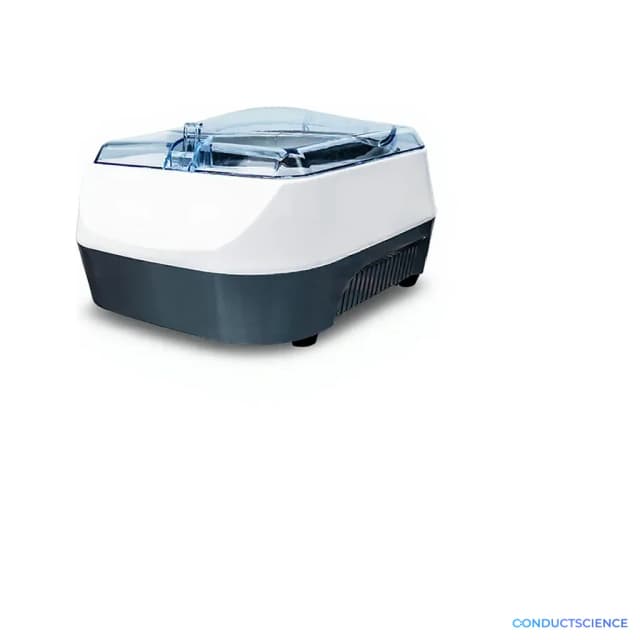
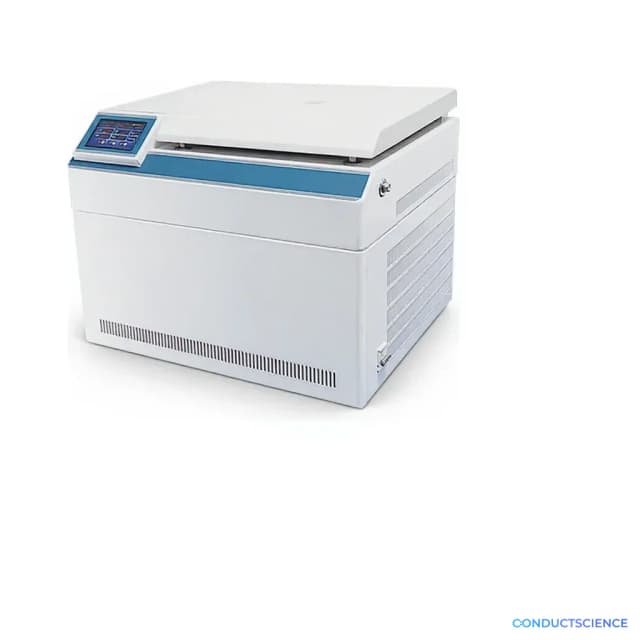
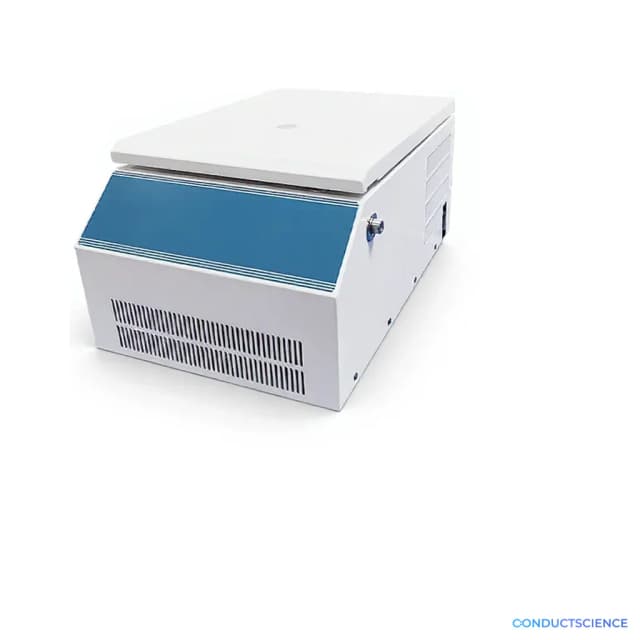
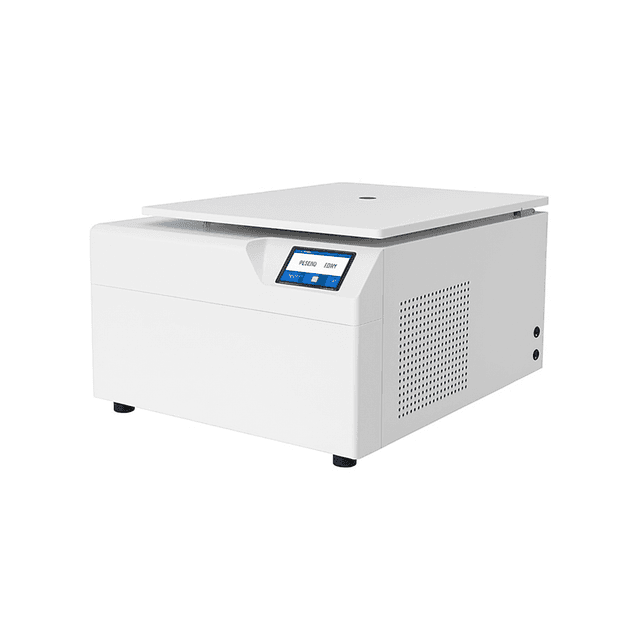
Table Top Low Speed Centrifuge
Tabletop low-speed centrifuge operating up to 5000 rpm and 3962×g with swing rotor design for 4×300ml capacity sample processing in research laboratories.

Louise Corscadden, PhD
Director of Science · ConductScience
Ask Louise about Table Top Low Speed Centrifuge fit, setup, configuration, or quote prep.
Already working with us? Sign in to connect this with My Scientist.
Key Specifications
Full details →- Model fit
- Configured during quote
- SKU family
- BIO-0281
- Shipping box
- 41.0 x 43.0 x 56.5 cm
- Ordering
- Online checkout and quote request available
- Category
- Centrifuges
- Build notes
- Confirm accessories, station layout, and support needs before purchase
The is a tabletop low-speed centrifuge designed for routine sample processing in research and analytical laboratories. Operating at maximum speeds up to 5000 rpm with relative centrifugal force up to 3962×g, this unit provides reliable separation capabilities for biological samples, chemical preparations, and analytical procedures requiring moderate centrifugal force.
The centrifuge features a swing rotor configuration with capacity for 4×300ml samples, making it suitable for medium-volume processing applications. Speed precision of ±10 rpm ensures consistent separation results, while the time range from 1 second to 99 hours 59 minutes accommodates both brief spin-downs and extended protocols. Operational noise levels ≤65 dB(A) support use in shared laboratory environments without excessive acoustic interference.
How It Works
Centrifugal separation operates on the principle of differential sedimentation under applied centrifugal force. When samples are rotated at high speed, particles experience centrifugal acceleration proportional to their mass, density difference from the medium, and the square of rotational velocity. This force causes denser particles to migrate radially outward while less dense components remain in suspension or migrate inward.
The swing rotor design allows sample tubes to pivot from vertical to horizontal position during acceleration, creating a uniform force vector across the sample volume. This configuration maximizes separation efficiency and produces well-defined pellets at the tube bottom. The centrifugal force generated at maximum speed (3962×g) provides sufficient acceleration to pellet most cellular materials, precipitates, and suspended particles while maintaining gentle handling of biological samples.
Speed precision of ±10 rpm ensures reproducible centrifugal force application across repeated runs, critical for quantitative protocols requiring consistent separation parameters. The extended time range capability accommodates protocols requiring brief pulse spins for sample mixing as well as extended runs for complete sedimentation of fine particles.
Features & Benefits
Automation Level
- manual
Max speed
- 5,000 rpm
Max.Capacity
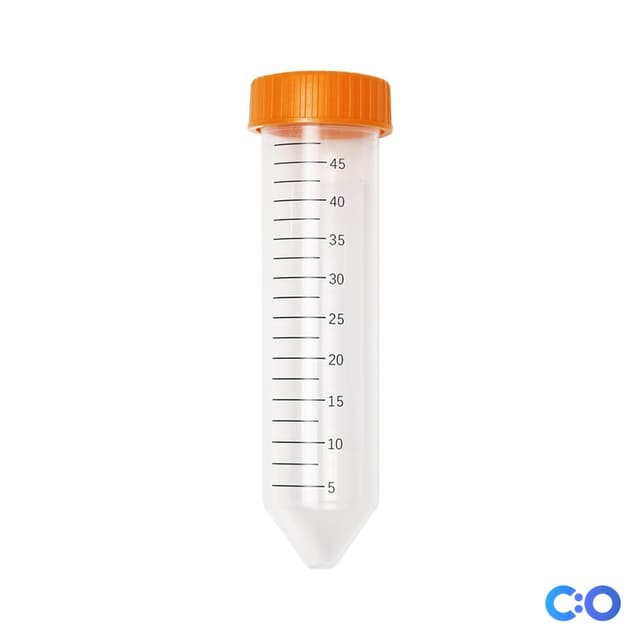
- 4*300ml
Speed Precision
- ±10rpm
Time Range
- 1s~99h59min/Continuous/Short-span
Noise
- ≤65dB(A)
External Size(L*W*H)
- 430*565*410mm
Package Size(L*W*H)
- 596*736*650mm
Type
- NO.
Max. RCF(×g)
- Adapters
Swing Rotor
- 5M00024
Brand
- ConductScience
Research Domain
- Analytical Chemistry
- Cell Biology
- Clinical Diagnostics
- Environmental Monitoring
- Microbiology
- Pharmaceutical QC
Weight
- 55kg(220V), 60kg(110V)
Capacity
- Max. Speed(r/min)
Max force
- 3,962 ×g
Shipping weight
- 43.0 lb
Shipping box
- L: 41.0 cm
- W: 43.0 cm
- H: 56.5 cm
| Feature | This Product | Typical Alternative | Advantage |
|---|---|---|---|
| Maximum Speed | 5000 rpm | Entry-level models often limited to 3000-4000 rpm | Higher speed capability enables faster processing times and improved separation efficiency for routine protocols |
| Maximum RCF | 3962×g | Basic tabletop models typically provide 2000-3000×g | Higher centrifugal force ensures complete pelleting of cellular materials and fine particles in biological samples |
| Sample Capacity | 4×300ml | Compact models often limited to smaller tube capacities | Larger volume capacity increases throughput for medium-scale sample processing without requiring multiple runs |
| Speed Precision | ±10 rpm | Basic models may have wider speed tolerances | Precise speed control ensures reproducible centrifugal force for quantitative protocols requiring consistent separation parameters |
| Time Range | 1s to 99h59min with continuous operation | Limited timer ranges or shorter maximum run times | Extended time capability accommodates both brief pulse spins and lengthy unattended protocols without interruption |
| Noise Level | ≤65 dB(A) | Higher noise levels common in comparable speed ranges | Quieter operation enables use in shared laboratory spaces without excessive acoustic disruption |
The BKC-TL5B provides higher speed and force capabilities than entry-level tabletop centrifuges while maintaining quiet operation and precise speed control. The 4×300ml swing rotor capacity and extended time range support both routine and specialized protocols requiring consistent, reproducible separation performance.
Practical Tips
Verify speed accuracy periodically using a calibrated tachometer or speed verification system to ensure ±10 rpm precision is maintained.
Why: Speed accuracy directly affects centrifugal force calculations and protocol reproducibility
Clean the rotor and sample chambers after each use, paying particular attention to removing any sample residue that could cause imbalance.
Why: Sample residue accumulation can create dangerous imbalances and affect separation performance
Always balance samples using either matched sample pairs or balance tubes filled with equivalent volumes of water or buffer.
Why: Proper balance prevents excessive vibration and extends equipment lifespan while ensuring safe operation
If excessive vibration occurs, immediately stop operation and check sample balance, rotor installation, and tube integrity.
Why: Vibration indicates potential safety hazards and can damage both samples and equipment if not corrected
Record actual centrifugation parameters (speed, time, temperature if applicable) for each run to ensure protocol reproducibility.
Why: Documentation enables troubleshooting of separation issues and ensures consistent results across experiments
Never open the lid during operation and always wait for complete rotor stop before accessing samples.
Why: Safety interlocks prevent access during rotation, but complete stop ensures safe sample handling
Use appropriate tube materials rated for the centrifugal forces being applied, especially for maximum speed operations.
Why: Tube failure under centrifugal force can cause dangerous projectiles and sample loss
Inspect rotor bucket hinges and locking mechanisms regularly for wear or damage that could affect swing operation.
Why: Proper swing rotor function is essential for optimal separation and safe operation at rated speeds
Setup Guide
What’s in the Box
- BKC-TL5B centrifuge main unit
- Swing rotor assembly
- Power cord (110V or 220V configuration)
- User manual and operation instructions
- Safety documentation and compliance certificates (typical)
- Sample tube adapters (typical)
Warranty
ConductScience provides standard one-year manufacturer warranty covering defects in materials and workmanship, with technical support for operational guidance and troubleshooting assistance.
Compliance
What is the maximum sample volume and how should tubes be balanced?
The swing rotor accommodates 4×300ml samples with maximum capacity. Load tubes in opposing positions to maintain balance, ensuring total weight is distributed evenly across all positions to prevent vibration and ensure safe operation.
What types of samples can be processed at maximum speed and force?
At 5000 rpm (3962×g), the unit can pellet most cellular materials, bacterial suspensions, protein precipitates, and suspended particles. Consult product datasheet for specific sample compatibility and recommended protocols for sensitive biological materials.
How precise is the speed control for reproducible protocols?
Speed precision is maintained at ±10 rpm across the operational range, providing consistent centrifugal force application for quantitative protocols requiring reproducible separation parameters.
Can the centrifuge operate unattended for extended protocols?
Yes, the time range extends to 99 hours 59 minutes with continuous operation capability, allowing unattended processing for lengthy protocols while maintaining safe operational parameters.
What are the power requirements and noise considerations?
The unit operates on 110V or 220V power (specified at purchase) and maintains ≤65 dB(A) noise levels, suitable for shared laboratory environments without excessive acoustic interference.
How does this compare to fixed-angle rotors for sample processing?
The swing rotor design creates horizontal tube orientation during centrifugation, producing well-defined pellets and maximizing separation efficiency compared to fixed-angle rotors, particularly beneficial for cell culture and analytical applications.
What maintenance is required for consistent performance?
Regular maintenance includes rotor cleaning, balance verification, and periodic calibration checks. Consult product datasheet for specific maintenance schedules and procedures to ensure continued operational accuracy.
Have a question about this product?
Have a question? Just ask.
Send it over and we'll email you a personalized answer — no call, no scheduling.
Prefer to talk it through?
Replacement Parts & Consumables