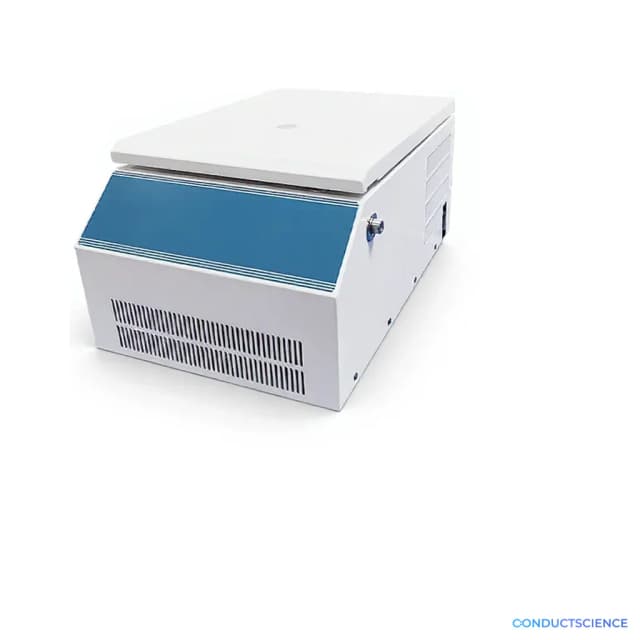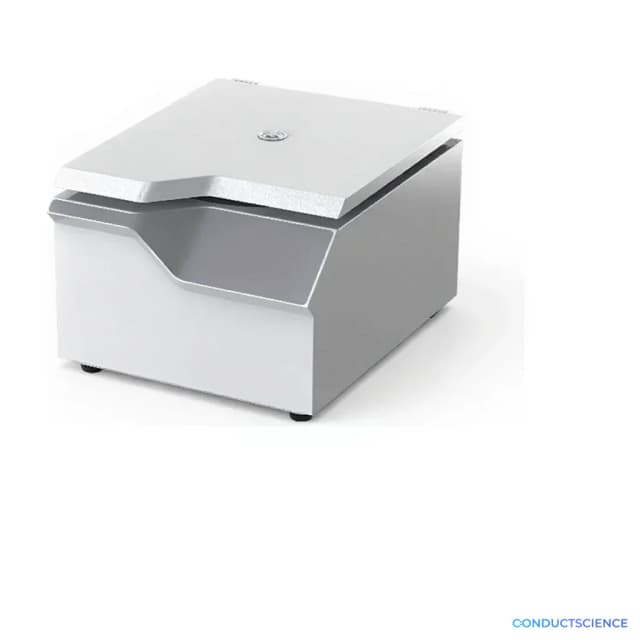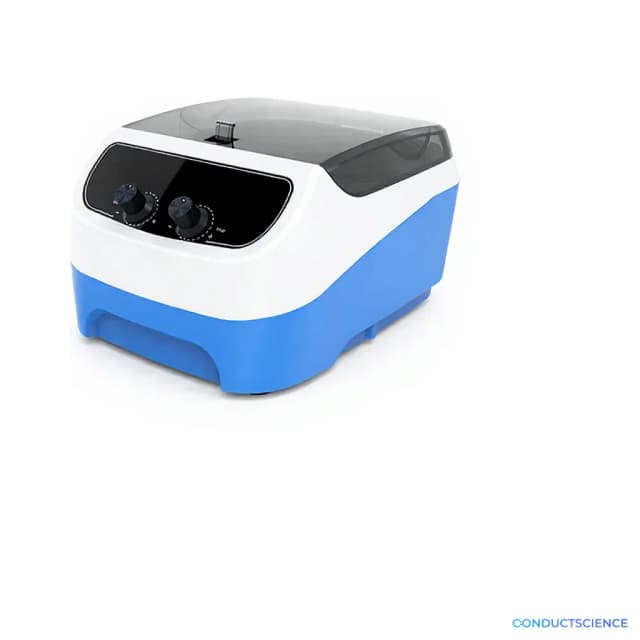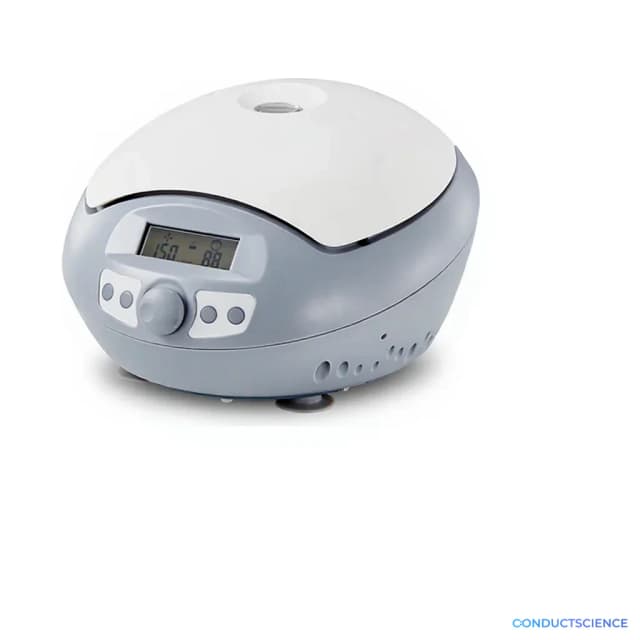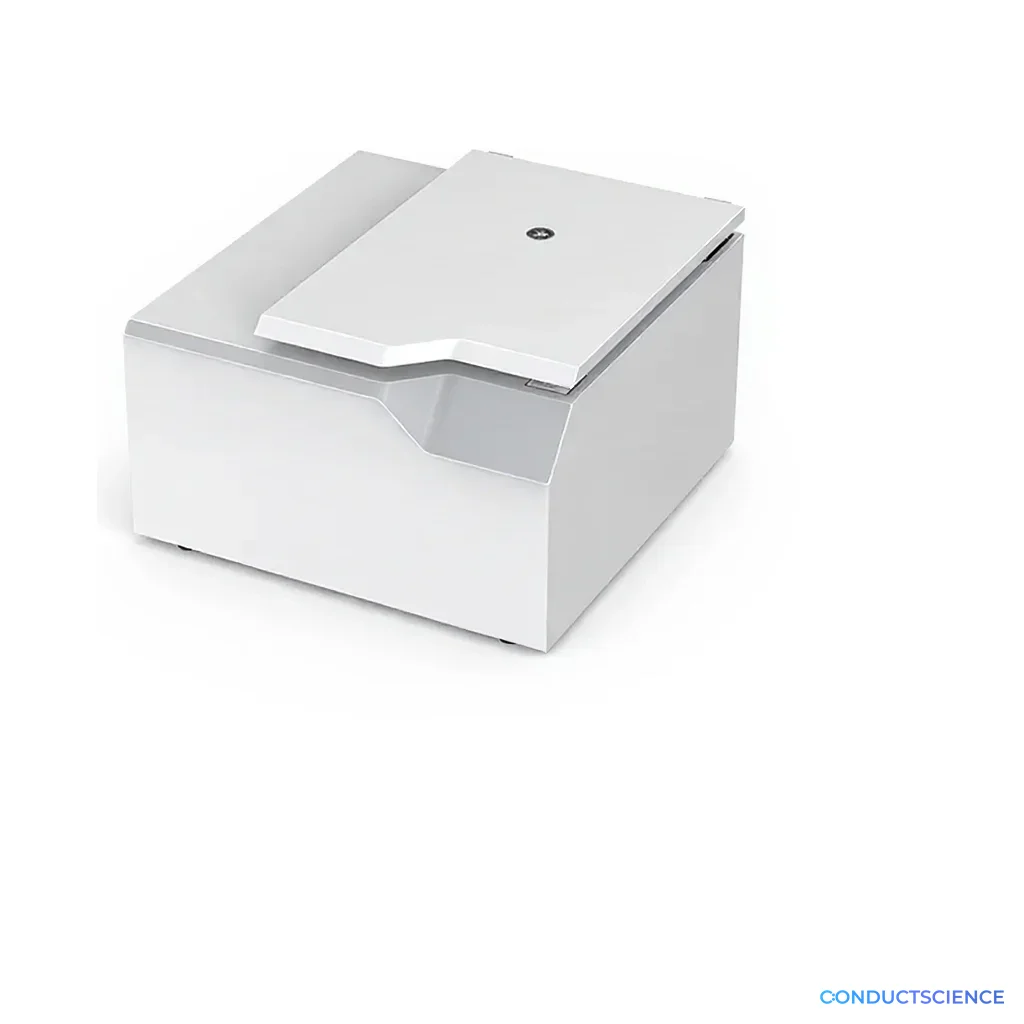
Table Top High Speed Refrigerated Centrifuge
High-speed refrigerated benchtop centrifuge reaching up to 18,800 rpm and 26,870×g with temperature control from −20°C to 40°C for temperature-sensitive sample processing.

Louise Corscadden, PhD
Director of Science · ConductScience
Ask Louise about Table Top High Speed Refrigerated Centrifuge fit, setup, configuration, or quote prep.
Already working with us? Sign in to connect this with My Scientist.
Key Specifications
Full details →- Model fit
- Configured during quote
- SKU family
- BIO-BKC-TH18R
- Shipping box
- 38.0 x 60.0 x 56.0 cm
- Ordering
- Online checkout and quote request available
- Category
- Centrifuges
- Build notes
- Confirm accessories, station layout, and support needs before purchase
The Table Top High Speed Refrigerated Centrifuge is a laboratory-grade centrifugal separation system designed for temperature-controlled processing of biological samples. This benchtop unit achieves maximum speeds of 18,800 rpm with centrifugal force up to 26,870×g, while maintaining precise temperature control from −20°C to 40°C throughout the separation process.
Compatible with twelve rotor configurations spanning 0.2 ml PCR strip tubes to 10 ml conical tubes, with speed precision of ±10 rpm and temperature accuracy of ±1°C. The integrated refrigeration system prevents thermal degradation of temperature-sensitive samples during high-speed centrifugation, making it suitable for protein purification, nucleic acid extraction, cell pelletization, and PCR product cleanup.
Specifications
| Parameter | Value |
|---|---|
| Max. Speed | 18,800 rpm |
| Max. RCF | 26,870×g |
| Max. Capacity | 12 × 10 ml |
| Speed Precision | ±10 rpm |
| Temperature Range | −20°C to 40°C |
| Temperature Accuracy | ±1°C |
| Timing Range | 1 s to 99 h 59 min 59 s / jog |
| Noise Level | ≤58 dB |
| Power Supply | AC 220V, 50/60 Hz (standard); AC 110V, 50/60 Hz (optional) |
| Dimensions (W×D×H) | 615 × 380 × 330 mm |
| Net Weight | 57 kg |
Rotor Compatibility
| Rotor | Capacity | Max. Speed (rpm) | Max. RCF (×g) |
|---|---|---|---|
| H0.512 | 12 × 0.5 ml | 18,800 | 18,967 |
| H0.524 | 24 × 0.5 ml | 18,800 | 26,870 |
| H0212 | 12 × 1.5/2.2 ml | 18,800 | 26,870 |
| H0224 | 24 × 1.5/2.2 ml | 15,800 | 24,365 |
| H0512 | 12 × 5 ml | 16,000 | 19,462 |
| H0612 | 12 × 5 ml cryotubes | 13,000 | 16,155 |
| H0712 | 12 × 5 ml vacuum blood tubes | 8,000 | 7,119 |
| H1012 | 12 × 10 ml | 13,500 | 17,645 |
| H0.548 | 48 × 0.5 ml | 13,000 | 14,737 |
| H0.232 | 4 × 8 × 0.2 ml PCR strip | 13,500 | 14,059 |
| H0.264 | 8 × 8 × 0.2 ml PCR strip | 13,000 | 14,926 |
| H0.136 | Capillary rotor 36 × 1.75×75 mm | 12,000 | 16,904 |
How It Works
Centrifugal separation operates on the principle of applying centrifugal force to accelerate the natural settling of particles based on their density differences. The rotor spins samples at high angular velocities, creating centrifugal force that can be thousands of times greater than gravitational force. Denser particles migrate toward the bottom of the tube while less dense components remain in the supernatant.
The integrated refrigeration system uses a compressor-based cooling circuit to maintain precise temperature control during operation. This prevents thermal denaturation of proteins, maintains enzyme activity, and preserves sample integrity during extended centrifugation runs. The temperature control system can maintain conditions from -20°C to 40°C with continuous monitoring throughout the separation process.
Speed precision is maintained through electronic feedback control systems that monitor rotor velocity and adjust motor output to maintain the set speed within ±1% or ±30rpm. This precision ensures reproducible separations and consistent relative centrifugal force (RCF) calculations across experimental replicates.
Features & Benefits
Shipping weight
- 76.0 lb
Shipping box
- L: 38.0 cm
- W: 60.0 cm
- H: 56.0 cm
| Feature | This Product | Typical Alternative | Advantage |
|---|---|---|---|
| Maximum Centrifugal Force | 20,878×g at 16,000 rpm | Entry-level models typically offer 15,000-18,000×g maximum force | Higher RCF enables more efficient separation of dense particles and subcellular components in shorter processing times. |
| Temperature Range | -20°C to 40°C continuous control | Many benchtop units offer limited cooling to 4°C only | Extended sub-zero capability preserves enzyme activity and prevents degradation of temperature-sensitive samples during long runs. |
| Sample Capacity | 6×100ml maximum capacity | Smaller units often accommodate 4×50ml or fewer samples | Higher sample throughput reduces the number of centrifugation runs needed for batch processing workflows. |
| Speed Precision | ±1% or ±30rpm accuracy | Basic models may offer ±2-3% speed accuracy | Enhanced precision ensures reproducible RCF calculations and consistent separation results across experiments. |
| Noise Level | ≤65dB operational noise | High-speed centrifuges often operate at 70-75dB | Lower noise operation allows extended use in shared laboratory spaces without disrupting adjacent work areas. |
| Power Requirements | 1000W consumption with universal 110-220V compatibility | High-performance units may require 1500W or dedicated electrical circuits | Moderate power consumption and universal voltage compatibility simplifies laboratory installation requirements. |
This centrifuge combines high centrifugal force capability with precise temperature control in a compact benchtop format. The 20,878×g maximum RCF and sub-zero temperature capability provide performance typically found in larger floor models while maintaining moderate power consumption and noise levels suitable for shared laboratory environments.
Practical Tips
Verify speed accuracy monthly using a calibrated tachometer or strobe light, especially after moving the unit or rotor changes.
Why: Speed accuracy directly affects RCF calculations and separation reproducibility in quantitative protocols.
Clean the refrigeration coils quarterly and ensure adequate ventilation clearance to maintain cooling efficiency.
Why: Restricted airflow reduces cooling capacity and can lead to temperature control failures during operation.
Pre-cool tubes and samples to target temperature before loading to minimize thermal equilibration time and improve separation quality.
Why: Temperature gradients during centrifugation can create convection currents that disrupt clean pellet formation.
Always balance samples within 0.1g across opposing positions and never exceed the maximum tube volume specifications.
Why: Imbalanced loads create vibration that can damage bearings and compromise safety at high speeds.
If temperature control becomes erratic, check for ice buildup in the chamber and ensure door seals are intact.
Why: Poor chamber sealing allows moisture infiltration and ice formation that interferes with temperature sensors.
Record actual temperature and speed values from the display rather than set points for protocol documentation.
Why: Actual operating parameters may differ slightly from set points and provide more accurate method documentation.
Allow the rotor to reach thermal equilibrium at the target temperature before starting high-speed runs.
Why: Temperature gradients in the rotor can affect sample temperature uniformity and separation consistency.
Inspect rotor threads and seating surfaces regularly for wear or damage that could affect proper installation.
Why: Worn rotor interfaces can cause vibration, noise, and potential safety hazards during high-speed operation.
Setup Guide
What’s in the Box
- Table Top High Speed Refrigerated Centrifuge main unit
- Standard rotor (typical)
- Power cord
- User manual and operation guide
- Calibration certificate (typical)
- Safety instructions and compliance documentation (typical)
Warranty
ConductScience provides a standard one-year manufacturer warranty covering defects in materials and workmanship. Technical support includes installation guidance, operational training, and troubleshooting assistance throughout the warranty period.
Compliance
What is the minimum temperature achievable and how long does it take to reach -20°C from room temperature?
The system can maintain temperatures as low as -20°C. Cool-down time from room temperature depends on ambient conditions and sample load, but consult the product datasheet for specific thermal performance specifications.
Can this centrifuge accommodate different rotor types for various tube sizes?
The unit is designed with interchangeable rotor capability, though the standard configuration accommodates 6×100ml tubes. Consult the product datasheet for available rotor options and tube compatibility.
How is the speed accuracy verified and what calibration is required?
Speed precision is maintained at ±1% or ±30rpm through electronic control systems. Regular calibration procedures should follow manufacturer guidelines to maintain accuracy specifications.
What safety features prevent operation with unbalanced samples?
Consult the product datasheet for specific safety and imbalance detection features, as proper sample balancing is critical for safe high-speed operation.
Can the temperature be monitored and logged during extended runs?
The system maintains temperature control from -20°C to 40°C during operation. Consult the product datasheet for data logging capabilities and temperature monitoring interfaces.
What maintenance schedule is recommended for optimal performance?
Regular cleaning of the chamber and rotor, along with periodic calibration checks, are essential. Consult the user manual for detailed maintenance protocols and recommended service intervals.
How does this compare to fixed-angle versus swing-out rotor designs?
The separation efficiency and sample accessibility depend on rotor geometry. This unit's rotor configuration affects pellet formation and supernatant clarity in different ways depending on the specific rotor type installed.
Have a question about this product?
Have a question? Just ask.
Send it over and we'll email you a personalized answer — no call, no scheduling.
Prefer to talk it through?
Accessories
Enhance your setup with compatible accessories
Replacement Parts & Consumables

Frequently Bought Together