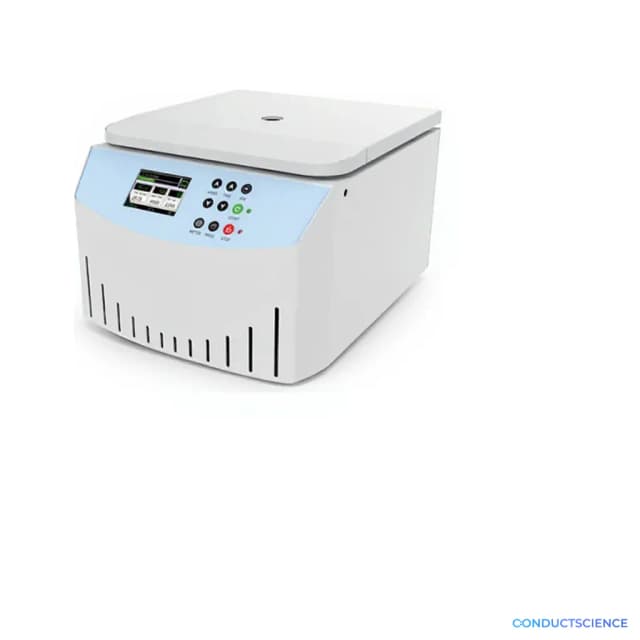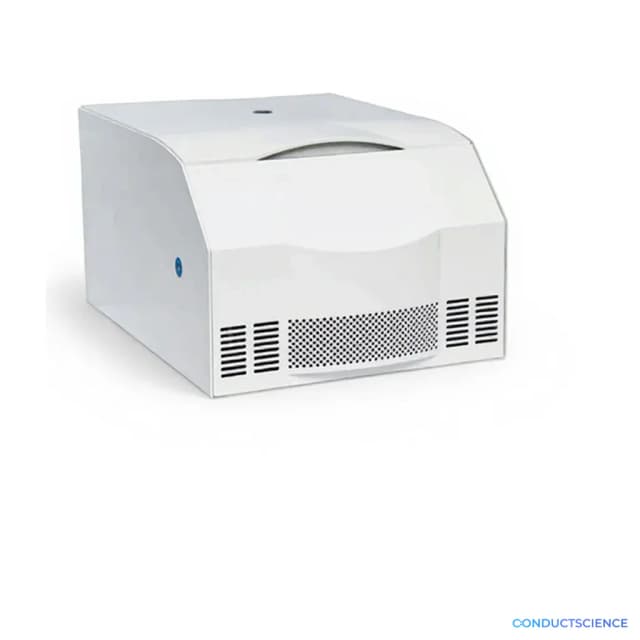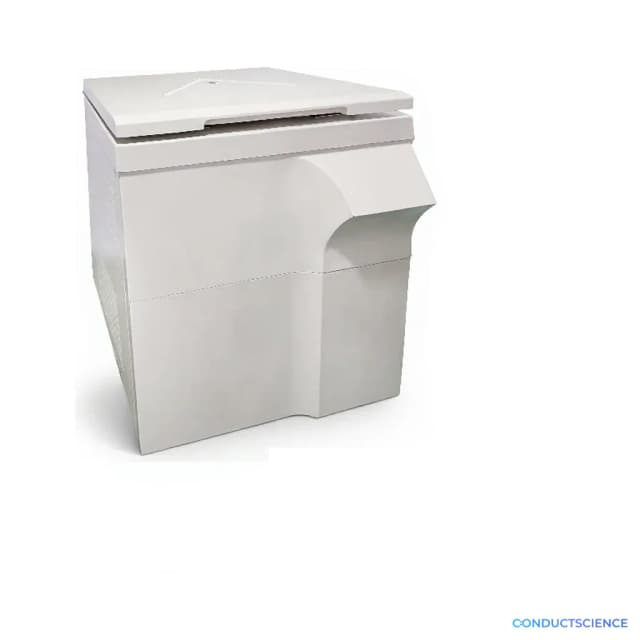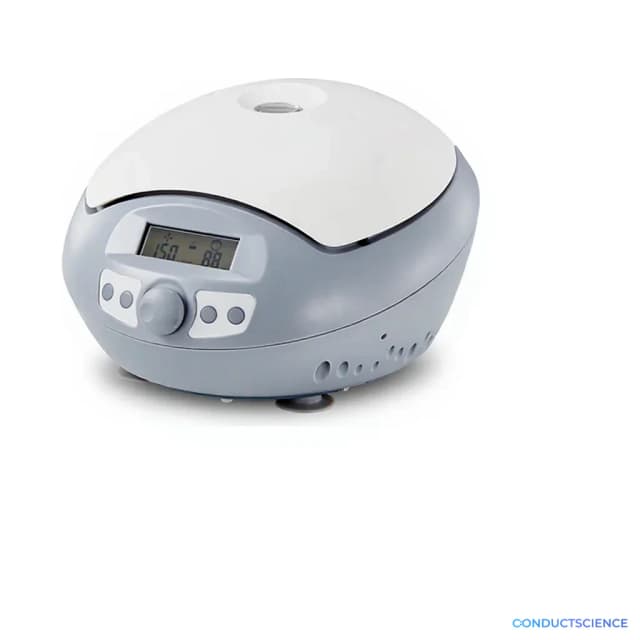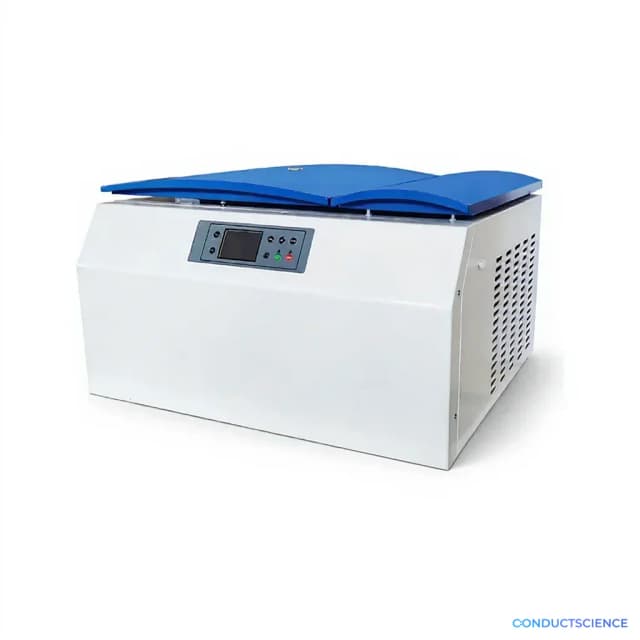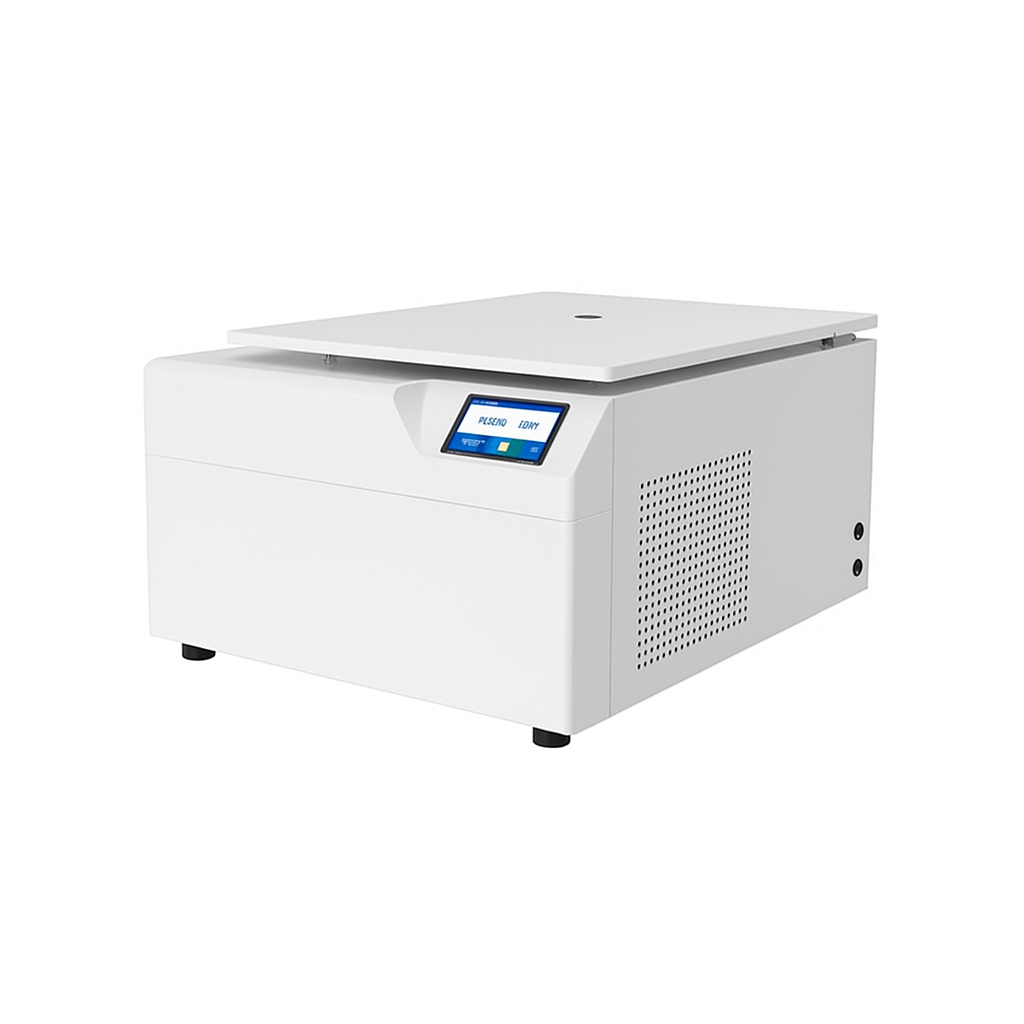
Table Top Low Speed Refrigerated Centrifuge TL6CR
Benchtop refrigerated centrifuge with 6000 rpm maximum speed, temperature control from -20°C to +40°C, and 4×500ml capacity for temperature-sensitive separation applications.

Louise Corscadden, PhD
Director of Science · ConductScience
Ask Louise about Table Top Low Speed Refrigerated Centrifuge TL6CR fit, setup, configuration, or quote prep.
Already working with us? Sign in to connect this with My Scientist.
Key Specifications
Full details →- Model fit
- Configured during quote
- SKU family
- BIO-0948
- Shipping box
- 44.5 x 78.5 x 67.0 cm
- Ordering
- Online checkout and quote request available
- Category
- Centrifuges
- Build notes
- Confirm accessories, station layout, and support needs before purchase
Table Top Low Speed Refrigerated Centrifuge BKC-TL6CR
Advanced laboratory centrifuge instrument for clinical, biological, genetic engineering, and immunology research. Provides refrigerated sample processing with speeds up to 6,000 rpm for precise separation and isolation tasks.
Key Features
- CFC-free compressor with environmentally friendly R404a refrigerant
- Temperature range: -20°C to +40°C, adjustable during operation
- Whole metal structure with multi-layer explosion-proof design
- Embedded microprocessor with DC brushless motor (maintenance-free)
- 5-inch LCD touch screen (Chinese/English) with real-time monitoring
- Electromechanical door lock with food-grade silicone sealing
- Self-test, blocking, overspeed, and overtemperature alarms
- Multiple user-defined programs with last-program boot capability
- Supports 20+ rotor configurations (0.1ml–500ml tubes)
- Optional automatic rotor recognition
Technical Specifications
| Parameter | Specification |
|---|---|
| Maximum Speed | 6,000 rpm |
| Speed Accuracy | ±10 rpm |
| Maximum RCF | 5,290×g |
| Capacity | 4×500ml |
| Temperature Range | -20°C to +40°C |
| Temperature Accuracy | ±1°C |
| Timing Range | 1 second–99 hours 59 minutes |
| Noise Level | ≤65 dB |
| Power Supply | AC 220V, 50/60Hz (AC 110V optional) |
| Dimensions | 785×670×445 mm (L×W×H) |
| Package Size | 815×915×850 mm |
| Net Weight | 105 kg |
| Gross Weight | 170-180 kg |
Rotor Options
Accommodates 20+ rotor configurations including:
- Swing Rotors: 48–96 positions for micro-tubes and blood collection tubes
- Angle Rotors: 6–24 positions for various tube sizes
- Auto Uncap Swing Rotor: For vacuum blood collection
- Microplate Rotor: 2×2×96 well capacity
- PRP Swing Rotor: Conventional syringe compatible
Maximum speeds vary by rotor type (2,361–6,000 rpm); RCF ranges from 2,361–5,290×g.
Applications
- Clinical laboratory analysis
- Biological and genetic research
- Immunology studies
- Sample separation and isolation
- Blood processing and separation
- Water treatment analysis
How It Works
Centrifugal separation operates on the principle of applying centrifugal force to samples, causing particles of different densities to separate based on their sedimentation rates. As the rotor spins, particles experience a force proportional to their mass, the square of the angular velocity, and their distance from the axis of rotation. Denser particles migrate toward the bottom of the tube while lighter components remain in the supernatant.
The refrigeration system maintains precise temperature control by circulating coolant through the rotor chamber, preventing thermal damage to temperature-sensitive samples during separation. Temperature regulation is critical for maintaining protein structure, enzyme activity, and cell viability during processing. The combination of controlled centrifugal force and temperature creates optimal conditions for reproducible separations.
Speed accuracy of ±10 rpm ensures consistent relative centrifugal force calculations, while temperature accuracy of ±1°C maintains sample integrity throughout the separation process. The timing system provides flexible operation modes to accommodate different separation requirements.
Features & Benefits
Shipping weight
- 105.0 lb
Shipping box
- L: 44.5 cm
- W: 78.5 cm
- H: 67.0 cm
| Feature | This Product | Typical Alternative | Advantage |
|---|---|---|---|
| Maximum Speed | 6000 rpm | Entry-level models often offer 3000-4000 rpm maximum | Higher speed capability enables faster separation times and increased flexibility for diverse sample types |
| Temperature Range | -20°C to +40°C | Basic refrigerated models typically offer 4°C to ambient range only | Extended low-temperature capability enables processing of frozen samples and temperature-critical separations |
| Maximum Volume | 4×500ml | Compact models often limit capacity to 4×250ml or smaller tubes | Larger sample volume capability increases throughput and accommodates standard laboratory sample sizes |
| Speed Accuracy | ±10 rpm | Standard models may offer ±20-50 rpm accuracy | Precise speed control ensures reproducible RCF calculations and consistent separation results |
| Temperature Accuracy | ±1°C | Basic refrigerated units often specify ±2-3°C accuracy | Tight temperature control maintains sample integrity and enables precise temperature-dependent separations |
| Timing Flexibility | 1 second to 99 hours 59 minutes | Standard models typically offer limited timing ranges | Extended timing options support both quick processing and overnight separations without operator intervention |
This centrifuge combines high-precision temperature control with flexible speed and timing options in a compact benchtop format. The extended temperature range to -20°C and precise ±1°C accuracy provide capabilities typically found in larger floor models.
Practical Tips
Verify speed and temperature accuracy monthly using calibrated instruments, especially after power outages or transport.
Why: Maintains measurement accuracy and ensures reproducible separation conditions for consistent results.
Clean the rotor chamber and door seals weekly to prevent sample cross-contamination and maintain temperature stability.
Why: Prevents buildup of contaminants that can affect both sample purity and cooling efficiency.
Pre-chill tubes and samples when performing separations below 4°C to minimize thermal shock and reduce cooling time.
Why: Prevents temperature fluctuations that can affect separation quality and reduces wear on the refrigeration system.
Always ensure proper tube balancing within manufacturer specifications before operation, especially at maximum speed.
Why: Prevents rotor damage, excessive vibration, and potential safety hazards during high-speed operation.
If temperature control becomes unstable, check door seal integrity and ensure adequate ventilation clearance around the unit.
Why: Poor sealing or restricted airflow are common causes of refrigeration system inefficiency and temperature fluctuations.
Record actual speed and temperature readings for each run when precise separation conditions are critical for reproducibility.
Why: Documentation enables troubleshooting of inconsistent results and supports protocol validation requirements.
Allow 15-20 minutes warm-up time after extended shutdown to ensure stable temperature control before critical separations.
Why: Ensures the refrigeration system reaches thermal equilibrium for accurate temperature control throughout the run.
Schedule annual refrigeration system service including coolant level check and condenser cleaning.
Why: Prevents gradual cooling performance degradation and extends equipment lifespan through proper system maintenance.
Setup Guide
What’s in the Box
- Table top refrigerated centrifuge main unit
- Power cord (voltage-specific)
- User manual and documentation
- Rotor (typical)
- Sample tube adapters (typical)
- Calibration certificate (typical)
Warranty
ConductScience provides a standard one-year manufacturer warranty covering parts and labor, with technical support available for troubleshooting and maintenance guidance.
Compliance
What is the cooling time required to reach -20°C from room temperature?
Consult product datasheet for specific cooling rates and time-to-temperature specifications, as these depend on ambient conditions and sample load.
Can the centrifuge accommodate different rotor types for various tube sizes?
The unit is designed for rotor compatibility, though specific rotor options and tube size accommodations should be verified with the manufacturer's rotor specifications.
How does the refrigeration system affect operational noise levels?
The unit maintains ≤65dB operational noise including refrigeration system operation, suitable for standard laboratory environments.
What is the recommended balancing tolerance for samples?
Consult the user manual for specific balancing requirements, which vary by rotor type and operational speed to ensure safe operation and optimal separation.
Does the unit provide data logging or connectivity options?
Consult product specifications for available data recording, connectivity, and documentation features for your specific workflow requirements.
What maintenance schedule is recommended for optimal performance?
Regular maintenance includes cleaning, calibration verification, and refrigeration system service according to manufacturer guidelines and usage frequency.
How does this compare to non-refrigerated centrifuges for routine applications?
Refrigerated models prevent thermal damage during extended runs and enable temperature-controlled separations, essential for heat-sensitive samples but with higher power consumption and complexity.
Have a question about this product?
Have a question? Just ask.
Send it over and we'll email you a personalized answer — no call, no scheduling.
Prefer to talk it through?
Replacement Parts & Consumables