ConductScience Deep Well Plates, 96-Well, 1.0mL, Round Well (Case of 10)
$95.00 per unit | 10 units per pack Bulk pricing: Case of 10 at $950.00 ($95.00 per unit)

Louise Corscadden, PhD
Director of Science · ConductScience
Ask Louise about ConductScience Deep Well Plates, 96-Well, 1.0mL, Round Well (Case of 10) fit, setup, configuration, or quote prep.
Already working with us? Sign in to connect this with My Scientist.
Key Specifications
Full details →- Model fit
- Configured during quote
- SKU family
- CS-DWP-96R-25
- Shipping box
- 96.0 x 39.37 x 25.0 cm
- Ordering
- Online checkout and quote request available
- Category
- General Labware
- Build notes
- Confirm accessories, station layout, and support needs before purchase
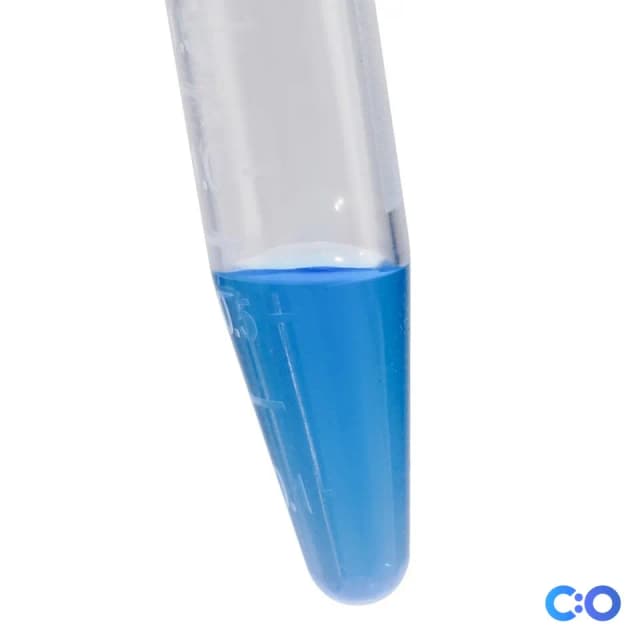
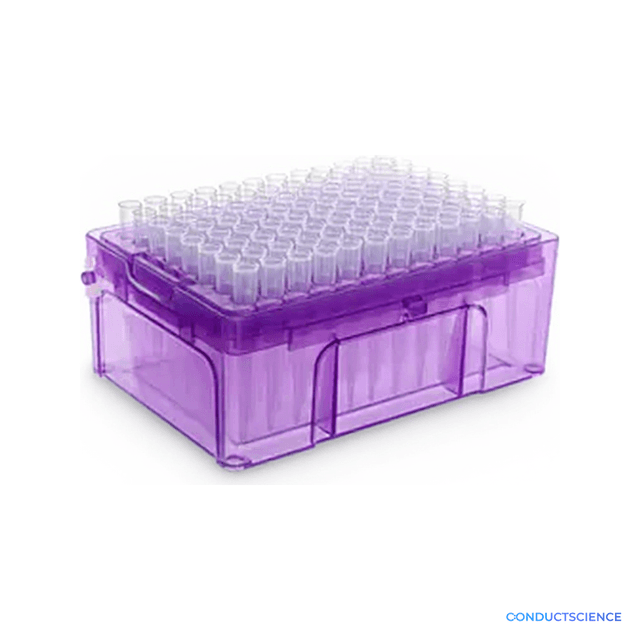
The ConductScience Deep Well Plates feature 96 round wells with 1.0mL capacity per well, manufactured from polypropylene for chemical resistance and autoclave compatibility. The U-bottom well geometry facilitates efficient mixing and complete liquid recovery, critical for quantitative analytical workflows. These plates conform to standard SBS footprint dimensions for compatibility with automated liquid handling systems, multichannel pipettes, and plate readers.
The round well design minimizes dead volume while providing optimal surface area for sample processing applications requiring larger volumes than standard microplates. Autoclavable construction enables sterilization for sterile cell culture applications or decontamination protocols. The deep well format accommodates sample preparation workflows requiring extended incubation times, multiple reagent additions, or high-volume processing steps.
How It Works
Deep well plates function as multi-well reaction vessels that extend the volume capacity beyond standard microplates while maintaining the 96-well SBS format for automation compatibility. The 1.0mL well capacity allows for sample preparation protocols requiring larger reagent volumes, extended incubation times, or multiple addition steps that would exceed the capacity of standard 200μL microplates.
The U-bottom well geometry creates a curved well bottom that facilitates complete liquid recovery during pipetting operations and promotes efficient mixing when used with orbital shakers or magnetic stirring systems. This design minimizes dead volume and ensures quantitative sample transfer, critical for applications requiring precise volume measurements or complete sample recovery.
Polypropylene construction provides chemical resistance to most organic solvents, acids, and bases commonly used in laboratory applications, while maintaining structural integrity during autoclave sterilization cycles at 121°C. The material properties allow for repeated freeze-thaw cycles without cracking, making these plates suitable for sample storage applications.
Features & Benefits
Research Domain
- Analytical Chemistry
- Cell Biology
- Environmental Monitoring
- Materials Science
- Microbiology
- Pharmaceutical QC
Shipping weight
- 559.16 lb
Shipping box
- L: 96.0 cm
- W: 39.37 cm
- H: 25.0 cm
| Feature | This Product | Typical Alternative | Advantage |
|---|---|---|---|
| Well Volume | 1.0mL capacity per well | Entry-level deep well plates often offer 500μL or 2.0mL options | Optimal balance between volume capacity and automation compatibility for most sample preparation workflows. |
| Well Geometry | U-bottom round wells | Square wells or V-bottom configurations vary by manufacturer | Round U-bottom design facilitates complete liquid recovery and efficient mixing compared to square geometries. |
| Material Construction | Autoclavable polypropylene | Some alternatives use non-autoclavable plastics | Enables sterilization protocols for sterile applications without compromising structural integrity. |
| Plate Format | Standard SBS 96-well format | Various formats including 24-well and 48-well configurations | 96-well format maximizes throughput while maintaining compatibility with standard laboratory automation. |
These deep well plates provide 1.0mL capacity with U-bottom geometry for optimal mixing and recovery, manufactured from autoclavable polypropylene for versatile laboratory applications. The standard SBS format ensures compatibility with existing automation systems while accommodating larger volume requirements than standard microplates.
Practical Tips
Pre-equilibrate plates to room temperature before use to prevent condensation and ensure accurate volume measurements.
Why: Temperature variations can affect plastic dimensions and create measurement artifacts in precision applications.
Inspect wells for stress cracks or deformation after multiple autoclave cycles, particularly around well edges.
Why: Repeated thermal cycling can cause material fatigue that may affect well integrity and volume accuracy.
Verify well volumes gravimetrically using distilled water at known temperature for critical quantitative applications.
Why: Manufacturing tolerances can result in well-to-well variation that impacts precision measurements.
Use appropriate plate carriers or holders when handling plates with liquid samples to prevent spills and cross-contamination.
Why: Deep wells contain larger volumes that create greater spillage risk during transport and handling.
Implement randomized sample placement across wells to minimize positional effects in quantitative assays.
Why: Thermal gradients and mechanical variations across the plate can introduce systematic errors in measurements.
If mixing appears incomplete, reduce orbital shaking speed and increase duration to prevent sample spillage while ensuring homogeneity.
Why: High shaking speeds can cause sample loss from deep wells while inadequate mixing affects assay reproducibility.
Setup Guide
What’s in the Box
- 25 individual 96-well deep well plates
- Product documentation and specifications (typical)
Warranty
ConductScience provides standard warranty coverage for manufacturing defects and material quality. Technical support is available for application guidance and troubleshooting.
Compliance
What is the actual working volume for quantitative applications?
While maximum capacity is 1.0mL, working volumes of 800-900μL are recommended to prevent overflow during mixing operations and allow for thermal expansion.
Can these plates withstand multiple autoclave cycles?
Yes, polypropylene construction maintains integrity through repeated autoclave cycles at 121°C, though extended high-temperature exposure may cause gradual dimensional changes.
Are these plates compatible with magnetic stirring systems?
The U-bottom geometry accommodates magnetic micro-stirrers for individual well mixing, though orbital shaking is typically more effective for uniform mixing across all wells.
What sealing options are recommended for volatile samples?
Use heat-sealable films or compression-fit plate covers designed for deep well plates to prevent evaporation during extended incubations.
How does well-to-well variation affect quantitative measurements?
Manufacturing tolerances typically result in <5% well volume variation, which should be considered for applications requiring high precision quantitative analysis.
Can these plates be used for long-term sample storage?
Polypropylene construction supports freeze-thaw cycles for sample storage, though appropriate sealing is essential to prevent contamination and evaporation.
Have a question about this product?
Have a question? Just ask.
Send it over and we'll email you a personalized answer — no call, no scheduling.
Prefer to talk it through?
Upgrade Options
Related Products