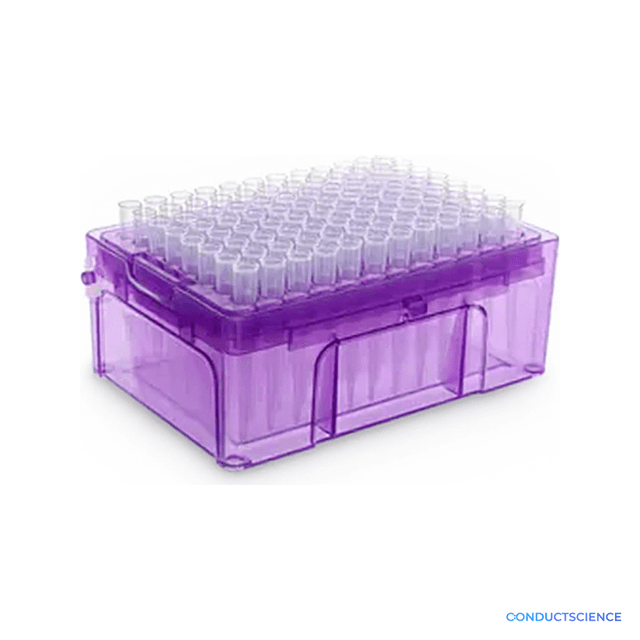
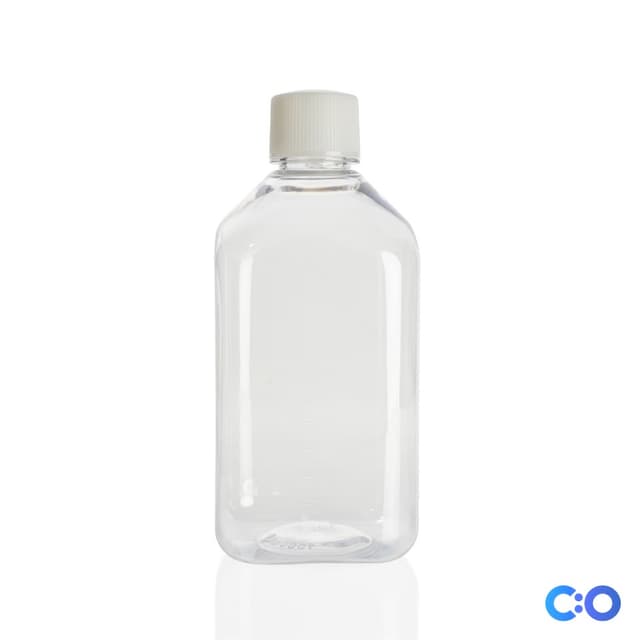
ConductScience Reagent Bottles, HDPE, 500mL (Pack of 20)
$28.00 per unit | 20 units per pack Bulk pricing: Pack of 20 at $560.00 ($28.00 per unit)

High-density polyethylene (HDPE) reagent bottles designed for safe storage and handling of laboratory chemicals and solutions. These 500mL bottles feature chemical-resistant construction and autoclavable design, making them suitable for sterilization workflows. The screw cap closure provides secure containment while allowing easy access to contents during routine laboratory procedures.
HDPE material offers excellent chemical compatibility with most acids, bases, and organic solvents commonly used in research environments. The bottles can withstand repeated autoclaving cycles at standard sterilization temperatures, enabling reuse in sterile applications. Clear visibility allows for easy identification of contents and volume monitoring during storage and dispensing operations.
How It Works
HDPE reagent bottles function as passive storage containers utilizing the chemical resistance properties of high-density polyethylene polymer. The molecular structure of HDPE provides resistance to chemical attack through its saturated hydrocarbon backbone, which lacks reactive sites that could interact with stored chemicals. This polymer exhibits particular resistance to acids, bases, and many organic solvents.
The screw cap closure creates a mechanical seal through thread engagement, providing containment while allowing controlled access to stored materials. HDPE's thermal stability enables the bottles to withstand autoclave sterilization temperatures (121°C at 15 psi) without deformation or degradation, allowing for repeated sterilization cycles in laboratory workflows requiring sterile conditions.
Features & Benefits
Research Domain
- Analytical Chemistry
- Cell Biology
- Clinical Diagnostics
- Environmental Monitoring
- Food Science
- Materials Science
- Microbiology
- Pharmaceutical QC
Weight
- 30.92 kg
Dimensions
- L: 43.2 mm
- W: 36.0 mm
- H: 28.8 mm
Comparison Guide
| Feature | This Product | Typical Alternative | Advantage |
|---|---|---|---|
| Material Chemical Resistance | HDPE construction resistant to acids, bases, and many organic solvents | Glass alternatives offer broader solvent compatibility but lack alkali resistance | Enables safe storage of fluoride-containing solutions and strong bases that would etch glass containers |
| Autoclave Compatibility | Designed for repeated autoclave sterilization at 121°C | Some plastic alternatives may deform or degrade under steam sterilization conditions | Supports sterile workflows requiring validated decontamination without container replacement |
| Break Resistance | HDPE construction provides impact resistance and flexibility | Glass bottles require careful handling and present breakage hazards | Reduces laboratory safety risks and cleanup requirements in high-throughput environments |
| Storage Volume | 500mL capacity for routine laboratory preparations | Available volumes range from 125mL to several liters depending on application needs | Optimal size for standard reagent preparations without excessive storage space requirements |
These HDPE reagent bottles provide chemical-resistant storage with autoclave compatibility and break resistance. The 500mL capacity serves routine laboratory needs while the screw cap design enables secure containment with easy access for repeated use.
Practical Tips
Loosen caps slightly during autoclave cycles to prevent vacuum formation and potential container collapse during cooling.
Why: Steam condensation creates negative pressure that can deform HDPE containers if caps are fully tightened.
Inspect bottles regularly for stress cracking, especially around the neck and cap threads after repeated use.
Why: Chemical exposure and thermal cycling can weaken HDPE over time, potentially leading to containment failure.
Always use secondary containment when storing corrosive chemicals, regardless of HDPE compatibility ratings.
Why: Secondary containment provides backup protection in case of unexpected chemical reactions or container failure.
Allow bottles to reach room temperature after autoclaving before adding chemicals to prevent thermal shock and volume measurement errors.
Why: Temperature differences can cause inaccurate volume dispensing and potential chemical reactions with hot containers.
If caps become difficult to remove, check for chemical deposits on threads and clean with appropriate solvents before forcing.
Why: Chemical crystallization on cap threads can create mechanical binding that may damage container integrity if forced.
Label bottles with chemical-resistant markers or tape to ensure identification remains legible throughout storage period.
Why: Many standard labels and inks can degrade when exposed to chemical vapors or autoclave conditions.
Setup Guide
What’s in the Box
- HDPE reagent bottle with screw cap (typical)
- Product identification label (typical)
Warranty
ConductScience provides standard product warranty covering manufacturing defects. Technical support available for application-specific compatibility questions and proper use protocols.
Compliance
What chemicals are incompatible with HDPE storage?
HDPE shows poor resistance to strong oxidizing agents, aromatic hydrocarbons, and halogenated solvents. Consult chemical compatibility charts for specific reagents before use.
How many autoclave cycles can these bottles withstand?
HDPE bottles typically withstand hundreds of autoclave cycles at standard conditions (121°C, 15 psi) before showing signs of degradation or deformation.
Are these bottles suitable for long-term storage of light-sensitive compounds?
Clear HDPE provides no UV protection. Light-sensitive compounds require amber bottles or storage in dark conditions to prevent photodegradation.
Can these bottles be used for cryogenic storage?
HDPE becomes brittle at cryogenic temperatures. These bottles are not recommended for liquid nitrogen or dry ice storage applications.
What is the maximum safe storage temperature?
HDPE maintains structural integrity up to approximately 80°C during continuous use, with brief exposures to 121°C during autoclaving.
How should I clean these bottles between different chemical uses?
Use appropriate laboratory detergents followed by thorough rinsing. For trace analysis applications, consider acid washing protocols specific to your analytical requirements.
Are graduated volume markings available on these bottles?
Consult product datasheet for availability of graduated versions. Standard reagent bottles typically have nominal volume capacity without precise measurement markings.
Have a question about this product?
Accessories
Enhance your setup with compatible accessories
Frequently Bought Together
Related Products