Individually Ventilated Cage System for Rats
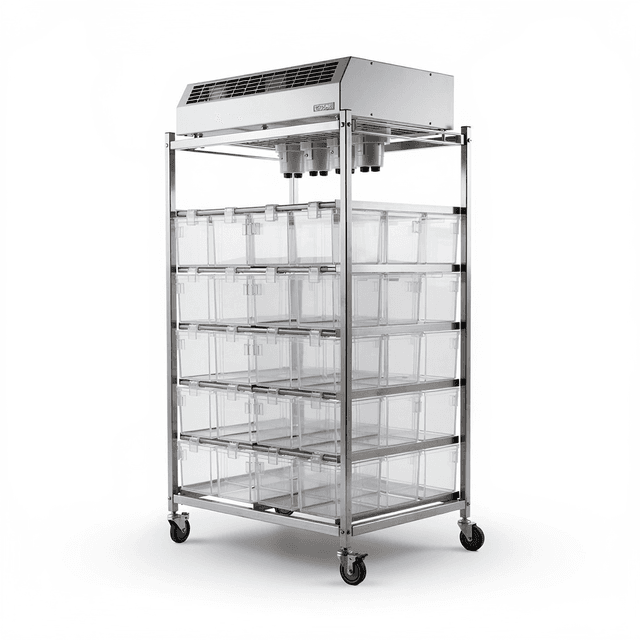
Individually ventilated cage system providing controlled environmental conditions for laboratory rat housing with independent air supply, HEPA filtration, and touchscreen-controlled management to prevent cross-contamination between cage units.
| Cage Dimensions | 464 x 300 x 150 mm |
| Cage Material | PC or PSU (configurable) |
| Rack Material | Stainless Steel SS304 |
| AHU Control | Touchscreen |
| Ventilation Type | Individual supply and exhaust per cage |
| Filtration | Primary + HEPA filters |
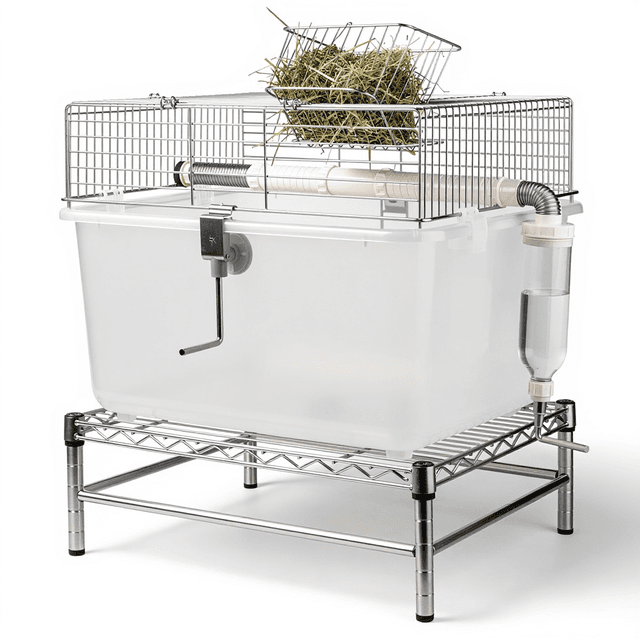
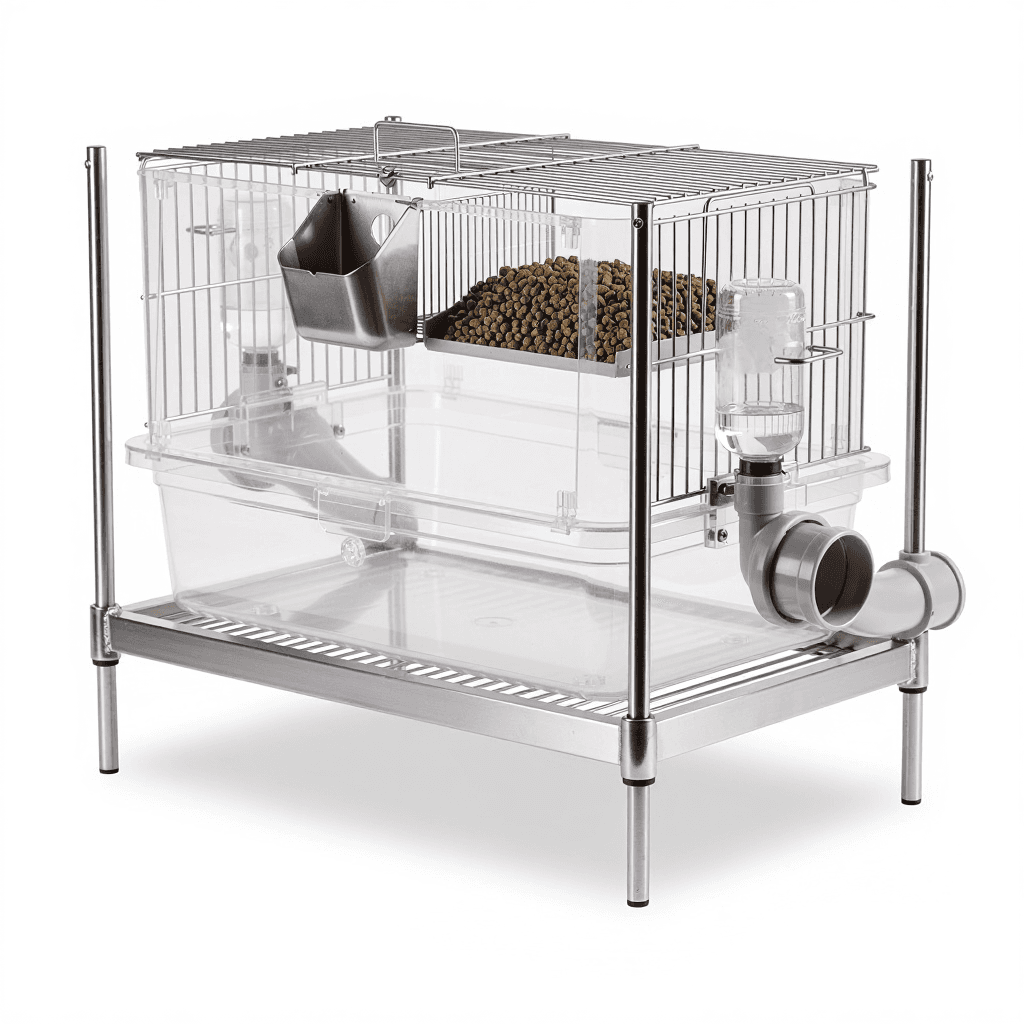
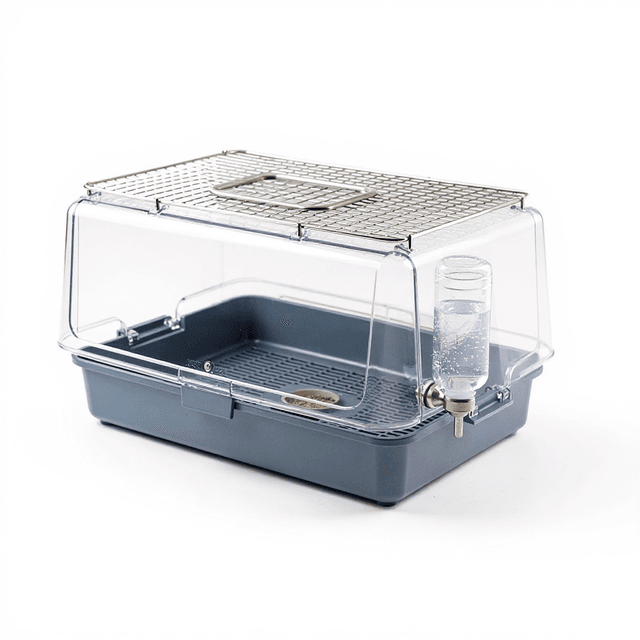
The Individually Ventilated Cage System for Rats provides controlled environmental conditions for laboratory rat housing through independent air supply and exhaust for each cage unit. This system addresses the critical need for contamination control and environmental standardization in rat research facilities. Each 464 x 300 x 150 mm polycarbonate or polysulfone cage receives filtered air through primary and HEPA filtration stages, preventing cross-contamination between housing units while maintaining consistent airflow parameters.
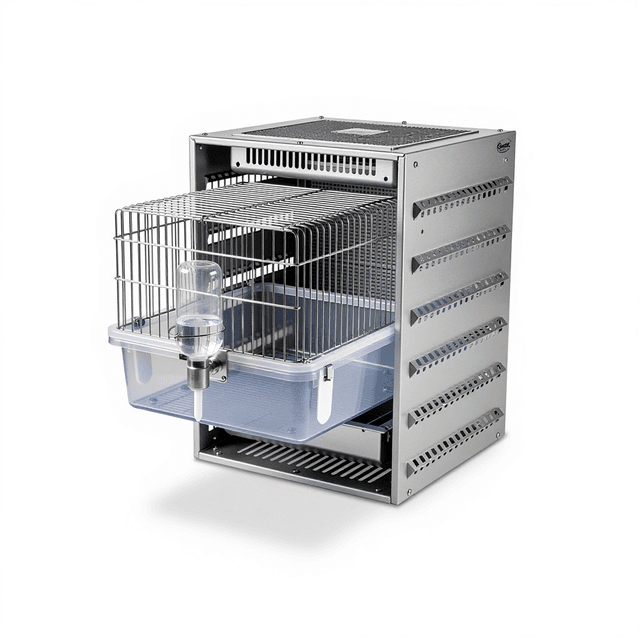
The system features stainless steel SS304 rack construction with touchscreen-controlled air handling unit management, enabling precise environmental control across multiple cage units. Individual ventilation architecture eliminates airborne pathogen transmission between cages, supporting research protocols where environmental variables must be controlled and animal welfare standards maintained. The system operates across 110V-250V power specifications and carries CE, ISO, and RoHS certifications for laboratory applications.
How It Works
The system operates on the principle of individual cage ventilation, where each cage unit receives independent air supply and exhaust flow. Air enters through a multi-stage filtration system consisting of primary pre-filters that remove larger particulates followed by HEPA filtration that captures particles ≥0.3 micrometers with high efficiency. This filtered air is distributed to each cage through dedicated supply ducts, creating positive pressure within the cage environment.
Exhaust air from each cage is removed through separate extraction points, preventing air mixing between cage units and eliminating cross-contamination pathways. The stainless steel rack structure provides structural support while facilitating airflow distribution through integrated ducting systems. Air handling unit operation is controlled through a touchscreen interface that manages fan speeds, pressure differentials, and filtration system monitoring.
Environmental control is achieved through precise regulation of air exchange rates, temperature, and humidity levels within each cage microenvironment. The system maintains consistent airflow patterns that remove ammonia, carbon dioxide, and other metabolic byproducts while delivering fresh, filtered air to support animal welfare and experimental consistency.
Features & Benefits
Cage Dimensions
- 464 x 300 x 150 mm
Cage Material
- PC or PSU (configurable)
Rack Material
- Stainless Steel SS304
AHU Control
- Touchscreen
Ventilation Type
- Individual supply and exhaust per cage
Filtration
- Primary + HEPA filters
Warranty
- 1 Year
Automation Level
- semi-automated
Brand
- ConductScience
Power/Voltage
- 110V-250V
Certifications
- CE, ISO, RoHS
Research Domain
- Addiction Research
- Aging Research
- Anxiety and Depression
- Behavioral Pharmacology
- Developmental Biology
- Immunology
- Learning and Memory
- Motor Function
- Neurodegeneration
- Neuroscience
- Pain Research
- Social Behavior
- Toxicology
Species
- Rat
Weight
- 140.0 lbs
Dimensions
- L: 65.0 in
- W: 32.0 in
- H: 82.0 in
Comparison Guide
| Feature | This Product | Typical Alternative | Advantage |
|---|---|---|---|
| Cage Dimensions | 464 x 300 x 150 mm standardized sizing | Basic systems often provide smaller cage volumes or non-standardized dimensions | Consistent cage sizing ensures reproducible housing conditions across studies and facilitates equipment standardization. |
| Filtration System | Primary and HEPA dual-stage filtration | Entry-level systems may use primary filtration only or basic air cleaning methods | Dual-stage filtration provides superior air quality control critical for sensitive research protocols and immunocompromised animal studies. |
| Control Interface | Touchscreen-controlled air handling unit management | Manual controls or basic digital displays are common in standard systems | Touchscreen interface enables precise parameter control and real-time monitoring essential for protocol documentation and regulatory compliance. |
| Rack Construction | Stainless steel SS304 construction | Powder-coated steel or basic stainless steel grades in budget systems | SS304 grade provides superior chemical resistance and durability for harsh cleaning protocols and extended service life. |
| Power Compatibility | 110V-250V universal power input | Single voltage configurations require region-specific models | Universal power compatibility simplifies international procurement and facility relocation without electrical modifications. |
| Material Options | Polycarbonate or polysulfone cage construction (configurable) | Fixed material selection limits application flexibility | Material selection flexibility accommodates diverse research requirements and chemical compatibility needs across different study protocols. |
This system provides comprehensive environmental control through individual cage ventilation, dual-stage filtration, and touchscreen management in a durable stainless steel framework. The combination of standardized cage dimensions, material flexibility, and universal power compatibility addresses diverse research facility requirements while maintaining consistent performance standards.
Practical Tips
Verify airflow rates at each cage position during initial setup and after filter changes using appropriate flow measurement equipment.
Why: Consistent airflow validation ensures uniform environmental conditions across all cage units and maintains research protocol integrity.
Monitor pressure differentials through the touchscreen interface and establish filter replacement schedules based on pressure drop measurements rather than fixed time intervals.
Why: Pressure-based maintenance scheduling optimizes filter life while ensuring consistent air quality and system performance.
Document environmental parameters and system settings for each research protocol to enable consistent conditions across studies and facilitate protocol replication.
Why: Standardized documentation supports regulatory compliance and enables accurate replication of experimental conditions in future studies.
Check individual cage ventilation connections if uneven airflow is observed, as loose connections can compromise contamination control effectiveness.
Why: Proper sealing at cage-manifold interfaces is critical for maintaining independent ventilation and preventing cross-contamination between units.
Establish baseline environmental monitoring data before introducing animals to document system performance and identify any deviations from specified parameters.
Why: Baseline documentation provides reference values for troubleshooting and demonstrates consistent environmental conditions for research validity.
Ensure proper electrical grounding and verify GFCI protection before system operation, particularly in high-humidity animal facility environments.
Why: Electrical safety precautions are essential in animal facilities where water exposure and humidity can create safety hazards for personnel and equipment.
Coordinate filter replacement schedules with facility maintenance windows to minimize disruption to ongoing research studies.
Why: Planned maintenance reduces the risk of unexpected system downtime that could compromise animal welfare and research continuity.
Clean stainless steel rack surfaces with appropriate sanitizing agents following manufacturer recommendations to prevent corrosion and maintain hygienic conditions.
Why: Proper cleaning protocols extend equipment life and maintain the controlled environment necessary for research applications.
Setup Guide
What’s in the Box
- Stainless steel SS304 rack assembly
- Polycarbonate or polysulfone cage units (quantity per configuration)
- Air handling unit with touchscreen controller
- Primary and HEPA filter elements
- Air distribution manifold and ductwork
- Power cables and electrical connections
- Installation and operation manual
- System validation documentation (typical)
Warranty
ConductScience provides a 1-year manufacturer warranty covering system components and technical support for installation, operation, and maintenance procedures. Extended warranty options and service contracts are available for continued system support.
Compliance
References
Background reading relevant to this product:
What air exchange rates does the system provide per cage unit?
Air exchange rates are controlled through the touchscreen interface and can be adjusted based on research protocol requirements. Consult product datasheet for specific flow rate ranges and pressure differential capabilities.
How often do the primary and HEPA filters require replacement?
Filter replacement frequency depends on facility air quality and system utilization. Primary filters typically require more frequent replacement than HEPA filters. Monitor pressure differentials through the control system to determine optimal replacement intervals.
Can the system accommodate different cage configurations or sizes?
The system is designed for 464 x 300 x 150 mm cages with options for polycarbonate or polysulfone construction. Rack configuration can be customized based on facility requirements, but cage dimensions are standardized for proper ventilation integration.
What environmental parameters can be monitored through the touchscreen interface?
The touchscreen controller manages air handling unit operations including fan speeds and system status monitoring. Specific environmental monitoring capabilities such as temperature, humidity, and pressure differential measurement depend on system configuration.
How does the system prevent cross-contamination between cage units?
Individual cage ventilation provides independent air supply and exhaust for each cage unit, preventing air mixing between cages. HEPA filtration removes airborne particulates and pathogens from supply air, while separate exhaust paths eliminate cross-contamination routes.
What cleaning and sanitization protocols are compatible with system components?
Stainless steel rack construction and polycarbonate/polysulfone cage materials support standard laboratory cleaning protocols. Consult product documentation for specific sanitization agent compatibility and recommended cleaning procedures for optimal system longevity.
Can the system integrate with facility building management systems?
Integration capabilities depend on specific system configuration and available communication protocols. Contact technical support to discuss facility integration requirements and available interface options for environmental monitoring systems.
Have a question about this product?
Accessories
Enhance your setup with compatible accessories
Frequently Bought Together