High-Density Mouse IVC Systems
High-density individually ventilated mouse housing for research programs that need cage-level airflow, organized colony access, and a room plan built around repeatable husbandry.
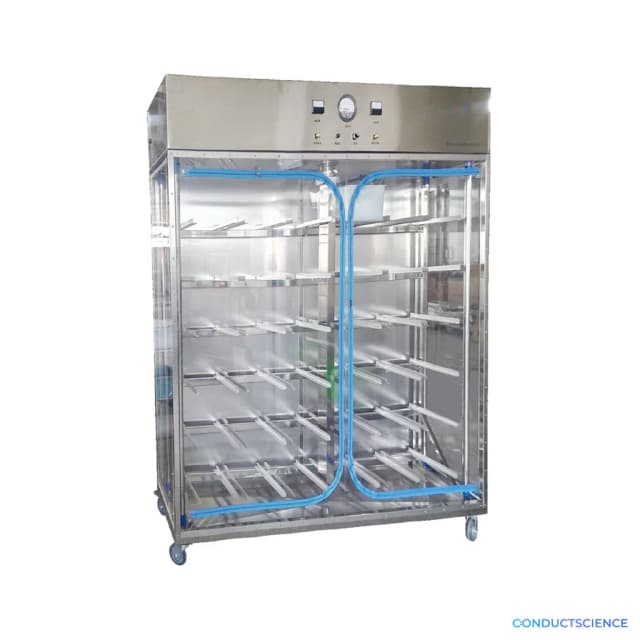
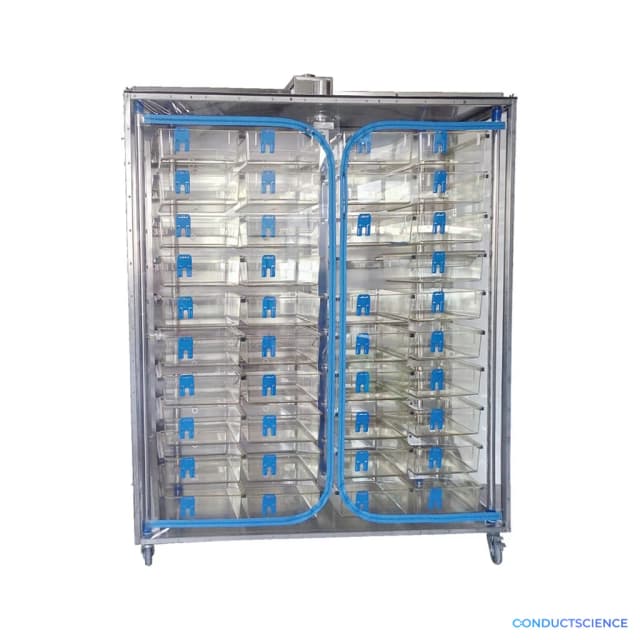
Choose the current touchscreen configuration for up to 126 cages or compare eight modular layouts from 60 to 180 cages, with exact cage and rack geometry kept in one quote workflow.

Louise Corscadden, PhD
Director of Science · ConductScience
Ask Louise about High-Density Mouse IVC Systems fit, setup, configuration, or quote prep.
Already working with us? Sign in to connect this with My Scientist.
Key Specifications
Full details →- Facility confirmation
- Power, supply and exhaust strategy, controls, alarms, installation, and commissioning confirmed in quote
- Modular cage dimensions
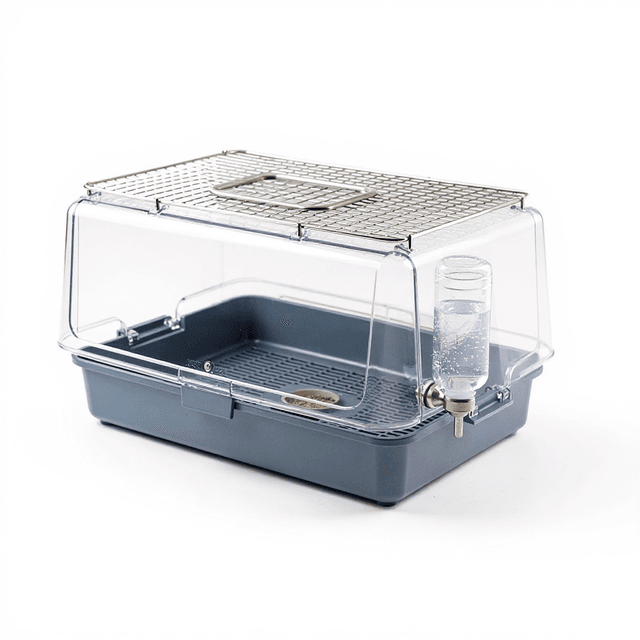
- 380 × 204 × 162 mm
- Cage height with water bottle
- 184 mm
- Modular rack layout
- 10 levels, Single sided · 60 cages · 1346 × 500 × 1990 or 1900 mm, Single sided · 70 cages · 1562 × 500 × 1990 or 1900 mm, Single sided · 80 cages · 1778 × 500 × 1990 or 1900 mm, Single sided · 90 cages · 1994 × 500 × 1990 or 1900 mm, Double sided · 120 cages · 1346 × 710 × 1990 or 1900 mm, Double sided · 140 cages · 1562 × 710 × 1990 or 1900 mm, Double sided · 160 cages · 1778 × 710 × 1990 or 1900 mm, Double sided · 180 cages · 1994 × 710 × 1990 or 1900 mm
- Current ventilation configuration
- Individual supply and exhaust connections · HEPA filtration
- Dimensional planning
- Catalog rack dimensions may vary by 40 mm for laboratory requirements
Match mouse IVC capacity to the science and the animal room
High-density mouse housing affects more than how many cage positions fit into a room. The selected system shapes cage-level ventilation, daily observation, cage changes, watering checks, feed delivery, sanitation, alarm response, and the way staff move through the vivarium. This family keeps the current touchscreen configuration and the modular rack layouts on one page so scientists, animal-care teams, facilities staff, and procurement can evaluate the same housing decision together.
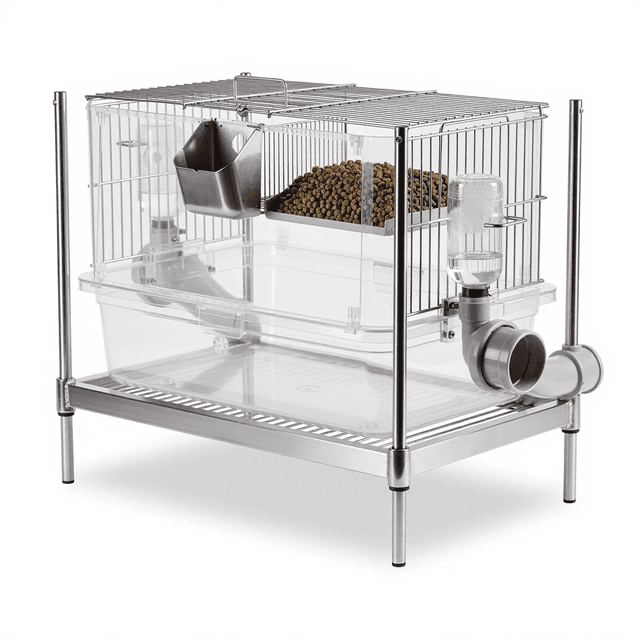
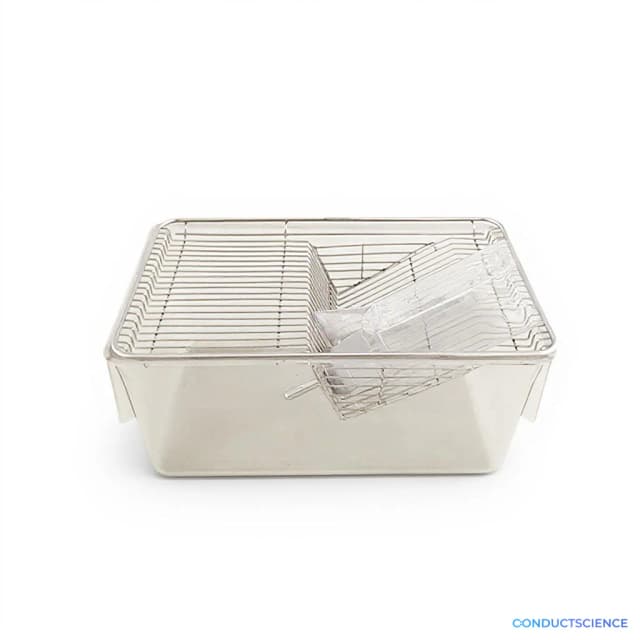
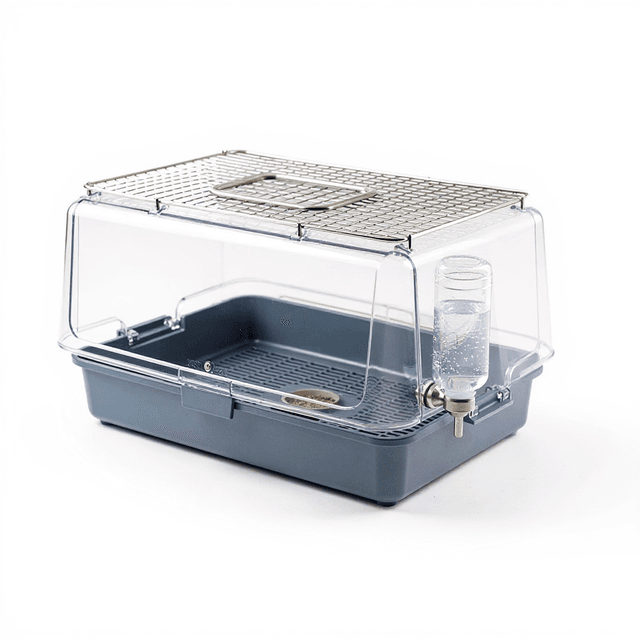
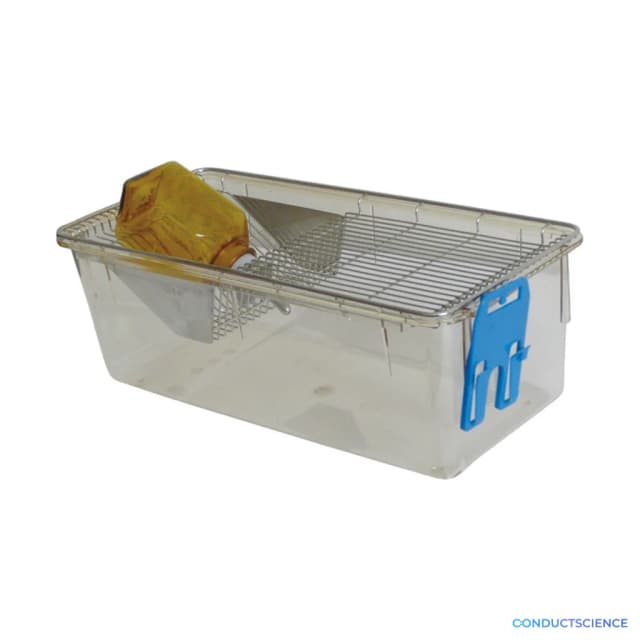
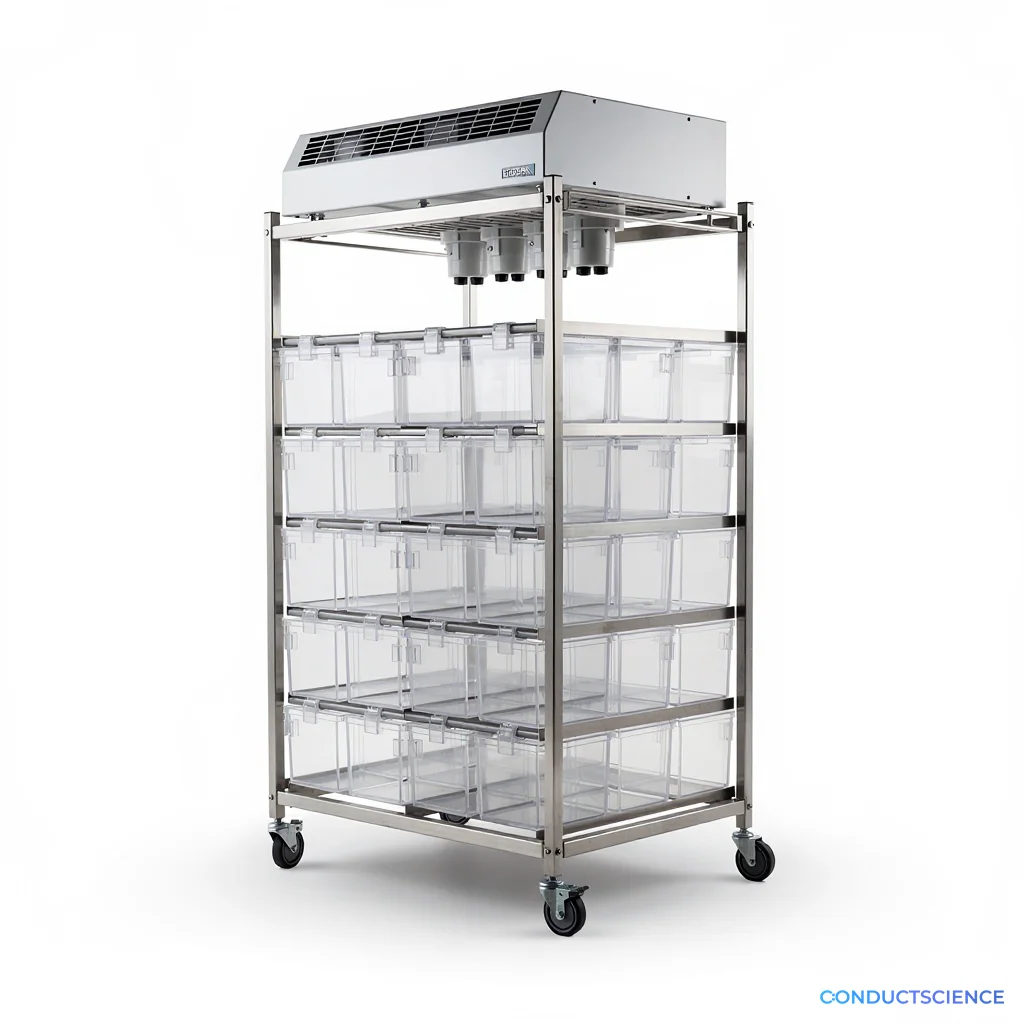
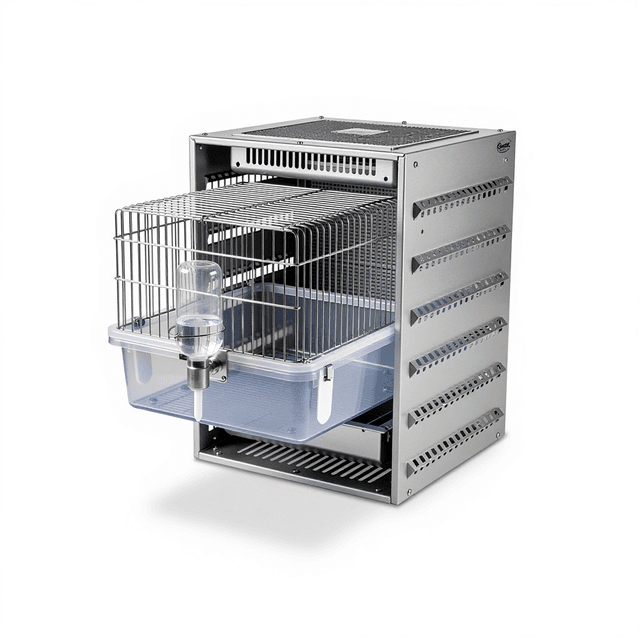
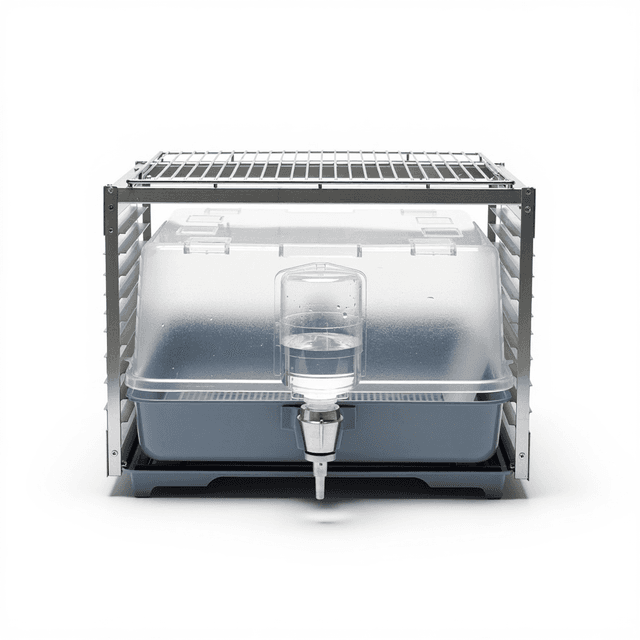
The current configuration supports up to 126 cages and uses individual supply and exhaust connections with HEPA filtration. The modular catalog system uses a 380 × 204 × 162 mm mouse cage that reaches 184 mm in height with the water bottle. Its 10-level layouts include single-sided capacities of 60, 70, 80, and 90 cages and double-sided capacities of 120, 140, 160, and 180 cages. Rack widths and depths change with each layout, and the catalog notes that rack dimensions may vary by 40 mm to meet laboratory requirements.
Capacity should follow the approved animal program, not simply the largest rack that fits. Review mouse size, stocking, study duration, cohort separation, identification, observation frequency, cage-change schedule, and contingency housing. Higher density can shorten staff travel within a room, while it also concentrates care activity and makes service clearance, response procedures, and backup planning more important. The selected layout should keep every cage position practical to inspect and service.
Facility review should cover the delivery route, final footprint, ceiling and aisle clearance, electrical service, supply and exhaust strategy, heat and noise considerations, controls, alarms, and building monitoring. The current touchscreen and modular configurations do not have identical facility interfaces, so the quote identifies the selected architecture and the responsibilities for connection, installation, commissioning, and staff training.
Share the room drawing, expected cage population, care schedule, sanitation process, water method, airflow and alarm requirements, and integration needs with ConductScience. The final quote will state the chosen capacity, cage and rack arrangement, ventilation and control package, supplied accessories, freight, placement, and commissioning scope. That record gives the research and facility teams a clear basis for installation and consistent long-term operation.
How It Works
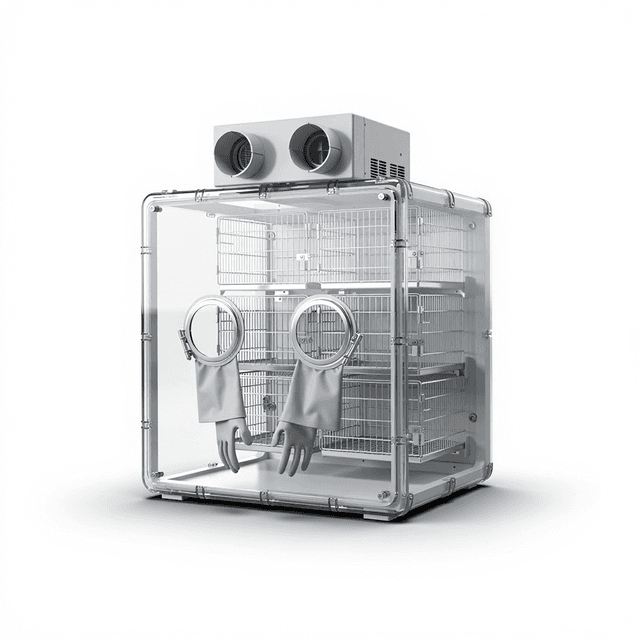
The IVC system operates through independent air handling for each cage position, creating isolated microenvironments that prevent cross-contamination between cages while maintaining optimal conditions for mouse health and experimental consistency. Dual-speed, frequency-controlled fans provide precise airflow control, with each cage receiving dedicated supply air that passes through primary filtration followed by high-efficiency HEPA filtration to remove particles and potential contaminants down to 0.3 micrometers.
The intelligent touchscreen AHU control system continuously monitors and adjusts environmental parameters including airflow rates, temperature, and humidity across all 126 cage positions. Real-time data acquisition enables immediate detection of system anomalies or environmental deviations that could impact research outcomes. The exhaust ventilation system removes cage-level ammonia, moisture, and other contaminants while maintaining slight negative pressure to contain odors and prevent escape of potential allergens.
The modular design accommodates different cage materials (PC, PSU, or PEI) selected based on chemical compatibility, autoclave requirements, and experimental protocols. The stainless steel SS304 rack construction provides chemical resistance and facilitates sanitization procedures required in research environments.
Features & Benefits
Facility confirmation
- Power, supply and exhaust strategy, controls, alarms, installation, and commissioning confirmed in quote
Modular cage dimensions
- 380 × 204 × 162 mm
Cage height with water bottle
- 184 mm
Modular rack layout
- 10 levels
- Single sided · 60 cages · 1346 × 500 × 1990 or 1900 mm
- Single sided · 70 cages · 1562 × 500 × 1990 or 1900 mm
- Single sided · 80 cages · 1778 × 500 × 1990 or 1900 mm
- Single sided · 90 cages · 1994 × 500 × 1990 or 1900 mm
- Double sided · 120 cages · 1346 × 710 × 1990 or 1900 mm
- Double sided · 140 cages · 1562 × 710 × 1990 or 1900 mm
- Double sided · 160 cages · 1778 × 710 × 1990 or 1900 mm
- Double sided · 180 cages · 1994 × 710 × 1990 or 1900 mm
Current ventilation configuration
- Individual supply and exhaust connections · HEPA filtration
Dimensional planning
- Catalog rack dimensions may vary by 40 mm for laboratory requirements
| Feature | This Product | Typical Alternative | Advantage |
|---|---|---|---|
| Maximum Cage Capacity | Up to 126 cages per rack | Entry-level systems often accommodate 20-60 cages per rack | Higher housing density reduces facility footprint requirements while maintaining individual environmental control for each cage position. |
| Ventilation Control | Individual supply and exhaust per cage with dual-speed, frequency-controlled fans | Basic systems may provide shared ventilation or single-speed fans | Independent cage ventilation prevents cross-contamination and enables precise airflow adjustment for different experimental conditions. |
| Control Interface | Intelligent touchscreen AHU control with real-time monitoring | Manual controls or basic digital displays with limited monitoring | Real-time parameter monitoring enables immediate detection of environmental deviations that could impact research outcomes. |
| Filtration System | Primary plus high-efficiency HEPA filtration | Single-stage filtration or lower efficiency filters | Dual-stage filtration removes particles to 0.3 micrometers, providing cleaner air supply for sensitive research applications. |
| Cage Material Options | Configurable PC, PSU, or PEI cage materials | Fixed cage material, typically polycarbonate only | Material selection flexibility accommodates diverse chemical compatibility requirements and sterilization protocols. |
| Voltage Compatibility | Universal voltage operation (110V-250V) | Fixed voltage requirements for specific regions | International installation flexibility without voltage conversion requirements simplifies global research facility deployment. |
This high-density IVC system offers 126-cage capacity with individual ventilation control, intelligent touchscreen monitoring, and configurable cage materials. The dual-stage HEPA filtration and universal voltage compatibility support diverse research applications while maximizing housing efficiency in large-scale operations.
| Model | SKU | Listed price | Status | Shipping box |
|---|---|---|---|---|
| Double sided · 180 cages | PTY-0004-180 | Quote | Available | Confirmed during quote |
| Double sided · 160 cages | PTY-0004-160 | Quote | Available | Confirmed during quote |
| Double sided · 140 cages | PTY-0004-140 | Quote | Available | Confirmed during quote |
| Double sided · 120 cages | PTY-0004-120 | Quote | Available | Confirmed during quote |
| Single sided · 90 cages | PTY-0004-090 | Quote | Available | Confirmed during quote |
| Single sided · 80 cages | PTY-0004-080 | Quote | Available | Confirmed during quote |
| Single sided · 70 cages | PTY-0004-070 | Quote | Available | Confirmed during quote |
| Single sided · 60 cages | PTY-0004-060 | Quote | Available | Confirmed during quote |
| Current touchscreen · up to 126 cages | PTY-0004-126 | Quote | Available | Confirmed during quote |
Practical Tips
Verify airflow rates at each cage position during initial setup and after any maintenance using a calibrated anemometer to ensure consistent ventilation performance.
Why: Uniform airflow distribution is critical for maintaining standardized environmental conditions across all experimental groups.
Monitor differential pressure across HEPA filters weekly and establish replacement schedules based on facility air quality conditions rather than fixed time intervals.
Why: Filter performance directly impacts air quality and system efficiency, with replacement timing dependent on actual contamination levels.
Configure cage materials based on experimental chemical exposure requirements, using PEI for aggressive solvents and PC for standard protocols.
Why: Material compatibility prevents chemical degradation that could introduce confounding variables or compromise cage integrity.
If touchscreen displays environmental alarms, verify cage placement and sealing before adjusting fan speeds or other system parameters.
Why: Improper cage sealing is the most common cause of ventilation irregularities and should be checked before mechanical adjustments.
Download environmental monitoring data regularly from the touchscreen system and correlate with experimental timelines to identify potential confounding factors.
Why: Environmental data provides valuable context for experimental results and helps identify periods of system instability that could affect outcomes.
Establish clear protocols for system shutdown procedures during maintenance, including notification of research staff and temporary animal relocation if needed.
Why: Planned maintenance downtime prevents emergency situations and ensures animal welfare is maintained during system servicing.
Implement a cage rotation schedule to distribute any minor environmental variations across experimental groups over time.
Why: Systematic cage position rotation helps minimize the impact of any rack-level environmental gradients on experimental results.
Clean and inspect the touchscreen interface monthly with appropriate cleaning agents to maintain display clarity and touch sensitivity.
Why: Clear interface operation is essential for accurate parameter monitoring and system control during critical experimental periods.
Setup Guide
What’s in the Box
- Selected high-density mouse IVC configuration; rack, cages, ventilation, controls, accessories, and commissioning scope confirmed in the quote
Warranty
ConductScience provides a 1-year manufacturer warranty covering system components and technical support for installation, operation, and maintenance guidance. Extended service agreements and on-site training programs are available for comprehensive facility support.
Compliance
References
Background reading relevant to this product:
How should capacity be selected?
Start with the approved animal program and care workflow, then compare cage positions with room fit, staff access, sanitation, and contingency needs.
Do the current and modular configurations use the same controls?
No common control package is assumed. The quote identifies the selected ventilation, control, alarm, and monitoring architecture.
What facility information is needed?
Share the room drawing, delivery route, power, air and exhaust strategy, alarm integration, sanitation plan, and final placement conditions.
Have a question about this product?
Have a question? Just ask.
Send it over and we'll email you a personalized answer — no call, no scheduling.
Prefer to talk it through?
Accessories
Enhance your setup with compatible accessories
Upgrade Options