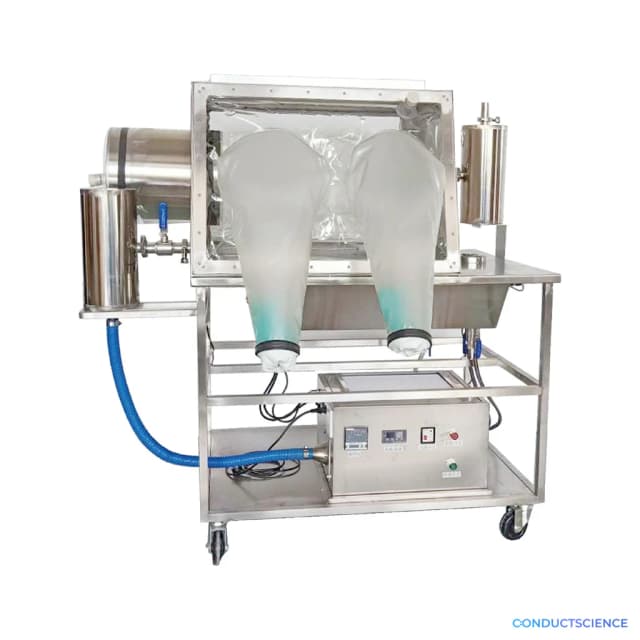
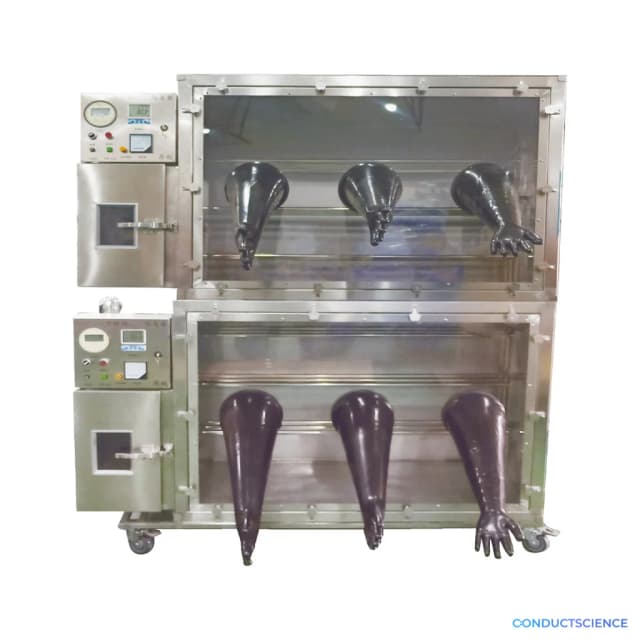
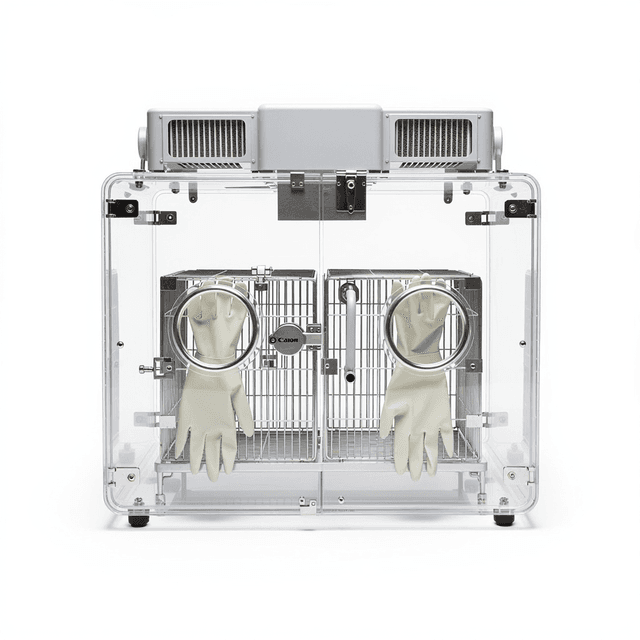
Laboratory Mouse Isolator
Flexible-film containment system with dual HEPA filtration for maintaining gnotobiotic and SPF mouse colonies in sterile barrier environments.

Louise Corscadden, PhD
Director of Science · ConductScience
Ask Louise about Laboratory Mouse Isolator fit, setup, configuration, or quote prep.
Already working with us? Sign in to connect this with My Scientist.
Key Specifications
Full details →- Model fit
- Mouse
- SKU family
- PTY-0027
- Shipping box
- 65.0 x 32.0 x 82.0 cm
- Ordering
- Online checkout and quote request available
- Category
- Isolators
- Build notes
- Confirm accessories, station layout, and support needs before purchase
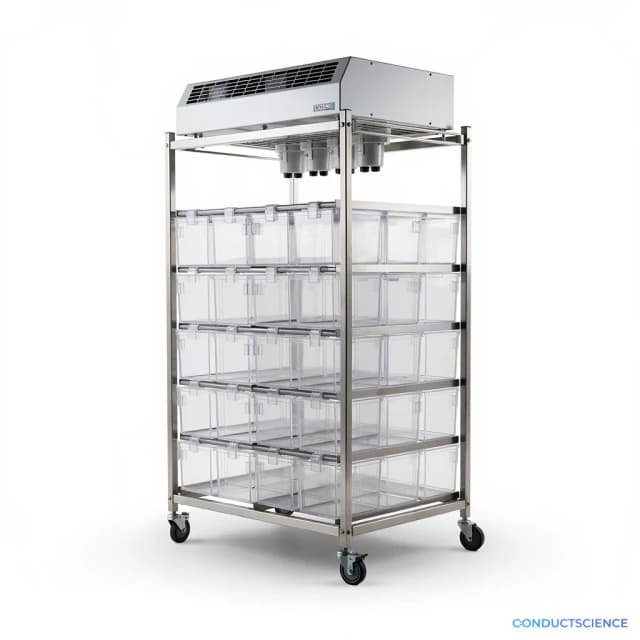
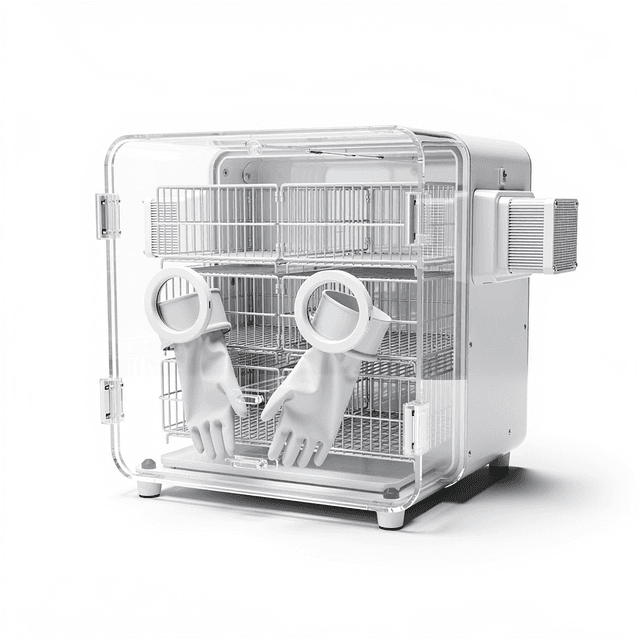
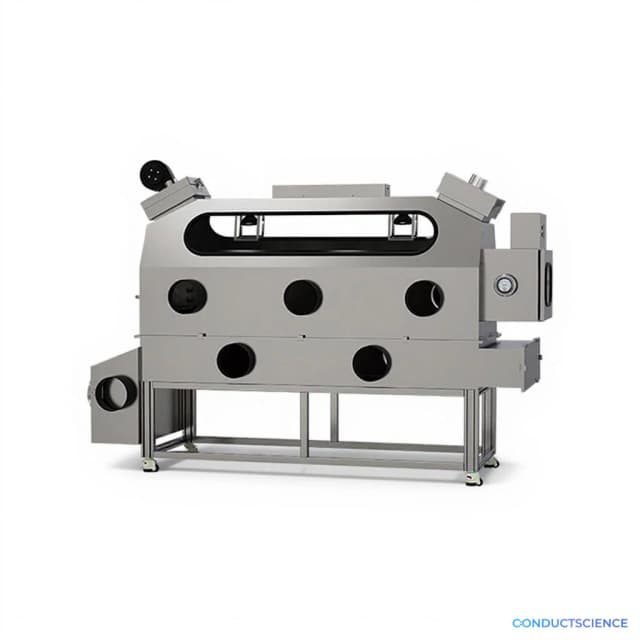
The Laboratory Mouse Isolator is a flexible-film containment system engineered for maintaining gnotobiotic and specific pathogen-free (SPF) mouse colonies in controlled laboratory environments. This system features dual HEPA filtration on both supply and exhaust air streams, with configurable positive or negative pressure operation to meet diverse research requirements.
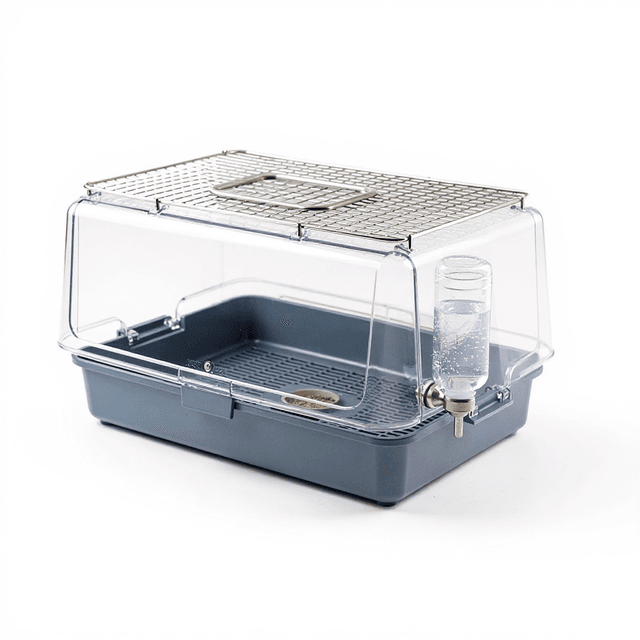
The isolator provides a sterile barrier environment essential for immunocompromised animal models, microbiome research, and contamination-sensitive studies. The flexible-film design allows for easy manipulation while maintaining environmental integrity, making it suitable for routine colony maintenance, experimental procedures, and long-term housing protocols requiring defined microbial status.
How It Works
The Laboratory Mouse Isolator operates on the principle of physical barrier containment combined with controlled atmospheric processing. The flexible-film construction creates a sealed environment that can be manipulated through built-in gloves while maintaining sterile integrity. Dual HEPA filtration systems process both incoming and outgoing air streams, removing particles and microorganisms down to 0.3 micrometers with 99.97% efficiency.
Pressure differential management allows for either positive pressure operation (preventing external contamination from entering) or negative pressure operation (containing potentially hazardous materials within the isolator). The configurable pressure system uses continuous air exchange through HEPA filters to maintain the desired pressure gradient while ensuring adequate ventilation for animal welfare.
Environmental control within the isolator maintains temperature, humidity, and air quality parameters suitable for mouse housing while the sterile barrier prevents microbial exchange with the external environment. This combination enables long-term maintenance of defined microbial status in research colonies.
Features & Benefits
Type
- Flexible-film isolator
Filtration
- HEPA supply and exhaust
Pressure
- Positive or negative (configurable)
Automation Level
- manual
Brand
- ConductScience
Species
- Mouse
Research Domain
- Cancer Research
- Developmental Biology
- Immunology
- Microbiology
- Pharmaceutical QC
- Toxicology
Certifications
- CE, ISO
Shipping weight
- 70.0 lb
Shipping box
- L: 65.0 cm
- W: 32.0 cm
- H: 82.0 cm
| Feature | This Product | Typical Alternative | Advantage |
|---|---|---|---|
| Filtration System | Dual HEPA filtration on both supply and exhaust streams | Single-stage filtration or HEPA supply only | Bidirectional contamination control prevents both external contamination entry and internal contaminant escape during procedures. |
| Pressure Configuration | Configurable positive or negative pressure operation | Fixed pressure operation mode | Adapts the same system for diverse research applications from immunocompromised animal protection to hazardous material containment. |
| Construction Type | Flexible-film design with integrated glove ports | Rigid chamber construction | Enables direct animal manipulation and equipment access while maintaining sterile barrier integrity throughout procedures. |
| Operation Level | Manual control system | Automated environmental control systems | Provides researchers with direct parameter control and eliminates potential automation failure points in critical studies. |
| Application Range | Supports both gnotobiotic and SPF colony maintenance | Single barrier type or pathogen status | Accommodates diverse research protocols from completely germ-free environments to defined pathogen-free conditions in one system. |
The Laboratory Mouse Isolator combines dual HEPA filtration with configurable pressure operation and flexible-film construction to provide versatile sterile barrier containment. The manual operation system offers direct researcher control over environmental parameters while supporting both gnotobiotic and SPF colony maintenance protocols.
Practical Tips
Verify pressure differential calibration weekly using certified pressure monitoring instruments to ensure consistent barrier performance.
Why: Pressure accuracy directly affects contamination control effectiveness and animal safety.
Replace HEPA filters according to pressure drop specifications rather than fixed time intervals to optimize filtration efficiency.
Why: Filter performance degrades with particle loading, not just time, affecting sterile barrier integrity.
Conduct sterility testing using multiple sampling locations within the isolator to verify uniform contamination control.
Why: Dead zones or inadequate air circulation can compromise sterile conditions despite proper filtration.
Monitor glove port integrity daily by checking for tears, punctures, or seal degradation that could compromise barrier function.
Why: Glove ports are the most vulnerable component for maintaining environmental isolation during manipulation procedures.
Document all environmental parameter excursions and correlate with experimental outcomes to identify potential confounding variables.
Why: Environmental deviations can affect animal physiology and experimental results in ways that may not be immediately apparent.
Establish emergency procedures for pressure system failures that maintain animal welfare while preserving experimental integrity.
Why: System failures during critical study phases require rapid response to prevent both animal harm and data loss.
Coordinate sterilization cycles with animal husbandry schedules to minimize environmental disruptions during critical experimental phases.
Why: Sterilization procedures can temporarily alter environmental conditions affecting animal behavior and physiology.
Inspect flexible film surfaces weekly for stress points, discoloration, or material degradation that could lead to barrier failure.
Why: Film integrity is essential for maintaining sterile isolation and early detection prevents catastrophic barrier loss.
Setup Guide
What’s in the Box
- Laboratory Mouse Isolator main unit
- Dual HEPA filter assemblies
- Pressure control system
- Integrated glove ports
- Entry port system
- Environmental monitoring instrumentation (typical)
- Installation hardware and gaskets
- User manual and operating procedures
- Sterilization compatibility guide (typical)
Warranty
ConductScience provides a standard one-year manufacturer warranty covering defects in materials and workmanship, with technical support available for installation guidance and operational troubleshooting.
Compliance
References
Background reading relevant to this product:
What particle size efficiency does the HEPA filtration provide?
The dual HEPA filtration system removes particles and microorganisms down to 0.3 micrometers with 99.97% efficiency on both supply and exhaust air streams.
Can the system maintain both positive and negative pressure operation?
Yes, the pressure control system is configurable for either positive pressure operation (contamination prevention) or negative pressure operation (containment) based on experimental requirements.
What sterilization methods are compatible with the flexible-film construction?
Consult product datasheet for specific sterilant compatibility with flexible-film materials, as chemical compatibility varies by sterilization agent and concentration.
How many mice can the isolator accommodate?
Housing capacity depends on cage configuration and animal welfare requirements - consult product datasheet for specific dimensional specifications and recommended housing densities.
What environmental parameters can be monitored and controlled?
The system monitors temperature, humidity, air quality, and pressure differential, with manual control over these parameters to maintain optimal conditions for mouse colonies.
How do you maintain sterility during routine colony maintenance?
The integrated glove ports and entry port system allow direct manipulation and animal transfer while maintaining environmental isolation and sterile barrier integrity.
What certifications does the isolator carry?
The system carries CE and ISO certifications for laboratory use, indicating compliance with European safety standards and international quality management requirements.
How does this compare to rigid isolator systems?
The flexible-film design offers easier manipulation access compared to rigid systems while maintaining equivalent sterile barrier performance, though specific dimensional and capacity specifications should be compared based on research requirements.
Have a question about this product?
Have a question? Just ask.
Send it over and we'll email you a personalized answer — no call, no scheduling.
Prefer to talk it through?
Accessories
Enhance your setup with compatible accessories

Upgrade Options