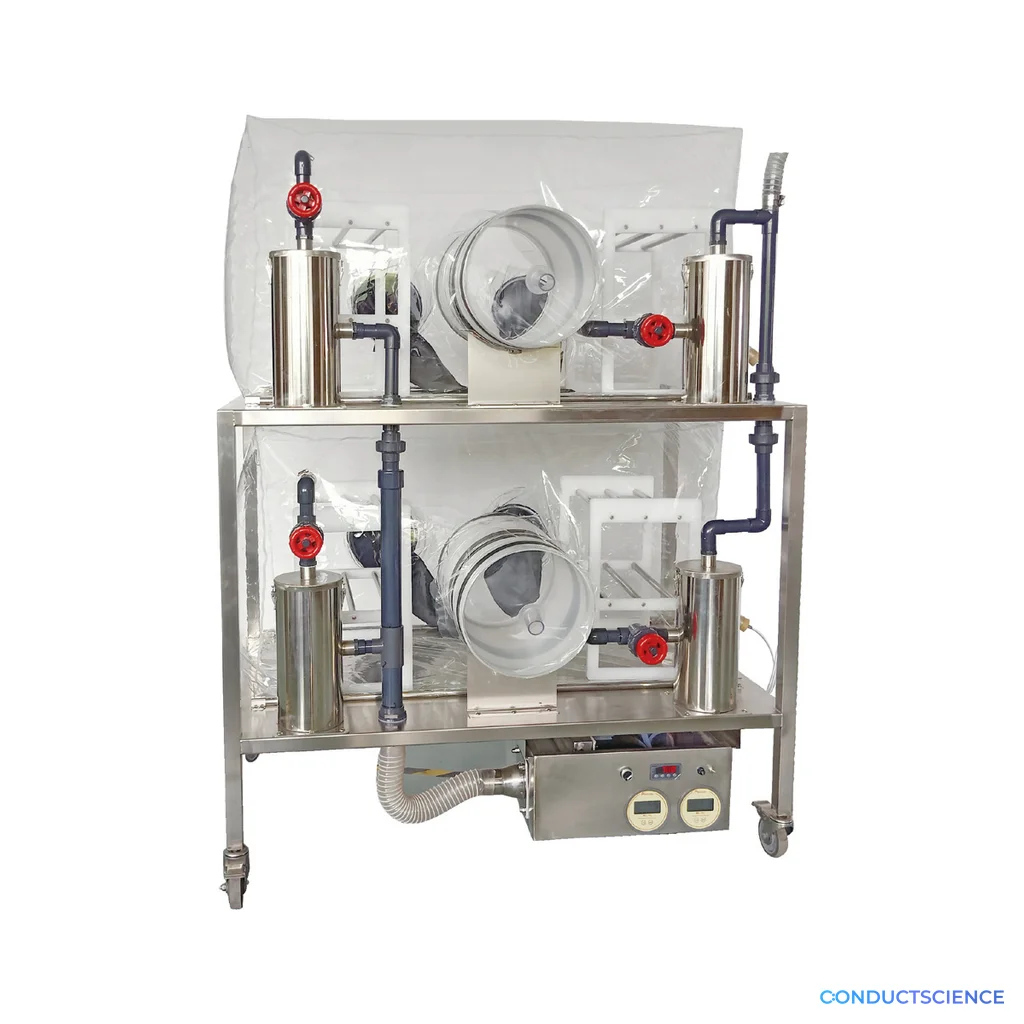
Sterile Animal Isolator
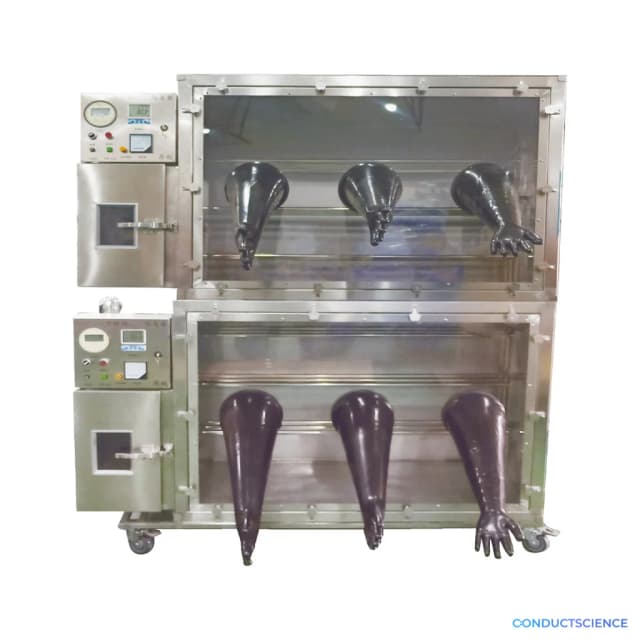
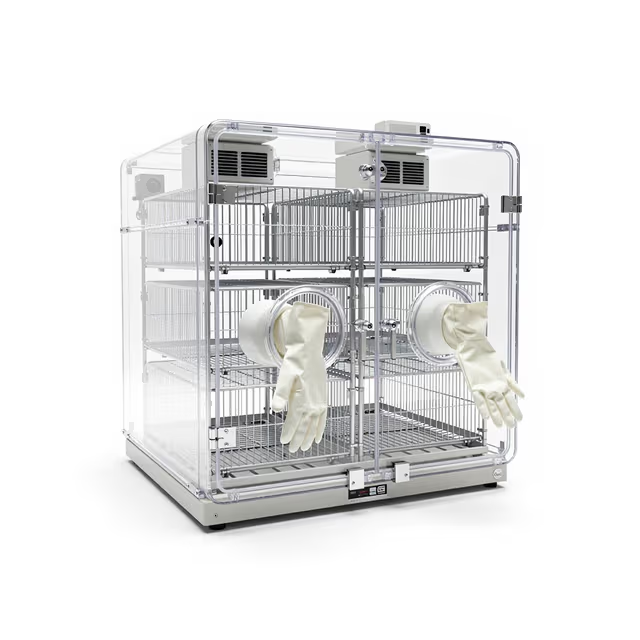
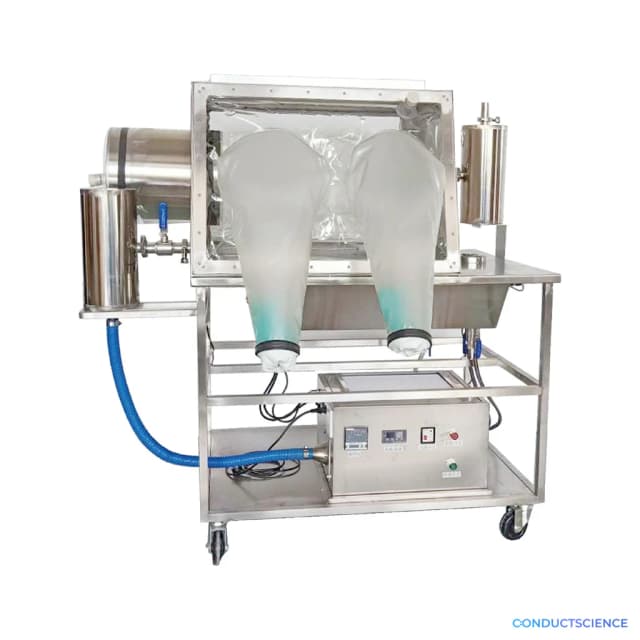
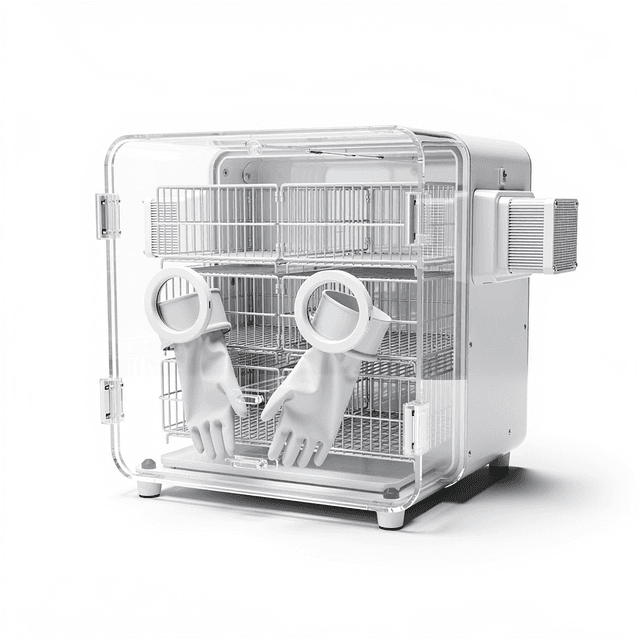
Sterile animal isolator for germ-free, SPF, and other approved studies that require a controlled housing boundary, managed transfers, and repeatable aseptic husbandry.
The 1400 × 900 × 1770 mm system is documented for ISO 5 cleanliness, 20 to 50 air changes per hour, 0.05 to 0.18 m/s airflow, a 50 to 100 Pa pressure gradient, and noise no greater than 50 dB(A).

Louise Corscadden, PhD
Director of Science · ConductScience
Ask Louise about Sterile Animal Isolator fit, setup, configuration, or quote prep.
Already working with us? Sign in to connect this with My Scientist.
Key Specifications
Full details →- External dimensions
- 1400 × 900 × 1770 mm
- Air changes
- 20-50 changes/h
- Cleanliness
- ISO 5 · settling count 0
- Airflow
- 0.05-0.18 m/s
- Pressure gradient
- 50-100 Pa
- Noise
- ≤50 dB(A)
Protect the study through a defined aseptic housing boundary
A sterile animal isolator is useful when the research question depends on maintaining a controlled microbiological environment around the animals. The equipment is only one part of that protection. Animal receipt, material transfer, feed and bedding, water, cage changes, sampling, waste removal, cleaning, and recovery from a breach all need to follow the same approved workflow.
The PRG1 isolator measures 1400 × 900 × 1770 mm. Its documented operating table lists 20 to 50 air changes per hour, ISO 5 cleanliness, airflow from 0.05 to 0.18 m/s, a 50 to 100 Pa pressure gradient, a settling count of 0, and noise no greater than 50 dB(A). These specifications give facility and research teams a starting point for environmental qualification, while the protocol defines the pressure direction, operating setpoint, monitoring, and acceptance criteria.
For germ-free or SPF work, the transfer procedure often matters as much as the chamber condition. Teams should map every item that crosses the boundary and decide how it will be packaged, sterilized, introduced, handled, and removed. The same review should cover glove use, observation, animal identification, cage access, sample collection, accidental spills, suspected contamination, and the steps required to protect or terminate a study after an excursion.
Room planning should include the external footprint, operator position, transfer access, maintenance clearances, ventilation connection, power, controls, alarms, and the route used to deliver and place the isolator. The facility should also define how cleanliness, airflow, pressure, and alarm functions will be tested at installation and rechecked during service. Consumables and compatible sterilants should be confirmed before ordering.
Share the animal species, microbiological status, study duration, transfer loads, husbandry schedule, sterilization method, room drawing, monitoring plan, and qualification requirements with ConductScience. The final quote will identify the isolator configuration, ventilation and control package, transfer and husbandry accessories, installation, testing, training, and commissioning. This turns a physical barrier into an operating system the research and animal-care teams can use consistently.
Features & Benefits
External dimensions
- 1400 × 900 × 1770 mm
Air changes
- 20-50 changes/h
Cleanliness
- ISO 5 · settling count 0
Airflow
- 0.05-0.18 m/s
Pressure gradient
- 50-100 Pa
Noise
- ≤50 dB(A)
Quote confirmation
- Pressure direction, transfer package, sterilization, utilities, controls, alarms, and qualification
Setup Guide
What’s in the Box
- Selected sterile animal isolator; enclosure, support structure, ventilation and controls, transfer and husbandry accessories, and qualification scope confirmed in the quote
Is the isolator alone enough to maintain sterility?
No. The result depends on the approved transfer, husbandry, sterilization, monitoring, maintenance, and response procedures used with it.
How is pressure direction selected?
The study objective, microbiological risk, room design, and institutional procedure determine the required direction and operating setpoint.
What information is needed for a quote?
Provide animal status, cohort size, transfers, sterilization method, room conditions, monitoring, utilities, accessories, and qualification expectations.
Have a question about this product?
Have a question? Just ask.
Send it over and we'll email you a personalized answer — no call, no scheduling.
Prefer to talk it through?