Laboratory Rodent Isolator
Flexible-film containment system with HEPA filtration for maintaining sterile environments in immunodeficient animal research and germ-free protocols.

Louise Corscadden, PhD
Director of Science · ConductScience
Ask Louise about Laboratory Rodent Isolator fit, setup, configuration, or quote prep.
Already working with us? Sign in to connect this with My Scientist.
Key Specifications
Full details →- Model fit
- Hamster, Mouse, Rat
- SKU family
- PTY-0028
- Shipping box
- 65.0 x 32.0 x 82.0 cm
- Ordering
- Online checkout and quote request available
- Category
- Isolators
- Build notes
- Confirm accessories, station layout, and support needs before purchase
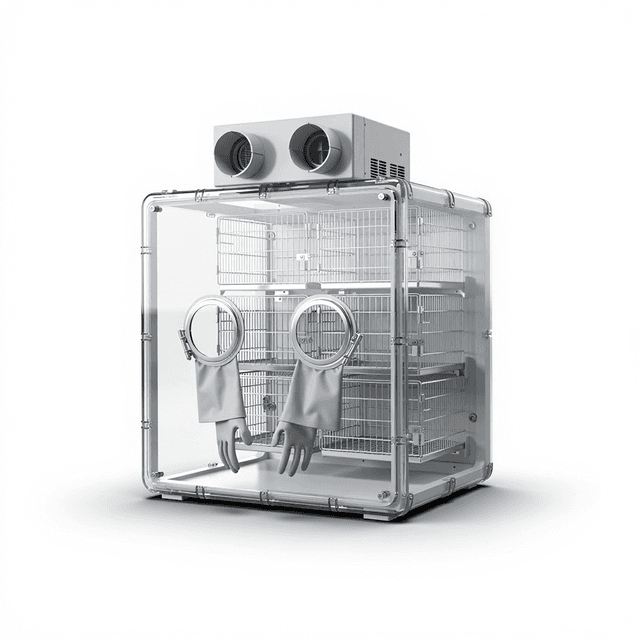
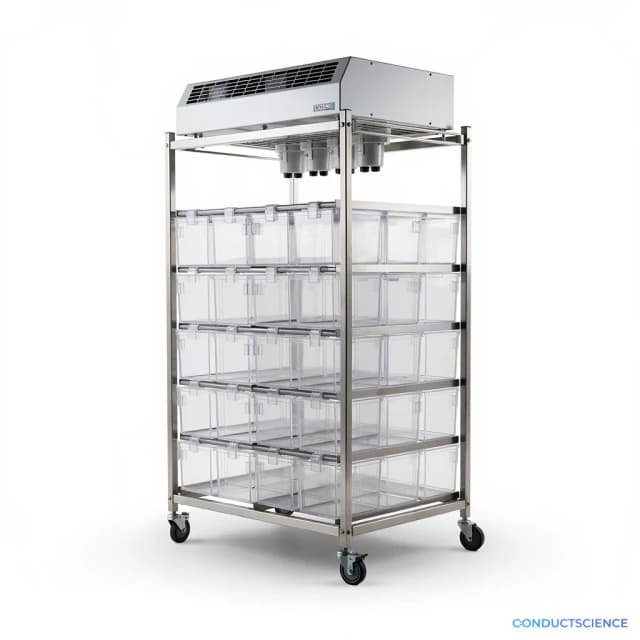
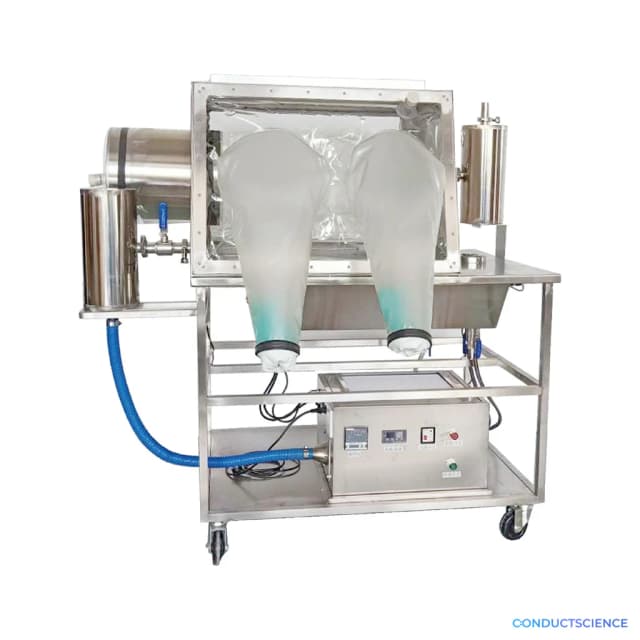
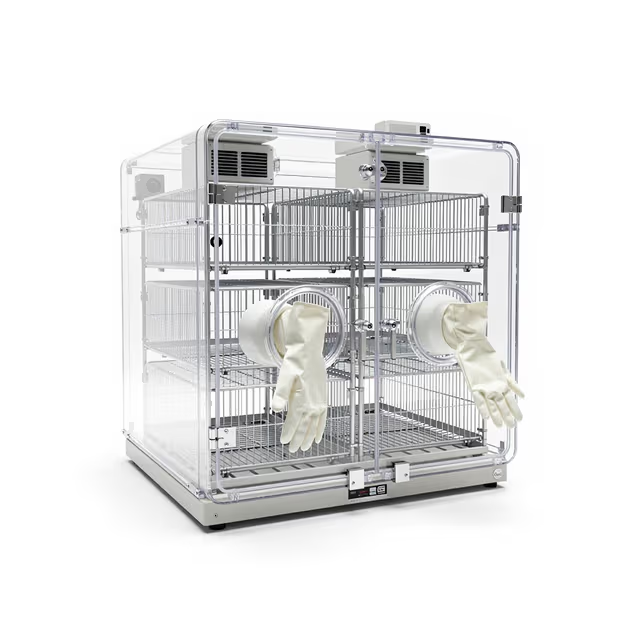
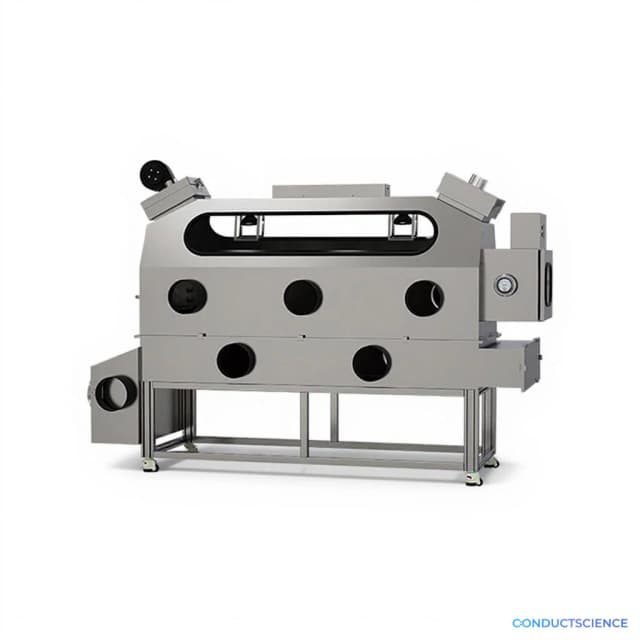
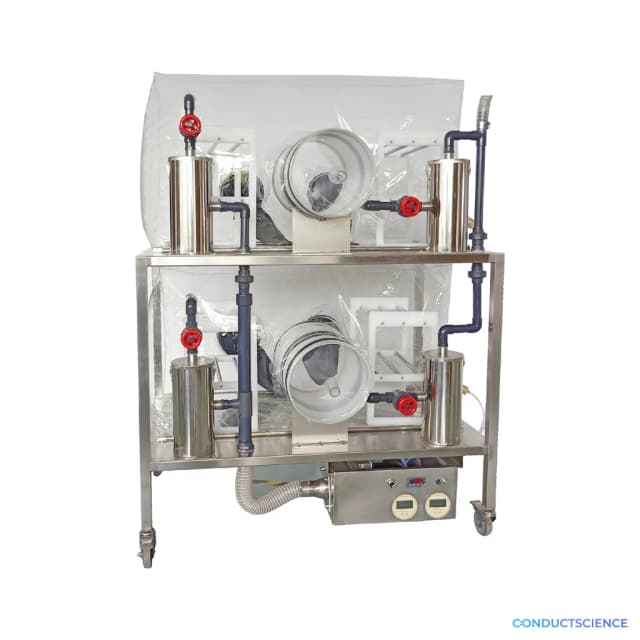
The Laboratory Rodent Isolator is a flexible-film containment system designed for maintaining sterile environments in sensitive research applications. This isolator incorporates HEPA filtration on both supply and exhaust air streams to create a controlled atmosphere suitable for immunodeficient animal models and germ-free research protocols. The flexible-film construction provides visual access to housed animals while maintaining barrier integrity essential for protecting vulnerable research subjects from environmental contamination.
The system supports multiple small rodent species including mice, rats, and hamsters, making it suitable for comparative studies across different animal models. CE and ISO certifications indicate conformance to European safety standards and international quality management systems, supporting research facilities operating under regulated conditions.
How It Works
The isolator operates on the principle of positive pressure barrier containment using flexible-film construction. HEPA filtration systems on both supply and exhaust air streams create a sterile microenvironment by removing particles and microorganisms down to 0.3 micrometers with 99.97% efficiency. The positive pressure differential prevents external contaminants from entering the housing space while allowing controlled air exchange.
The flexible-film design maintains barrier integrity while providing visual access and manual manipulation capabilities through integrated gloves or transfer ports. This construction allows for routine animal care procedures while preserving the sterile environment essential for immunocompromised research models.
Features & Benefits
Type
- Flexible-film isolator
Filtration
- HEPA supply and exhaust
Automation Level
- manual
Brand
- ConductScience
Species
- Hamster
- Mouse
- Rat
Research Domain
- Cancer Research
- Developmental Biology
- Immunology
- Microbiology
- Pharmaceutical QC
- Toxicology
Certifications
- CE, ISO
Shipping weight
- 80.0 lb
Shipping box
- L: 65.0 cm
- W: 32.0 cm
- H: 82.0 cm
| Feature | This Product | Typical Alternative | Advantage |
|---|---|---|---|
| Filtration System | Dual HEPA filtration on both supply and exhaust air streams | Entry-level units often provide single-stage filtration or non-HEPA filtration | Comprehensive particle removal ensures both sterile air supply and prevents contaminated air release. |
| Construction Type | Flexible-film barrier system | Rigid plastic or metal construction is common in basic isolators | Provides superior visual access and manual manipulation capabilities for routine animal care. |
| Species Compatibility | Designed for mice, rats, and hamsters | Single-species designs limit research flexibility | Enables comparative studies across multiple rodent species within the same sterile environment. |
| Certification Level | CE and ISO certified | Basic units may lack formal certification documentation | Documented compliance with international safety and quality standards supports regulatory requirements. |
| Pressure Management | Positive pressure barrier containment | Negative pressure systems or passive ventilation varies by model | Prevents external contamination ingress while maintaining controlled air exchange for animal welfare. |
This isolator combines dual HEPA filtration, flexible-film construction, and multi-species compatibility with CE/ISO certifications. The positive pressure design and comprehensive filtration system provide reliable sterile containment for immunodeficient research models across multiple rodent species.
Practical Tips
Establish standardized aseptic transfer protocols for all materials entering the isolator, including pre-sterilization of feed, bedding, and experimental supplies.
Why: Consistent procedures prevent contamination events that could compromise entire experimental cohorts.
Monitor HEPA filter differential pressure readings daily and maintain replacement schedules based on manufacturer specifications.
Why: Filter saturation reduces filtration efficiency and can compromise barrier integrity.
Conduct weekly pressure differential verification using calibrated manometers to ensure positive pressure maintenance.
Why: Pressure loss indicates potential barrier breaches that could allow contamination ingress.
Document all environmental parameters, pressure readings, and sterilization procedures for experimental record-keeping.
Why: Complete environmental documentation supports data interpretation and regulatory compliance requirements.
If pressure alarms activate, immediately inspect flexible-film integrity for tears or seal failures before resuming operations.
Why: Rapid response to barrier breaches prevents contamination and protects vulnerable animal models.
Implement backup power systems for critical filtration components to maintain barrier integrity during power interruptions.
Why: Filtration system failure can rapidly compromise sterile conditions and animal welfare.
Schedule isolator sterilization cycles between animal cohorts to ensure complete decontamination before introducing new subjects.
Why: Thorough sterilization prevents cross-contamination between experimental groups and maintains research integrity.
Setup Guide
What’s in the Box
- Laboratory rodent isolator main unit
- HEPA filtration system components
- Flexible-film housing chamber
- Pressure monitoring equipment (typical)
- Transfer port assemblies (typical)
- Installation hardware and fittings (typical)
- User manual and setup guide (typical)
- CE and ISO certification documentation
Warranty
ConductScience provides a one-year manufacturer warranty covering defects in materials and workmanship, with technical support available for setup, calibration, and operational guidance.
Compliance
References
Background reading relevant to this product:
What particle size efficiency does the HEPA filtration provide?
The HEPA filtration system removes particles ≥0.3 micrometers with 99.97% efficiency on both supply and exhaust air streams, maintaining sterile atmospheric conditions.
Can this isolator accommodate breeding colonies?
The system supports mice, rats, and hamsters, making it suitable for maintaining breeding colonies of immunodeficient strains, though specific capacity should be confirmed based on institutional housing density guidelines.
How is sterility maintained during routine animal care?
The flexible-film construction with integrated transfer ports allows aseptic procedures while maintaining positive pressure barriers, preventing external contamination during feeding, cage changes, and animal handling.
What environmental monitoring is required?
Continuous monitoring of pressure differentials, temperature, humidity, and HEPA filter status is recommended to ensure barrier integrity and optimal animal welfare conditions.
Is this suitable for xenograft tumor studies?
Yes, the sterile environment is ideal for immunocompromised hosts in xenograft research, preventing opportunistic infections that could interfere with tumor growth or experimental outcomes.
How does this compare to rigid isolator systems?
Flexible-film construction provides visual access and manual dexterity advantages over rigid systems while maintaining equivalent barrier protection through positive pressure and HEPA filtration.
What sterilization methods are compatible?
Consult product datasheet for approved sterilization protocols, though chemical sterilants and UV irradiation are commonly used methods for isolator sterilization.
Have a question about this product?
Have a question? Just ask.
Send it over and we'll email you a personalized answer — no call, no scheduling.
Prefer to talk it through?
Accessories
Enhance your setup with compatible accessories
Upgrade Options