Polycarbonate Metabolic Cage for Rats
Polycarbonate metabolic cage with separate urine and feces collection systems for quantitative rat metabolic studies and pharmacokinetic research.

Louise Corscadden, PhD
Director of Science · ConductScience
Ask Louise about Polycarbonate Metabolic Cage for Rats fit, setup, configuration, or quote prep.
Already working with us? Sign in to connect this with My Scientist.
Key Specifications
Full details →- Model fit
- Rat
- SKU family
- PTY-0021
- Shipping box
- 57.2 x 28.2 x 72.2 cm
- Ordering
- Online checkout and quote request available
- Category
- Metabolic Cages
- Build notes
- Polycarbonate (PC)
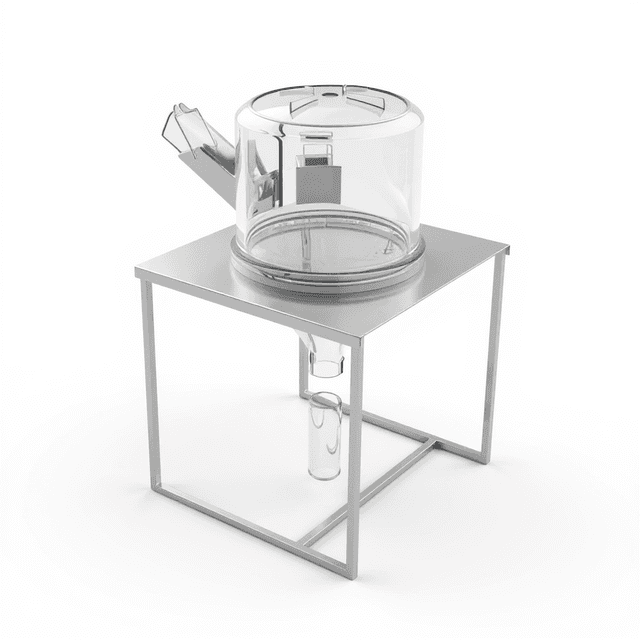
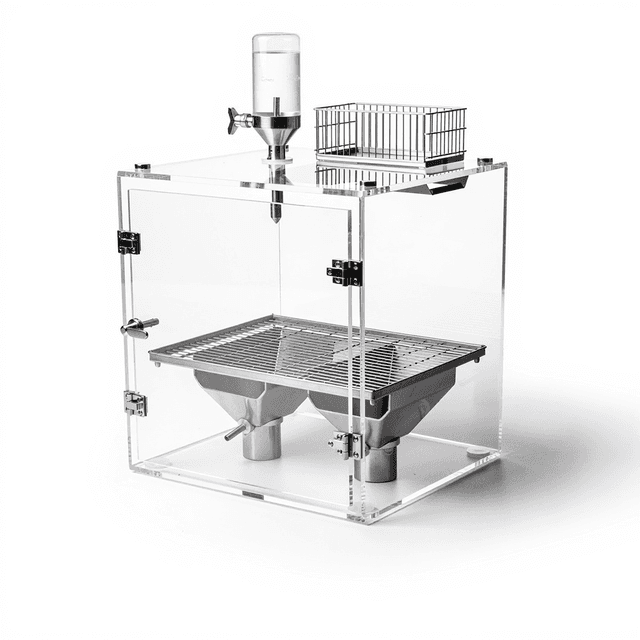
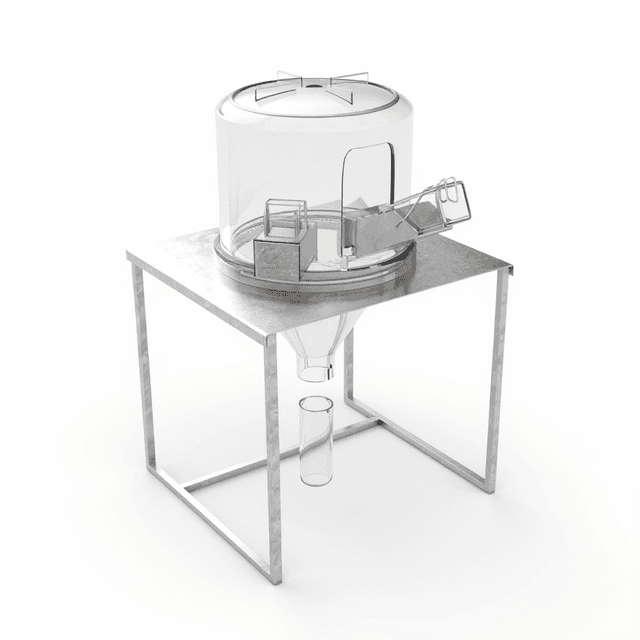
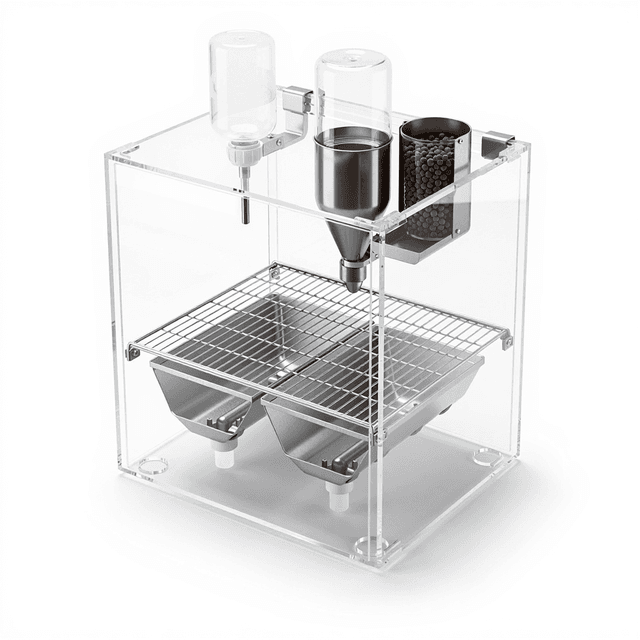
The Polycarbonate Metabolic Cage for Rats (PTY-0021) provides quantitative measurement capabilities for rodent metabolic studies through dedicated urine and feces collection systems. Constructed from polycarbonate with a stainless steel SUS304 polished lid, this cage enables researchers to conduct metabolic balance studies, pharmacokinetic investigations, and physiological monitoring protocols with precise sample separation and collection.
The integrated life air window with filtering film automatically opens during power interruptions, maintaining animal welfare while preserving environmental control. The 96 x 56 mm record card slot facilitates protocol documentation and experimental tracking. At 3 kg operational weight, this cage provides stable housing for adult rats while enabling quantitative collection of metabolic outputs for downstream analysis in toxicology, drug metabolism, and physiological research applications.
How It Works
The metabolic cage operates on the principle of quantitative mass balance, enabling researchers to precisely measure inputs (food, water, test compounds) against outputs (urine, feces, expired gases). The polycarbonate construction provides chemical resistance and transparency for visual monitoring, while the separate collection chambers prevent cross-contamination between urine and fecal samples.
The stainless steel SUS304 polished lid ensures durability and ease of cleaning while maintaining secure containment. The integrated life air window with filtering film provides passive ventilation under normal conditions and automatically opens during power failures to prevent oxygen depletion. This fail-safe mechanism ensures animal welfare while maintaining environmental control necessary for metabolic measurements.
Sample collection occurs through gravity-fed separation, where urine passes through a mesh floor into a dedicated collection vessel while solid feces are retained in a separate compartment. The 96 x 56 mm record card slot enables real-time protocol documentation and data tracking throughout experimental periods.
Features & Benefits
Cage Material
- Polycarbonate (PC)
Lid Material
- Stainless Steel SUS304, polished
Record Card Seat
- 96 x 56 mm slot
Life Air Window
- Filtering film, opens on power off
Collection
- Separate urine and feces collection
Automation Level
- manual
Brand
- ConductScience
Species
- Rat
Certifications
- CE, ISO, RoHS
Research Domain
- Addiction Research
- Aging Research
- Behavioral Pharmacology
- Metabolic Research
- Pharmaceutical QC
- Toxicology
Shipping weight
- 3.0 lb
Shipping box
- L: 57.2 cm
- W: 28.2 cm
- H: 72.2 cm
| Feature | This Product | Typical Alternative | Advantage |
|---|---|---|---|
| Construction Material | Polycarbonate housing with stainless steel SUS304 polished lid | All-metal construction or basic plastic materials | Combines chemical resistance of polycarbonate with durability of stainless steel while providing transparency for visual monitoring |
| Sample Collection System | Separate urine and feces collection with dedicated vessels | Combined collection systems or manual separation methods | Prevents cross-contamination between sample types and improves accuracy of quantitative metabolic measurements |
| Ventilation System | Life air window with automatic opening during power failure | Fixed ventilation or manual backup systems | Provides fail-safe animal welfare protection while maintaining environmental control for consistent metabolic conditions |
| Documentation Integration | Built-in 96 x 56 mm record card slot | External labeling or separate documentation systems | Enables real-time protocol tracking directly at the cage level for improved data management and audit trail |
| Quality Certifications | CE, ISO, and RoHS certified | Limited or unspecified certifications | Ensures compliance with international quality standards required for regulated research environments |
| Weight and Stability | 3 kg operational weight | Varies significantly by design and materials | Provides stable platform for accurate measurements while remaining manageable for routine laboratory operations |
This metabolic cage combines polycarbonate transparency with stainless steel durability, features automatic ventilation backup systems, and provides integrated documentation capabilities. The separate collection system and quality certifications support precise metabolic studies in regulated research environments.
Practical Tips
Acclimate animals to the metabolic cage environment for 24-48 hours before beginning formal sample collection to minimize stress-induced metabolic changes.
Why: Environmental stress can significantly alter metabolic parameters and confound experimental results.
Inspect the mesh floor regularly for wear or clogging that could affect urine drainage and sample separation efficiency.
Why: Compromised mesh integrity can lead to sample cross-contamination and inaccurate quantitative measurements.
Weigh collection vessels before and after each sampling period using an analytical balance to verify collection volumes.
Why: Gravimetric verification provides independent confirmation of sample volumes for mass balance calculations.
Record ambient temperature, humidity, and lighting conditions along with metabolic measurements since environmental factors influence metabolic rate.
Why: Environmental variables directly impact metabolic activity and must be controlled or accounted for in data analysis.
Test the automatic life air window function regularly by simulating power interruptions to ensure proper fail-safe operation.
Why: Animal welfare depends on reliable ventilation backup systems during unexpected power failures.
If urine collection appears incomplete, check for blockages in the drainage system and ensure proper cage leveling.
Why: Incomplete collection leads to underestimation of urinary metabolite excretion and compromises study validity.
Standardize food and water presentation methods across all cages to minimize variability in consumption patterns and metabolic outputs.
Why: Consistent presentation reduces behavioral variables that could influence feeding patterns and metabolic measurements.
Replace the filtering film in the life air window according to manufacturer specifications to maintain proper air quality and flow rates.
Why: Degraded filtration can compromise air quality and affect animal health during extended metabolic studies.
Setup Guide
What’s in the Box
- Polycarbonate metabolic cage housing (typical)
- Stainless steel SUS304 polished lid (typical)
- Urine collection vessel (typical)
- Feces collection compartment (typical)
- Mesh floor assembly (typical)
- Life air window with filtering film (typical)
- Record card slot insert (typical)
- User manual and setup instructions (typical)
Warranty
ConductScience provides a standard one-year manufacturer warranty covering defects in materials and workmanship, with technical support available for setup, operation, and troubleshooting guidance.
Compliance
References
Background reading relevant to this product:
What is the collection efficiency for urine versus feces separation in this cage design?
The cage utilizes gravity-fed separation through a mesh floor system. Consult product datasheet for specific collection efficiency percentages, as this depends on mesh size and collection vessel configuration.
How frequently should samples be collected to prevent degradation of metabolites?
Collection frequency depends on the specific metabolites being analyzed and their stability. Most protocols collect every 8-24 hours, but labile compounds may require more frequent collection or immediate processing.
Is the polycarbonate material compatible with organic solvents used in metabolite extraction?
Polycarbonate shows good resistance to many solvents, but compatibility should be verified for specific extraction protocols. Test solvent compatibility on a small area before full-scale use.
What volume capacity do the collection vessels provide for extended studies?
Collection vessel volumes are not specified in the provided specifications. Consult product datasheet for exact capacities and consider study duration when planning collection intervals.
How does the automatic air window function during power outages?
The life air window contains a filtering film that automatically opens when power is interrupted, providing passive ventilation to prevent oxygen depletion while maintaining some environmental filtration.
Can this cage accommodate juvenile rats or is it sized only for adults?
The cage is designed for rats but specific size ranges are not provided. Adult rats are typically accommodated, but consult specifications for minimum and maximum animal weight recommendations.
What cleaning protocols are recommended between experimental subjects?
Use laboratory detergent followed by thorough distilled water rinse. Sterilization methods should be compatible with polycarbonate and stainless steel materials - avoid harsh chemicals that may degrade the polycarbonate.
Have a question about this product?
Have a question? Just ask.
Send it over and we'll email you a personalized answer — no call, no scheduling.
Prefer to talk it through?
Accessories
Enhance your setup with compatible accessories
Frequently Bought Together