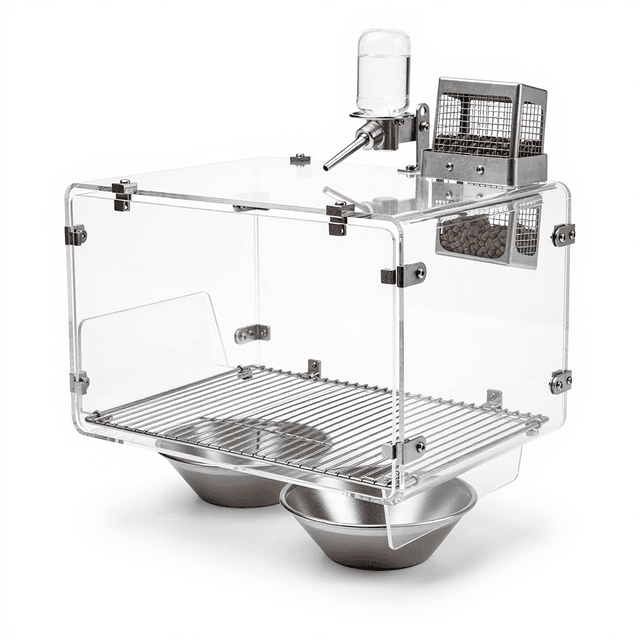
Rodent Metabolic Cages for small rodents
Precision metabolic cage system for small rodents enabling simultaneous collection of separated urine and feces samples while monitoring food and water intake for comprehensive metabolic studies.

Louise Corscadden, PhD
Director of Science · ConductScience
Ask Louise about Rodent Metabolic Cages for small rodents fit, setup, configuration, or quote prep.
Already working with us? Sign in to connect this with My Scientist.
Key Specifications
Full details →- Model fit
- Gerbil, Hamster, Mouse, Rat
- SKU family
- ORCH-RMC-S-T-1
- Shipping box
- 12.6 x 8.27 x 8.07 cm
- Ordering
- Online checkout and quote request available
- Category
- Metabolic Cages
- Build notes
- Confirm accessories, station layout, and support needs before purchase
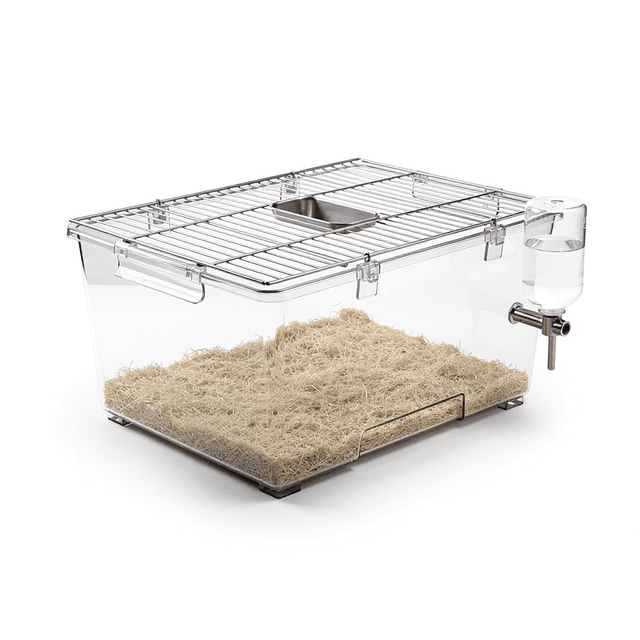
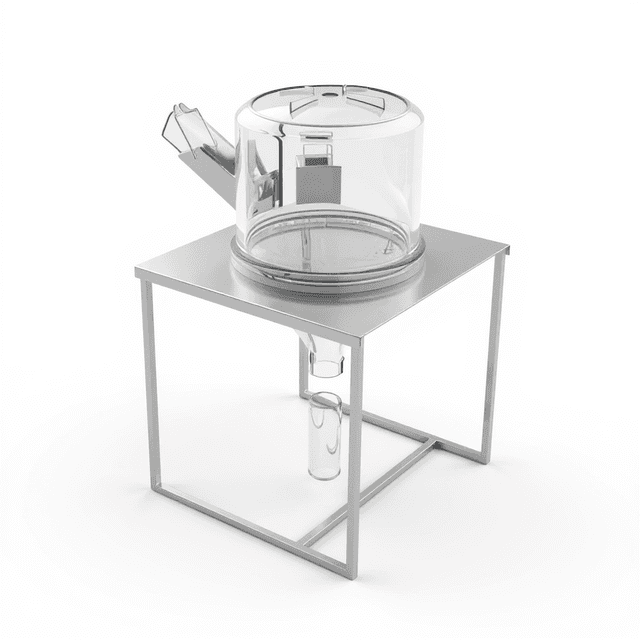
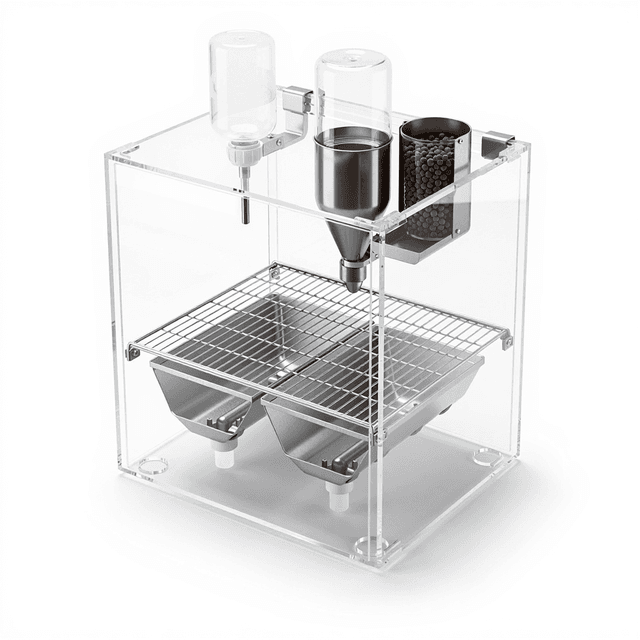
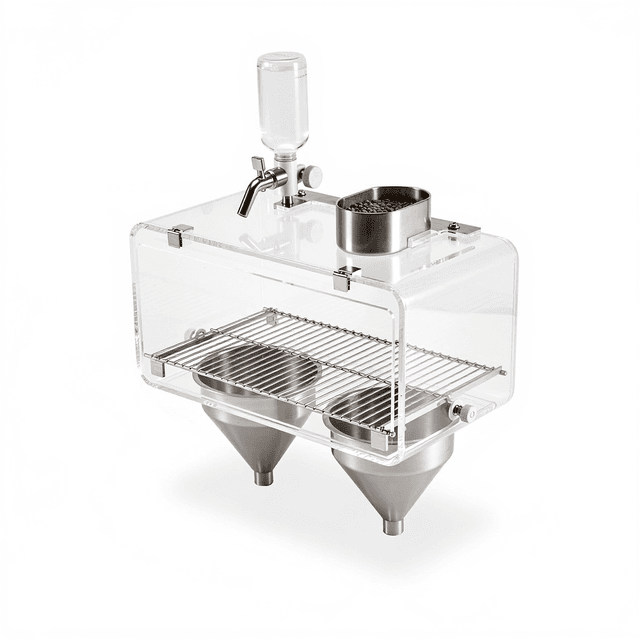
The Rodent Metabolic Cage is a precision animal housing system designed for comprehensive metabolic studies in small laboratory rodents. Measuring 21 cm × 20.5 cm × 32 cm, this acrylic apparatus enables simultaneous collection and separation of urine and feces while monitoring food and water intake. The system features an open mesh floor design that allows waste products to fall through a specialized funnel system, directing urine to a central collection tube while routing feces to a separate peripheral collection vessel, preventing cross-contamination between samples.
The apparatus includes an integrated feeding chamber with sliding drawer for external refilling and a water bottle system, both positioned to minimize animal disturbance during data collection. This design enables researchers to conduct quantitative metabolic assessments by measuring changes in food and water consumption alongside waste product analysis, supporting studies in energy expenditure, drug metabolism, nutritional absorption, and physiological monitoring across various research applications.
How It Works
The metabolic cage operates on a gravity-based separation principle using a specialized funnel collection system. Animals are housed on an open mesh floor that allows waste products to fall through into a funnel positioned below the cage. The funnel design creates differential flow paths: liquid urine flows down the central channel into a dedicated collection tube, while solid fecal pellets roll along the funnel sides into a separate collection vessel. This physical separation prevents cross-contamination between sample types.
Food and water consumption are measured through weight-based monitoring systems. The feeding chamber features a sliding drawer that can be refilled externally without disturbing the animal, while the water bottle system allows volume measurements. Intake calculations are performed by subtracting pre- and post-feeding weights and measuring remaining water volumes. The gnaw-proof acrylic construction ensures system integrity while maintaining animal safety.
The open floor design eliminates bedding material that would otherwise absorb urine and contaminate fecal samples. This approach enables accurate quantitative collection of both waste products for downstream analytical procedures including metabolite analysis, compound excretion studies, and digestive efficiency assessments.
Features & Benefits
Automation Level
- manual
Research Domain
- Aging Research
- Developmental Biology
- Endocrinology
- Metabolic Research
- Pharmaceutical QC
- Toxicology
Species
- Gerbil
- Hamster
- Mouse
- Rat
Shipping weight
- 6.46 lb
Shipping box
- L: 12.6 cm
- W: 8.27 cm
- H: 8.07 cm
| Feature | This Product | Typical Alternative | Advantage |
|---|---|---|---|
| Waste Separation Method | Gravity-based funnel system with dedicated flow paths for urine and feces | Basic collection systems often require manual separation or use less reliable separation mechanisms | Eliminates cross-contamination and reduces labor-intensive post-collection processing steps. |
| Feeding System Design | External sliding drawer chamber for disturbance-free refilling | Internal feeding systems typically require cage opening and animal handling for food replacement | Maintains consistent environmental conditions and reduces stress-induced behavioral artifacts during studies. |
| Construction Material | Gnaw-proof acrylic with transparent walls | Metal or plastic systems may limit visual monitoring capabilities | Enables continuous behavioral observation while ensuring system durability and animal safety. |
| Cage Dimensions | 21 × 20.5 × 32 cm compact design | Larger systems may require more laboratory space and housing resources | Fits standard laboratory settings while maintaining adequate space for natural rodent behaviors. |
This metabolic cage system offers integrated waste separation and external feeding access in a compact, transparent design suitable for quantitative metabolic studies. The gravity-based separation system and gnaw-proof construction provide reliable sample collection with minimal maintenance requirements.
Practical Tips
Weigh all collection tubes empty before each study and verify feeding chamber and water bottle measurement accuracy with known quantities.
Why: Baseline measurements are essential for accurate intake and output calculations throughout the study period.
Clean the funnel system thoroughly between animals using laboratory detergent followed by appropriate disinfection to prevent sample carryover.
Why: Residual material in the separation system can contaminate subsequent samples and affect analytical results.
Allow 24-48 hours for animal acclimation before beginning data collection to minimize stress-related behavioral changes.
Why: Stress responses can significantly alter metabolic parameters and feeding behaviors, affecting study validity.
Record collection times precisely and maintain consistent temperature and humidity conditions throughout the study period.
Why: Environmental factors can influence metabolic rate and waste production, introducing variability in measurements.
Check funnel positioning regularly to ensure proper waste separation and verify that collection tubes are securely attached.
Why: Misaligned components can lead to sample loss or cross-contamination between urine and feces collections.
Handle collected samples using appropriate personal protective equipment and follow institutional biosafety protocols for waste disposal.
Why: Animal waste products may contain pathogens or administered compounds requiring special handling procedures.
Monitor water bottle positioning to prevent leakage while ensuring easy animal access for accurate consumption measurements.
Why: Water spillage can contaminate samples and create inaccurate intake calculations affecting metabolic balance assessments.
Setup Guide
What’s in the Box
- Acrylic metabolic cage with mesh floor (typical)
- Funnel collection assembly (typical)
- Urine collection tube (typical)
- Feces collection tube (typical)
- Feeding chamber with sliding drawer (typical)
- Water bottle system (typical)
- Assembly hardware (typical)
- User manual and setup guide (typical)
Warranty
ConductScience provides a standard 1-year manufacturer warranty covering defects in materials and workmanship, with technical support for setup and operational guidance throughout the warranty period.
Compliance
What is the minimum study duration recommended for accurate metabolic measurements?
A 24-48 hour acclimation period is recommended before data collection, with study durations typically ranging from 3-7 days depending on the metabolic parameter being measured and the expected magnitude of changes.
How is cross-contamination prevented between urine and feces samples?
The funnel design creates separate flow paths where liquid urine flows down the central channel while solid feces roll along the funnel sides, directing each waste type to dedicated collection tubes.
What sample volumes can typically be collected from small rodents?
Sample volumes vary by species and study duration; consult product datasheet for collection tube capacities and recommended collection intervals for your specific research application.
Can the feeding system accommodate different diet types?
The sliding drawer feeding chamber can accommodate various pelleted diets and powdered formulations, with external access allowing diet changes without animal disturbance.
What cleaning protocols are recommended between animals?
Thorough cleaning with laboratory detergents followed by appropriate disinfection is recommended, with particular attention to the funnel system and collection tubes to prevent sample carryover.
How accurate are the food and water intake measurements?
Accuracy depends on the precision of weighing equipment used; the system enables measurement to the limits of your analytical balance for food weighing and graduated cylinder for water volume.
Is the cage suitable for long-term housing studies?
The cage is designed for metabolic assessment periods rather than long-term housing, with study durations typically limited by animal welfare considerations and IACUC protocol requirements.
Have a question about this product?
Have a question? Just ask.
Send it over and we'll email you a personalized answer — no call, no scheduling.
Prefer to talk it through?
Accessories
Enhance your setup with compatible accessories