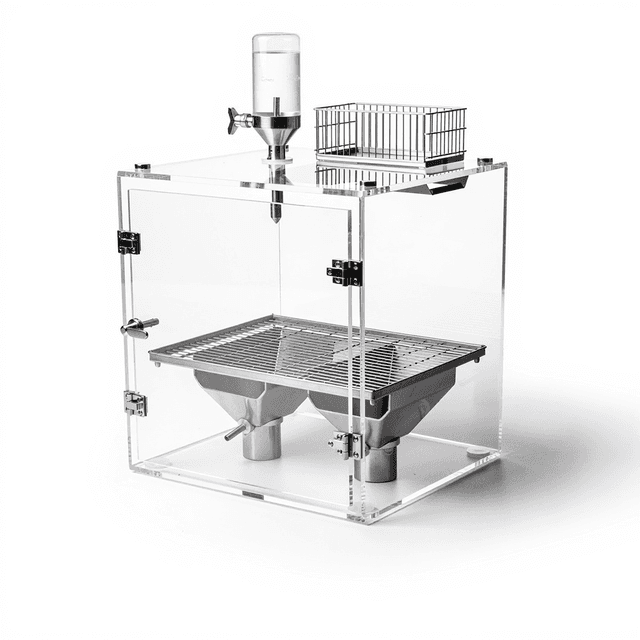
Metabolic Cages
Polycarbonate metabolic cages with separation funnel system for precise collection of rodent urine and feces while monitoring food and water intake in metabolic studies.

Louise Corscadden, PhD
Director of Science · ConductScience
Ask Louise about Metabolic Cages fit, setup, configuration, or quote prep.
Already working with us? Sign in to connect this with My Scientist.
Key Specifications
Full details →- Model fit
- Mouse, Rat
- SKU family
- ORCH-RMC-03
- Shipping box
- 11.81 x 11.81 x 9.25 cm
- Ordering
- Online checkout and quote request available
- Category
- Metabolic Cages
- Build notes
- Confirm accessories, station layout, and support needs before purchase
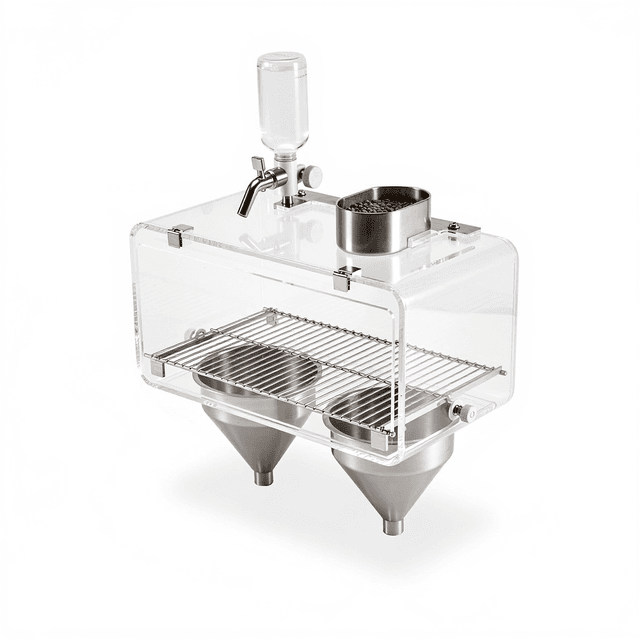
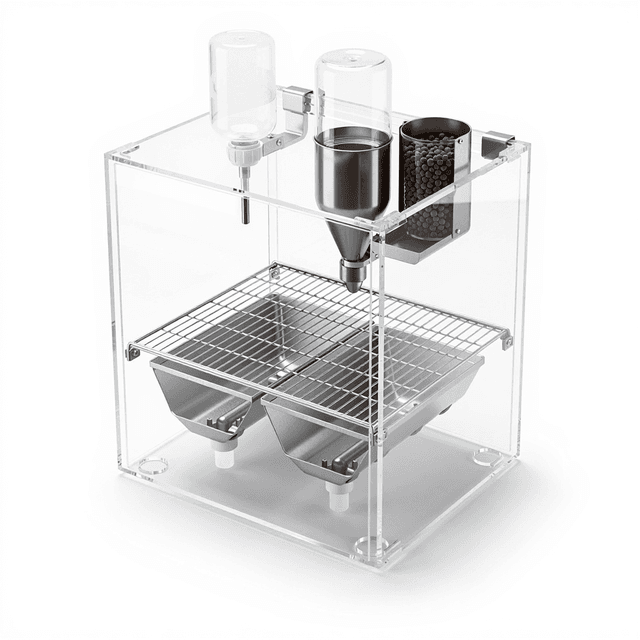
The ConductScience Metabolic Cage system provides precise separation and collection of rodent urine and feces while enabling accurate measurement of food and water intake for metabolic studies. The system features an open floor with grid mesh construction that allows waste products to fall into a specialized funnel system, where urine flows through the center into a dedicated collection tube while feces are directed to a separate collection container, preventing cross-contamination between waste products.
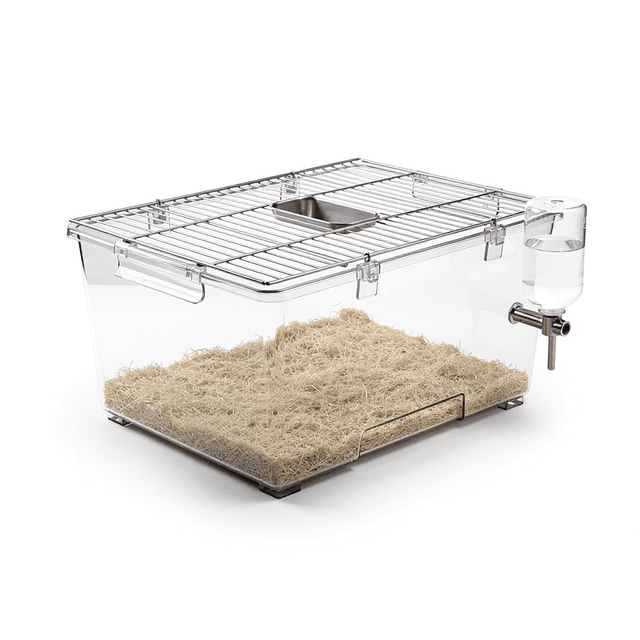
Each metabolic cage is constructed from polycarbonate materials and includes dual floor grills sized for different rodent species, a 250ml water bottle with holder, universal food hopper, and waste water collection system. The mobile stainless steel rack accommodates up to four, eight, or ten metabolic cages in a two-tier configuration, positioning cages at ergonomically convenient heights for observation and maintenance while minimizing assembly components to reduce labor requirements.
How It Works
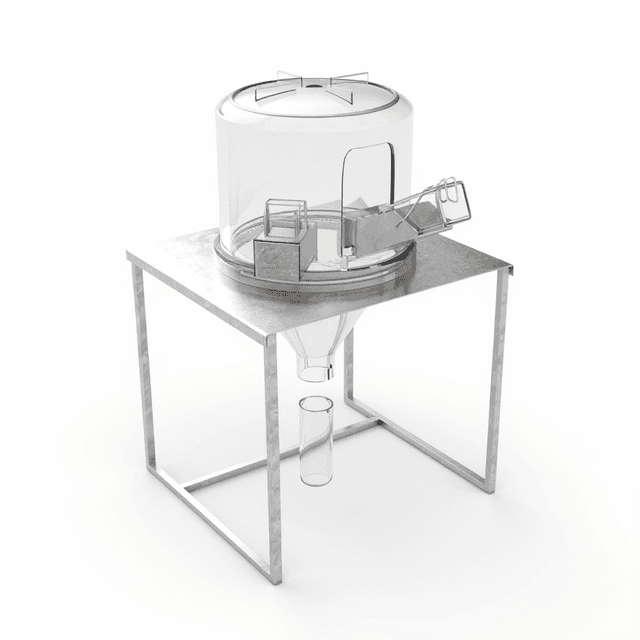
The metabolic cage operates on a gravity-based separation principle using a specialized polycarbonate funnel system positioned beneath an open grid floor. When rodents defecate and urinate, the grid mesh (235mm diameter) allows waste products to fall through into the collection funnel below the cage. The funnel's geometric design creates distinct flow paths for different waste types based on their physical properties.
Urine, being liquid, flows down the center channel of the funnel directly into a dedicated polypropylene collection tube positioned outside the cage. Solid feces, due to their different flow characteristics, roll down the sloped sides of the funnel into a separate feces collection tube, maintaining complete separation between the two waste streams. This prevents cross-contamination that typically occurs in standard bedded cages where urine is absorbed into bedding material.
Food and water intake measurements are achieved through the universal food hopper and 250ml polycarbonate water bottle system. Researchers can accurately determine consumption by weighing the food hopper and measuring water bottle volume before and after defined time periods, providing precise intake data concurrent with waste collection.
Features & Benefits
Automation Level
- manual
Research Domain
- Aging Research
- Developmental Biology
- Metabolic Research
- Pharmaceutical QC
- Toxicology
Species
- Mouse
- Rat
Shipping weight
- 65.87 lb
Shipping box
- L: 11.81 cm
- W: 11.81 cm
- H: 9.25 cm
| Feature | This Product | Typical Alternative | Advantage |
|---|---|---|---|
| Waste Separation System | Dedicated funnel design with separate urine and feces collection pathways | Basic wire floors or simple collection trays with limited separation capability | Prevents cross-contamination between sample types, enabling more accurate analytical results for both waste streams |
| Floor Area | 434 square centimeters of floor space | Smaller floor areas in some compact designs or larger areas in less space-efficient models | Provides adequate space for normal rodent movement while maintaining efficient laboratory footprint |
| Material Construction | Polycarbonate cage and collection components with polypropylene tubes | Wire mesh or acrylic construction with varying chemical resistance | Offers superior chemical resistance for diverse analytical protocols while providing visual monitoring capability |
| Rack Configuration | Two-tier mobile system accommodating 4-10 cages | Single-tier systems or fixed installations with limited capacity | Maximizes space utilization while maintaining ergonomic access for routine monitoring and maintenance |
| Food Monitoring | Universal food hopper with spillage minimization design | Standard feeders or external feeding systems requiring separate monitoring | Integrates food intake measurement directly into the cage system for comprehensive metabolic data collection |
| Assembly Complexity | Minimal component design for reduced assembly time | Multi-component systems requiring extensive setup procedures | Reduces labor requirements and potential assembly errors while maintaining system functionality |
This metabolic cage system combines efficient waste separation with integrated intake monitoring in a space-optimized rack configuration. The polycarbonate construction and minimal assembly design provide practical advantages for routine metabolic studies requiring precise sample collection and quantitative measurements.
Practical Tips
Calibrate analytical balances daily and verify water bottle graduations with known volumes before beginning studies.
Why: Accurate intake measurements depend on precise weighing and volume determination capabilities
Inspect collection funnels weekly for debris buildup that could affect waste separation efficiency.
Why: Blocked or contaminated funnels compromise the separation between urine and feces samples
Pre-weigh all food portions and record initial water bottle volumes before each measurement period.
Why: Baseline measurements are essential for calculating accurate consumption data over defined time intervals
If urine appears in the feces collection tube, check funnel alignment and ensure proper cage positioning on the stand.
Why: Misalignment disrupts the gravity-based separation mechanism designed to direct waste to appropriate collection points
Monitor collection tubes every 4-6 hours during the first 24-hour period to verify proper separation function.
Why: Early detection of separation issues prevents loss of valuable samples and ensures data integrity throughout the study
Use appropriate PPE when handling waste collection tubes and follow institutional biosafety protocols for sample processing.
Why: Rodent waste products may contain pathogens or study compounds requiring proper safety precautions during handling
Maintain consistent room temperature and humidity during metabolic studies to minimize environmental effects on measurements.
Why: Environmental fluctuations can affect water consumption patterns and urine concentration, impacting study reproducibility
Replace collection tubes between animals and thoroughly rinse all components with distilled water before autoclaving.
Why: Residual contamination from previous subjects can interfere with analytical results and introduce cross-contamination artifacts
Setup Guide
What’s in the Box
- Polycarbonate cage with lid
- Polycarbonate collection funnel
- Two floor grills (different sizes)
- Polycarbonate linear diffuser guide
- Urine collection tube (polypropylene)
- Feces collection tube (polypropylene)
- Polycarbonate water bottle (250ml) with holder
- Wastewater collection tube (polypropylene)
- Universal food hopper
- Cage stand
- Assembly instructions (typical)
- Cleaning protocol guidelines (typical)
Warranty
ConductScience provides a standard one-year manufacturer warranty covering defects in materials and workmanship, with technical support available for setup and operational guidance.
Compliance
What is the minimum acclimatization period required before beginning metabolic measurements?
A 24-48 hour acclimatization period is recommended to minimize stress-related effects on metabolic parameters, though some protocols may require up to 72 hours depending on the specific study design and species.
How do you prevent urine evaporation during extended collection periods?
Collection tubes should be kept at 4°C when possible, and collection intervals should not exceed 24 hours. Some researchers add mineral oil to urine collection tubes to prevent evaporation during longer studies.
What cleaning protocols are recommended between animals?
All polycarbonate and polypropylene components can be washed with standard laboratory detergents, rinsed thoroughly, and autoclaved if required. Avoid harsh chemicals that may leave residues affecting metabolic measurements.
How accurate are the food intake measurements compared to standard housing?
The universal food hopper design minimizes spillage compared to standard cage feeders, typically improving measurement accuracy to within 0.1-0.2g when weighed on analytical balances.
Can the system accommodate special diets or liquid supplements?
The food hopper accommodates pellets and powdered diets, while liquid supplements can be administered through the water bottle system, though separate bottles may be needed for precise intake measurements of both water and supplements.
What is the maximum collection period before sample degradation occurs?
Urine samples should be collected every 4-24 hours depending on the analytes of interest, while feces can typically be collected every 24 hours. Both should be processed or frozen immediately after collection.
How does housing in metabolic cages affect normal rodent behavior?
The open floor design and lack of bedding may initially affect behavior, which is why acclimatization periods are critical. Some studies show adaptation within 48-72 hours for most metabolic parameters.
What are the space requirements for the rack system in laboratory settings?
The mobile rack requires approximately 1 square meter of floor space for a 10-cage configuration, with additional clearance needed for access and maintenance around the two-tier structure.
Have a question about this product?
Have a question? Just ask.
Send it over and we'll email you a personalized answer — no call, no scheduling.
Prefer to talk it through?
Accessories
Enhance your setup with compatible accessories