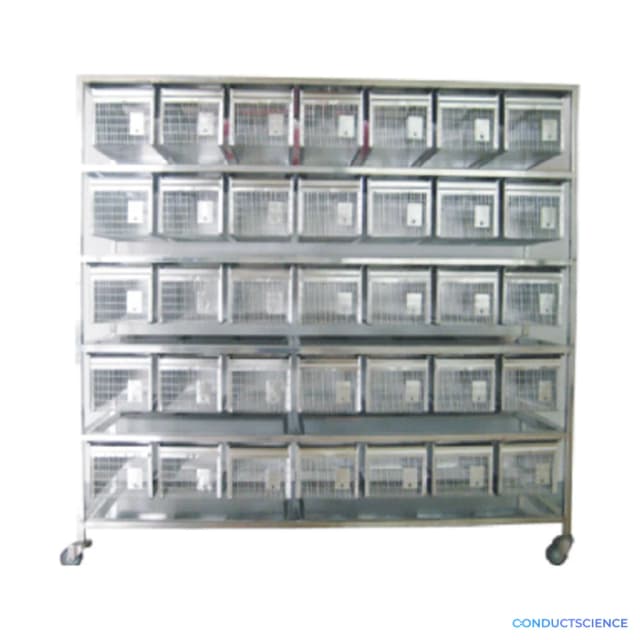
Stainless Steel Metabolic Cage for Non-Human Primates
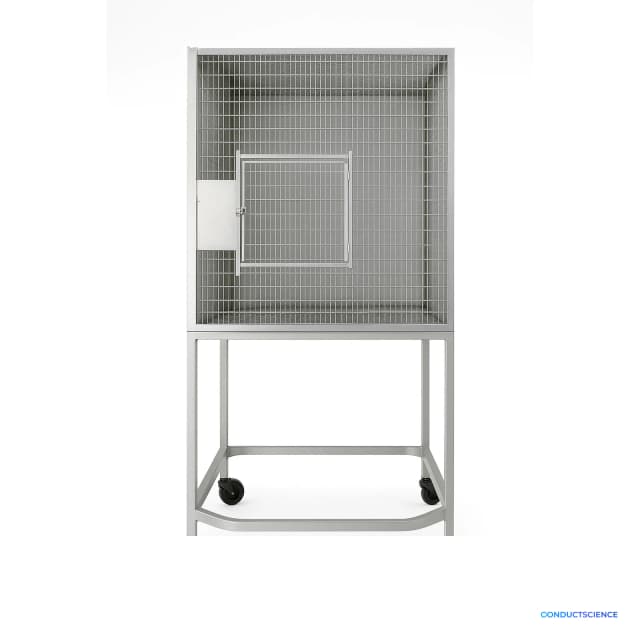
Medical-grade SS304 stainless steel metabolic cage designed for non-human primates with separate urine and feces collection capabilities and food intake monitoring for ADME and toxicology studies.

Louise Corscadden, PhD
Director of Science · ConductScience
Ask Louise about Stainless Steel Metabolic Cage for Non-Human Primates fit, setup, configuration, or quote prep.
Already working with us? Sign in to connect this with My Scientist.
Key Specifications
Full details →- Model fit
- Non-human Primate
- SKU family
- PTY-0022
- Shipping box
- 65.0 x 32.0 x 82.0 cm
- Ordering
- Online checkout and quote request available
- Category
- Large Animal Housing
- Build notes
- Stainless Steel SS304
The Stainless Steel Metabolic Cage for Non-Human Primates provides a controlled housing environment engineered for quantitative collection and measurement of metabolic parameters in primate research. Constructed from medical-grade SS304 stainless steel, this primate-rated reinforced enclosure enables separate collection of urine and feces while supporting food intake measurement protocols essential for ADME studies, metabolic disease research, and nutritional investigations.
The reinforced design addresses the unique requirements of non-human primate housing, accommodating natural behaviors while maintaining the precision sample collection necessary for regulatory submission-quality data. This system supports metabolism studies requiring quantitative recovery of excreta and accurate food consumption monitoring, commonly employed in pharmaceutical development, toxicology assessments, and comparative metabolism research across primate species.
How It Works
The metabolic cage operates on the principle of complete mass balance accounting, where all inputs (food and water) and outputs (urine, feces, and residual food) are quantitatively measured. The SS304 stainless steel construction provides a non-reactive surface that prevents absorption or leaching of test compounds, maintaining sample integrity throughout collection periods.
Separate collection funnels direct urine and feces into distinct receptacles, preventing cross-contamination that could compromise analytical results. The food delivery system allows precise measurement of offered food weight and collection of unconsumed portions, enabling calculation of actual intake. The reinforced enclosure design accommodates normal primate locomotion and postural behaviors while ensuring complete sample recovery.
The system maintains environmental control through adequate ventilation while containing all excreta within the collection apparatus. Sample preservation is achieved through collection vessel design that minimizes evaporation losses and allows for preservation additives when required by analytical protocols.
Features & Benefits
Collection
- Separate urine and feces collection
Food Monitoring
- Intake measurement capability
Security
- Primate-rated reinforced enclosure
Automation Level
- manual
Brand
- ConductScience
Material
- Stainless Steel SS304
Species
- Non-human Primate
Certifications
- CE, ISO, RoHS
Research Domain
- Metabolic Research
- Pharmaceutical QC
- Toxicology
Shipping weight
- 40.0 lb
Shipping box
- L: 65.0 cm
- W: 32.0 cm
- H: 82.0 cm
| Feature | This Product | Typical Alternative | Advantage |
|---|---|---|---|
| Construction Material | SS304 medical-grade stainless steel | Basic models often use lower-grade steel or plastic components | Chemical inertness prevents compound absorption and enables harsh cleaning protocols required for cross-over studies |
| Structural Design | Primate-rated reinforced enclosure | Standard designs may lack reinforcement for primate use | Withstands normal primate behaviors while maintaining sample collection integrity throughout study periods |
| Sample Collection | Separate urine and feces collection systems | Some systems combine collection streams | Prevents cross-contamination between excretion routes, enabling independent metabolite analysis and accurate mass balance |
| Food Monitoring | Integrated intake measurement capability | External weighing systems often required | Built-in monitoring reduces handling steps and improves data accuracy for metabolic balance calculations |
| Certifications | CE, ISO, and RoHS certified | Certification levels vary by manufacturer | Meets international standards for use in regulated research environments requiring validated equipment |
This cage combines medical-grade construction with primate-specific design features and integrated monitoring capabilities. The separate collection systems and reinforced structure address the unique requirements of non-human primate metabolic studies while maintaining the precision necessary for regulatory-quality data collection.
Practical Tips
Validate collection efficiency using known tracer compounds before each study period to establish baseline recovery percentages.
Why: Quantitative studies require documented collection efficiency to calculate accurate mass balance and metabolite recovery.
Inspect collection funnels and vessel seals daily during studies to prevent sample loss from loose connections or wear.
Why: Even small leaks can compromise quantitative recovery and invalidate metabolic balance calculations.
Allow adequate acclimation time for subjects to adapt to cage environment before initiating data collection phases.
Why: Stress-related changes in feeding and elimination patterns can introduce artifacts in baseline metabolic measurements.
Record environmental conditions (temperature, humidity) alongside sample collection data to identify potential variables affecting metabolism.
Why: Environmental factors can influence metabolic rate and excretion patterns, affecting study interpretation.
If collection efficiency appears low, check for spillage outside collection areas and verify proper funnel alignment.
Why: Primate movement can shift collection components, leading to sample loss that appears as reduced recovery.
Use appropriate personal protective equipment when handling collection vessels, especially for studies involving hazardous compounds.
Why: Concentrated metabolites in urine and feces may retain biological activity or toxicity of parent compounds.
Implement standardized feeding schedules and food preparation protocols to minimize intake measurement variability.
Why: Consistent food presentation reduces behavioral variables that could affect appetite and consumption patterns.
Setup Guide
What’s in the Box
- Stainless steel metabolic cage assembly
- Urine collection funnel and mounting hardware
- Feces collection funnel and mounting hardware
- Sample collection vessels (typical)
- Food delivery and weighing system
- Mounting brackets and hardware
- Operating manual and setup guide (typical)
- Calibration verification documentation (typical)
Warranty
ConductScience provides a standard one-year manufacturer warranty covering defects in materials and workmanship, with technical support for setup and operational guidance. Extended service agreements available for facilities requiring validated performance documentation.
Compliance
References
Background reading relevant to this product:
What is the minimum study duration this cage can support without sample degradation?
Sample preservation depends on collection interval frequency and preservation methods used. The stainless steel construction prevents compound absorption, but consult your analytical method requirements for specific preservation and collection timing protocols.
How is collection efficiency validated for quantitative recovery studies?
Conduct pre-study validation using known masses of food and liquid with tracer compounds to establish recovery percentages. Document collection efficiency for both urine and feces collection systems prior to study initiation.
Can the cage accommodate different primate species and sizes?
The reinforced design accommodates standard non-human primate research species. Verify cage dimensions are appropriate for your specific species and animal size requirements before study initiation.
What cleaning and decontamination procedures are recommended between studies?
SS304 stainless steel surfaces can withstand standard laboratory detergents and disinfectants. Follow your facility's decontamination protocols appropriate for the compounds studied, ensuring complete residue removal between animals.
How accurate is the food intake measurement system?
Measurement accuracy depends on proper calibration and spillage recovery protocols. Consult product datasheet for specific weighing system specifications and implement standard operating procedures for consistent results.
What sample volumes can the collection vessels accommodate?
Collection vessel capacity varies with study duration and animal size. Plan collection intervals based on expected urine production rates and feces output to prevent overflow and sample loss.
Is the cage suitable for studies requiring sterile sample collection?
The stainless steel construction can be sterilized using standard laboratory methods. Implement aseptic collection techniques and sterile collection vessels when study protocols require contamination-free samples.
Have a question about this product?
Have a question? Just ask.
Send it over and we'll email you a personalized answer — no call, no scheduling.
Prefer to talk it through?
Accessories
Enhance your setup with compatible accessories