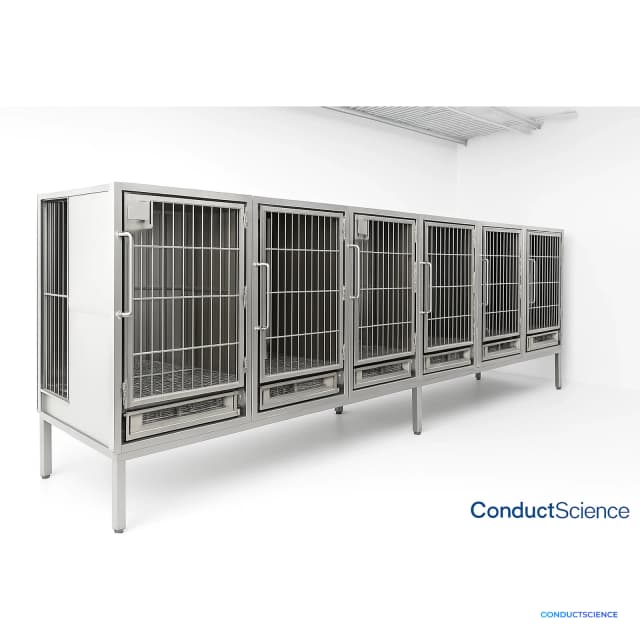
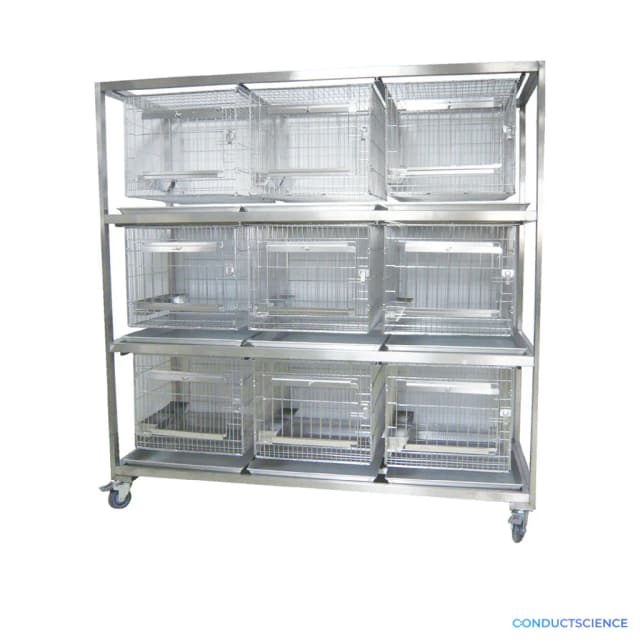
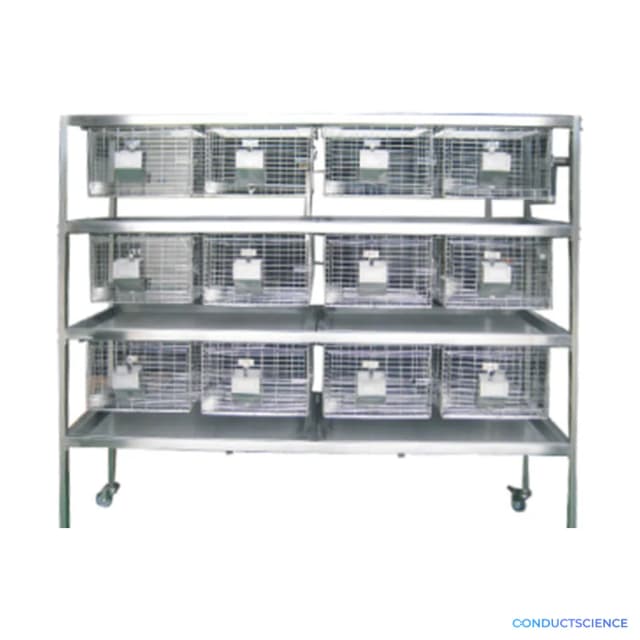
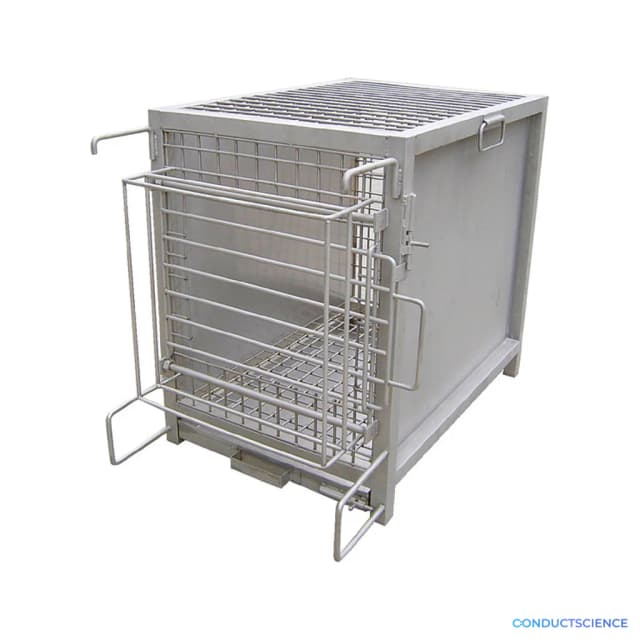
Stainless Steel Laboratory Sheep Cage
Single-tier stainless steel primate cage with durable support frame

Louise Corscadden, PhD
Director of Science · ConductScience
Ask Louise about Stainless Steel Laboratory Sheep Cage fit, setup, configuration, or quote prep.
Already working with us? Sign in to connect this with My Scientist.
Key Specifications
Full details →- Model fit
- Sheep
- SKU family
- PTY-0019
- Shipping box
- 700 x 900 x 1000 cm
- Ordering
- Online checkout and quote request available
- Category
- Large Animal Housing
- Build notes
- Stainless Steel SS304
Stainless steel laboratory primate/monkey cage designed for research facilities. Single-tier configuration provides safe, secure housing for laboratory animals with easy access for care and observation.
How It Works
The cage system operates as a specialized containment unit designed around ovine behavioral patterns and physical requirements. The SS304 stainless steel construction provides a non-porous surface that prevents bacterial adhesion and allows for thorough chemical decontamination between research subjects. The polished finish eliminates surface irregularities that could harbor contaminants or cause injury to research animals.
The robust 60 kg construction ensures structural integrity under the physical stresses imposed by adult sheep movement and normal behavioral activities. The stainless steel material maintains dimensional stability across temperature variations typical in laboratory environments while resisting corrosion from cleaning agents and biological materials. This combination enables consistent housing conditions throughout extended research protocols requiring sterile or controlled environments.
Features & Benefits
Surface Treatment
- Polished
Brand
- ConductScience
Material
- Stainless Steel SS304
Species
- Sheep
Research Domain
- Cardiovascular
- Developmental Biology
- Metabolic Research
- Pharmaceutical QC
Shipping weight
- 60.0 lb
Shipping box
- L: 700 cm
- W: 900 cm
- H: 1000 cm
| Feature | This Product | Typical Alternative | Advantage |
|---|---|---|---|
| Construction Material | SS304 stainless steel with polished finish | Standard cages often use galvanized steel or lower-grade stainless steel | Superior corrosion resistance enables aggressive decontamination protocols without material degradation |
| Surface Treatment | Polished surface treatment | Mill-finish or unpolished surfaces are common in basic models | Eliminates surface porosity that could harbor pathogens or complicate cleaning procedures |
| Structural Weight | 60 kg robust construction | Lighter constructions vary by model and materials used | Provides stable containment preventing cage displacement during animal movement or procedures |
| Research Applications | Designed for cardiovascular, orthopedic, and surgical research | General housing systems may lack specialized research considerations | Optimized for controlled research environments requiring sterile conditions and procedural access |
The cage system combines SS304 stainless steel construction with polished surface treatment to provide enhanced decontamination capabilities and structural durability. The 60 kg construction weight ensures stable containment for adult sheep subjects in demanding research applications.
Practical Tips
Inspect welds and connection points monthly for signs of stress or corrosion that could compromise structural integrity.
Why: Early detection prevents cage failure that could endanger research subjects or compromise study protocols.
Allow surfaces to air-dry completely after decontamination before introducing new research subjects.
Why: Prevents chemical residue exposure and ensures complete disinfectant contact time for pathogen elimination.
Check all latching mechanisms and door seals before each use to prevent accidental animal escape.
Why: Ensures containment security and prevents disruption of controlled research environments.
Document cleaning protocols and cage rotation schedules to maintain consistent environmental conditions between subjects.
Why: Standardized housing conditions reduce experimental variability and improve research reproducibility.
Address any surface scratches or damage immediately using appropriate stainless steel repair compounds.
Why: Prevents bacterial colonization in damaged areas and maintains the integrity of decontamination procedures.
Rotate cage usage when multiple units are available to allow thorough decontamination between research protocols.
Why: Ensures complete pathogen elimination and prevents cross-contamination between different research studies.
Setup Guide
What’s in the Box
- Stainless steel cage assembly (typical)
- Hardware fasteners and connection elements (typical)
- Installation and assembly instructions
- Animal care and maintenance guidelines (typical)
- Material certification documentation (typical)
Warranty
ConductScience provides standard one-year manufacturer warranty covering material defects and construction quality, with technical support for installation and maintenance procedures.
Compliance
What decontamination protocols are compatible with the SS304 stainless steel construction?
The polished SS304 surface accommodates standard veterinary disinfectants including quaternary ammonium compounds, chlorine-based solutions, and alcohol formulations without material degradation or residue retention.
What is the maximum weight capacity for adult sheep subjects?
Consult product datasheet for specific load ratings, though the 60 kg cage construction indicates design for standard adult ovine research subjects typically weighing 45-90 kg.
How does the cage design accommodate different research procedures?
The large animal housing configuration provides adequate space for pre-procedural preparation, post-surgical recovery, and routine behavioral observations while maintaining containment security.
What maintenance schedule is recommended for the stainless steel surfaces?
Daily cleaning with approved disinfectants between subjects, with periodic deep cleaning using alkaline detergents to maintain surface integrity and prevent biofilm formation.
Is the cage compatible with environmental monitoring systems?
The stainless steel construction accommodates standard temperature, humidity, and air quality monitoring equipment commonly used in large animal research facilities.
What are the ventilation requirements for proper cage operation?
Consult facility guidelines for large animal housing air exchange rates, typically requiring 10-15 air changes per hour for adequate odor control and respiratory health.
Have a question about this product?
Have a question? Just ask.
Send it over and we'll email you a personalized answer — no call, no scheduling.
Prefer to talk it through?