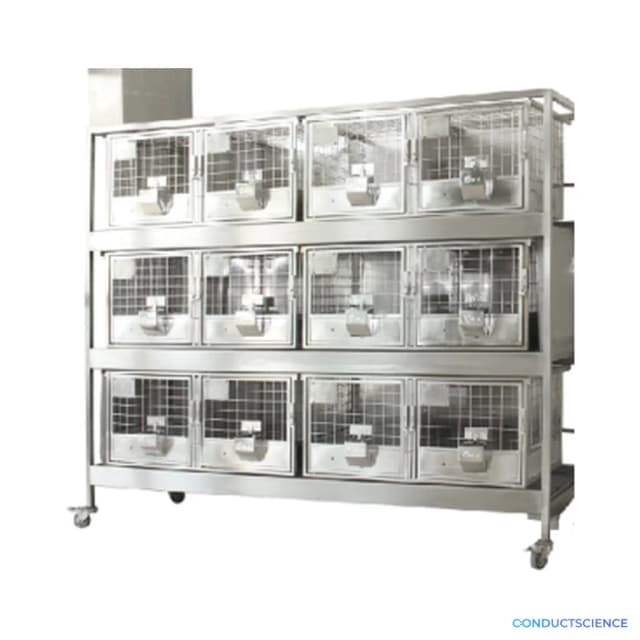
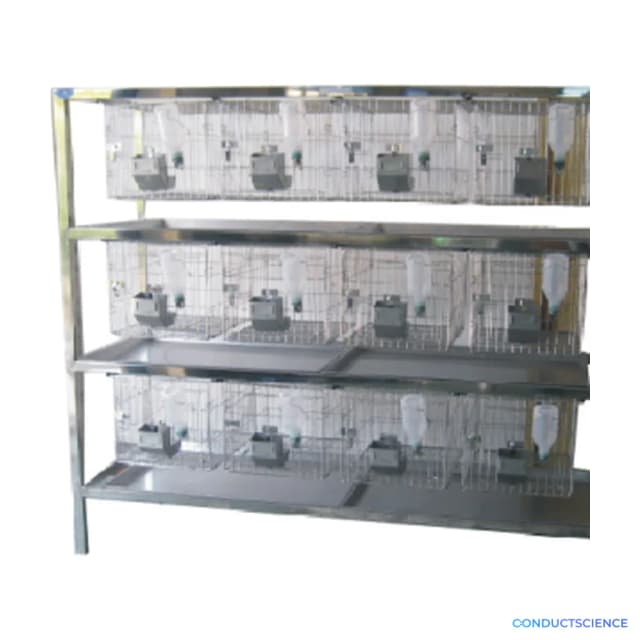
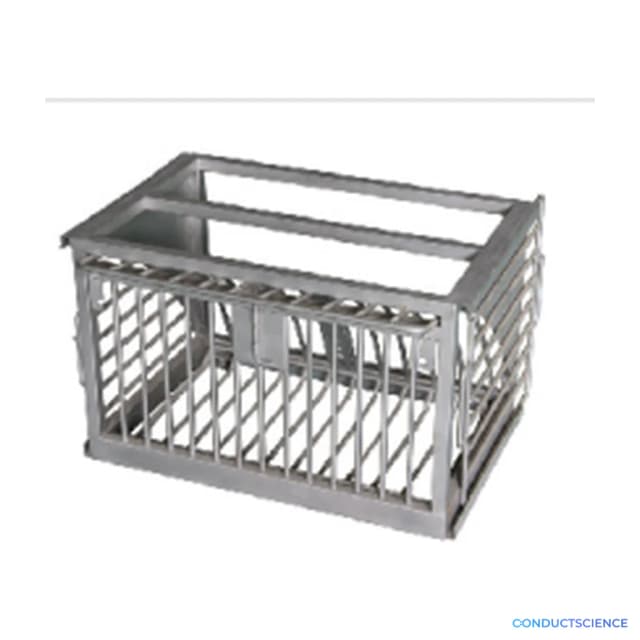
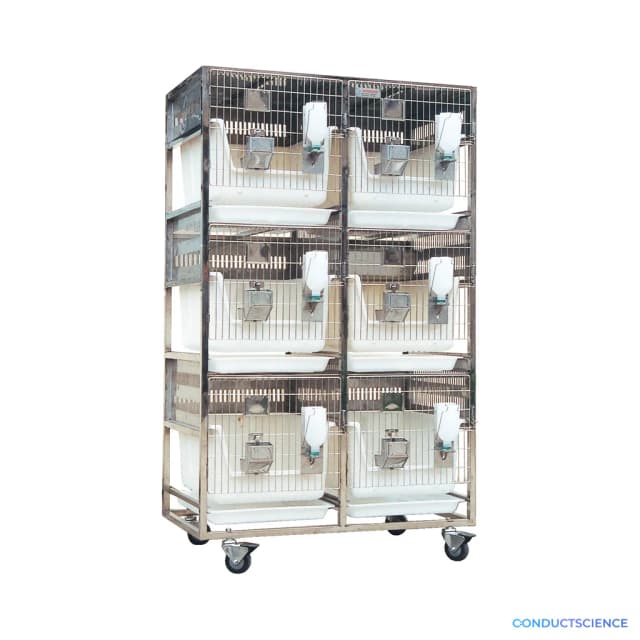
Stainless Steel Laboratory Mini Pig Cage
SS304 stainless steel housing system designed for mini pig research models in cardiovascular, dermatological, and surgical research applications.

Louise Corscadden, PhD
Director of Science · ConductScience
Ask Louise about Stainless Steel Laboratory Mini Pig Cage fit, setup, configuration, or quote prep.
Already working with us? Sign in to connect this with My Scientist.
Key Specifications
Full details →- Model fit
- Pig
- SKU family
- PTY-0018
- Shipping box
- 65.0 x 32.0 x 82.0 cm
- Ordering
- Online checkout and quote request available
- Category
- Large Animal Housing
- Build notes
- Stainless Steel SS304
The Stainless Steel Laboratory Mini Pig Cage provides specialized housing for swine research models in cardiovascular, dermatological, and surgical research applications. Constructed from SS304 stainless steel with polished surface treatment, this housing system accommodates the unique physiological and behavioral requirements of mini pigs while maintaining the sterile conditions essential for controlled biomedical research protocols.
Mini pig models serve as critical translational research tools due to their anatomical and physiological similarities to humans, particularly in cardiovascular and dermatological studies. This housing system supports extended research protocols requiring consistent environmental conditions and easy access for procedures, sampling, and monitoring while meeting institutional animal care standards.
How It Works
The housing system utilizes SS304 stainless steel construction to provide a corrosion-resistant, non-reactive environment suitable for extended research protocols. The polished surface treatment creates a smooth, non-porous finish that prevents bacterial adhesion and facilitates thorough decontamination procedures essential for maintaining pathogen-free research conditions.
The cage design accommodates the behavioral and physiological needs of mini pigs while allowing researchers controlled access for procedures, sample collection, and monitoring. The stainless steel framework provides structural integrity to safely contain animals weighing 20-70 kg typical of research mini pig breeds, while the open design permits environmental control and observation.
Housing parameters can be controlled through facility environmental systems, allowing researchers to maintain specific temperature, humidity, and lighting conditions required for particular experimental protocols while ensuring animal welfare compliance.
Features & Benefits
Surface Treatment
- Polished
Brand
- ConductScience
Material
- Stainless Steel SS304
Species
- Pig
Research Domain
- Cancer Research
- Cardiovascular
- Developmental Biology
- Metabolic Research
- Pharmaceutical QC
Shipping weight
- 50.0 lb
Shipping box
- L: 65.0 cm
- W: 32.0 cm
- H: 82.0 cm
| Feature | This Product | Typical Alternative | Advantage |
|---|---|---|---|
| Construction Material | SS304 stainless steel with polished surface treatment | Entry-level systems often use painted steel or aluminum construction | Provides superior corrosion resistance and enables thorough decontamination required for sterile research environments. |
| Animal Size Accommodation | Designed specifically for mini pig research models | Generic large animal housing may not optimize for swine behavioral patterns | Species-specific design supports both animal welfare requirements and research protocol accessibility. |
| Surface Treatment | Polished finish prevents bacterial adhesion | Standard finishes may have surface irregularities that harbor contaminants | Facilitates thorough cleaning protocols essential for maintaining pathogen-free research conditions. |
| Research Application Focus | Optimized for cardiovascular, dermatological, and surgical research | General-purpose housing may not address specific research access requirements | Design features support translational research protocols requiring frequent animal access and monitoring. |
| Structural Integrity | 50 kg construction weight indicates substantial framework | Lighter-weight alternatives may compromise containment security | Ensures safe containment of animals up to 70 kg throughout extended research protocols. |
This housing system provides SS304 stainless steel construction with polished surface treatment specifically designed for mini pig research models. The substantial construction and species-specific design optimize both animal welfare and research accessibility requirements for translational biomedical studies.
Practical Tips
Implement daily visual inspection protocols for structural integrity and animal behavior to identify potential issues before they affect research outcomes.
Why: Early detection of housing problems prevents experimental disruption and maintains animal welfare standards.
Schedule weekly detailed cleaning of all surfaces with facility-approved disinfectants, paying particular attention to corners and latching mechanisms.
Why: Regular thorough cleaning prevents pathogen buildup and maintains the sterile environment required for valid research results.
Train all personnel on proper latching procedures and emergency access protocols before allowing unsupervised animal care activities.
Why: Proper training ensures both animal containment security and rapid response capability for emergency situations.
Document environmental conditions and animal behavior patterns during initial acclimation to establish baseline data for research protocols.
Why: Baseline documentation supports data interpretation and helps identify environmental factors that may influence research outcomes.
Inspect and lubricate latching mechanisms monthly with laboratory-safe lubricants to ensure smooth operation and secure containment.
Why: Regular mechanism maintenance prevents operational failures that could compromise research protocols or animal containment.
Address any surface damage or corrosion immediately by consulting with facility maintenance to prevent contamination risks.
Why: Surface integrity is critical for maintaining sterile conditions and preventing bacterial harboring that could affect research validity.
Maintain detailed logs of all housing modifications, cleaning procedures, and environmental conditions to support research data interpretation.
Why: Comprehensive documentation enables identification of housing variables that may influence experimental outcomes and supports reproducibility.
Setup Guide
What’s in the Box
- Stainless steel housing structure (typical)
- Latching mechanisms and door hardware (typical)
- Installation hardware and mounting components (typical)
- User manual and care instructions (typical)
Warranty
ConductScience provides standard manufacturer warranty coverage with technical support for proper installation and operation guidance. Contact technical support for specific warranty terms and service arrangements.
Compliance
What are the internal dimensions and weight capacity of this housing system?
Consult the product datasheet for specific internal dimensions. The system is designed for mini pigs typically weighing 20-70 kg used in research protocols, with structural integrity to safely accommodate these weight requirements.
How does the SS304 stainless steel construction compare to other materials for animal housing?
SS304 provides superior corrosion resistance and chemical inertness compared to painted steel or aluminum alternatives, essential for withstanding repeated decontamination cycles and maintaining sterile research conditions over extended use.
What decontamination procedures are compatible with this housing system?
The polished stainless steel surface supports standard laboratory disinfection protocols including quaternary ammonium compounds, bleach solutions, and other facility-approved sanitizers. The non-porous surface prevents bacterial adhesion and enables thorough cleaning.
Can this housing system be integrated with existing facility infrastructure?
The design accommodates integration with standard laboratory animal facility systems including ventilation, waste management, and environmental controls. Specific integration requirements should be reviewed with facility engineering.
What behavioral enrichment options are compatible with this housing design?
The open design allows for species-appropriate enrichment items compatible with mini pig behavioral needs while maintaining research protocol requirements and facilitating cleaning procedures.
How does this system support different research protocol requirements?
The housing design provides controlled access for various procedures including sample collection, monitoring, and medical interventions while maintaining animal containment and environmental control throughout research protocols.
What maintenance is required to maintain performance over time?
Regular inspection of structural joints, latching mechanisms, and surface condition ensures continued performance. The stainless steel construction requires minimal maintenance beyond routine cleaning protocols.
Have a question about this product?
Have a question? Just ask.
Send it over and we'll email you a personalized answer — no call, no scheduling.
Prefer to talk it through?