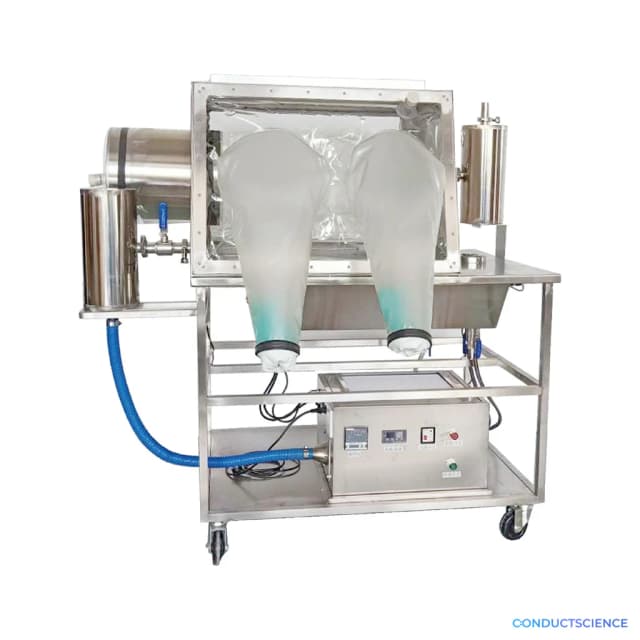
Laboratory Non-Human Primate Isolator
Reinforced BSL-3 isolator with dual HEPA filtration for housing non-human primates during infectious disease research and containment studies.

Louise Corscadden, PhD
Director of Science · ConductScience
Ask Louise about Laboratory Non-Human Primate Isolator fit, setup, configuration, or quote prep.
Already working with us? Sign in to connect this with My Scientist.
Key Specifications
Full details →- Model fit
- Non-human Primate
- SKU family
- PTY-0030
- Shipping box
- 65.0 x 32.0 x 82.0 cm
- Ordering
- Online checkout and quote request available
- Category
- Isolators
- Build notes
- Confirm accessories, station layout, and support needs before purchase
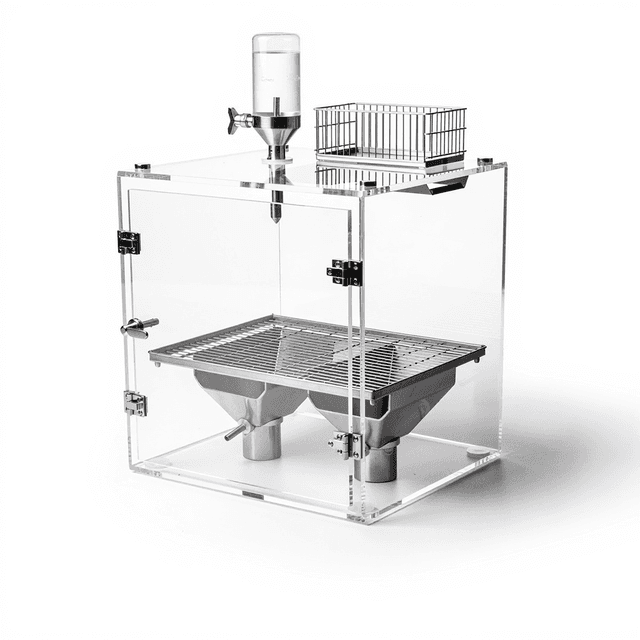
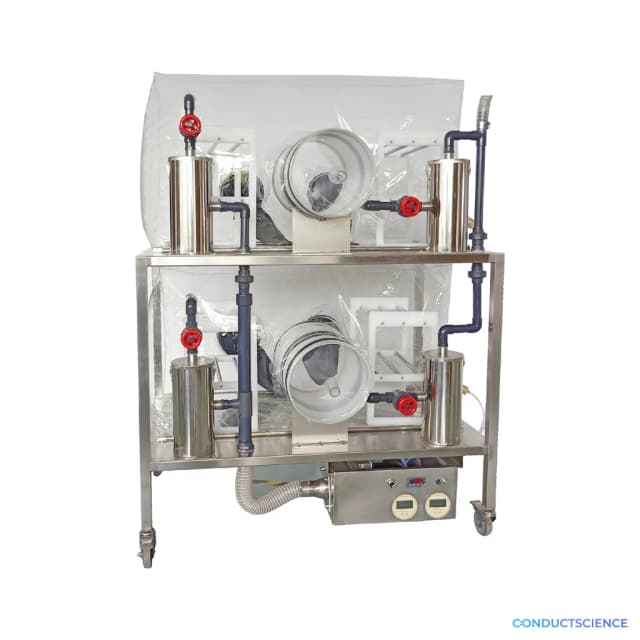
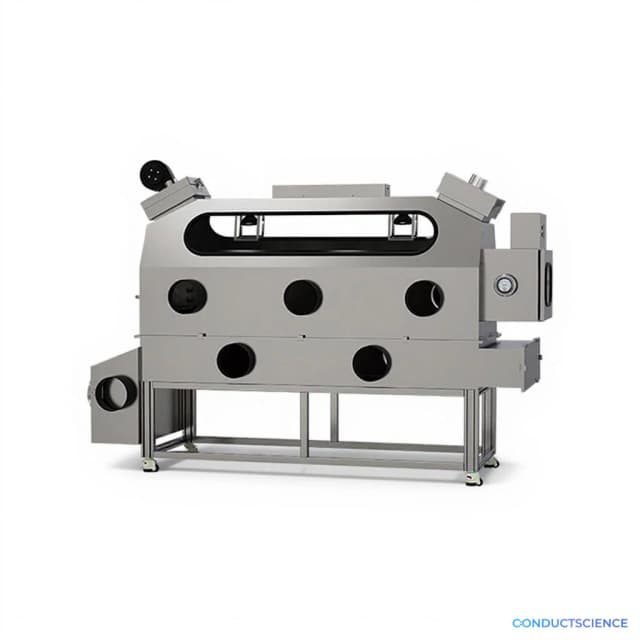
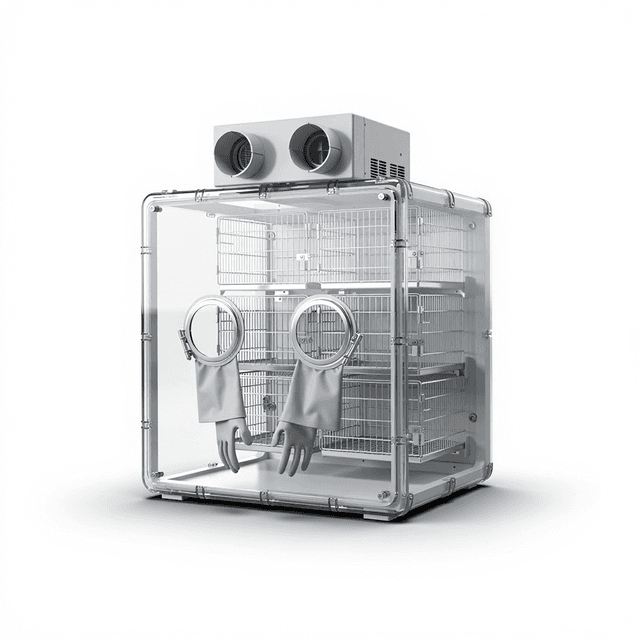
The Laboratory Non-Human Primate Isolator (PTY-0030) is a reinforced containment system engineered for housing non-human primates under controlled atmospheric conditions in biosafety level 3 (BSL-3) applications. The unit employs dual HEPA filtration with dedicated supply and exhaust systems to maintain negative pressure containment, providing bidirectional protection for both research animals and laboratory personnel from airborne pathogens.
This manually-operated isolator features primate-rated reinforced construction to accommodate the physical demands of non-human primate housing while maintaining the stringent environmental control necessary for infectious disease research protocols. The sealed environment supports critical studies in pathogen transmission dynamics, immunological response characterization, and therapeutic intervention evaluation in primate models under controlled containment conditions.
How It Works
The isolator operates on negative pressure differential principles, where dual HEPA filtration systems create directional airflow from the laboratory environment into the containment chamber. Supply air passes through HEPA filters before entering the isolator, while exhaust air undergoes secondary HEPA filtration before release, ensuring bidirectional contamination control.
The reinforced chamber construction accommodates primate behavioral patterns while maintaining atmospheric isolation through sealed port access systems. Negative pressure is continuously maintained through controlled air exchange rates, preventing airborne contaminant escape during routine husbandry procedures and experimental manipulations.
Manual operation protocols require trained personnel to perform all animal handling, feeding, and experimental procedures through integrated glove ports or transfer chambers, maintaining containment integrity throughout the research protocol duration.
Features & Benefits
Type
- Reinforced isolator — primate rated
Filtration
- HEPA supply and exhaust
Automation Level
- manual
Brand
- ConductScience
Species
- Non-human Primate
Research Domain
- Developmental Biology
- Immunology
- Microbiology
- Neurodegeneration
- Pharmaceutical QC
- Toxicology
Certifications
- CE, ISO
Shipping weight
- 120.0 lb
Shipping box
- L: 65.0 cm
- W: 32.0 cm
- H: 82.0 cm
| Feature | This Product | Typical Alternative | Advantage |
|---|---|---|---|
| Construction Rating | Reinforced primate-rated design | Standard laboratory isolators often lack reinforcement for larger animal species | Accommodates primate behavioral patterns and physical strength without compromising containment integrity |
| Filtration System | Dual HEPA supply and exhaust | Entry-level units may feature single-stage filtration | Bidirectional contamination control protects both animals and personnel from airborne pathogens |
| Containment Level | BSL-3 rated containment | Basic isolators typically offer BSL-1 or BSL-2 capabilities | Enables infectious disease research requiring higher biosafety containment protocols |
| Operation Method | Manual control systems | Automated systems common in larger installations | Eliminates electronic failure risks and provides direct operator control over all containment procedures |
| Species Compatibility | Non-human primate specific design | General laboratory animal housing often designed for smaller species | Purpose-built for primate research requirements including space, enrichment, and behavioral considerations |
| Certification Standards | CE and ISO certified | Certification levels vary by manufacturer and model | Documented compliance with international safety and quality management standards |
The PTY-0030 combines primate-specific reinforced construction with BSL-3 containment capabilities through dual HEPA filtration systems. The manual operation design provides reliable containment control without automated system dependencies, while CE and ISO certifications validate manufacturing and safety standards.
Practical Tips
Verify negative pressure differential monthly using calibrated manometers at multiple measurement points around the isolator perimeter.
Why: Pressure monitoring ensures containment integrity and identifies potential seal deterioration before containment failure.
Monitor HEPA filter pressure drop weekly and maintain replacement filter inventory to minimize research disruption.
Why: Filter performance degradation can compromise containment effectiveness and require immediate replacement to maintain BSL-3 protocols.
Establish dedicated personnel teams for isolator operations and limit access to trained individuals only.
Why: Consistent operator training reduces containment breach risks and ensures proper manual operation procedure adherence.
If pressure alarms activate, immediately cease research activities and implement facility emergency response protocols.
Why: Rapid response to containment failures prevents pathogen release and protects personnel and facility environments.
Document all pressure readings, filter changes, and maintenance activities in dedicated logs for regulatory compliance.
Why: Comprehensive documentation demonstrates containment system reliability and supports institutional biosafety program requirements.
Never override negative pressure safeguards or operate the isolator with compromised seals or filtration systems.
Why: Containment system integrity is essential for preventing exposure to infectious agents and maintaining BSL-3 protocol compliance.
Schedule routine decontamination cycles between research protocols using validated disinfection procedures.
Why: Regular decontamination prevents cross-contamination between studies and maintains sterile conditions for subsequent research.
Setup Guide
What’s in the Box
- Laboratory Non-Human Primate Isolator main unit
- Supply HEPA filter assembly (typical)
- Exhaust HEPA filter assembly (typical)
- Pressure monitoring equipment (typical)
- Glove port assemblies (typical)
- Installation manual and operation procedures
- CE and ISO certification documentation
Warranty
ConductScience provides standard one-year manufacturer warranty covering structural defects and filtration system components, with technical support for setup, operation, and maintenance protocols.
Compliance
What pressure differential range does this isolator maintain for containment?
Consult product datasheet for specific pressure differential specifications. The unit maintains negative pressure through dual HEPA filtration systems designed for BSL-3 containment applications.
How often do HEPA filters require replacement during continuous operation?
Filter replacement frequency depends on usage intensity and contamination levels. Monitor pressure differentials across filters and replace when performance degrades below containment specifications.
Can this isolator accommodate multiple primates simultaneously?
Housing capacity depends on primate species and experimental protocol requirements. Consult product datasheet for internal dimensions and recommended occupancy guidelines.
What training is required for personnel operating this containment system?
Operators require BSL-3 safety training, primate handling certification, and specific instruction on isolator manual operation procedures and emergency protocols.
How is waste removal handled without compromising containment?
Waste management typically involves autoclave-compatible transfer systems and decontamination protocols. Specific procedures depend on institutional biosafety requirements.
What backup systems exist if negative pressure is lost?
Manual operation design provides inherent reliability without electronic dependencies. Establish backup power for HVAC systems and emergency response protocols for pressure loss events.
Is this isolator compatible with existing facility HVAC systems?
The exhaust system connects to facility HVAC, but specific compatibility depends on your facility's air handling capacity and exhaust specifications. Consult installation requirements.
Have a question about this product?
Have a question? Just ask.
Send it over and we'll email you a personalized answer — no call, no scheduling.
Prefer to talk it through?
Accessories
Enhance your setup with compatible accessories