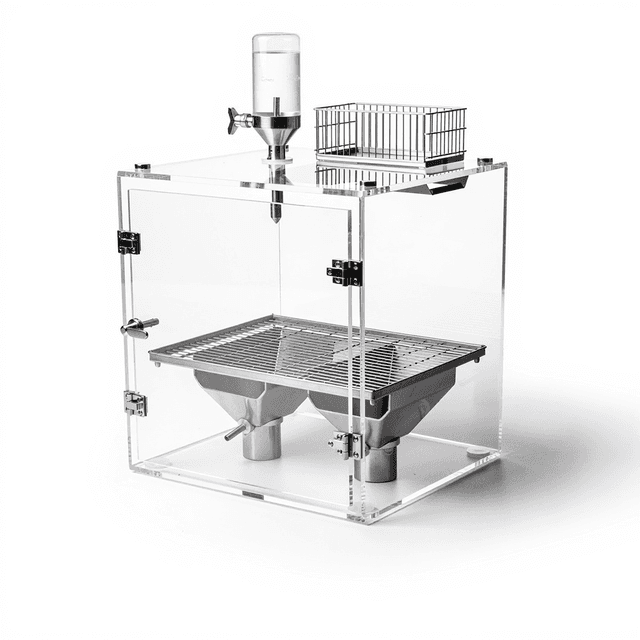
Metabolic Cage for Guinea Pigs
Specialized housing system with separate urine and feces collection chambers for precise metabolic parameter measurement in guinea pig research models.

Louise Corscadden, PhD
Director of Science · ConductScience
Ask Louise about Metabolic Cage for Guinea Pigs fit, setup, configuration, or quote prep.
Already working with us? Sign in to connect this with My Scientist.
Key Specifications
Full details →- Model fit
- Guinea pig
- SKU family
- PTY-0023
- Shipping box
- 60.2 x 29.7 x 76.0 cm
- Ordering
- Online checkout and quote request available
- Category
- Metabolic Cages
- Build notes
- Polycarbonate / Stainless Steel hybrid
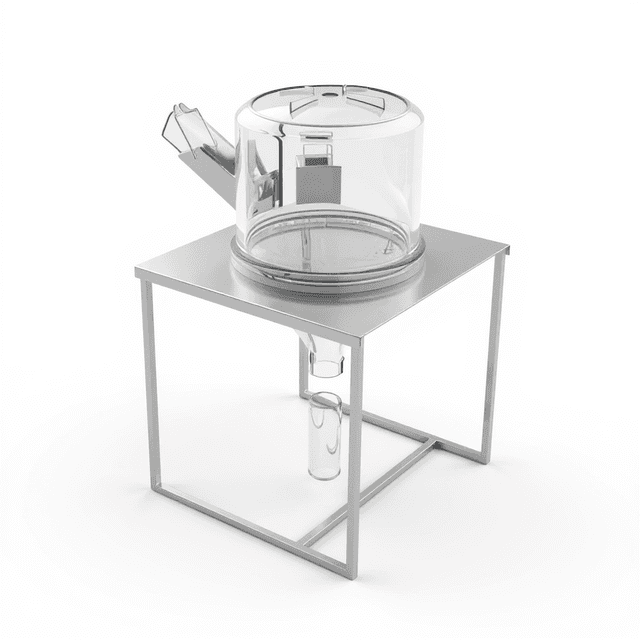
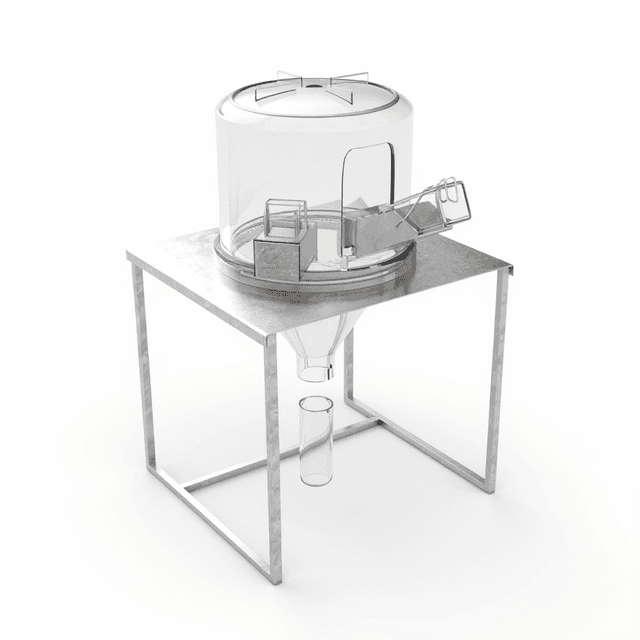
The Metabolic Cage for Guinea Pigs is a specialized housing system designed for precise quantitative collection and separation of urine and feces during metabolic studies. Constructed from a polycarbonate and stainless steel hybrid, this cage provides a controlled environment for accurate measurement of metabolic parameters in guinea pig research models, supporting pharmacokinetic, toxicological, and nutritional studies requiring continuous excreta monitoring.
The system features separate collection chambers that enable independent analysis of urinary and fecal excretion patterns, supporting quantitative assessment of drug metabolism, nutritional absorption, and toxicological endpoints. The dual-material construction ensures chemical compatibility with biological samples while maintaining structural integrity throughout extended study periods, with manual operation allowing researchers full control over collection protocols and timing.
How It Works
The metabolic cage operates on the principle of gravitational separation and controlled collection pathways to maintain discrete sample integrity. The polycarbonate housing provides transparent observation while the stainless steel collection components ensure chemical inertness with biological samples. Guinea pigs are housed on a wire mesh floor that allows immediate separation of solid and liquid waste through different collection channels.
Urine passes through the mesh directly into a sealed collection chamber, while fecal pellets are channeled to a separate compartment, preventing cross-contamination. The separate collection system enables researchers to measure specific metabolic parameters including nitrogen balance, drug metabolite excretion, and nutritional absorption efficiency through independent analysis of each waste stream.
Manual operation allows researchers to control collection timing precisely, facilitating both single time-point and continuous monitoring protocols. The hybrid construction materials provide optimal balance between visual monitoring capability and chemical compatibility for sensitive analytical procedures.
Features & Benefits
Cage Material
- Polycarbonate / Stainless Steel hybrid
Collection
- Separate urine and feces collection
Automation Level
- manual
Brand
- ConductScience
Species
- Guinea pig
Research Domain
- Cardiovascular
- Developmental Biology
- Immunology
- Metabolic Research
- Pharmaceutical QC
- Toxicology
Certifications
- CE, ISO, RoHS
Shipping weight
- 3.5 lb
Shipping box
- L: 60.2 cm
- W: 29.7 cm
- H: 76.0 cm
| Feature | This Product | Typical Alternative | Advantage |
|---|---|---|---|
| Collection System Design | Separate urine and feces collection chambers | Single collection chamber systems often require manual separation | Eliminates cross-contamination and improves analytical accuracy by maintaining discrete sample integrity. |
| Construction Materials | Polycarbonate and stainless steel hybrid | Entry-level models typically use all-plastic construction | Provides optimal balance of transparency for observation and chemical resistance for analytical applications. |
| Species Optimization | Guinea pig-specific design | Multi-species cages often compromise on optimal dimensions | Ensures proper housing conditions while maximizing collection efficiency for guinea pig research models. |
| Operation Method | Manual operation with researcher control | Automated systems may have higher complexity | Allows researchers complete protocol flexibility and timing control for diverse study requirements. |
| Quality Certifications | CE, ISO, RoHS certified | Basic models may lack comprehensive certifications | Ensures manufacturing quality standards and regulatory compliance for international research environments. |
This metabolic cage system offers superior sample integrity through separate collection chambers, optimized guinea pig housing design, and hybrid construction materials. The manual operation provides maximum protocol flexibility while maintaining chemical compatibility for sensitive analytical procedures.
Practical Tips
Validate collection efficiency using known volumes of water and measured quantities of solid material before each study.
Why: Ensures quantitative recovery and identifies any collection pathway blockages or inefficiencies.
Inspect wire mesh floor regularly for wear or damage that could affect collection separation.
Why: Maintains proper waste stream separation and prevents sample cross-contamination.
Allow 24-48 hour acclimation period before beginning metabolic measurements.
Why: Minimizes stress-related artifacts that could affect normal metabolic parameters and excretion patterns.
Record precise collection start and end times, environmental conditions, and any behavioral observations.
Why: Enables proper normalization of metabolic data and identification of potential confounding factors.
If collection volumes appear low, check for blockages in separation pathways and verify proper chamber alignment.
Why: Ensures complete sample recovery and prevents loss of analytical material during critical study periods.
Use appropriate personal protective equipment when handling collected samples and cleaning components.
Why: Protects researchers from potential biological hazards while maintaining sample integrity.
Establish consistent cleaning protocols between animals to prevent metabolic carryover effects.
Why: Maintains analytical accuracy and prevents confounding from previous animal metabolic products.
Setup Guide
What’s in the Box
- Polycarbonate housing unit
- Stainless steel urine collection chamber
- Stainless steel feces collection chamber
- Wire mesh floor assembly
- Collection chamber mounting hardware
- User manual and setup guide (typical)
- Cleaning and maintenance instructions (typical)
Warranty
ConductScience provides a standard one-year manufacturer warranty covering defects in materials and workmanship, with technical support available for setup and operational guidance.
Compliance
What collection volume capacity do the chambers provide?
Consult product datasheet for specific chamber volumes; capacity should accommodate typical guinea pig excretion rates for your study duration.
How do I prevent sample degradation during extended collection periods?
Use appropriate preservatives in collection chambers, maintain controlled temperature conditions, and establish collection intervals based on analyte stability requirements.
Can the cage accommodate multiple guinea pigs simultaneously?
This system is designed for individual animal housing to ensure accurate metabolic measurements; consult specifications for exact housing dimensions.
What cleaning protocols are recommended between animals?
Disassemble all components, wash with laboratory detergent, rinse with distilled water, and sanitize with appropriate disinfectant to prevent cross-contamination.
How does the collection efficiency compare to traditional metabolic cages?
The separate collection chamber design minimizes sample loss and cross-contamination compared to single-collection systems, improving analytical accuracy.
What environmental controls are required for optimal operation?
Maintain stable temperature and humidity according to guinea pig housing standards; ensure adequate ventilation while preventing sample contamination.
Can I modify collection chamber materials for specific analytical requirements?
The stainless steel chambers provide chemical inertness for most applications; contact manufacturer for compatibility with specific solvents or preservatives.
Have a question about this product?
Have a question? Just ask.
Send it over and we'll email you a personalized answer — no call, no scheduling.
Prefer to talk it through?
Accessories
Enhance your setup with compatible accessories