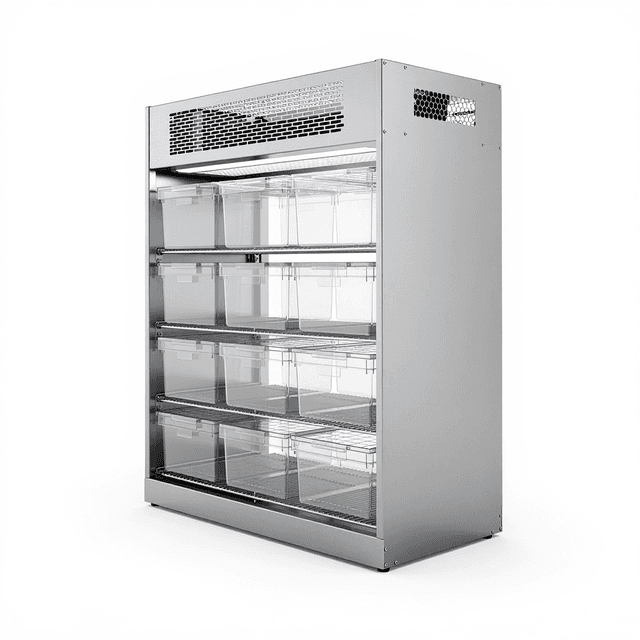
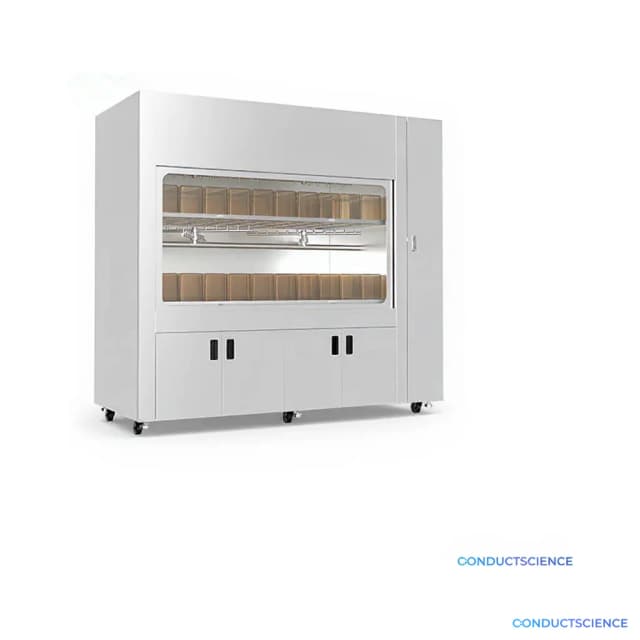
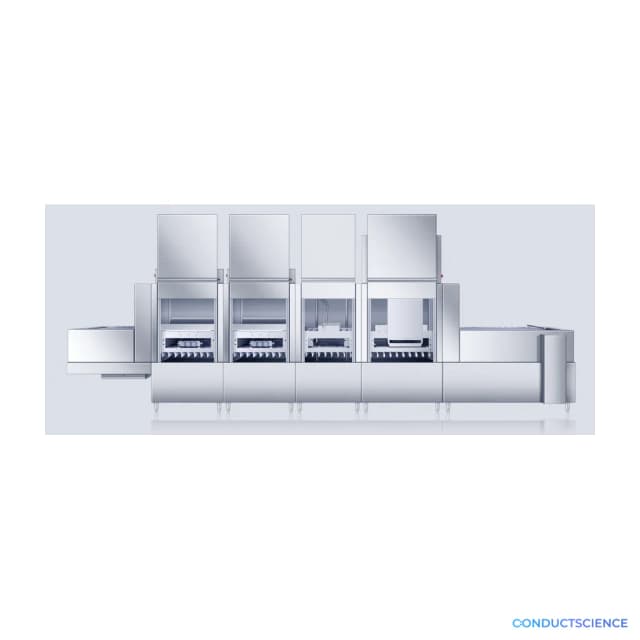
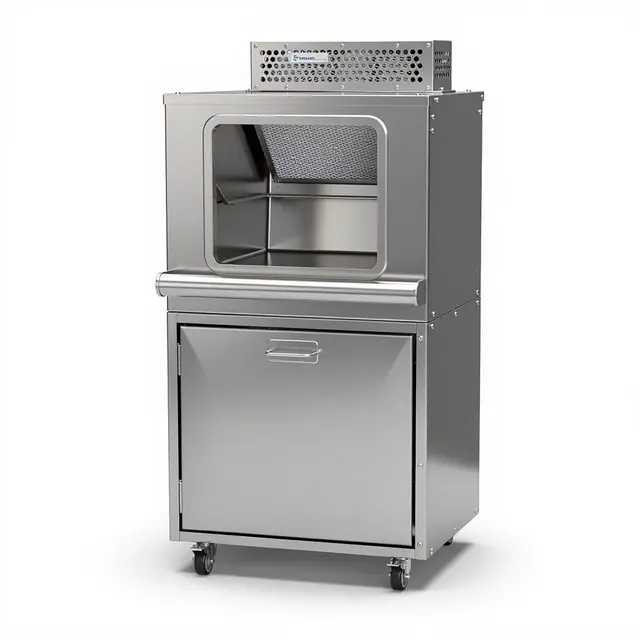
Rat Laminar Flow Rack
Vertical laminar flow cabinet providing ISO 5 clean air environment with HEPA filtration for rat cage changing and animal handling procedures.

Louise Corscadden, PhD
Director of Science · ConductScience
Ask Louise about Rat Laminar Flow Rack fit, setup, configuration, or quote prep.
Already working with us? Sign in to connect this with My Scientist.
Key Specifications
Full details →- Model fit
- Rat
- SKU family
- PTY-0032
- Shipping box
- 65.0 x 32.0 x 82.0 cm
- Ordering
- Online checkout and quote request available
- Category
- Bedding & Change Stations
- Build notes
- Confirm accessories, station layout, and support needs before purchase
The Rat Laminar Flow Rack delivers ISO 5 clean air environment through vertical laminar flow design with HEPA filtration for cage changing and animal handling procedures. The system provides consistent, unidirectional airflow at controlled velocities to minimize particulate contamination during routine husbandry operations. HEPA filtration achieves 99.99% efficiency at 0.3 micron particles, creating a protective barrier that reduces cross-contamination risk between housing units.
Vertical laminar flow configuration directs filtered air downward over the work surface, establishing positive pressure conditions that prevent ambient air infiltration during cage manipulation procedures. The system supports standardized laboratory animal care workflows while maintaining environmental controls critical for research reproducibility. Design facilitates ergonomic access for personnel performing routine animal handling tasks while preserving air quality parameters essential for research integrity.
How It Works
Vertical laminar flow technology creates unidirectional airflow by drawing ambient air through HEPA filtration and directing it downward across the work surface at uniform velocity. The HEPA filter removes 99.99% of particles at 0.3 micrometers, the most penetrating particle size, through mechanical filtration mechanisms including impaction, interception, and diffusion. Particles larger than 0.3 micrometers are captured with even higher efficiency through impaction and interception.
The downward airflow pattern establishes positive pressure within the work zone, preventing ambient air infiltration and maintaining particle-free conditions during cage manipulation. Air exits through strategically positioned exhaust ports that maintain flow uniformity and prevent recirculation. This configuration protects both the work surface and cage contents from airborne contamination while providing operator protection through directional airflow patterns.
Environmental consistency is maintained through continuous air processing that removes particulates, maintaining ISO 5 classification with particle counts not exceeding 3,520 particles ≥0.5 micrometers per cubic meter. The system operates independently of room air conditioning, providing stable microenvironmental conditions regardless of facility HVAC fluctuations.
Features & Benefits
Airflow
- Vertical laminar flow
Filtration
- HEPA (99.99% at 0.3 micron)
Clean Class
- ISO 5
Automation Level
- manual
Brand
- ConductScience
Species
- Rat
Research Domain
- Addiction Research
- Aging Research
- Anxiety and Depression
- Behavioral Pharmacology
- Cancer Research
- Learning and Memory
- Motor Function
- Neurodegeneration
- Neuroscience
- Pain Research
- Social Behavior
- Toxicology
Shipping weight
- 90.0 lb
Shipping box
- L: 65.0 cm
- W: 32.0 cm
- H: 82.0 cm
| Feature | This Product | Typical Alternative | Advantage |
|---|---|---|---|
| Airflow Direction | Vertical laminar flow with downward air movement | Entry-level models may use horizontal flow or basic ventilation without laminar characteristics | Vertical flow prevents ambient air infiltration and provides superior containment during cage manipulation |
| Filtration Efficiency | HEPA filtration at 99.99% efficiency at 0.3 micron | Basic models may use lower efficiency filters or lack HEPA-grade filtration | High-efficiency filtration removes submicron particles including bacteria and aerosols critical for research integrity |
| Clean Air Classification | ISO 5 clean air environment | Standard models often provide ISO 7 or ISO 8 classification | Higher cleanliness level reduces contamination risk and supports more sensitive research protocols |
| Target Species | Specifically designed for rat cage changing procedures | Generic animal handling stations may lack species-specific ergonomic optimization | Optimized dimensions and airflow patterns specifically support rat husbandry workflows and cage systems |
| Operation Mode | Manual control system | Automated systems with complex controls and sensors | Simplified operation reduces training requirements and maintenance complexity while providing essential environmental control |
The system provides vertical laminar flow with HEPA filtration achieving ISO 5 classification specifically optimized for rat cage changing procedures. Manual operation ensures reliable performance with minimal maintenance requirements while delivering particle containment essential for research applications.
Practical Tips
Verify airflow velocity at multiple grid points across the work surface monthly using calibrated anemometer to ensure uniform distribution.
Why: Uneven airflow can create dead zones where particles accumulate and compromise containment effectiveness.
Monitor pressure differential across HEPA filter weekly and document readings to establish replacement schedule.
Why: Gradual pressure increase indicates filter loading and helps predict when replacement is needed before performance degrades.
Allow 15 minutes of operation before beginning cage changing procedures to establish stable airflow conditions.
Why: Start-up time ensures laminar flow pattern stabilizes and removes any particles disturbed during system activation.
If airflow seems reduced, check for obstructions in air intake areas and verify HEPA filter is properly seated in frame.
Why: Blocked intakes or filter bypass can dramatically reduce system performance and compromise containment.
Perform particle counts during actual cage changing operations, not just at-rest conditions, to validate real-world performance.
Why: Operational testing reveals how physical movements and procedures affect airflow patterns and particle generation.
Position cage waste and soiled bedding downstream of clean cages to prevent cross-contamination via airflow.
Why: Proper workflow organization ensures contaminated materials do not compromise clean areas within the laminar flow field.
Clean work surface with appropriate disinfectant between animal groups or experimental cohorts.
Why: Surface decontamination prevents transfer of biological material between different study groups or housing units.
Inspect and clean air intake screens monthly to prevent dust accumulation that reduces airflow efficiency.
Why: Blocked intake screens increase system workload and may lead to premature filter loading or motor strain.
Setup Guide
What’s in the Box
- Laminar flow cabinet main unit
- HEPA filter assembly (typical)
- Control module and wiring (typical)
- Mounting hardware and adjustable feet (typical)
- User manual and operation guide (typical)
- Airflow verification tools (typical)
Warranty
ConductScience provides standard 1-year manufacturer warranty covering defects in materials and workmanship, with technical support for installation and operation guidance.
Compliance
References
Background reading relevant to this product:
What airflow velocity should be maintained for optimal particle containment?
Consult product datasheet for specific velocity specifications. Typical vertical laminar flow cabinets operate between 0.3-0.5 m/s to maintain ISO 5 conditions without creating turbulence that could disrupt containment.
How frequently should HEPA filter replacement occur?
Filter replacement depends on usage intensity and environmental conditions. Monitor pressure differential across filter and replace when airflow velocity cannot be maintained within specifications or particle counts exceed ISO 5 limits.
Can this system accommodate other rodent species besides rats?
While designed for rat cage changing, the work surface dimensions and airflow patterns may accommodate other similarly-sized rodent species. Verify ergonomic compatibility and containment effectiveness for specific cage systems and procedures.
What maintenance procedures are required for continued operation?
Regular maintenance includes HEPA filter monitoring, airflow velocity verification, work surface cleaning with appropriate disinfectants, and periodic particle count validation to confirm ISO 5 performance.
How does room air conditioning affect system performance?
The system operates independently of facility HVAC but ambient temperature and humidity fluctuations may affect blower performance. Maintain stable room conditions within typical laboratory ranges for optimal operation.
What particle monitoring is recommended for validation?
Use calibrated particle counter capable of measuring 0.5 μm particles to verify ISO 5 compliance. Perform measurements at multiple locations across work surface during operational and at-rest conditions.
Can chemical disinfectants be used on work surfaces?
Use laboratory-grade disinfectants compatible with stainless steel or cabinet work surface materials. Avoid aerosol sprays that could overload HEPA filter or create airflow disruption during application.
Have a question about this product?
Have a question? Just ask.
Send it over and we'll email you a personalized answer — no call, no scheduling.
Prefer to talk it through?
Accessories
Enhance your setup with compatible accessories
Frequently Bought Together