Rabbit Laminar Flow Rack
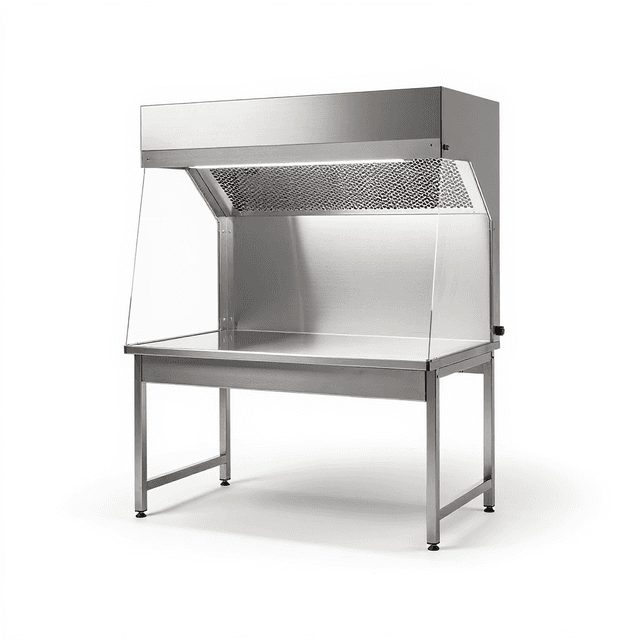
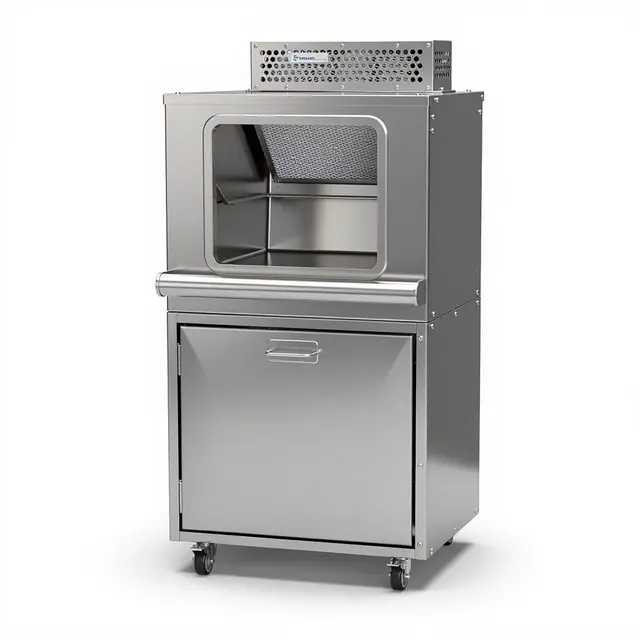
Vertical laminar flow rack providing ISO 5 clean air environment with HEPA filtration for rabbit cage changing and handling procedures in laboratory animal facilities.

Louise Corscadden, PhD
Director of Science · ConductScience
Ask Louise about Rabbit Laminar Flow Rack fit, setup, configuration, or quote prep.
Already working with us? Sign in to connect this with My Scientist.
Key Specifications
Full details →- Model fit
- Rabbit
- SKU family
- PTY-0033
- Shipping box
- 65.0 x 32.0 x 82.0 cm
- Ordering
- Online checkout and quote request available
- Category
- Bedding & Change Stations
- Build notes
- Confirm accessories, station layout, and support needs before purchase
The Rabbit Laminar Flow Rack delivers ISO 5 clean air environment for rabbit handling and cage changing operations in laboratory animal facilities. This vertical laminar flow system provides HEPA-filtered air at 99.99% efficiency at 0.3 micron particle size, creating a controlled environment that protects both animals and operators during routine husbandry procedures.
The system generates downward vertical airflow that maintains consistent air quality throughout the work zone. Primary applications include cage changing, animal transfers, minor procedures, and general rabbit handling where contamination control is required. The vertical flow design ensures continuous air exchange while providing adequate workspace for standard rabbit caging systems.
How It Works
The vertical laminar flow system operates by drawing ambient air through a HEPA filter mounted in the upper section of the cabinet. The HEPA filter removes 99.99% of particles 0.3 micrometers and larger through mechanical filtration, including bacteria, fungal spores, and other airborne contaminants that could compromise animal health or experimental protocols.
Filtered air flows downward in a uniform laminar pattern at controlled velocity, creating a continuous curtain of clean air over the entire work surface. This vertical airflow design ensures that any particles generated during cage changing or animal handling are immediately swept away from both the animals and the operator. The laminar flow prevents turbulence that could recirculate contaminants back into the work zone.
The system maintains ISO 5 cleanroom standards (≤3,520 particles ≥0.5 μm per cubic meter) throughout the work area, providing environmental control comparable to pharmaceutical manufacturing cleanrooms. This level of air quality protection is achieved through continuous air exchange and the physical barrier created by the downward-flowing clean air stream.
Features & Benefits
Airflow
- Vertical laminar flow
Filtration
- HEPA (99.99% at 0.3 micron)
Clean Class
- ISO 5
Automation Level
- manual
Brand
- ConductScience
Species
- Rabbit
Research Domain
- Immunology
- Laboratory Animal Science
- Toxicology
Shipping weight
- 100.0 lb
Shipping box
- L: 65.0 cm
- W: 32.0 cm
- H: 82.0 cm
| Feature | This Product | Typical Alternative | Advantage |
|---|---|---|---|
| Air Classification | ISO 5 clean air environment | Many basic units provide less stringent air quality control | Pharmaceutical-grade air quality suitable for immunocompromised animals and sterile procedures |
| Filtration Efficiency | HEPA filtration at 99.99% efficiency at 0.3 micron | Entry-level units may use lower-efficiency filters | Removes bacteria and fungal spores that could compromise experimental outcomes |
| Airflow Design | Vertical laminar flow | Some units use horizontal flow or non-laminar ventilation | Provides uniform protection across entire work surface while preventing recirculation |
| Species Optimization | Rabbit-specific workspace design | Generic designs may not optimize for rabbit handling | Accommodates standard rabbit caging systems with appropriate clearance for normal procedures |
This unit provides ISO 5 air quality through HEPA filtration and vertical laminar flow design optimized for rabbit handling procedures. The rabbit-specific workspace accommodates standard caging systems while maintaining pharmaceutical-grade environmental control for contamination-sensitive research applications.
Practical Tips
Position cage changing supplies inside the clean air zone before beginning procedures to minimize reaching across the airflow boundary.
Why: Maintains the integrity of the clean air environment throughout the entire procedure
Monitor airflow patterns monthly using smoke tubes to detect any turbulence or dead zones in the work area.
Why: Early detection of airflow problems prevents compromised contamination control during critical procedures
Document HEPA filter performance annually with particle counting verification to confirm continued 99.99% efficiency.
Why: Validates that filtration performance meets ISO 5 requirements for research protocol compliance
Keep the work surface clear of unnecessary equipment to prevent airflow obstruction and maintain operator access.
Why: Ensures both effective contamination control and safe animal handling during cage changing procedures
If airflow appears reduced, check for filter loading before assuming equipment malfunction.
Why: Filter replacement is often the solution to decreased performance rather than costly equipment repair
Record environmental conditions when handling animals for studies sensitive to microbiological contamination.
Why: Documentation supports data integrity and regulatory compliance for contamination-controlled experiments
Setup Guide
What’s in the Box
- Rabbit Laminar Flow Rack main unit
- HEPA filter (pre-installed)
- Power cord (typical)
- Operation manual (typical)
- HEPA filter certification documentation (typical)
- Installation hardware (typical)
Warranty
ConductScience provides standard 1-year manufacturer warranty covering defects in materials and workmanship, with technical support available for installation guidance and operational questions.
Compliance
What particle size range does the HEPA filtration effectively remove?
The HEPA filter removes 99.99% of particles 0.3 micrometers and larger, including bacteria, fungal spores, and other airborne contaminants relevant to laboratory animal facilities.
How often should the HEPA filter be replaced?
Filter replacement frequency depends on usage intensity and environmental conditions. Consult product datasheet for specific maintenance intervals and monitor pressure differential across the filter as an indicator of filter loading.
Can this unit accommodate different rabbit cage sizes?
The workspace is designed for standard rabbit caging systems used in laboratory facilities. Consult product datasheet for specific internal dimensions to verify compatibility with your existing cage configurations.
What airflow velocity is maintained in the work zone?
Consult product datasheet for specific airflow velocity specifications. The vertical laminar flow is designed to provide uniform coverage while allowing normal cage changing procedures.
Is the unit suitable for sterile procedures beyond routine husbandry?
The ISO 5 air quality makes it suitable for minor procedures requiring contamination control, though surgical procedures may require additional sterile technique protocols beyond the clean air environment.
What are the electrical requirements for installation?
Consult product datasheet for specific voltage, amperage, and electrical connection requirements. Professional electrical installation may be required depending on facility infrastructure.
How does this compare to biological safety cabinets for animal work?
This laminar flow rack provides clean air protection for routine husbandry, while biological safety cabinets offer containment for infectious agents. Choose based on whether you need environmental protection or biocontainment.
Have a question about this product?
Have a question? Just ask.
Send it over and we'll email you a personalized answer — no call, no scheduling.
Prefer to talk it through?
Accessories
Enhance your setup with compatible accessories
Frequently Bought Together