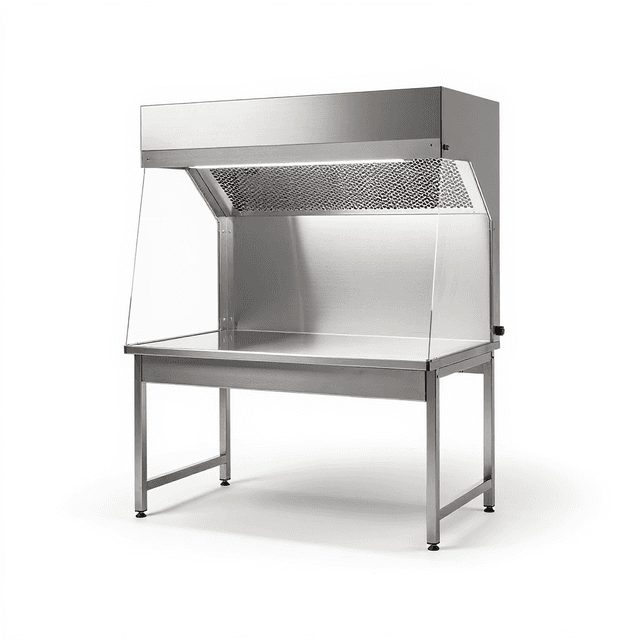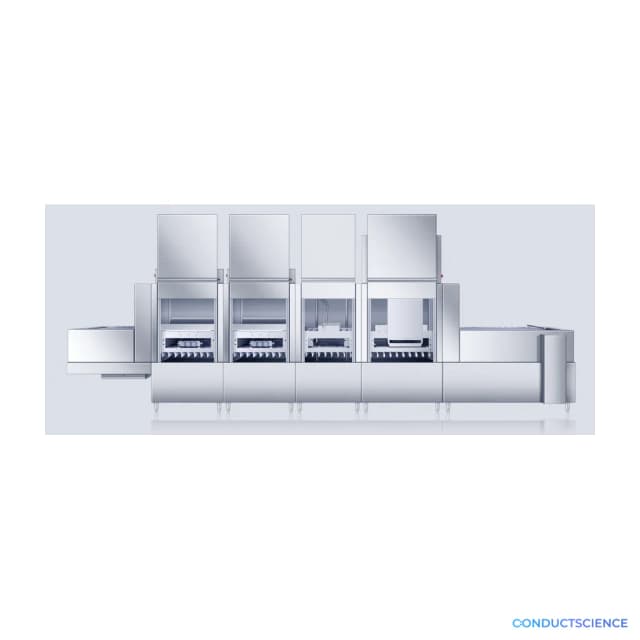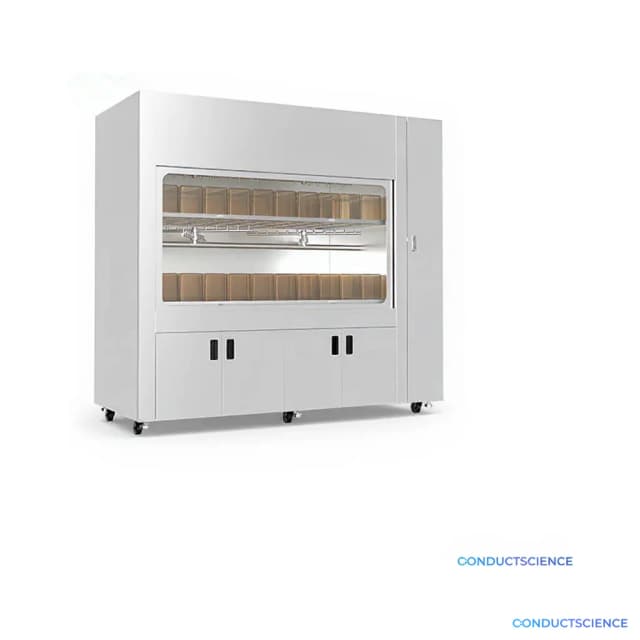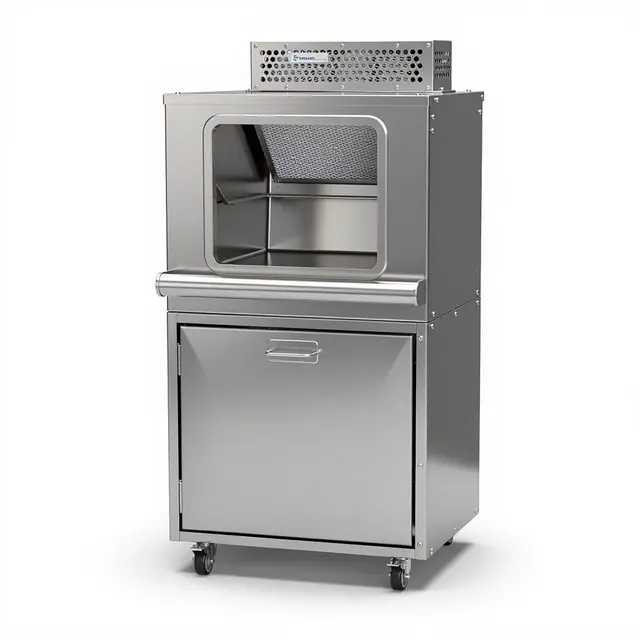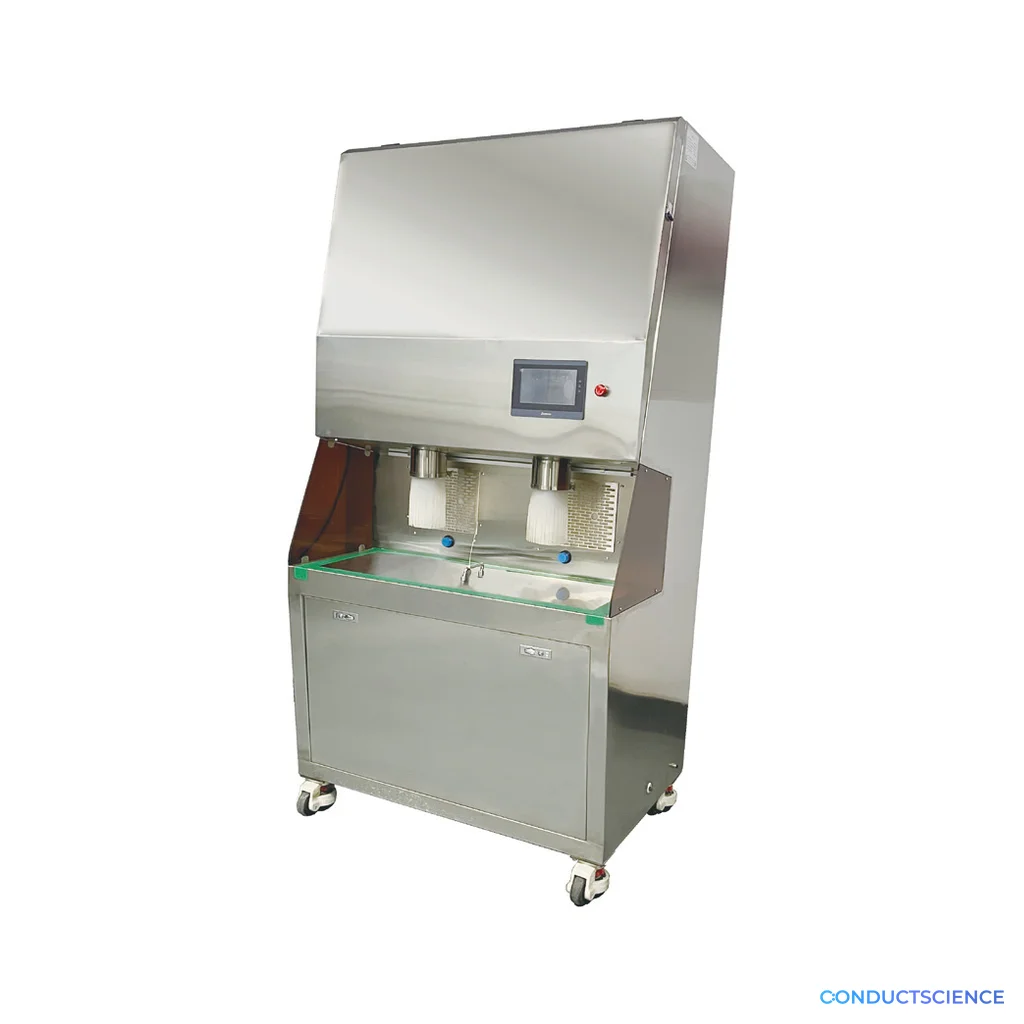
Automatic Bedding Dispenser
Automated bedding delivery for vivarium teams that want repeatable cage preparation and less loose dust at the filling point.
The 1000 × 780 × 1975 mm stainless system combines vacuum loading, 250 L and 60 L hoppers, two photoelectric dispensing outlets, local filtered extraction, editable mouse and rat programs, and fault alarms in one cage-preparation station.

Louise Corscadden, PhD
Director of Science · ConductScience
Ask Louise about Automatic Bedding Dispenser fit, setup, configuration, or quote prep.
Already working with us? Sign in to connect this with My Scientist.
Key Specifications
Full details →- External dimensions
- 1000 × 780 × 1975 mm
- Construction
- 304 stainless steel
- Electrical
- 220 V · 50 Hz · 1.8 kW
- Operating environment
- +5 to +40 °C · <60 dB(A)
- Hopper capacities
- Lower 250 L · upper 60 L
- Cycle timing
- Loading ≤20 s · mouse dispensing ≤2 s adjustable · rat dispensing ≤4 s adjustable
Standardize bedding preparation without separating it from the care workflow
This automatic bedding dispenser is designed for animal-care programs that prepare large numbers of mouse and rat cages and need the fill step to be consistent, observable, and easier to manage. Bedding quantity affects nest building, absorption, cage-change timing, material use, and the amount of loose particulate handled by staff. A controlled dispensing station helps the team define how bedding is loaded, delivered, checked, and documented instead of relying on an unstructured manual pour at every cage.
The stainless enclosure measures 1000 × 780 × 1975 mm and uses a vacuum lift to move bedding into a 60 L upper hopper from a 250 L lower hopper. A loading cycle is listed at no more than 20 seconds. Two outlets use photoelectric cage detection and screw-metered delivery. The documented dispense time is adjustable to no more than 2 seconds for mouse cages and no more than 4 seconds for rat cages, giving the care team a starting point for cage-specific qualification rather than a fixed claim about bedding mass.
Dust control is built around local negative pressure at the dispensing area and filtration rated at least 99.99% at 0.3 µm. That design can reduce loose bedding at the work point, but room ventilation, operator protection, bedding characteristics, and cleaning practice still belong in the facility risk assessment. Material sensors monitor both hoppers, while low-material, blocked-filter, and equipment faults can generate visible and audible alarms.
Five editable programs support IVC and standard mouse and rat cage formats. Before use, the facility should qualify each program with the approved bedding, cage geometry, target depth or mass, and inspection method. Teams should also define lot changes, moisture control, hopper cleaning, cross-study segregation, spill response, and what operators do when a cage is missing, misaligned, or rejected after filling.
Share cage dimensions, bedding type, daily cage volume, target fill criteria, room drawing, power, exhaust approach, sanitation plan, and delivery route with ConductScience. The quote will define the dispenser configuration, controls, filtration, accessories, placement, installation, testing, training, and commissioning. This makes the equipment part of a documented husbandry process rather than an isolated speed purchase.
Features & Benefits
External dimensions
- 1000 × 780 × 1975 mm
Construction
- 304 stainless steel
Electrical
- 220 V · 50 Hz · 1.8 kW
Operating environment
- +5 to +40 °C · <60 dB(A)
Hopper capacities
- Lower 250 L · upper 60 L
Cycle timing
- Loading ≤20 s · mouse dispensing ≤2 s adjustable · rat dispensing ≤4 s adjustable
Programs
- Five editable programs for IVC and standard mouse and rat cages
Filtration and monitoring
- ≥99.99% at 0.3 µm · material sensors · low-material, filter, and fault alarms
Setup Guide
What’s in the Box
- Automatic bedding dispenser; hopper, filtration, controls, accessories, and commissioning scope confirmed in the quote
Does the listed dispensing time define the bedding mass?
No. The facility should qualify time settings against its approved bedding, cage geometry, and target fill criterion.
How is loose bedding managed?
The filling area uses local negative pressure and high-efficiency filtration, while room ventilation and operator protection remain facility decisions.
What should be included in commissioning?
Confirm cage detection, metering, alarms, filtration, program settings, cleaning access, and staff response with the actual workflow.
Have a question about this product?
Have a question? Just ask.
Send it over and we'll email you a personalized answer — no call, no scheduling.
Prefer to talk it through?