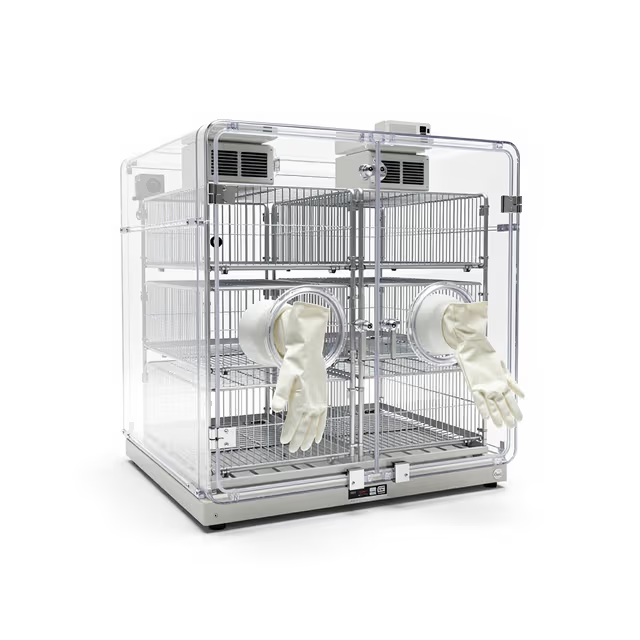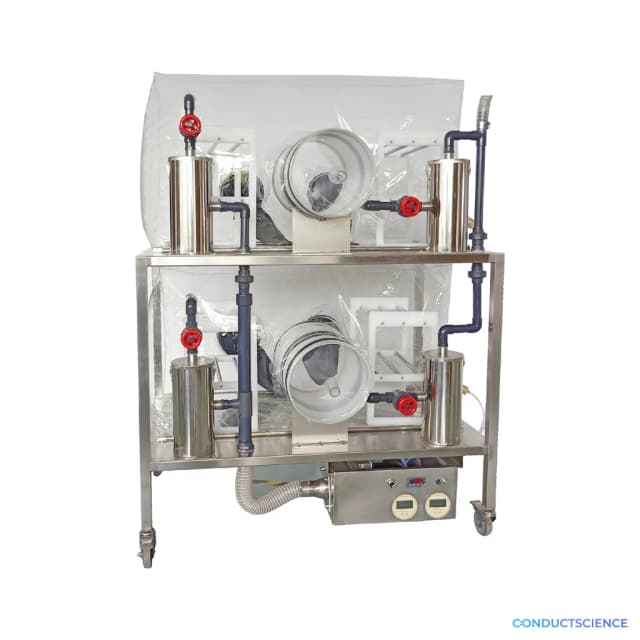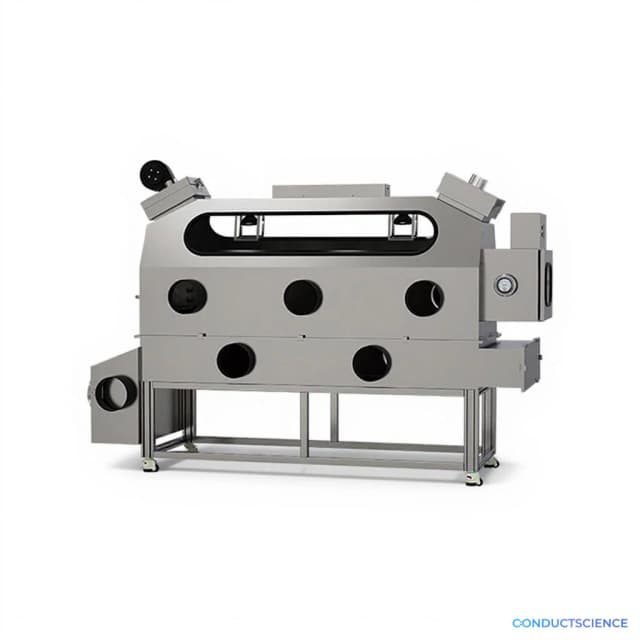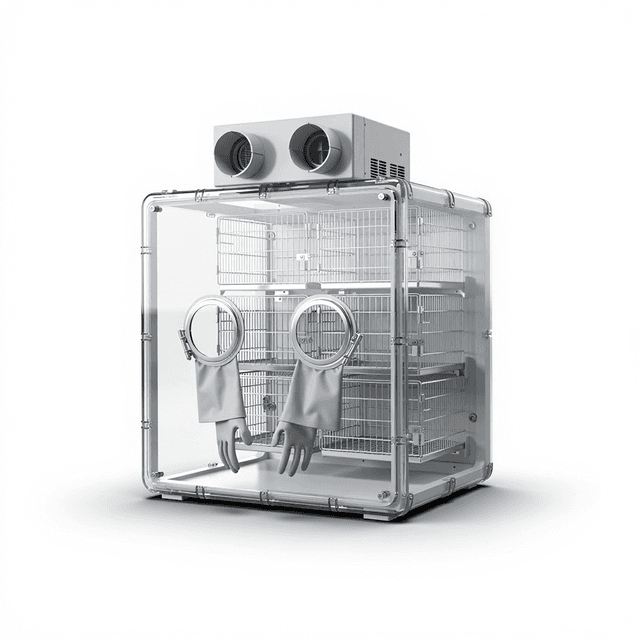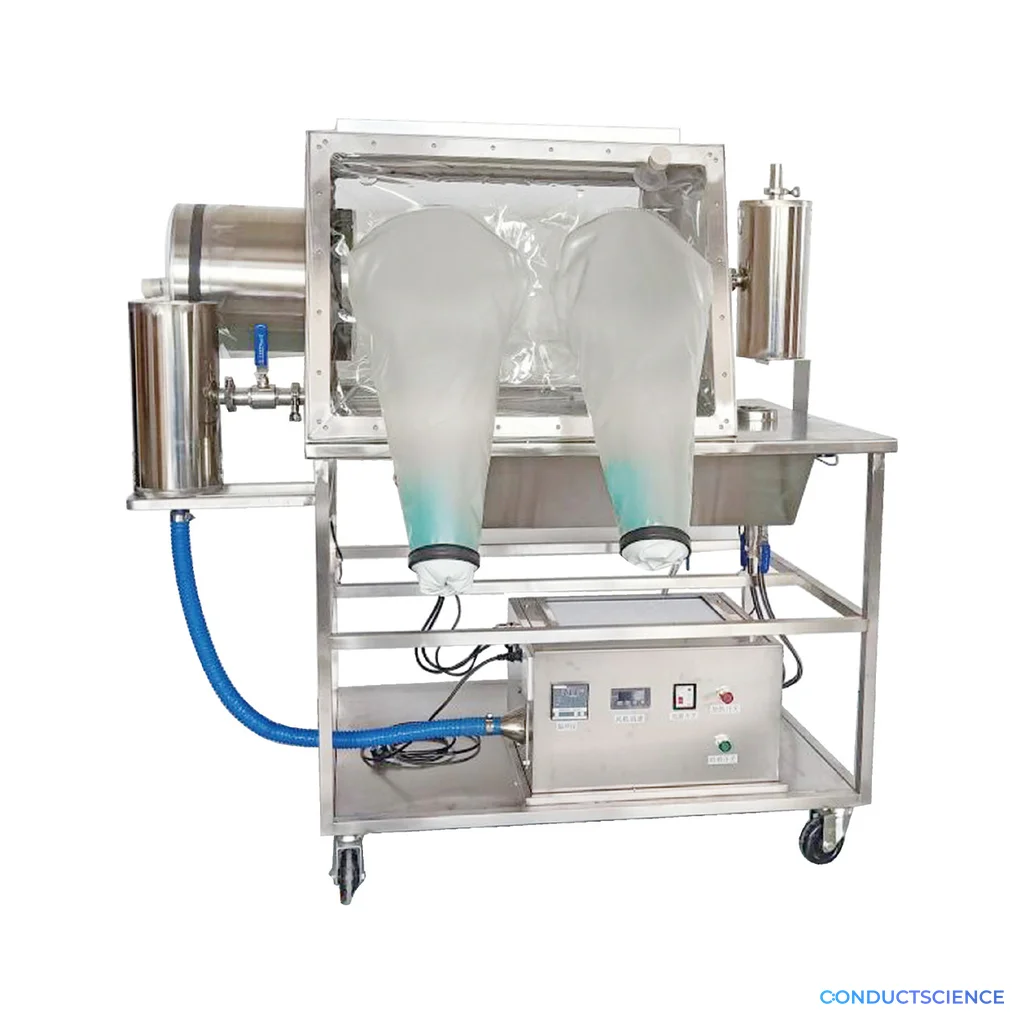
Animal Surgery Isolator
Stainless steel surgery isolator for animal procedures that need a separated working boundary, gloved access, controlled transfers, and a heated work surface.
The 1390 × 800 × 1430 mm system includes a 315 × 270 mm transfer chamber, a 120 × 320 mm cylindrical HEPA filter, two 500 W heaters, and a documented 1200 W total load for coordinated surgical and facility planning.

Louise Corscadden, PhD
Director of Science · ConductScience
Ask Louise about Animal Surgery Isolator fit, setup, configuration, or quote prep.
Already working with us? Sign in to connect this with My Scientist.
Key Specifications
Full details →- External dimensions
- 1390 × 800 × 1430 mm
- Transfer chamber
- Ø315 × 270 mm
- HEPA filter
- Cylindrical · Ø120 × 320 mm
- Work surface
- Heated surface · liquid and medication trough
- Heating
- 2 × 500 W
- Electrical
- AC 220 V · 150 W control box · 1200 W total
Keep the surgical field, animal support, and transfer plan together
This animal surgery isolator provides a separated work area for approved procedures in which aseptic technique and environmental control need more protection than an open surgical table can provide. It is intended to support, not replace, the institution's surgical protocol, anesthesia plan, analgesia, monitoring, recovery criteria, and staff training. The equipment decision should therefore involve the investigator, veterinary team, surgical staff, biosafety or infection-control personnel, and facilities.
The stainless steel system measures 1390 × 800 × 1430 mm and provides gloved access to the enclosed work area. A 315 × 270 mm transfer chamber supports planned movement of prepared instruments, supplies, samples, and waste across the boundary. The cylindrical HEPA filter measures 120 × 320 mm. The work surface is heated by two 500 W elements, and the catalog states a 1200 W total load. The control box is separately documented at AC 220 V and 150 W.
Procedure planning should start with the animal species, body position, sterile field, instruments, imaging or monitoring leads, anesthesia circuit, fluids, medications, sample handling, and emergency access. The liquid and medication trough can support organized work, but the team should define exactly what enters the chamber, where items are placed, how clean and used materials are separated, and how the animal is transferred to recovery.
Heating needs careful control. The selected temperature, sensor location, independent animal monitoring, warm-up check, alarm response, and shutdown method should be written into the protocol. Facility review should confirm electrical service for the total load, ventilation and filter arrangement, access around the isolator, cleaning compatibility, delivery route, and the space needed for staff and support equipment.
Share the procedure, animal size, anesthesia and monitoring setup, transfer loads, temperature requirements, aseptic method, room drawing, utilities, cleaning process, and qualification expectations with ConductScience. The final quote will identify the isolator, transfer and filtration package, heating and controls, included work accessories, installation, testing, training, and commissioning. This gives the surgical team a clear, repeatable environment for approved procedures.
Features & Benefits
External dimensions
- 1390 × 800 × 1430 mm
Transfer chamber
- Ø315 × 270 mm
HEPA filter
- Cylindrical · Ø120 × 320 mm
Work surface
- Heated surface · liquid and medication trough
Heating
- 2 × 500 W
Electrical
- AC 220 V · 150 W control box · 1200 W total
Quote confirmation
- Procedure fit, temperature monitoring, transfer package, ventilation, controls, installation, and qualification
Setup Guide
What’s in the Box
- Selected animal surgery isolator; enclosure, transfer chamber, filtration, heated work surface, controls, accessories, and commissioning scope confirmed in the quote
Does the heated surface replace animal temperature monitoring?
No. The protocol should use independent animal monitoring and define temperature limits, response, and shutdown.
What should pass through the transfer chamber?
Only items covered by the approved procedure, with packaging, cleaning, timing, and clean-to-used flow defined in advance.
How should the electrical requirement be interpreted?
The control box and total system loads are listed separately; facilities should size service for the complete quoted configuration.
Have a question about this product?
Have a question? Just ask.
Send it over and we'll email you a personalized answer — no call, no scheduling.
Prefer to talk it through?