
1 / 8
Burrowing Tube
SKU CS-958248
$749.99
IncludesStandard care
Standardized tube system for quantifying burrowing and tunneling behaviors in laboratory rodents under controlled conditions.
CE MarkedBAA available
Scientist guidance

Louise Corscadden, PhD
Director of Science · ConductScience
Ask Louise about Burrowing Tube fit, setup, configuration, or quote prep.
Already working with us? Sign in to connect this with My Scientist.
Key Specifications
Full details →- Model fit
- Mouse, Rat, Small Mammal
- SKU family
- CS-958248
- Shipping box
- 65.0 x 36.0 x 27.0 cm
- Ordering
- Online checkout and quote request available
- Category
- Behavioral Mazes
- Build notes
- Confirm accessories, station layout, and support needs before purchase
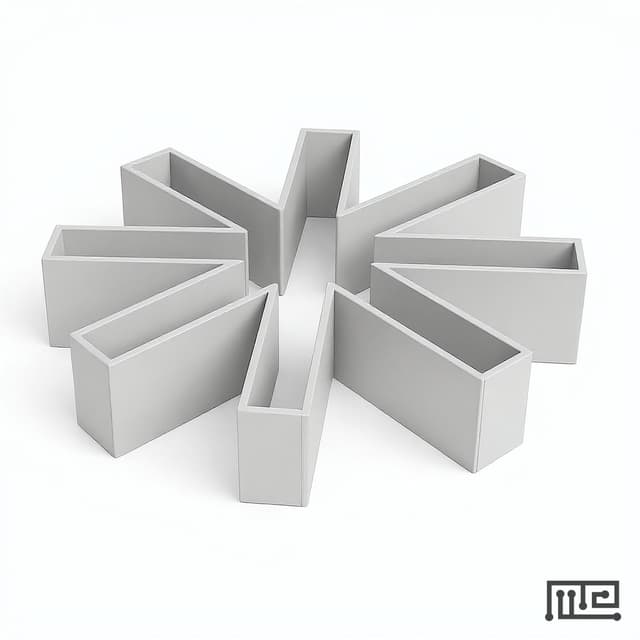
The Burrowing Tube provides a standardized environment for studying natural burrowing and tunneling behaviors in laboratory rodents. This apparatus consists of a transparent or translucent tube system that allows researchers to observe and quantify digging behaviors, spatial navigation within confined spaces, and species-specific burrowing patterns under controlled conditions.
The system enables researchers to assess motor coordination, spatial memory, and anxiety-related behaviors as animals navigate through tube networks. The apparatus supports both acute behavioral assessments and chronic studies of burrowing preference, with applications spanning neuroscience research, behavioral pharmacology, and comparative ethology studies.
How It Works
The Burrowing Tube apparatus utilizes the natural burrowing instinct present in most rodent species to assess behavioral and cognitive parameters. Animals are placed at tube entrances and their movement patterns, exploration time, and navigation choices are recorded through direct observation or video tracking systems.
The transparent or translucent construction allows researchers to monitor animal behavior without interference while maintaining the enclosed environment that stimulates natural burrowing responses. Behavioral parameters are quantified through measurement of latency to enter, total time spent burrowing, distance traveled, and preference for specific tube sections or configurations.
Data collection typically involves recording movement trajectories, measuring exploration duration, and analyzing spatial distribution patterns within the tube system to generate quantitative behavioral metrics for statistical analysis.
Features & Benefits
Transparent construction
Enables continuous behavioral observation without disturbing natural burrowing patterns
Modular tube sections
Allows customizable configurations to match specific experimental requirements and species needs
Smooth internal surfaces
Provides consistent movement conditions and reduces variables that could affect behavioral measurements
Easy disassembly design
Facilitates thorough cleaning between subjects to prevent cross-contamination and maintain hygiene standards
Standardized dimensions
Ensures reproducible conditions across experiments and enables comparison with published literature
Durable material construction
Withstands repeated use and cleaning cycles while maintaining structural integrity for long-term studies
Shipping weight
- 4.41 lb
Shipping box
- L: 65.0 cm
- W: 36.0 cm
- H: 27.0 cm
| Feature | This Product | Typical Alternative | Advantage |
|---|---|---|---|
| Construction Material | Consult product datasheet for material specifications | Basic models may use opaque materials limiting observation capabilities | Transparent construction enables continuous behavioral monitoring without environmental disruption |
| Tube Configuration | Modular design allowing custom configurations | Fixed configurations limit experimental flexibility | Adaptable setup accommodates diverse experimental protocols and species requirements |
| Assembly Method | Easy disassembly for cleaning | Permanent assemblies complicate sanitation procedures | Thorough cleaning between subjects prevents cross-contamination and maintains data integrity |
| Size Range | Consult product datasheet for dimensional specifications | Limited size options may not accommodate all species | Appropriate sizing ensures natural movement patterns and behavioral validity |
The Burrowing Tube system provides modular construction and transparent materials for comprehensive behavioral assessment. The design emphasizes ease of cleaning and flexible configuration to support diverse experimental protocols.
Neuroscience
Assessing spatial navigation and motor coordination deficits in neurodegeneration models by measuring burrowing latency and path selection.
Behavioral Pharmacology
Evaluating anxiolytic compound effects on natural burrowing behaviors and exploration patterns in tube networks.
Learning and Memory
Testing spatial memory retention by measuring animals' ability to navigate previously learned tube configurations.
Anxiety and Depression
Quantifying anxiety-related behaviors through burrowing latency and time spent in different tube sections.
Motor Function
Assessing fine motor control and coordination through analysis of movement patterns within confined tube spaces.
Aging Research
Monitoring age-related changes in burrowing behavior and spatial navigation capabilities over time.
Practical Tips
Best Practices
Allow 5-10 minutes habituation time before beginning formal behavioral measurements.
Why: Reduces novelty stress that could confound natural burrowing behavior patterns.
Maintenance
Inspect tube connections regularly for secure fit and replace worn connection hardware promptly.
Why: Loose connections can create gaps that affect animal movement and compromise behavioral measurements.
Data Quality
Record environmental conditions including temperature and lighting for each test session.
Why: Environmental variables can influence burrowing behavior and should be controlled or documented for data interpretation.
Calibration
Verify tube dimensions periodically using calipers to ensure consistency across experiments.
Why: Dimensional accuracy affects movement patterns and ensures reproducible behavioral measurements.
Safety
Check for sharp edges or cracks before each use that could injure animals.
Why: Animal safety is paramount and injuries could introduce confounding variables to behavioral data.
Troubleshooting
If animals show reluctance to enter tubes, reduce ambient lighting to create more natural burrowing conditions.
Why: Bright lighting can inhibit natural burrowing instincts and reduce experimental validity.
Setup Guide
Unpack and Inspect
Remove tube components from packaging and inspect for cracks or damage that could affect animal safety or behavioral measurements.
Assembly Configuration
Assemble tube sections according to experimental design, ensuring secure connections between segments and proper alignment.
Environmental Setup
Position apparatus in testing room with consistent lighting and minimal external stimuli that could influence burrowing behavior.
Cleaning and Sanitization
Clean all surfaces with appropriate disinfectant and allow complete drying before introducing animals.
Recording System Setup
Position cameras or observation equipment to capture animal movement throughout the tube system without obstruction.
Habituation Protocol
Allow animals brief pre-test exposure to reduce novelty stress and establish baseline behavioral patterns.
Testing Procedure
Place animals at designated entry points and begin recording behavioral parameters according to protocol timeline.
What’s in the Box
- Burrowing tube sections (typical)
- Connection hardware (typical)
- Assembly instructions (typical)
- Cleaning protocol guide (typical)
Warranty
ConductScience provides a one-year manufacturer warranty covering material defects and construction issues, with technical support for setup and operational questions.
Compliance
ARRIVE GuidelinesSupports standardized reporting of animal research methodology in behavioral studies
Guide for Care and Use of Laboratory AnimalsCompatible with standard animal welfare requirements for behavioral testing equipment
Q
What species size ranges are accommodated by the tube dimensions?
A
Consult product datasheet for specific internal diameter specifications. Standard configurations typically accommodate mice and rats, with tube dimensions selected based on species body size and natural burrowing preferences.
Q
How should the apparatus be cleaned between subjects?
A
Disassemble tube sections and clean with appropriate disinfectant solution. Allow complete drying before reassembly. Use ethanol-based cleaners that evaporate completely to avoid residual odors affecting behavior.
Q
Can multiple tubes be connected for complex maze configurations?
A
The modular design allows connection of multiple tube sections to create branched or linear configurations. Connection methods and maximum recommended configurations depend on specific tube design features.
Q
What behavioral parameters are typically measured?
A
Common measurements include latency to enter tubes, total exploration time, distance traveled, time spent in different sections, and preference indices for tube branches or configurations.
Q
Is the apparatus compatible with video tracking systems?
A
Transparent construction enables video recording for automated tracking analysis. Lighting conditions and camera positioning should be optimized for the specific tracking software being used.
Q
How does tube diameter affect behavioral measurements?
A
Tube diameter influences movement speed, turning ability, and stress levels. Diameter should be large enough for comfortable movement while maintaining the confined environment that stimulates natural burrowing responses.
Have a question about this product?
Track rodents with ConductVision
ConductVision is our video-tracking software. Record your sessions on video, and it scores standard rodent tests, such as those listed below.
Examples of tests it scores
To check whether ConductVision scores your protocol in this apparatus, ask in your quote request.
Ask a question
Have a question? Just ask.
Send it over and we'll email you a personalized answer — no call, no scheduling.
Personalized email reply
Usually within one business day
Helpful answers published here
Prefer to talk it through?
Accessories
Enhance your setup with compatible accessories
Total: $0.00
Frequently Bought Together
Total: $6,480.00

Creator Insights
Robert M. J. DeaconStandardized the rodent burrowing test (2006)University of Oxford
About the Creator
Robert M. J. Deacon was a behavioral neuroscientist at the University of Oxford who developed a suite of ethologically grounded assays for mouse models of neurological disease, emphasizing tasks sensitive to early or subtle changes in brain function. In a 2006 Nature Protocols paper he described the burrowing test, which measures a rodent’s spontaneous motivation to displace material from a tube — a behavior reliably suppressed by central nervous system pathology. The test is valued for its simplicity, low cost and sensitivity, and has been widely adopted in models of Alzheimer’s disease, prion disease and other neurodegenerative conditions.
To view Robert M. J. Deacon’s publications, visit PubMed.
Are you Robert M. J. Deacon? to review your photo and bio, and find out how to submit Creator Insights.
ConductScience celebrates method creators: researchers who, through rigorous and often ingenious experiments, develop the tools that reveal how the brain and body work. These are real scientific discoveries that become everyday instruments for the labs that follow.
Foundational paper
- Deacon, R. M. J. (2006). Burrowing in rodents: a sensitive method for detecting behavioral dysfunction. Nature Protocols, 1(1), 118–121. doi:10.1038/nprot.2006.19
Use this apparatus with
The complete Burrowing Test workflow
Track behavior
No exact ConductVision burrowing page is currently published. Substrate displaced is measured by weighing the tube before and after rather than by tracking, so automated burrowing scoring stays a roadmap gap.
Supporting page not yet builtRun protocol
Habituation, tube loading, substrate selection, overnight versus 2-hour timing, and definitions for substrate displaced, burrowing latency, and non-burrowers.
ConductMaze Burrowing Protocol ->Analyze output
No exact burrowing analysis tool is currently published. Burrowed fraction, latency, and time-course yields are summarized from before-and-after weights rather than a dedicated analyzer; keep this as a roadmap gap.
Supporting page not yet builtConfiguration considerations
Common Burrowing Test setup decisions
Use these notes to scope species, cohort, tracking, and automation needs. Only verified product or support routes are linked from this section.
This productStandard tube
Burrowing Test
Open-ended tube with a raised lip and end stopper, loaded with a weighed substrate charge
Standard configuration for measuring burrowing as a spontaneous, welfare-sensitive behavior, reporting the weight of substrate displaced from the tube over a fixed interval.
Quote
Request QuoteBuyableMouse or rat
Species-Scaled Tube
Tube diameter, length, and lip height scaled for mouse or rat
Tube bore, length, and lip height set how readily an animal can displace substrate, so the tube should be scaled to the species and substrate weight.
Quote
View options ->SpecialtyTime-course
Time-Course Burrowing Set
Matched tubes for paired 2-hour and overnight yields
Best when the question is the time course of burrowing rather than a single endpoint, using paired short and overnight measures to separate initiation from total output.
Quote
Request automation help§ 1
Introduction
The Burrowing Test measures a spontaneous, species-typical behavior by recording how much substrate a rodent displaces from a loaded tube over a fixed interval. Deacon established burrowing as a sensitive index of behavioral dysfunction and general wellbeing that detects deficits many task-based assays miss. 1
The core readout is the weight of substrate displaced, supported by burrowing latency, time spent burrowing, and the proportion of non-burrowers. Because burrowing is voluntary and unrewarded, a drop in output is an early, low-stress marker of disrupted wellbeing across models of neurodegeneration, infection, and inflammation. 1
Novelty, tube geometry, substrate type and weight, satiety when food substrate is used, and individual-housing condition all change displacement independent of the underlying state. A defensible protocol habituates animals to the tube, fixes the substrate and timing, distinguishes overnight from short yields, and flags non-burrowers as a welfare quality-control category. 1
§ 2
Methods
2.1 Procedure
Loaded-tube burrowing with habituation, fixed substrate and timing, time-course measurement, and non-burrower flagging.
Pre-test setup
- 1.Habituation: Habituate animals to a loaded tube over prior nights so the test session reflects burrowing motivation rather than novelty of the apparatus.
- 2.Tube and substrate setup: Fix the tube diameter, length, lip height, and substrate type and weight, since each changes how readily substrate is displaced.
- 3.Define the timing: Choose and fix the measurement window, typically a 2-hour reading and an overnight reading, so initiation and total output are captured separately.
- 4.Set welfare flags: Pre-define a non-burrower threshold and the conditions under which an animal is flagged, so low output is treated as a welfare signal rather than missing data.
Trial sequence
- 1.Weigh and load the tube: Record the loaded substrate weight and place the tube in the cage with the open end raised on the lip.
- 2.Record burrowing latency: Note the latency to the first burrowing bout, indexing how readily the animal initiates the behavior.3
- 3.Measure short-interval yield: At the 2-hour mark, weigh the substrate remaining in the tube and compute the amount displaced.2
- 4.Measure overnight yield: Re-weigh after the overnight interval to capture total output, since some animals burrow late and a single early reading underestimates them.
- 5.Flag non-burrowers: Record animals that displace little or no substrate as non-burrowers, a welfare category rather than a zero to be averaged away.
Critical methodological constraints
- Substrate consistency. Substrate type and weight set the baseline displacement. Use the same material and loaded weight across groups so output is comparable.2
- Tube geometry. Tube diameter, length, and lip height change how easily substrate is pushed out. Hold geometry constant across all animals in a study.1
- Time-course separation. A single early reading misses late burrowers. Report 2-hour and overnight yields separately to distinguish initiation from total output.2
- Non-burrower handling. Animals that burrow little are a welfare signal, not noise. Flag non-burrowers as a category rather than folding zeros into a group mean.3
2.2 Measurement & Analysis
Core burrowing endpoints for output, initiation, engagement, and welfare quality control.
Substrate Displaced
Burrowing output
Weight of substrate pushed out of the tube over the interval, the primary index of burrowing behavior and general wellbeing.1
Burrowing Latency
Initiation
Time from tube placement to the first burrowing bout, indexing how readily the animal initiates the behavior.3
Time Spent Burrowing
Engagement
Duration of active burrowing during the interval, separating sustained engagement from a brief initial push.
Overnight vs 2h Yield
Time-course
Comparison of the short-interval and overnight displacement, distinguishing early initiation from total output for late burrowers.2
Non-Burrowers
Welfare QC
Proportion of animals displacing little or no substrate, flagged as a welfare quality-control category rather than averaged into the group.
+ Additional metrics: substrate type and weight, tube geometry, time of day, housing condition, body weight, and per-animal welfare notes.
2.3 burrowed fraction (analysis)
A compact fraction of the loaded substrate that the animal displaced from the tube.
2.4 sample-size planning
Estimate the N per group needed to detect a literature-anchored burrowing effect at the endpoint you plan to report. Override the defaults with your own pilot numbers.
§ 3
Results
PubMed publication counts, sample apparatus output, and recent papers from a dated PubMed snapshot.
3.1 Publication trends
PubMed volume and co-occurring behavioral methods for rodent burrowing studies.
3.2 Sample apparatus output
Representative output from a burrowing session with a 2-hour and overnight reading on a 200 g substrate charge.
3.3 Recent findings (PubMed)
- Aug 2026PMID: 42667687
Deep seeding resistance in maize: selected after domestication or a strategy of its wild ancestors to escape underground animal burrowing?
Vázquez L, Cruz A, Alonso-Hernández R, et al.. J Exp Bot. 2026 Aug 29.
Buried seeds avoid predation ensuring their survival until conditions are suitable for germination. The ability of seedlings to emerge from the soil depends on soil characteristics, burial depth, and the skotomorphogenic program of each species.
- Aug 2026PMID: 42655981
Brief, Repeated Isoflurane Anaesthesia Elicits Sex-Dependent Behavioural, Cerebrovascular and Microglial Alterations in Mice.
Sus Z, Verma I, Khan SH, et al.. Eur J Neurosci. 2026 Aug.
General anaesthetics are indispensable tools in biomedical research, yet growing evidence shows that their effects on brain function extend beyond the transient loss of consciousness for which they are used.
- Jul 2026PMID: 42511137
Assessing Rodent-Induced Ecological Disturbance in Natural Grasslands Using Multi-Source Spatial Data.
Huang M, Wulan Q, Wang T, et al.. Animals (Basel). 2026 Jul 21.
High-density rodent populations cause severe habitat degradation and ecological imbalance in natural grasslands through intense foraging and burrowing activities. However, dynamically monitoring these small mammals and assessing their large-scale damage using traditional ground surveys alone is challenging.
- Jul 2026PMID: 42511122
Impacts of Global Climate Change on Potential Habitat Distribution and Range Shifts of Semi-Subterranean Rodents.
Chen D, Zhang R, Yang H, et al.. Animals (Basel). 2026 Jul 20.
As integral components of ecosystems, rodents exhibit high sensitivity to environmental fluctuations. As a typical semi-subterranean rodent, the burrowing and foraging behaviors of the mole vole (Ellobius tancrei) profoundly impact local microhabitat structure and vegetation succession.
- Jul 2026PMID: 42399819
Benefits and challenges of adding BKM120 to a BI-3406 plus trametinib combination therapy.
Schulz B, Leitner E, Rabierad M, et al.. BMC Cancer. 2026 Jul 3.
Achieving a balance between efficacy and side effects is essential for the success of new combinatorial cancer therapies. This study investigated the impact of adding BKM120, a PI3K inhibitor, to a dual regimen consisting of BI-3406, a KRAS/SOS1 inhibitor, and trametinib, a MEK inhibitor.
- Jul 2026PMID: 42390885
Divergence Linked to Possible Ecological Speciation in Blind Mole Rats: Integration of Thermal Biology and Bite Force in the Upper Galilee Blind Mole Rat (Nannospalax galili).
Lövy M, Okrouhlík J, Vejmělka F, et al.. Integr Zool. 2026 Jul 2.
Ecological speciation refers to the process in which divergent natural selection drives lineage diversification within a species.
§ 4
Discussion
Limitations of the paradigm, methodological caveats, and current directions.
4.1 Common confounds
Variables that can shift Burrowing Test results apart from the effect under study.
Novelty/habituation
An unfamiliar tube suppresses burrowing on first exposure. Habituate animals over prior nights so the test reflects motivation rather than novelty.
Tube size/material/angle
Tube diameter, length, lip height, and material change how easily substrate is displaced. Hold geometry constant across all groups.
Substrate type & weight
Different substrates and loaded weights set different baselines. Use the same material and charge weight so output is comparable across groups.
Satiety (food substrate)
When food pellets are the substrate, hunger drives displacement. Standardize feeding state, or use a non-food substrate to remove the appetite confound.
Individual-housing condition
Housing and social condition affect burrowing motivation. Match housing across groups so the comparison is not confounded by isolation or crowding.
Preview exported markdown
## Burrowing Test — methods controls

Confounds controlled in this protocol:

- **Novelty/habituation.** An unfamiliar tube suppresses burrowing on first exposure. Habituate animals over prior nights so the test reflects motivation rather than novelty.
- **Tube size/material/angle.** Tube diameter, length, lip height, and material change how easily substrate is displaced. Hold geometry constant across all groups.
- **Substrate type & weight.** Different substrates and loaded weights set different baselines. Use the same material and charge weight so output is comparable across groups.
- **Satiety (food substrate).** When food pellets are the substrate, hunger drives displacement. Standardize feeding state, or use a non-food substrate to remove the appetite confound.
- **Individual-housing condition.** Housing and social condition affect burrowing motivation. Match housing across groups so the comparison is not confounded by isolation or crowding.
4.2 Construct validity caveats
Burrowing is strongest when habituation, substrate, tube geometry, and timing are fixed before testing. Because output is voluntary and time-dependent, report both a short and an overnight yield, flag non-burrowers as a welfare category, and confirm a wellbeing deficit alongside an independent measure such as nest building. 1
4.3 Special considerations
Should I read at 2 hours or overnight?
Report both. A 2-hour reading captures initiation but misses late burrowers, while an overnight reading captures total output. Reporting them separately distinguishes slow starters from genuinely impaired animals.
How should I handle non-burrowers?
Flag them as a welfare category rather than averaging their zeros into the group. A cluster of non-burrowers is itself a meaningful signal of disrupted wellbeing, not missing data.
Does the substrate choice matter?
Yes. Substrate type and weight set the baseline displacement, and food substrate adds a hunger confound. Use the same material and charge weight across groups, and standardize feeding state if food is used.
4.4 Current directions
Quarterly editorial review of emerging Burrowing Test methodology. Q2 2026
Methods
Time-course reporting
Reporting paired 2-hour and overnight yields rather than a single endpoint separates initiation from total output and reduces misclassification of late burrowers.
Emerging
Burrowing in welfare batteries
Burrowing is increasingly paired with nest building and grimace scoring as a low-stress battery for monitoring general wellbeing during disease models.
Methods
Substrate standardization
Reporting substrate type, charge weight, and tube geometry is increasingly expected because displacement is not comparable across different materials and tubes.
Emerging
Non-burrower flagging
Treating non-burrowers as a defined welfare category rather than averaging their zeros gives a clearer read on disrupted wellbeing within a group.
§ 5
References
5 selected methods and validation references for Burrowing Test.
- Deacon RM. Burrowing in rodents: a sensitive method for detecting behavioral dysfunction. Nat Protoc. 2006;1(1):118-121. doi:10.1038/nprot.2006.19
- Deacon RM. Burrowing: a sensitive behavioural assay, tested in five species of laboratory rodents. Behav Brain Res. 2009;200(1):128-133. doi:10.1016/j.bbr.2009.01.007
- Jirkof P. Burrowing and nest building behavior as indicators of well-being in mice. J Neurosci Methods. 2014;234:139-146. doi:10.1016/j.jneumeth.2014.02.001
- Deacon RM, Raley JM, Perry VH, Rawlins JN. Burrowing into prion disease. Neuroreport. 2001;12(9):2053-2057. doi:10.1097/00001756-200107030-00052
- Jirkof P, Leucht K, Cesarovic N, et al. Burrowing is a sensitive behavioural assay for monitoring general wellbeing during dextran sulfate sodium colitis in laboratory mice. Lab Anim. 2013;47(4):274-283. doi:10.1177/0023677213493409

Burrowing Tube
$749.99
Added to quoteView Quote
