1 / 2
Activity Cage
SKU ME-5607
$2,990.00
IncludesStandard care
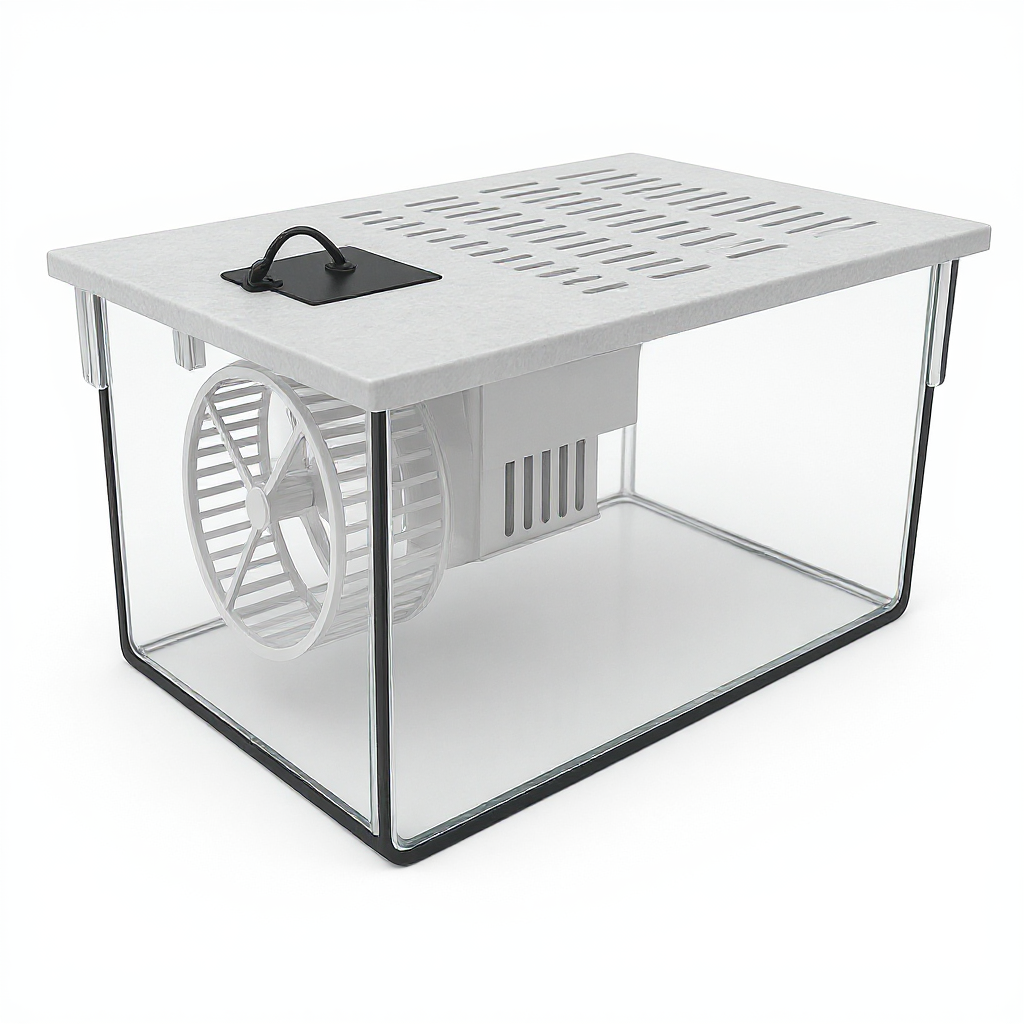
Automated rodent activity monitoring system with integrated running wheel, capacitive touch screen control, and comprehensive data recording for locomotor and circadian rhythm studies.
Scientist guidance

Louise Corscadden, PhD
Director of Science · ConductScience
Ask Louise about Activity Cage fit, setup, configuration, or quote prep.
Already working with us? Sign in to connect this with My Scientist.
Key Specifications
Full details →- Model fit
- Mouse, Rat
- SKU family
- ME-5607
- Shipping box
- 43.2 x 38.0 x 27.9 cm
- Ordering
- Online checkout and quote request available
- Category
- Behavioral Mazes
- Build notes
- Stainless Steel
The Activity Cage is a comprehensive behavioral monitoring system designed for automated assessment of rodent locomotor activity and circadian rhythm patterns. The system combines a standard home cage environment with an integrated running wheel, capacitive touch screen control interface, and advanced data recording capabilities. The apparatus features species-specific wheel diameters (20 cm for mice, 40 cm for rats) with motorized or manual rotation modes, enabling researchers to conduct both spontaneous activity monitoring and controlled exercise protocols.
The system provides continuous monitoring of wheel-running behavior with high temporal resolution, supporting test durations from minutes to extended circadian studies up to 9000 minutes. Built-in RFID technology allows for individual animal identification in group studies, while additional stimulus modules (shock, air puff, sound generation) enable investigation of activity responses to environmental challenges. Data collection options include distance-based metrics (meters, m/s) or rotational counting (revolutions, rpm) with storage capacity for up to 200 data sets.
How It Works
The Activity Cage operates through continuous monitoring of wheel rotation using precision sensors that detect each revolution with 0.1g force sensitivity. The motorized wheel system can operate in manual mode for spontaneous activity measurement or controlled mode with programmable rotation speeds from 0.1 to 99.9 rpm. The capacitive touch screen interface allows researchers to configure test parameters including duration, auto start/stop schedules, and stimulus presentations.
Data acquisition occurs through integrated sensors that track wheel revolutions and convert to distance or speed metrics in real-time. The RFID technology enables automatic animal identification when multiple subjects are tested sequentially. Environmental stimuli (auditory tones from 100-40,000 Hz at 1-150 dB, shock delivery, or air puff) can be programmed to assess activity responses to specific triggers.
The system records activity patterns with temporal resolution suitable for circadian analysis, storing up to 200 complete data sets in internal memory. Data output includes raw counts, distance traveled, speed profiles, and timing information for comprehensive behavioral analysis.
Features & Benefits
Species-specific wheel diameters (20 cm mice, 40 cm rats)
Provides appropriate exercise dimensions for different rodent species, ensuring natural running biomechanics and accurate activity measurements.
Capacitive touch screen control interface
Enables intuitive parameter setup and real-time monitoring without requiring separate computer or complex software installation.
Motorized and manual rotation modes
Supports both spontaneous activity monitoring and controlled exercise protocols with programmable speed profiles from 0.1-99.9 rpm.
RFID animal identification technology
Automatically tracks individual animals in group studies, eliminating manual identification errors and enabling longitudinal data collection.
Extended test duration capability (0-9000 minutes)
Accommodates both short-term behavioral assessments and multi-day circadian rhythm studies within a single experimental protocol.
Multi-stimulus integration (sound, shock, air puff)
Allows investigation of activity responses to environmental challenges and stress stimuli with precise timing control.
Dual data counting modes (distance/rotational)
Provides flexibility in data analysis with options for distance-based metrics (m, m/s) or revolution counting (r, r/min) depending on research focus.
High-capacity data storage (200 data sets)
Enables extended studies with multiple animals and repeated measurements without data loss or external storage requirements.
Add-ons and modifications
| Add-on | Size | Price |
|---|---|---|
| Activity Wheel with Home Cage | 13.9”L x 9.25"W x 7.875”H (35.3 23.5 x 20 cm) Weight: 5.8 lbs | $2,990 |
Add any of these to your quote request.
Gripping Plate Area
- 20×20 cm
- 25x25cm
Maximum Tensile Force
- 0 – 50 N (5kgf)
Cage Area
- 1000 cm²
Wheel Diameter Mouse
- 20 cm
Wheel Diameter Rat
- 40 cm
Test Time Range
- 0 – 9000 minutes
Motor Acceleration
- 0.1 – 100 r/min²
Data Storage Capacity
- up to 200 data sets
Speaker Frequency Range
- 100-40,000 Hz
Speaker Intensity
- 1-150 dB
Wheel Rotation Modes
- clockwise or counter clock
Data Counting Modes
- count by distance (m, m/s) or count by a circle (r, r/min)
Wheel Type
- motorized or manual rotation
Connectivity
- USB cable
Additional Features
- RFID technology, shock or air puff, dual visible and IR light bulb, sound detector
Behavioral Construct
- locomotor activity
- circadian rhythms
- voluntary exercise
- motor function
- behavioral arousal
- activity patterns
Automation Level
- semi-automated
Accuracy
- 0.1g steps
Material
- Stainless Steel
Power/Voltage
- 20W
- AC 190V-230V 50HZ
Species
- Mouse
- Rat
Speed/RPM
- 0.1 – 99.9 r/min with step 0.1 r/min
Display Type
- capacitive touch screen
Research Domain
- Addiction Research
- Aging Research
- Anxiety and Depression
- Behavioral Pharmacology
- Learning and Memory
- Neuroscience
Compatible Tracking Software
- ConductVision
Shipping weight
- 21.0 lb
Shipping box
- L: 43.2 cm
- W: 38.0 cm
- H: 27.9 cm
| Feature | This Product | Typical Alternative | Advantage |
|---|---|---|---|
| Wheel Diameter Options | Species-specific diameters: 20 cm (mouse), 40 cm (rat) | Many systems offer fixed diameter wheels or limited size options | Proper wheel sizing ensures natural running biomechanics and accurate activity measurements for different species. |
| Control Interface | Capacitive touch screen with handheld control device | Basic systems often require computer connection or simple button interfaces | Intuitive touch screen control enables real-time parameter adjustment and monitoring without external computer dependency. |
| Test Duration Range | 0-9000 minutes (150 hours) with programmable scheduling | Entry-level systems typically offer shorter maximum durations | Extended duration capability accommodates multi-day circadian studies and long-term behavioral assessments. |
| Data Storage Capacity | Up to 200 complete data sets with internal storage | Basic systems often have limited storage or require continuous data export | High-capacity storage enables extended studies with multiple animals without data loss concerns. |
| Stimulus Integration | Built-in sound (100-40,000 Hz), shock, and air puff capabilities | Most activity wheels lack integrated stimulus delivery systems | Integrated stimuli allow investigation of activity responses to environmental challenges within the same apparatus. |
| Animal Identification | RFID technology for automatic individual tracking | Manual identification methods or no individual tracking in basic systems | Automated identification eliminates errors in longitudinal studies and enables efficient group study protocols. |
The Activity Cage combines comprehensive activity monitoring with integrated stimulus delivery and automated data management in a single system. The species-specific design, extended duration capability, and RFID identification provide research-grade functionality for behavioral and circadian studies.
Behavioral Pharmacology
Assessing drug effects on spontaneous locomotor activity and wheel-running patterns to evaluate therapeutic compounds for movement disorders or stimulant/sedative properties.
Neuroscience
Monitoring circadian locomotor rhythms in neurological disease models to investigate disruptions in sleep-wake cycles and motor function.
Learning and Memory
Quantifying baseline activity levels and exercise-induced changes in cognitive performance studies where physical activity may influence memory consolidation.
Aging Research
Tracking age-related changes in voluntary exercise capacity and daily activity patterns to assess functional decline in aging animal models.
Anxiety and Depression
Measuring wheel-running behavior as an index of anhedonia and motivation in depression models, where reduced voluntary activity indicates depressive-like states.
Addiction Research
Evaluating wheel-running as an alternative reward to drug self-administration in addiction models, investigating exercise as a behavioral intervention.
Practical Tips
Calibration
Verify wheel rotation smoothness and force sensitivity before each study by manually testing wheel drag is below 3 grams.
Why: Proper calibration ensures accurate activity measurements and prevents mechanical resistance from affecting natural running behavior.
Maintenance
Clean wheel bearings and rotation mechanisms regularly, especially after studies involving food rewards or extended use periods.
Why: Debris accumulation can increase wheel drag beyond the 3-gram specification, compromising measurement accuracy.
Best Practices
Allow animals 24-48 hours acclimation in the cage before beginning data collection to establish baseline activity patterns.
Why: Initial exploration and stress responses can confound true activity measurements in novel environments.
Data Quality
Monitor data storage capacity regularly during extended studies to ensure complete data capture throughout the experimental period.
Why: The 200 data set limit could be reached during intensive multi-animal or long-duration studies, potentially causing data loss.
Troubleshooting
If wheel rotation becomes erratic, check for bedding material or food particles interfering with the rotation mechanism.
Why: Environmental debris is the most common cause of mechanical issues affecting wheel performance and data accuracy.
Safety
Test all stimulus functions (sound, shock, air puff) at minimum intensities before applying to animals to verify proper operation.
Why: Stimulus malfunction could deliver inappropriate intensities that cause animal distress or compromise experimental validity.
Best Practices
Use consistent lighting and temperature conditions throughout studies, as environmental changes can significantly affect circadian activity patterns.
Why: Activity monitoring is highly sensitive to environmental variables that can mask or confound experimental treatments.
Data Quality
Export and backup data regularly rather than relying solely on internal storage, especially during multi-week studies.
Why: System failures or data corruption could result in loss of valuable longitudinal data that cannot be easily replicated.
Setup Guide
Unpack and Inspect
Remove all components from packaging and verify cage, running wheel, control device, USB cable, water bottle, and food holder are present and undamaged.
Wheel Installation
Install the appropriate wheel diameter (20 cm for mice, 40 cm for rats) ensuring smooth rotation with drag force less than 3 grams.
Control Device Setup
Connect the handheld control device via USB cable and power on to access the capacitive touch screen interface.
Cage Preparation
Set up the 1000 cm² cage with water bottle and food holder, ensuring adequate bedding and environmental conditions for the study duration.
Parameter Configuration
Use the touch screen to set test duration (0-9000 minutes), rotation mode (manual or motorized), and data collection preferences (distance or rotational counting).
RFID Setup
If using RFID identification, ensure animals are properly tagged and the system recognizes individual subjects before beginning the study.
Initial Testing
Conduct a brief test run without animals to verify wheel rotation, data recording, and any programmed stimuli are functioning correctly.
What’s in the Box
- Activity cage with integrated running wheel mount
- Species-appropriate running wheel (20 cm or 40 cm diameter)
- Handheld control device with capacitive touch screen
- USB connectivity cable
- Water bottle and mounting hardware
- Food holder assembly
- User manual and quick start guide (typical)
- Calibration documentation (typical)
Warranty
ConductScience provides a standard one-year manufacturer warranty covering defects in materials and workmanship, with comprehensive technical support for setup, calibration, and troubleshooting throughout the warranty period.
Compliance
AAALAC International GuidelinesActivity monitoring systems are commonly used in AAALAC-accredited facilities conducting behavioral research under standardized animal care protocols.
Guide for the Care and Use of Laboratory AnimalsAutomated activity assessment supports welfare monitoring requirements by providing objective measures of animal behavior and exercise patterns.
Good Laboratory Practice (GLP)Data integrity features including automated recording and storage support GLP requirements for traceable behavioral data in regulatory studies.
Q
What is the temporal resolution for circadian rhythm analysis?
A
The system provides continuous monitoring with programmable sampling intervals suitable for circadian analysis, though specific temporal resolution should be confirmed in the product datasheet for your application requirements.
Q
Can the system accommodate group housing studies?
A
The system is designed for individual animal monitoring with RFID identification capability, making it suitable for sequential testing of multiple animals but not simultaneous group housing assessment.
Q
How sensitive is the wheel rotation detection?
A
Wheel drag is maintained below 3 grams, with 0.1g step accuracy in force measurement, providing sensitive detection of wheel movement without impeding natural running behavior.
Q
What data formats are available for export?
A
Data export formats and connectivity options should be confirmed in the product datasheet, though USB connectivity enables data transfer to external analysis software.
Q
How do I calibrate the force and rotation sensors?
A
Calibration procedures should be performed according to manufacturer specifications provided in the user manual, ensuring accurate force detection and rotational measurements.
Q
Can environmental stimuli be synchronized with activity measurements?
A
Yes, the system integrates sound generation (100-40,000 Hz), shock, and air puff stimuli that can be programmed with activity monitoring protocols for stimulus-response studies.
Q
What is the maximum study duration for continuous monitoring?
A
The system supports test durations up to 9000 minutes (150 hours) with programmable auto start/stop scheduling for extended circadian or multi-day studies.
Q
How does this compare to traditional activity monitoring methods?
A
Compared to manual observation or basic wheel counters, this system provides automated data collection, precise temporal resolution, stimulus integration, and individual animal identification without requiring constant researcher supervision.
Have a question about this product?
Track rodents with ConductVision
ConductVision is our video-tracking software. Record your sessions on video, and it scores standard rodent tests, such as those listed below.
Examples of tests it scores
To check whether ConductVision scores your protocol in this apparatus, ask in your quote request.
Ask a question
Have a question? Just ask.
Send it over and we'll email you a personalized answer — no call, no scheduling.
Personalized email reply
Usually within one business day
Helpful answers published here
Prefer to talk it through?
Use this apparatus with
The complete Activity Cage workflow
Track behavior
No exact ConductVision activity-cage page is currently published. Locomotor counts are captured by infrared beam breaks rather than overhead tracking, so automated video scoring of cage activity stays a roadmap gap.
Supporting page not yet builtRun protocol
No exact ConductMaze activity-cage protocol is currently published. Habituation, session length, beam-spacing setup, and circadian-timing routines are apparatus-specific; keep this as a roadmap gap.
Supporting page not yet builtAnalyze output
No exact activity-cage analysis tool is currently published. Distance, ambulatory and rearing counts, and habituation slope are summarized from beam-break logs rather than a dedicated analyzer; keep this as a roadmap gap.
Supporting page not yet builtConfiguration considerations
Common Activity Cage setup decisions
Use these notes to scope species, cohort, tracking, and automation needs. Only verified product or support routes are linked from this section.
This productInfrared-beam
Activity Cage
Enclosed cage with horizontal infrared beam grid and a software counter for ambulatory and stereotypic counts
Standard configuration for automated locomotor monitoring, reporting total distance and ambulatory counts from horizontal beam breaks over a fixed session.
Quote
Request QuoteBuyableMouse or rat
Species-Scaled Activity Cage
Cage footprint and beam spacing scaled for mouse or rat body size
Beam spacing relative to body size sets the spatial resolution of the counts, so the cage and grid should match the species being recorded.
Quote
View options ->SpecialtyVertical beams
Dual-Plane / Rearing Activity Cage
Horizontal plus vertical beam planes for ambulatory and rearing counts
Best when vertical exploration matters, with a second beam plane that separates rearing from horizontal ambulation rather than collapsing them into one count.
Quote
Request automation help§ 1
Introduction
The Activity Cage measures spontaneous locomotor activity by counting infrared beam breaks as a rodent moves through an enclosed cage. Automated activity monitoring turns open-field-style locomotion into a continuous, observer-independent record of distance, ambulation, and rearing. 1
The core readouts are total distance, ambulatory counts, rearing or vertical counts, and the distribution of activity between the cage center and walls. Because beam-break monitoring runs unattended, it is widely used to phenotype hyperactivity, sedation, and drug effects, and to track activity across long circadian windows. 1
Novelty and habituation, circadian timing, handling, beam spacing, and whether animals are tested alone or in groups all change activity counts independent of the manipulation. A defensible protocol fixes the session length, controls the time of day, allows for within-session habituation, and reports beam resolution so counts are comparable across studies. 1
§ 2
Methods
2.1 Procedure
Beam-break locomotor monitoring with habituation handling, circadian control, and resolution-aware count scoring.
Pre-test setup
- 1.Acclimation and handling: Acclimate animals to the room and to handling so the first session reflects baseline locomotion rather than novelty stress and handling arousal.
- 2.Beam calibration: Verify horizontal and, where present, vertical beam alignment and spacing, and confirm the counter distinguishes ambulatory from stereotypic breaks.
- 3.Fix the session: Set the session length, light level, and time of day in advance, since activity falls within a session as animals habituate and varies across the circadian cycle.
- 4.Define count rules: Pre-define ambulatory versus stereotypic counts and the center-versus-periphery boundary so anxiety-like and locomotor measures are scored consistently.
Trial sequence
- 1.Place and start: Place the animal in the cage and start the counter, recording from the first beam break so the within-session habituation curve is captured.
- 2.Record ambulation: Log ambulatory counts and total distance from horizontal beam breaks over the fixed session.3
- 3.Count rearing: Record vertical beam breaks as rearing counts where a second plane is present, since rearing indexes exploration distinctly from horizontal movement.1
- 4.Track center activity: Log activity in the center versus the periphery, since center avoidance is an anxiety-like measure that rides alongside locomotion.2
- 5.Clean between subjects: Clean the cage and beam frame between animals to remove odor and urine cues that alter exploration and thigmotaxis.
Critical methodological constraints
- Novelty and habituation. Activity is highest at the start and falls as the animal habituates. Report the within-session slope rather than a single total, and allow a habituation window where appropriate.2
- Circadian timing. Rodent activity varies strongly across the light-dark cycle. Fix the time of day across groups, or record across full circadian windows.5
- Beam resolution. Beam spacing sets the smallest movement that registers. Coarse grids miss fine movements, so resolution must be reported and held constant for comparison.3
- Stereotypy versus ambulation. Repetitive movement in one location inflates raw counts. Separate ambulatory from stereotypic counts so locomotion is not overstated.
2.2 Measurement & Analysis
Core activity-cage endpoints for locomotion, exploration, and within-session quality control.
Total Distance
Locomotion
Path length reconstructed from sequential beam breaks, the primary index of overall locomotor activity.3
Ambulatory Counts
Horizontal activity
Horizontal beam breaks reflecting whole-body movement, separated from repetitive stereotypic breaks.
Rearing/Vertical Counts
Exploration
Vertical beam breaks indexing rearing and exploratory posture, recorded where a second beam plane is present.1
Center Activity
Anxiety-like confound
Activity in the center versus the periphery, an anxiety-like thigmotaxis measure that accompanies locomotor counts.2
Habituation Slope
Within-session adaptation
Decline in activity across the session as the animal habituates, separating novelty-driven activity from steady-state locomotion.
+ Additional metrics: stereotypic counts, time of day, session length, beam spacing, resting time, and per-session apparatus notes.
2.3 ambulatory fraction (analysis)
A compact fraction of total beam breaks attributable to ambulation rather than stereotypy.
2.4 sample-size planning
Estimate the N per group needed to detect a literature-anchored locomotor effect at the endpoint you plan to report. Override the defaults with your own pilot numbers.
§ 3
Results
PubMed publication counts, sample apparatus output, and recent papers from a dated PubMed snapshot.
3.1 Publication trends
PubMed volume and co-occurring behavioral methods for locomotor-activity monitoring studies.
3.2 Sample apparatus output
Representative output from a 30-minute activity-cage session with horizontal and vertical beam planes.
3.3 Recent findings (PubMed)
- Sep 2026PMID: 42779395
[Mechanism of electroacupuncture in ameliorating mild duodenal inflammation in rats with functional dyspepsia through regulation of the Hippo/YAP pathway].
Liang T, Zhao Y, Wang T, et al.. Zhen Ci Yan Jiu. 2026 Sep 25.
To clarify the pathway by which electroacupuncture (EA) at "Taichong" (LR3) and "Zusanli" (ST36) alleviates low-grade duodenal inflammation in functional dyspepsia (FD) rats via regulating the Hippo/Yes-associated protein (YAP) signaling pathway.
- Sep 2026PMID: 42777959
A tube-restriction test: A candidate impulsivity-related assay based on nose-poke behavior dynamics.
Zhang Y, Huang H, Huang Y, et al.. J Neurosci Methods. 2026 Sep 23.
Impulsivity is a multidimensional endophenotype, yet current rodent assays require prolonged training, dietary restriction, or yield binary outcomes. We developed the tube-restriction test (TRT) as a complementary assay to exploit innate approach-avoidance conflict.
- Sep 2026PMID: 42767510
Long-term monitoring reveals immobility-defined sleep fragmentation and behavioural alterations in collagen-induced arthritis mouse model of both sexes.
Macáková K, Szabó J, Skybová E, et al.. Behav Brain Res. 2026 Sep 21.
Rheumatoid arthritis is an autoimmune disease that impairs musculoskeletal function and overall well-being, often disrupting sleep and worsening cognitive and behavioural outcomes. While animal models of collagen-induced arthritis (CIA) are widely used, sleep behaviour in arthritic mice remains poorly studied.
- Sep 2026PMID: 42764135
Acute lipopolysaccharide (LPS) treatment in male mice exacerbates dextroamphetamine-induced hyperlocomotion without detectable changes in nucleus accumbens dopaminergic activity.
Neuhaus L, Chiha C, Ong ZY, et al.. Brain Behav Immun. 2026 Sep 20.
Immune system activation contributes to the pathophysiology of multiple psychiatric disorders, including schizophrenia.
- Sep 2026PMID: 42097340
Regulatory effects of Yixin Anshen Granules on neurotransmitters and receptor expression in insomnia model rodents.
Sun N, Chu H, Tang Q, et al.. J Ethnopharmacol. 2026 Sep 15.
Yixin Anshen Granules (YX) has demonstrated notable clinical efficacy for insomnia, a prevalent sleep disorder with a complex and multifaceted pathogenesis. TCM offers unique advantages in its management, characterized by a favorable safety profile and potent therapeutic effects.
- Sep 2026PMID: 42342045
A novel odor-mediated social exclusion model reveals behavioral effects distinct from social isolation in mice.
Ueno H, Tanaka Y, Kitano E, et al.. Behav Brain Res. 2026 Sep 13.
Social exclusion, such as ostracism or being ignored within a group, causes severe psychological distress known as social pain.
§ 4
Discussion
Limitations of the paradigm, methodological caveats, and current directions.
4.1 Common confounds
Variables that can shift Activity Cage results apart from the effect under study.
Novelty/habituation
Activity peaks on first exposure and falls as the animal habituates within and across sessions. Report the habituation slope rather than a single total count.
Circadian timing
Rodent locomotion varies strongly with the light-dark cycle. Fix the time of day across groups or record across full circadian windows.
Handling
Pre-test handling arouses animals and inflates early activity. Standardize handling and transfer so arousal does not differ between groups.
Beam spacing/resolution
Coarse beam grids miss fine movements and undercount distance. Report beam spacing and hold it constant for any cross-study comparison.
Individual vs group testing
Group-tested animals stimulate each other's movement. Whether animals are recorded alone or together must be fixed and reported.
Preview exported markdown
## Activity Cage — methods controls

Confounds controlled in this protocol:

- **Novelty/habituation.** Activity peaks on first exposure and falls as the animal habituates within and across sessions. Report the habituation slope rather than a single total count.
- **Circadian timing.** Rodent locomotion varies strongly with the light-dark cycle. Fix the time of day across groups or record across full circadian windows.
- **Handling.** Pre-test handling arouses animals and inflates early activity. Standardize handling and transfer so arousal does not differ between groups.
- **Beam spacing/resolution.** Coarse beam grids miss fine movements and undercount distance. Report beam spacing and hold it constant for any cross-study comparison.
- **Individual vs group testing.** Group-tested animals stimulate each other's movement. Whether animals are recorded alone or together must be fixed and reported.
4.2 Construct validity caveats
Activity-cage counts are strongest when session length, time of day, beam resolution, and the ambulatory-versus-stereotypic distinction are fixed before testing. A single total count confounds novelty with steady-state locomotion; report the habituation slope and center activity, and confirm locomotor phenotypes with an independent open-field or home-cage measure. 1
4.3 Special considerations
How long should a session be?
Long enough to capture the within-session habituation curve, since a short session can sit entirely in the novelty phase. Fix the length in advance and report the activity slope rather than only a total.
Does beam spacing matter?
Yes. Beam spacing sets the smallest movement that registers, so coarse grids undercount distance and fine movements. Report the resolution and keep it constant across all groups in a study.
Should I separate ambulation from stereotypy?
Yes. Repetitive movement in one place inflates raw counts. Scoring ambulatory and stereotypic breaks separately keeps locomotion from being overstated by stationary repetitive behavior.
4.4 Current directions
Quarterly editorial review of emerging Activity Cage methodology. Q2 2026
Methods
Habituation-slope reporting
Reporting the within-session activity decline rather than a single total separates novelty-driven activity from steady-state locomotion and improves comparability.
Emerging
Long-window home-cage monitoring
Extended beam-break recording across full light-dark cycles captures circadian structure that a short novel-cage session cannot.
Methods
Resolution standardization
Reporting beam spacing and resolution is increasingly expected because count magnitudes are not comparable across grids of different density.
Emerging
Multi-plane activity decomposition
Adding vertical beam planes separates rearing from horizontal ambulation, giving distinct exploration and locomotion readouts from one session.
§ 5
References
5 selected methods and validation references for Activity Cage.
- Walsh RN, Cummins RA. The Open-Field Test: a critical review. Psychol Bull. 1976;83(3):482-504. doi:10.1037/0033-2909.83.3.482
- Prut L, Belzung C. The open field as a paradigm to measure the effects of drugs on anxiety-like behaviors: a review. Eur J Pharmacol. 2003;463(1-3):3-33. doi:10.1016/s0014-2999(03)01272-x
- Tatem KS, Quinn JL, Phadke A, Yu Q, Gordish-Dressman H, Nagaraju K. Behavioral and locomotor measurements using an open field activity monitoring system for skeletal muscle diseases. J Vis Exp. 2014;(91):51785. doi:10.3791/51785
- Crawley JN. Behavioral phenotyping of transgenic and knockout mice. Brain Res. 1999;835(1):18-26. doi:10.1016/s0006-8993(98)01258-x
- Tang X, Orchard SM, Sanford LD. Home cage activity and behavioral performance in inbred and hybrid mice. Behav Brain Res. 2002;136(2):555-569. doi:10.1016/s0166-4328(02)00228-0

Activity Cage
$2,990.00
Added to quoteView Quote