ConductVision
$1,490 per yearA 5-year license is $3,990 in total.
The same license also scores standard tests such as the open field, the Y-maze, the Morris water maze and the Barnes maze. Results export as CSV files.
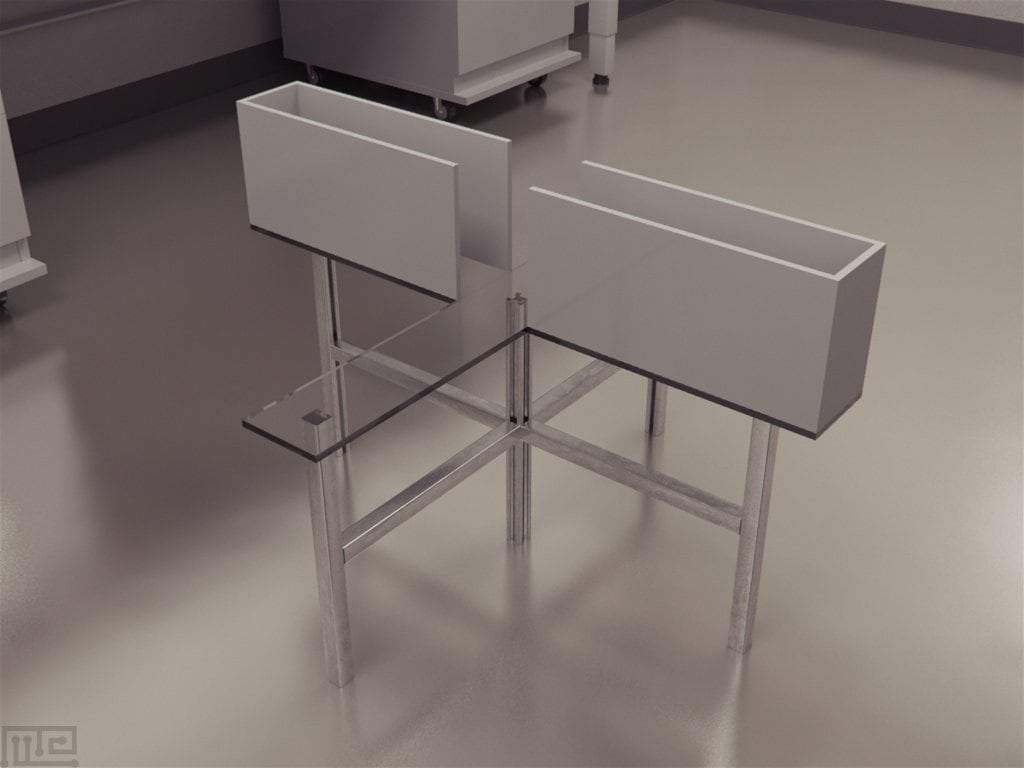
Standardized behavioral assay apparatus for quantifying anxiety-like behavior in mice and rats through measurement of exploratory activity in open versus enclosed elevated arms.

Director of Science · ConductScience
Ask Louise about Elevated Plus Maze fit, setup, configuration, or quote prep.
Already working with us? Sign in to connect this with My Scientist.
The paper
“Representations of stimulus features in the ventral hippocampus.”
Mice were placed in a standard EPM sized maze (13.5” height of maze from floor, 25” full length of each arm type, 2” arm width, 7” tall closed arms, with 0.5” tall/wide ledges on the open arms made by Maze Engineers, Skokie, IL), with 450 light lux centered over the open arms to promote avoidance.
Maze Engineers is part of ConductScience.
The elevated plus maze test is one of the most widely used tests for measuring anxiety-like behavior. The test is based on the natural aversion of rodents to open and elevated areas, as well as on their natural spontaneous exploratory behavior in novel environments. This test is commonly used with therapeutic validation and screening for anti-anxiety properties.
The elevated plus maze operates on the principle of approach-avoidance conflict, exploiting rodents' natural behavioral tendencies. Animals experience a conflict between their innate drive to explore novel environments and their aversion to open, elevated spaces that represent potential danger. The maze's elevation (61cm above ground) and open arm design create an anxiogenic environment that activates the animal's fear response system.
During testing, animals are placed in the central platform and allowed to freely explore all four arms for a defined period, typically 5-10 minutes. Anxiety-like behavior is quantified through multiple parameters including percentage of time spent in open arms, number of open arm entries, total arm entries (locomotor activity), and ethological measures such as stretch-attend postures, head dips, and defecation. Higher anxiety levels correlate with reduced open arm exploration and increased closed arm preference.
The non-reflective matted surface prevents visual artifacts that could influence behavior, while the ethanol-cleanable acrylic construction ensures consistent testing conditions between subjects. Optional modifications including doors, variable wall heights, and raised edge lips allow researchers to adjust the apparatus for specific experimental requirements and species-appropriate testing parameters.
| Add-on | Fits | Size | Price | Details |
|---|---|---|---|---|
| Doors | Mouse or Rat | $100 | ||
| Extra Wall Height | Mouse | 40cm | $125 | |
| Extra Wall Height | Rat | 50cm | $150 | |
| Raised edge lip around open arms | Mouse and Rat | 0.5cm or 1cm height, please specify, to fit | $75 | |
| Backlighting | $350 | Available for mice and rats. manual on and off, removable |
Add any of these to your quote request.
| Measurement | Mouse | Rat |
|---|---|---|
| Arm length | 35 cm | 50 cm |
| Arm width | 5 cm | 10 cm |
| Wall height | 20 cm | 30 cm |
| Stand height | 61 cm | 61 cm |
| Feature | This Product | Typical Alternative | Advantage |
|---|---|---|---|
| Construction Material | Non-reflective matted acrylic with odor-resistant properties | Basic acrylic or painted wood surfaces that may retain odors | Prevents visual artifacts and maintains consistent olfactory conditions between test subjects |
| Dimensional Precision | Species-specific scaling with precise arm dimensions (mouse: 35cm length, rat: 50cm length) | One-size-fits-all designs with compromised scaling | Ensures appropriate anxiogenic stimulus strength for each species' natural behavioral patterns |
| Cleaning Compatibility | 70% ethanol resistant acrylic construction | Materials requiring specialized cleaning agents | Enables standard laboratory disinfection protocols for consistent experimental conditions |
| Modification Options | Doors, wall height extensions, raised edge lips, and specialized lighting configurations available | Fixed designs with limited customization | Allows protocol adaptation for specific research questions and safety requirements |
| Color Selection | Five color options (black, blue, clear, grey, white) | Single color offering | Enables optimization for different lighting conditions and video tracking contrast requirements |
This EPM provides species-specific dimensional scaling, non-reflective matted construction, and extensive modification options. The ethanol-compatible acrylic ensures consistent cleaning protocols while the modular design accommodates diverse experimental requirements from basic anxiety screening to specialized behavioral paradigms.
| Model | Size | SKU | Listed price | Status | Shipping box |
|---|---|---|---|---|---|
| Mouse | Arm length 35 cm · Arm width 5 cm · Wall height 20 cm · Stand height 61 cm | ME-3301-W (+4) | $1,890.00 | Available | 88.9 x 38.1 x 7.62 cm |
| Rat | Arm length 50 cm · Arm width 10 cm · Wall height 30 cm · Stand height 61 cm | ME-3302-W (+4) | $2,190.00 | Available | 60.96 x 40.64 x 15.24 cm |
Verify arm dimensions and platform level using precision measuring tools before initial use and periodically thereafter.
Why: Dimensional accuracy affects the anxiogenic stimulus strength and behavioral measurement validity.
Inspect arm joints and support connections regularly, tightening hardware as needed to prevent movement during testing.
Why: Apparatus stability prevents vibrations that could influence animal behavior and measurement accuracy.
Habituate animals to the testing room environment for 30-60 minutes before EPM testing to minimize handling stress effects.
Why: Reduced stress from novel environments allows cleaner measurement of anxiety-specific behaviors rather than general stress responses.
Record both traditional parameters (time in open arms, entries) and ethological measures (stretch-attend postures, head dips) for comprehensive behavioral analysis.
Why: Ethological parameters provide additional sensitivity to detect subtle behavioral changes and validate anxiety-related interpretations.
If animals consistently avoid the central platform, reduce lighting intensity or check for vibrations from building systems.
Why: Environmental factors can overshadow the maze's anxiogenic properties and reduce the validity of behavioral measurements.
Consider raised edge lip modifications when testing animals with motor impairments or when conducting extended duration protocols.
Why: The 0.5-1cm safety barrier prevents falls while maintaining the open arm's anxiogenic properties for valid behavioral measurement.
Test animals during their active phase and maintain consistent timing across experimental groups.
Why: Circadian rhythms affect anxiety-related behaviors and locomotor activity levels in rodents.
Store the disassembled apparatus in a dry environment to prevent acrylic clouding and ensure longevity.
Why: Proper storage maintains the non-reflective surface properties essential for consistent behavioral testing conditions.
ConductScience provides a standard one-year manufacturer warranty covering defects in materials and workmanship, with technical support for apparatus setup and behavioral protocol guidance.
Background reading relevant to this product:
Elevated Plus Maze (EPM) is a widely used behavioral assay in the study of anxiety and anxiety-related disorders in neuroscience. The maze is based on the tendency of rodents to avoid exposed open areas and their innate behavior to scavenge for food. The EPM is a four-choice armed maze that exploits the natural tendency of rodents to seek sheltered spaces. Of the four arms of the maze, two arms are enclosed by walls while the remaining two are un-walled.
Observation of fear and anxiety-evoked behaviors in rodents was made by K. C. Montgomery in 1955 using an elevated Y-Maze (see also T-Maze) which had one of its choice-arm enclosed by walls and the other arm un-walled. These observations resulted in Handley and Mithani (1984) testing fear-motivated behaviors using an Elevated Plus Maze designed by them. Since its conception, the maze has been used for testing and validating the anxiety-inducing effects of research compounds. The Elevated Plus Maze is also used in understanding the underlying biology and mechanisms of anxiety-like behaviors.
The maze consists of four arms spaced at an angle of 90 degrees from one another. Alternating arms of the maze are enclosed to create a protected area while the open arms create an anxiogenic space. The concept of the Elevated Plus Maze has been adapted into other mazes such as the Elevated Zero Maze which uses a continuous circular path having some segments enclosed and open, and the Cross Maze which contains a clear enclosed central area with doors leading to each arm. Another variation of the EPM is the Elevated Asymmetric Plus Maze.
2.1 Origin
In 1955, Montgomery published a paper that correlated fear induction in novel spaces and exploratory behavior. He made use of an Elevated Y-Maze with one of the choice arms enclosed within walls and the other choice arm left open. He was able to observe that exploratory behavior gradually increased across trials in the elevated maze although the subjects showed a greater amount of avoidance behavior. These observations of fear-induced behavior and exploration were then adapted by Handley and Mithani in 1984 into an Elevated Plus Maze task.
In 1985, Pellow et al. investigated the validity of the Elevated Plus Maze as a measure of anxiety in rats. They tested the apparatus for validation under three areas: physiological, molecular, and behavioral effects. Their investigation was successful in showing that the preference for closed spaces was in agreement with Montgomery's result which suggested that aversion towards open arms was due to anxiety more so than fear.
2.2 Developments
The Elevated Plus Maze was seen as a useful tool in quantifying anxiety in rodent models and became one of the most widely used apparatuses in molecular testing (Pellow et al., 1985; Lister et al., 1987).
Gentsch et al. (1987) compared the behavioral performances of the spontaneously hypersensitive rats (SHR) (widely used in animal models of hypertension in humans) and Wistar-Kyoto rats on an EPM and found a clear distinction in their fear responses to the open spaces of the maze. The Wistar-Kyoto rats showed a higher reaction to aversive environments than the SHR.
Brett and Pratt (1990) investigated the role of chronic handling of the subjects on the behavior of anti-anxiety therapy-treated animals in an Elevated Plus Maze. They proposed that, although the effect was negligible, the results coupled with other studies suggest that rats habituated to handling represent a ‘normal’ unstressed state. Another study speculated on the possible influence of gender and age on the performance of rats in the EPM. Imhof et al. (1993) tested male and female Wistar rats of varying ages and found that within a certain range of age (60 and 120 days) significant sex-related differences could be observed.
2.3 Recent Developments
Akyazi et al. (2104) investigated the transmission of stress between cage mates by grouping animals together that were stressed with unstressed animals. The transmission group that consisted of non-stressed transmission (TC) animals paired with the transmission group (TS) spent more time in open arms as compared to the non-stressed reference value group. The hypothesis of transmission of stress in cage mates was supported by the gradual decrease of stress hormone levels from the stress-exposed group (that served as stress control) towards the reference value group.
Colnaghi et al. (2016) proposed that the absence or presence of social involvement could plausibly play a significant role in how adverse experiences are encoded. The performance of mice was examined in an Elevated Plus Maze task by placing groups rather than individuals on the maze. It was observed that social involvement led to increased time spent in the open arms of the maze.
The Elevated Plus Maze has a small central platform with four arms radiating outwards. The arms are placed at an angle of 90 degrees from each other and are usually 30 to 50 cm in length and about 5 to 10 cm in width. The dimensions of the apparatus can vary depending on the subjects used (whether mice, rats or small primates). Alternating arms are enclosed by high walls of t usually with an open roof. These walls are either opaque or transparent. For the un-walled arms, an end plate and raised edges ensure that the subject does not fall off the open arm while exploring. The apparatus floor should be in contrast with the color of the subject being tested. The entire apparatus is raised above the ground to a height of at least 50 cm.
To avoid shadows in the maze, the Elevated Plus Maze should be well-lit from above. Proper lighting also ensures that the subject can see the food rewards or other cues. A camera connected to tracking software such as ConductVision, Noldus Ethovision XT,and ANY-Maze can mounted above the maze to assist with live scoring, tracking and recording the subject and its movements within the maze.
The apparatus must be cleaned thoroughly before and after each trial to limit the influence of any residual stimuli from previous trials.
The Elevated Plus Maze is employed in the assessment of anxiety and anxiety-related disorders. The subject’s preference for open spaces is observed under this test, and the performances of the treated group or the disease group are compared with that of the control group. Rodents have an innate preference for closed or enclosed spaces where they feel safe. Thus they tend to avoid exploring exposed arms as much as the enclosed ones.
Animals treated with anti-anxiety therapies show reduced anxiety-like behavior and are more likely to explore the exposed arms of the maze. On the other hand, animals treated with anxiety-inducing compounds will spend less time in open spaces and more time exploring the enclosed arms due to the heightened anxiety-like feeling. The amount of time the animal spends on either of the arms provides information regarding the anxious state of the subject.
The maze requires no pre-training or repeated trials as the task is intended to test the response of the subject to an unfamiliar maze. Before every trial, the apparatus must be thoroughly cleaned to avoid the influence of residual stimuli if any.
Evaluation of Anxiety State Using the Elevated Plus Maze
To ensure accurate results, the trials are carried out in an exact manner for each test subject. The test subject is brought into the test room in its individual home cage to avoid any unnecessary stress and is allowed to acclimate (if required). The subject is then placed on the central platform facing the open arm away from the experimenter. It is important to ensure that all the test subjects face the same arm in the preceding trials.
The experiment begins as soon as the animal is placed on the central platform. The subject is allowed to explore the maze for a set period of at least 5 minutes, and its behavior is recorded via a ceiling-mounted video camera. Data is collected for the number of arm entries into the open and closed arm, and for the time spent in each arm. Arm entries are recorded only when the subject places all four of its paws within the arms. Any anomalies such as freezing or immobility and falling of the apparatus are also recorded.
When the set time has elapsed the subject is removed from the maze and placed back into its home cage (Komada et al., 2008).
The Elevated Plus Maze has seen several adaptations since its original design to meet the requirements of different investigations. The maze was often used by pre-training the subjects and testing them more than once over a period of time. However, it was observed that pre-training and repeated trials with the same subject resulted in test decay and altered behavior such as decreased activity on the open arms. The maze is now used without pre-exposure to achieve optimum results and to avoid these effects (Walf & Frye, 2007, Campos et al.,. 2013).
The maze can also be automated to include doors to the arms to isolate the arms. Another modification could be done by enclosing the adjacent arms instead of alternating the enclosed arms. This adaptation is used in a discriminative avoidance task to investigate the interactions between aversive memory and anxiety responses in rodents (Leão et al., 2016). The enclosed arms can also be modified to include aversive stimuli such as bright lights and loud sounds to achieve a variation in anxiety investigation (Silva et al., 1997).
The Elevated Zero Maze uses the same concept as the Elevated Plus Maze but eliminates the need for a central platform by using a continuous circular path that has some segments enclosed and some exposed. Another variation of the EPM is the Cross Maze. This maze uses a clear enclosed central platform with doors leading to identical exposed arms.
The Elevated Asymmetric Plus Maze was first described by Ruarte et al. in their 1997 paper. The design of the asymmetric EPM was intended to create conflictive exploration among the subjects. The basis of the approach was that novel environments with fear-inducing characteristics induce specific behaviors and modulate exploration by fear.
The Elevated Plus Maze serves as a simple and effective tool not just for the assessment of anxiety and anxiety-related disorders, but also for understanding learning and memory-related deficits associated with lesion-induced, genetic or age-related disorders.
Data collection from the Elevated Plus Maze is straightforward. The data is collected for the number of open-arm entries, the number of closed-arm entries, time spent in open arms and time spent in closed arms. Apart from these data, latencies to enter/ exit from the arms can also be collected along with other anxiety-related measures such as the number of head dips and grooming.
These data can be visualized by graphing the individual measures and then comparing them across control and treatment groups of animals. Animals treated with anxiety-reducing therapies are more likely to spend time in the open areas than the control animals.
Graphs allow easy visualization and comparisons across treatments and control groups. Anxiety-inducing substances heighten anxiety-like behaviors while anxiety-reducing therapies decrease such behaviors, which can be observed during the Elevated Plus Maze task. Generally, cohorts of approximately 20 animals per group are sufficient to obtain p-values of <0.05 using ANOVA (Vorhees et al., 2011, Walf & Frye 2007).
The Elevated Plus Maze is a popular behavioral assay for anxiety-related behaviors. Animal models have often served as a tool for understanding the human implication of treatments and for creating a controlled environment for the investigation of human diseases and disorders..
The Elevated Plus Maze has also seen a virtual adaptation of the task for humans. Virtual reality enables the creation of ecologically and ethologically valid environments. The Virtual Elevated Plus Maze is often combined with a real-world maze to create a mixed-reality environment to investigate human fear-avoidance behaviors. Using a virtual environment is cost-effective and does not endanger the subjects. Since the maze environments are virtual, the possibility of creating environments to suit the needs of any investigation is endless.
The Elevated Plus Maze can be easily adapted for testing of behaviors apart from those related to anxiety such as memory and cognition.
From the Maze Engineers documentation for this apparatus.
What is the Elevated Plus Maze?
The Elevated Plus Maze is a behavioral apparatus used to measure anxiety-like behavior in rodents. It consists of four arms arranged in a plus shape - two open and two enclosed - elevated above the floor.
How does the Elevated Plus Maze work?
Animals are placed at the junction of the four arms and allowed to freely explore. Anxious animals spend more time in enclosed arms, while less anxious animals venture into open arms. Time and entries in each arm type are recorded to quantify anxiety levels.
What research applications use the Elevated Plus Maze?
The Elevated Plus Maze is a gold-standard test for anxiolytic drug screening, anxiety disorder modeling, and stress research. It is used in pharmacology, behavioral neuroscience, and genetic studies of anxiety phenotypes.
ConductVision is our video-tracking software. Record your sessions on video, and it reports the measures listed below.
A 5-year license is $3,990 in total.
The same license also scores standard tests such as the open field, the Y-maze, the Morris water maze and the Barnes maze. Results export as CSV files.
Send it over and we'll email you a personalized answer — no call, no scheduling.
Prefer to talk it through?
Enhance your setup with compatible accessories
Creator Insights
Sandra E. File was a British neuropharmacologist at the University of London and King’s College London, where she became a leading authority on the neuropharmacology of anxiety. The elevated plus-maze concept was first described by Handley and Mithani in 1984; File and colleagues Sharon Pellow, Philippe Chopin and Mike Briley then published the 1985 validation showing the test was selectively sensitive to anxiolytic and anxiogenic drugs, establishing its construct validity for anxiety. The elevated plus-maze has since become one of the most widely used behavioral assays in neuroscience, spanning pharmacological screening, genetic models and basic anxiety research.
To view Sandra E. File’s publications, visit PubMed.
Are you Sandra E. File? to review your photo and bio, and find out how to submit Creator Insights.
ConductScience celebrates method creators: researchers who, through rigorous and often ingenious experiments, develop the tools that reveal how the brain and body work. These are real scientific discoveries that become everyday instruments for the labs that follow.
Use this apparatus with
Automate open and closed arm scoring, latency, and risk assessment with ConductVision behavioral tracking software.
ConductVision EPM ->Step-by-step ConductMaze protocol with TTL events, parameter tables, and metric definitions.
ConductMaze EPM Protocol ->Free calculator: enter open and closed arm times, get the open-arm duration ratio and 95% CI.
EPM Anxiety Index Tool ->Configuration considerations
Use these notes to scope species, cohort, tracking, and automation needs. Only verified product or support routes are linked from this section.
50 × 10 cm arms · 40 cm walls · 50 cm elevation
Pellow 1985 canonical configuration. Used in over 6,000 published studies.
Add to Cart30 × 5 cm arms · 15 cm walls · 40 cm elevation
Scaled-down dimensions for mouse studies. Lister 1987 mouse adaptation.
Switch to Mouse →1 cm low ledge on open arms · same other dimensions
Preserves anxiolytic responsivity on retest. Bertoglio & Carobrez 2002.
Configure tracking →§ 1
The Elevated Plus Maze was introduced by Pellow et al. (1985) 1 as an unconditioned model of anxiety, building on earlier observations by Montgomery (1955) 2 that rats avoid open and elevated spaces. Pellow demonstrated that the open-arm avoidance response is reversed by classical anxiolytic compounds and exaggerated by anxiogenic challenges, establishing pharmacological validity for the paradigm.
Within a decade the EPM became the most widely-used anxiety screen in preclinical neuroscience. By 2010, over 6,000 published studies had used the apparatus. 1 Its appeal: the test is short (5 minutes per animal), requires no training or food deprivation, and produces a robust between-group effect size with N=8-12 per group. 2
The EPM is now the canonical first-pass screen for anxiety-like behavior in rodents and the back-translational bridge between human anxiolytic literature and preclinical mechanism work. Its limitations and confound profile, addressed in Discussion §4, are well-characterized. 12
§ 2
Standard 5-minute single-trial EPM. Single exposure per animal.
Critical methodological constraints
The 12 metrics ConductVision auto-scores from EPM video.
Time in Open Arms
Primary anxiety axis
Open Arm Entries
Approach frequency
Open Arm Duration Ratio
Primary anxiety index
Risk Assessment
Ethological measure
Closed Arm Entries
Locomotion control
+ 7 additional metrics: latency to first open entry, rearing, grooming, velocity by zone, total distance, time in center, head dips.
The standard published anxiety endpoint. Computed per animal from the 5-min trial.
§ 3
PubMed publication counts, sample apparatus output, and recent papers from a dated PubMed snapshot.
Two views of where the paradigm sits in the current literature.
Illustrative EPM scoring output for six animals in a vehicle versus anxiolytic comparison.
Sex-independent recruitment of the dorsal periaqueductal gray in fear memory expression, consolidation, and pronounced anxiety-like state.
de Lima Silva ÁHB, de Oliveira PHA, da Cunha JM, et al.. Neuroscience. 2026 Sep 28.
The dorsolateral column of the periaqueductal gray (dPAG) is a midbrain structure involved in innate defensive reactions but also contributes to processes relevant to the neurobiology of post-traumatic stress disorder (PTSD).
Combined Lactobacillus plantarum Supplementation and Aerobic Training Mitigate Cognitive and Behavioral Impairments in Ovariectomized Rats.
Taghipour N, Aghabozorg M, Bafroee AST, et al.. Physiol Behav. 2026 Sep 24.
Menopause, modeled by ovariectomy (OVX) in rodents, causes cognitive decline and emotional disturbances due to estrogen withdrawal. While probiotics and aerobic exercise independently show beneficial effects, their combined contribution remains poorly characterized.
Vicarious defeat stress (VDS) is not a simple substitute for chronic social defeat stress (CSDS): a comparative study on behavioral and molecular mechanisms in both stress-induced anxiety- and depression-like behaviors.
Sun XR, Chen YX, Zhang XJ, et al.. Behav Brain Funct. 2026 Sep 22.
Social stress is a fundamental environmental factor driving the pathophysiology of neuropsychiatric disorders. Chronic social defeat stress (CSDS) and vicarious defeat stress (VDS) are two widely used social stress paradigms, with VDS initially proposed as an alternative to CSDS.
To Study the Effect of Nilotinib, a Tyrosine Kinase Inhibitor, on Learning and Memory and Its Comparison with Nitric Oxide Synthase Inhibitor in an Animal Model of Alzheimer's Disease.
Kumar A, Fatima N, Kumar P, et al.. Ann Neurosci. 2026 Sep 20.
Alzheimer's disease (AD) is a gradual neurodegenerative disorder presenting with cognitive and non-cognitive impairment. Currently approved therapies alleviate symptoms but do not modify disease progression and may be associated with adverse effects.
Sex differences in rat behavioral responses to acute wheel running during stress and ambiguity.
Wachtel A, Castaneda E, Davis JG, et al.. Behav Brain Res. 2026 Sep 19.
Acute aerobic exercise activates physiological stress systems yet is widely viewed as a strategy for improving cognitive and emotional functioning.
Single ayahuasca administration mitigates long-term behavioral and neurochemical effects of early-life stress in rats.
Lodetti G, Redivo H, Teixeira AG, et al.. J Neural Transm (Vienna). 2026 Sep 19.
Pharmacotherapy for depression is commonly prescribed, yet fewer than half of patients achieve remission with a single treatment. Many also experience intolerable side effects, highlighting the need for new treatment approaches.
§ 4
Limitations of the paradigm, methodological caveats, and current directions.
Variables that can shift Elevated Plus Maze results apart from the effect under study.
If one open arm is brighter than the other, animals avoid it. Always confirm illumination at four arm endpoints is within ±10 lux. The single most common methodological error in EPM data.
Re-testing on the EPM increases open-arm avoidance even without intervening manipulation. The retest no longer indexes anxiety state. For repeat-measure designs, use the modified-EPM (mEPM) variant which preserves anxiolytic responsivity on retest (Bertoglio & Carobrez 2002).4
Nocturnal rodents test reliably during their active dark phase. Light-phase testing produces lower baseline activity and compressed group differences.
Animals handled more before testing show higher anxiety-like behavior. Standardize handling: same person, same picking-up method, same transport route from vivarium.
BALB/c spend ~10% time in open arms; C57BL/6 ~25%. Always report strain, age, sex, and supplier, and run within-strain comparisons before cross-strain claims.3
Open-arm avoidance is not purely "anxiety". It conflates novelty avoidance, height aversion, and risk assessment. 1 Reproducibility across labs is variable due to lighting, handling, and prior testing history. 2 Recent work emphasizes scoring ethologically-defined behaviors (head dips, stretch-attend postures) alongside the traditional time and entry measures to improve construct validity. 3 When a treatment effect is subtle, ethological measures often outperform zone-time at detecting low-dose anxiolytic activity.
No. Zebrafish plus-maze assays use a different apparatus, aversive stimulus, and interpretation frame. Treat them as species-specific anxiety assays rather than variants of the rodent elevated plus maze.
Yes if your treatment effect is subtle. Ethological measures (head dips, stretch-attend, risk assessment) are often more sensitive than zone-time to low-dose anxiolytics. 1 ConductVision automates these from video.
EPM open-arm time shows reliable sex differences in many strains. NIH SABV mandate plus growing evidence of sex × treatment interactions on EPM measures has driven the proportion of papers reporting both sexes from ~15% (2020) to ~40% (2026).
Quarterly editorial review of emerging Elevated Plus Maze methodology. Q2 2026
DeepLabCut and SLEAP-derived ethograms (head dips, stretch-attend, rearing) layered on top of traditional zone-time scoring. Six papers this quarter, three of which detected effects classical scoring missed.
EPM is the back-translational bridge between human anxiolytic literature and novel psychedelic mechanism work. Adolescent and adult rodent studies emerging in 2025-2026.
Sex × treatment interactions on EPM open-arm time are now reported in ~40% of 2026 papers vs ~15% in 2020.
CRISPR-edited risk loci (CACNA1C, ANK3, BDNF Val66Met) tested for anxiety-like baseline phenotypes. EPM is the standard first-pass screen before deep behavioral batteries.
§ 5
50 selected methods and validation references for Elevated Plus Maze.