Floor Inserts for Sociability Chamber
Standardized floor inserts for sociability chambers, available in mouse and rat dimensions to support consistent social behavior testing conditions.

Louise Corscadden, PhD
Director of Science · ConductScience
Ask Louise about Floor Inserts for Sociability Chamber fit, setup, configuration, or quote prep.
Already working with us? Sign in to connect this with My Scientist.
Key Specifications
Full details →- Model fit
- Mouse, Rat
- SKU family
- CS-958423
- Shipping box
- 65.0 x 36.0 x 27.0 cm
- Ordering
- Online checkout and quote request available
- Category
- Behavioral Mazes
- Build notes
- Confirm accessories, station layout, and support needs before purchase
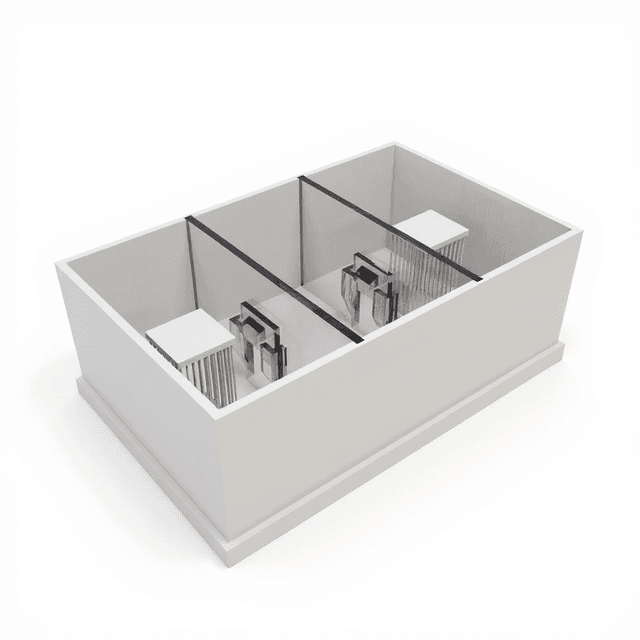
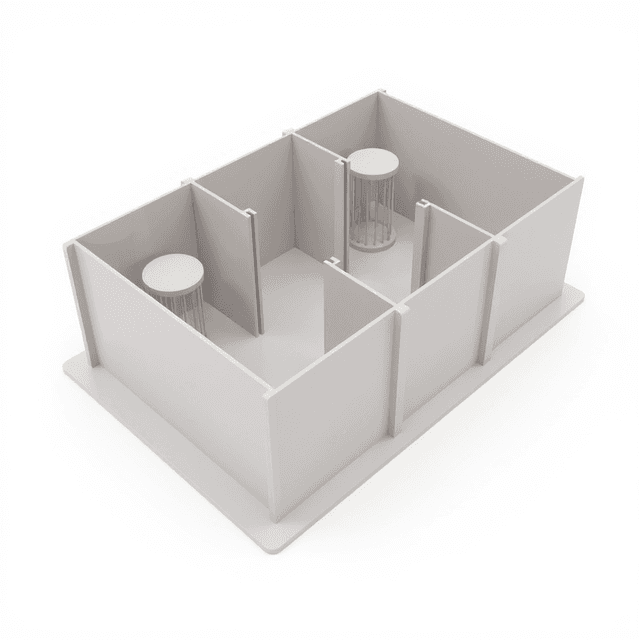
Floor Inserts for Sociability Chamber are specialized test surface components designed to provide standardized flooring conditions for rodent social behavior assessments. These inserts create uniform testing environments within three-chamber sociability apparatus, supporting consistent behavioral measurements across experimental sessions.
Available in species-specific dimensions (40x20cm for mouse studies, 80x40cm for rat studies), these inserts facilitate controlled social interaction paradigms including social approach, preference testing, and autism-related behavioral phenotyping. The standardized surface materials and dimensions ensure reproducible conditions for quantitative social behavior analysis.
How It Works
Floor inserts function as standardized testing surfaces that replace or overlay existing chamber floors to create uniform environmental conditions. The inserts eliminate variability in surface texture, material composition, and dimensional parameters that could influence rodent locomotion patterns and exploratory behavior during social testing.
By providing consistent flooring across all chambers within the three-chamber apparatus, these inserts ensure that behavioral differences reflect genuine social preferences rather than environmental artifacts. The species-specific sizing maintains appropriate spatial relationships for natural social interaction distances while preventing chamber size from becoming a confounding variable in experimental outcomes.
Features & Benefits
Shipping weight
- 6.06 lb
Shipping box
- L: 65.0 cm
- W: 36.0 cm
- H: 27.0 cm
| Feature | This Product | Typical Alternative | Advantage |
|---|---|---|---|
| Species-Specific Sizing | Available in mouse (40x20cm) and rat (80x40cm) configurations | Generic sizing often requires adaptation or may not provide optimal spatial relationships | Ensures appropriate scaling for species-specific social interaction distances and natural movement patterns |
| Chamber Integration | Designed specifically for sociability chamber compatibility | Generic floor materials may require custom fitting or modification | Provides seamless integration without apparatus modifications or setup complications |
| Surface Standardization | Uniform material properties across all chamber compartments | Improvised surfaces often create inconsistent testing conditions | Eliminates surface-related behavioral artifacts that could confound social preference measurements |
| Easy Replacement | Direct-fit design for rapid chamber reconfiguration | Custom solutions may require complex installation procedures | Supports efficient experimental workflows with minimal setup time between test sessions |
These floor inserts provide species-optimized dimensions and standardized surface conditions specifically designed for sociability chamber integration. The system offers consistent testing environments that eliminate floor-related behavioral confounds while supporting efficient experimental workflows.
| Model | SKU | Listed price | Status | Shipping box |
|---|---|---|---|---|
| Rat | CS-958423 | $240.00 | Available | 65.0 x 36.0 x 27.0 cm |
| Mouse | CS-958423 | $130.00 | Available | 65.0 x 36.0 x 27.0 cm |
| Mouse | ME-SCFI-3806 | $130.00 | Available | 65.0 x 36.0 x 27.0 cm |
| Rat | ME-SCFI-3808 | $240.00 | Available | 65.0 x 36.0 x 27.0 cm |
Practical Tips
Allow inserts to equilibrate to room temperature before testing to minimize temperature-related behavioral artifacts.
Why: Temperature differences can influence rodent exploratory behavior and social approach patterns.
Inspect insert surfaces regularly for wear patterns that could create textural inconsistencies between chambers.
Why: Surface irregularities can introduce environmental confounds that affect social behavior measurements.
Document insert usage history and replacement schedules to maintain experimental consistency across studies.
Why: Consistent environmental conditions are critical for reproducible social behavior phenotyping results.
Use identical cleaning protocols for all inserts to ensure consistent olfactory conditions between test sessions.
Why: Residual odors can influence social approach behaviors and create false preferences or avoidance patterns.
If inserts shift during testing, verify proper chamber fit and consider additional stabilization methods.
Why: Movement during behavioral testing can create noise artifacts in automated tracking systems.
Ensure insert edges are smooth and properly fitted to prevent injury during animal handling procedures.
Why: Sharp edges or gaps can pose safety risks during subject placement and removal from chambers.
Setup Guide
What’s in the Box
- Floor inserts (species-specific dimensions)
- Installation instructions (typical)
- Cleaning and maintenance guidelines (typical)
Warranty
ConductScience provides standard manufacturer warranty coverage with technical support for proper installation and maintenance procedures.
Compliance
How do the floor inserts affect baseline locomotor activity measurements?
Floor inserts provide consistent surface conditions that minimize variability in locomotor patterns, allowing behavioral differences to reflect social preferences rather than environmental factors.
Can the inserts be used with existing video tracking systems?
Yes, the inserts maintain standard chamber dimensions and do not interfere with overhead video tracking or automated behavioral analysis systems.
What cleaning protocols are recommended between test subjects?
Standard laboratory disinfectants can be used on insert surfaces, with thorough drying required before subsequent testing to eliminate olfactory cues.
Do the inserts require replacement after extended use?
Insert longevity depends on usage frequency and cleaning protocols; replacement is recommended when surface wear becomes visible or cleaning effectiveness diminishes.
How do insert dimensions relate to species-specific social interaction distances?
Mouse inserts (40x20cm) accommodate typical mouse social approach distances, while rat inserts (80x40cm) provide appropriate spatial scaling for larger body size and interaction patterns.
Can inserts be modified for specialized experimental protocols?
Consult product datasheet for modification specifications; alterations may affect standardization and comparability with established behavioral protocols.
Have a question about this product?
Have a question? Just ask.
Send it over and we'll email you a personalized answer — no call, no scheduling.
Prefer to talk it through?