IVC Mouse Cage System
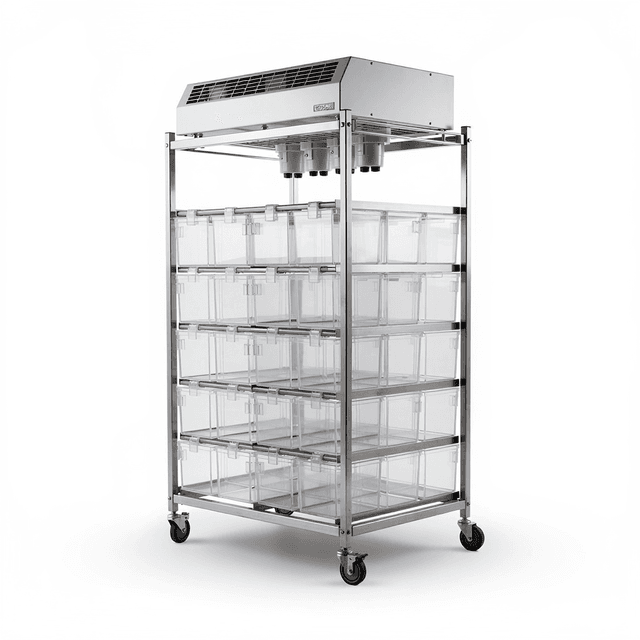
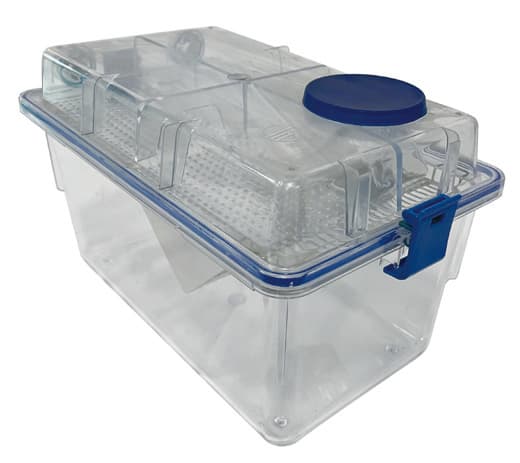
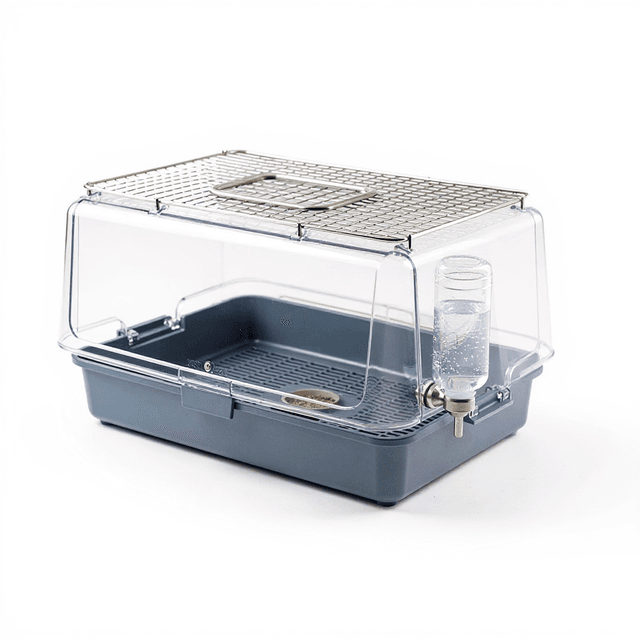
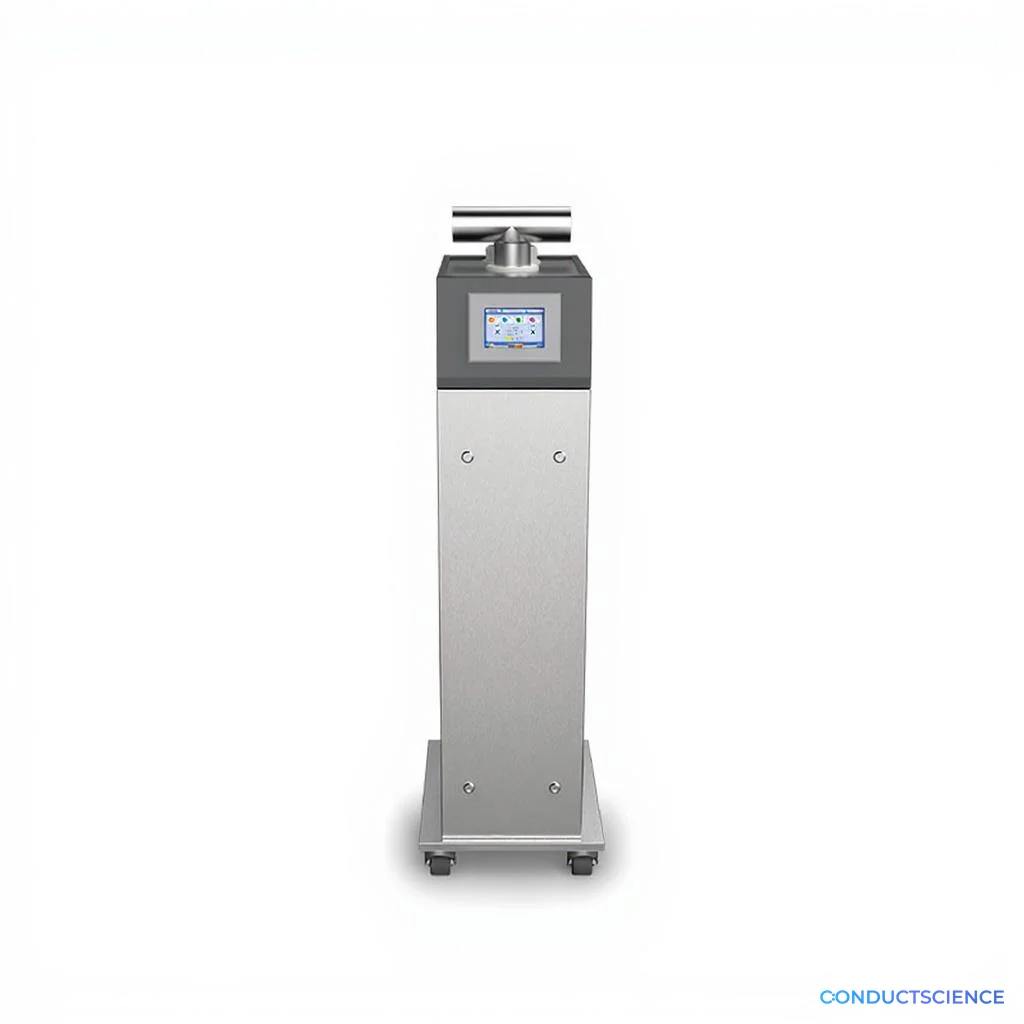
Modular individually ventilated mouse-cage system for laboratory mouse and rat housing, with PPSU or PSU cage boxes, SUS304 stainless steel frames, independent air supply and exhaust, 0.2 micron filtration, automatic valve closure, environmental sensors, alarm support, and PLC or MCU control for controlled vivarium microenvironments.

Louise Corscadden, PhD
Director of Science · ConductScience
Ask Louise about IVC Mouse Cage System fit, setup, configuration, or quote prep.
Already working with us? Sign in to connect this with My Scientist.
Key Specifications
Full details →- Model fit
- Configured during quote
- SKU family
- BIO-BK-0669
- Shipping box
- 42.0 x 43.6 x 38.0 cm
- Ordering
- Online checkout and quote request available
- Category
- IVC Systems
- Build notes
- PPSU or PSU cage boxes with 500 ml autoclavable drinking bottles
Overview
The IVC Mouse Cage System is a modular individually ventilated cage system for mouse and rat vivarium housing. It brings the air-handling unit, cage-frame architecture, cage boxes, filtration, monitoring, alarms, and cage-positioning workflow into one controlled housing platform for research facilities that need stable cage-level microenvironments.
The system is built around SUS304 stainless steel cage frames, PPSU or PSU cage boxes, ABS guide rails, 500 ml autoclavable drinking bottles, and independent air supply and exhaust for each cage position. The current ConductScience product data specifies 0.2 micron high-efficiency filtration, automatic inlet and exhaust valve closure when cages are removed, high-precision wind-speed pressure-difference sensing, temperature and humidity sensing, built-in UPS support, and PLC or MCU control.
For a scientist or facility manager, the value is consistency and containment planning. Cage-level ventilation helps separate cohorts, reduce airborne cross-contamination risk, manage allergens and odor, and keep environmental monitoring tied to the animal-housing system rather than scattered across disconnected accessories.
Scientific Use
Individually ventilated cage systems are used across mouse colony management, immunology, oncology, behavioral neuroscience, aging, toxicology, metabolic research, and other long-running animal studies where housing environment can affect welfare, microbial status, stress, physiology, or behavioral outcomes. The product is especially useful when a facility needs SPF or clean-grade housing support with alarmed ventilation and structured cage-position management.
The IVC Mouse Cage System should be selected alongside facility ventilation planning, cage-material preference, sterilization cadence, cage capacity, monitoring requirements, husbandry procedures, and the downstream experimental workflows that will use the colony. Related ConductScience IVC pages cover polycarbonate mouse IVC, polysulfone mouse IVC, high-density mouse IVC, and species-specific rat, rabbit, and guinea-pig systems when the facility needs a more specific rack family.
Buying Fit
Choose this listing when the purchasing decision is a complete mouse-focused IVC system with cage boxes, rack hardware, air handling, filtration, monitoring, and alarm support. Use the related cage, rack, and species-specific IVC products to build out replacement cages, higher-density installations, or parallel rat and rabbit housing areas.
How It Works
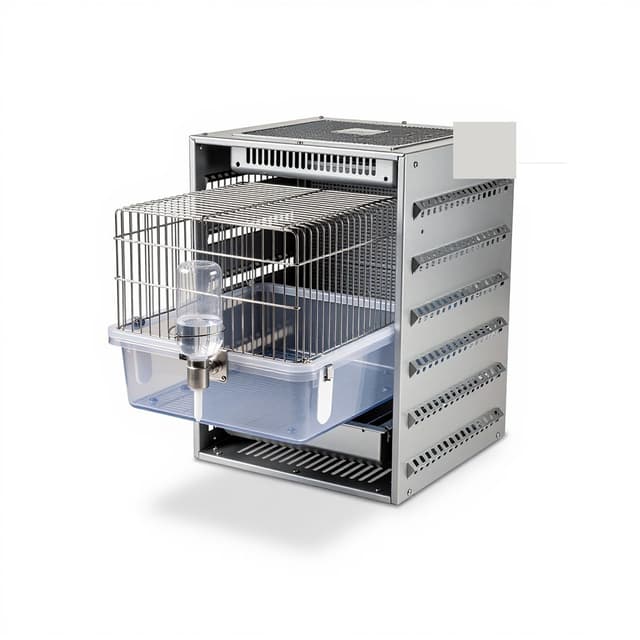
The IVC system operates through three integrated subsystems that create individually controlled microenvironments. The central air handling unit generates positive or negative pressure differentials and conditions incoming air through multi-stage filtration. Each cage box receives independent air supply through 0.2μm high-efficiency filters that remove bacteria, fungi, and particulate matter while maintaining laminar airflow patterns within the cage volume.
Environmental control is achieved through high-precision wind speed pressure difference sensors that monitor airflow rates and pressure gradients across each cage unit. Temperature and humidity sensors provide real-time feedback to the control system, which adjusts air conditioning parameters to maintain stable conditions. When cage boxes are removed for husbandry or experimental procedures, automatic valve closure prevents backflow and maintains system pressure integrity.
The modular design allows each cage to function as an independent biocontainment unit while sharing centralized air handling resources. This architecture provides the environmental control benefits of barrier housing while enabling individual cage manipulation without compromising adjacent units.
Features & Benefits
Housing fit
- Mouse and rat IVC housing workflows for clean-grade or SPF vivarium environments
Cage materials
- PPSU or PSU cage boxes with 500 ml autoclavable drinking bottles
Rack and guide materials
- SUS304 stainless steel cage frame with ABS engineering-plastic guide rails
Ventilation path
- Independent air supply and exhaust per cage with automatic valve closure when cages are removed
Filtration
- 0.2 micron membrane filtration with a separate 25 x 50 mm metal dust filter
Controls and monitoring
- PLC or MCU control with pressure-difference, temperature, humidity, alarm, and UPS support
Shipping weight
- 68.34 lb
Shipping box
- L: 42.0 cm
- W: 43.6 cm
- H: 38.0 cm
| Feature | This Product | Typical Alternative | Advantage |
|---|---|---|---|
| Cage Box Sterilization Cycles | >500 cycles (PPSU) or >200 cycles (PSU) at 205kPa, 134°C | Standard plastic cages often provide 100-300 sterilization cycles before replacement | Extended cage box lifespan reduces long-term replacement costs and inventory management requirements |
| Filtration Efficiency | 0.2μm high-efficiency filtration for each cage | Entry-level systems may use coarser filtration or shared filtration between multiple cages | Removes bacteria and fungi to maintain pathogen-free environments essential for immunocompromised animal studies |
| Backup Power Integration | Built-in UPS system with power failure alarms | Basic systems often lack integrated backup power capability | Maintains critical ventilation during power outages to prevent animal stress and environmental parameter excursions |
| Control System Options | PLC or MCU control with remote monitoring capability | Simple timer-based controls without data logging or remote access | Enables 24/7 monitoring and alarm notification for proactive maintenance and regulatory documentation |
| Automatic Containment | Air inlet and exhaust valves automatically close when cages removed | Manual valve operation or no containment during cage changes | Prevents cross-contamination and system pressure loss without requiring operator intervention during routine husbandry |
| Environmental Sensor Integration | High-precision wind speed, pressure difference, temperature, and humidity sensors | Basic systems may monitor only temperature or lack precision sensing | Comprehensive environmental parameter control essential for reproducible research results and animal welfare |
The IVC Mouse Cage System provides individual cage environmental control with 0.2μm filtration, automatic valve closure, and integrated backup power systems. PPSU cage boxes offer extended sterilization cycle life, while PLC control systems enable remote monitoring and comprehensive data logging for research documentation requirements.
Practical Tips
Confirm room footprint, airflow routing, power, service access, and alarm-notification workflow before final rack configuration.
Why: IVC systems behave like vivarium infrastructure; installation planning affects usability as much as the cage-box material does.
Use PPSU when repeated high-temperature sterilization and long cage-box service life are key purchasing requirements.
Why: The current product data specifies higher deformation temperature and more steam-sterilization cycles for PPSU than PSU.
Use numbered cage positions to support randomization, cohort tracking, and rack-position balance for long-running studies.
Why: Cage position and airflow conditions can become hidden variables if they are not tracked in colony and study records.
Setup Guide
What’s in the Box
- SUS304 stainless steel cage frame assembly
- PPSU or PSU cage boxes selected by configuration
- Central air handling unit with PLC or MCU control path
- Independent air supply and exhaust path for each cage position
- 0.2 micron membrane filter elements
- 25 x 50 mm metal dust filters
- 500 ml autoclavable drinking bottles
- ABS guide rails with cage-positioning indicators
- High-precision wind-speed pressure-difference, temperature, and humidity sensor support
- Built-in UPS backup-power and alarm support
- 4-inch PU wear-resistant universal wheel set
Warranty
Support, replacement, and fulfillment terms are confirmed with the final quote and institutional purchasing requirements.
Compliance
References
Background reading relevant to this product:
What is included with the IVC Mouse Cage System?
The listing covers the coordinated IVC system: stainless cage-frame assembly, PPSU or PSU cage boxes, air handling and control path, independent cage air supply and exhaust, 0.2 micron filters, drinking bottles, guide rails, sensors, alarms, UPS support, and wheel hardware.
How do PPSU and PSU cage boxes differ?
Current ConductScience product data lists PPSU with thermal deformation above 180 C and more than 500 sterilization cycles at 205 kPa, 134 C, 5 minutes. PSU is listed above 150 C with more than 200 cycles. PPSU is the stronger fit when frequent autoclaving and longer cage-box life are priorities.
How does the system help with cage-level containment?
Each cage position has independent air supply and exhaust through 0.2 micron filtration. When a cage is removed, inlet and exhaust valves automatically close, helping maintain airflow integrity during husbandry work.
What monitoring and alarm features should facilities plan around?
The product data specifies wind-speed pressure-difference sensing, temperature and humidity sensing, abnormal-parameter alarms, filter-life alarms, power-failure alarms, built-in UPS support, and PLC or MCU control.
Can this be configured for SPF or clean-grade housing?
Yes. The current product data lists clean-grade and SPF-grade compatibility. Final configuration should be reviewed around facility ventilation, sterilization workflow, cage count, monitoring expectations, and animal-care SOPs.
What related products should be reviewed with this system?
Review replacement mouse cages, lab rodent cages, containment chambers, high-density mouse IVC systems, and species-specific rat, rabbit, or guinea-pig IVC systems when planning a broader vivarium installation.
Have a question about this product?
Have a question? Just ask.
Send it over and we'll email you a personalized answer — no call, no scheduling.
Prefer to talk it through?
Accessories
Enhance your setup with compatible accessories
Frequently Bought Together
Upgrade Options