
Stereotaxic Surgery Kit

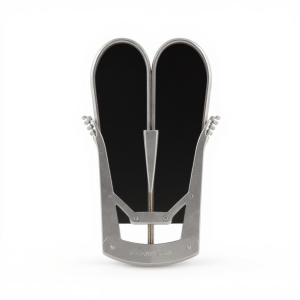
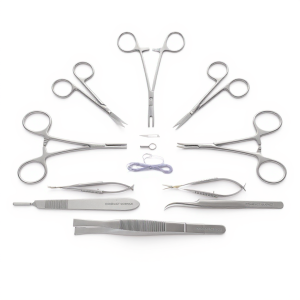
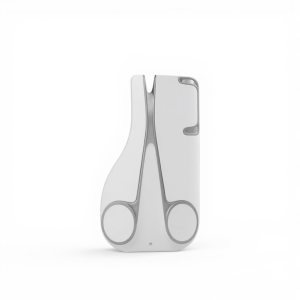
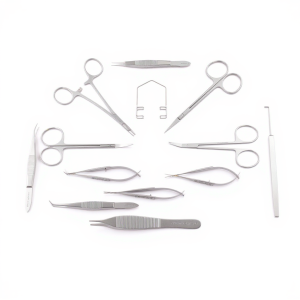
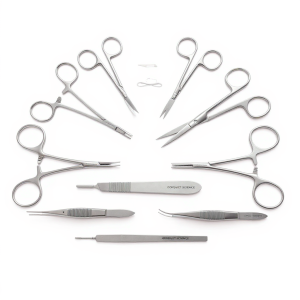
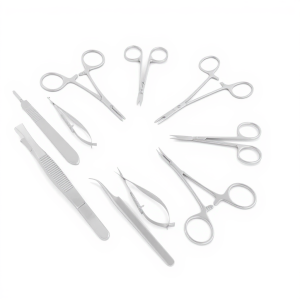
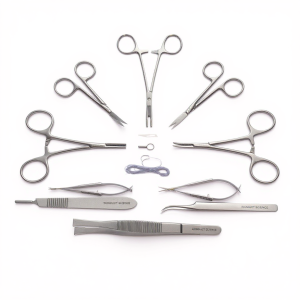
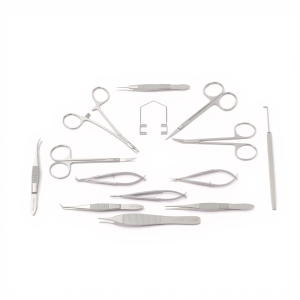
The Stereotaxic Surgery Kit provides a comprehensive collection of precision surgical instruments designed for stereotaxic neurosurgical procedures in laboratory mice and rats. This kit contains 12 specialized instruments including fine dissection forceps, IRIS scissors, mosquito forceps, needle holders, and micro spatulas, all manufactured to exacting standards for precise tissue manipulation during brain microinjection and electrode implantation procedures.
Each instrument in the kit serves a specific function in stereotaxic workflows, from initial skin incision and tissue dissection to vessel clamping and suture placement. The surgical tools feature stainless steel construction with fine tips and cutting edges optimized for small animal neurosurgery, enabling researchers to perform consistent, accurate procedures while minimizing tissue trauma. The kit supports experimental protocols requiring precise positioning of needles, electrodes, or cannulae at pre-defined brain coordinates.
How It Works
Stereotaxic neurosurgery relies on a three-dimensional coordinate system referenced to anatomical landmarks, typically bregma, to achieve precise targeting of brain structures. The surgical procedure involves securing the anesthetized animal in a stereotaxic frame, making calculated measurements from reference points, and using specialized microsurgical instruments to access target regions with sub-millimeter accuracy.
The instruments in this kit serve specific functions during the surgical procedure: scalpel handles with ruler markings enable precise incisions and measurements, fine-tip forceps provide delicate tissue manipulation without crushing, specialized scissors create clean cuts through scalp and dura, and mosquito forceps control hemostasis. The dual-end micro spatula facilitates tissue retraction and positioning during deep brain access.
Successful stereotaxic procedures require careful coordination of anatomical knowledge, precise instrumentation, and sterile technique to minimize tissue trauma while achieving accurate targeting of neural structures for experimental manipulation or recording.
Features & Benefits
Surgical Technique
- Stereotaxic neurosurgery
purpose
- Engraft needle or electrode at pre-defined brain location
Automation Level
- manual
Research Domain
- Addiction Research
- Behavioral Pharmacology
- Learning and Memory
- Neurodegeneration
- Neuroscience
- Pain Research
Brand
- RWD
Weight
- 4.41 lbs
Dimensions
- 34.0 × 39.0 × 33.0 cm
Product Highlights
| Feature | This Product | Category Context |
|---|---|---|
| Instrument Count | 12-piece comprehensive set | Basic kits often provide 6-8 essential instruments |
| Scalpel Handle Design | Graduated handle with ruler markings | Standard handles without measurement capability |
| Forceps Variety | Multiple configurations including straight and curved tips | Limited to single forceps type per kit |
| Scissors Size Options | Dual-size IRIS scissors (9.5cm and 10.5cm) | Single scissors size in most kits |
| Specialty Tools | Dual-end micro spatula and needle holder with integrated scissors | Basic kits may lack specialized microsurgical tools |
| Blade Supply | 100-piece #11 blade box included | Limited blade quantity or separate purchase required |
This kit offers a comprehensive instrument selection with specialized features like graduated scalpel handles and dual-size scissors that support precise stereotaxic procedures. The 12-piece set with included blade supply provides complete surgical toolkit functionality in a single procurement.
Applications & Use Cases
Practical Tips
Organize instruments in order of use on sterile tray before beginning surgery to maintain efficient workflow and sterile field.
Reduces surgery time and minimizes contamination risk during instrument retrieval.
Clean instruments immediately after use with enzymatic detergent to prevent blood and tissue adhesion.
Maintains instrument function and prevents corrosion that can compromise surgical precision.
Use needle holders when manipulating sharp instruments and dispose of used scalpel blades in appropriate sharps containers.
Prevents accidental injury and ensures proper biological waste disposal compliance.
Select straight forceps for surface work and curved forceps for deep tissue access based on surgical approach angle.
Optimizes instrument ergonomics and reduces tissue trauma during manipulation.
Inspect instrument tips regularly for damage or dulling and replace when sharpness decreases.
Maintains surgical precision and prevents excessive tissue trauma from damaged instruments.
Verify scalpel handle ruler markings against known standards before critical measurement applications.
Ensures measurement accuracy for precise stereotaxic coordinate verification.
If mosquito forceps lose hemostatic grip, check for blood buildup on serrated surfaces and clean thoroughly.
Maintains effective bleeding control during surgery and prevents incomplete hemostasis.
Document instrument condition and any replacements in surgical logs to maintain experimental consistency.
Enables identification of potential variables affecting surgical outcomes across experimental groups.
Setup & Operation Guide
-
Instrument PreparationRemove all instruments from packaging and inspect for damage. Sterilize instruments using appropriate autoclave or chemical sterilization protocols before first use.
-
Scalpel AssemblyMount #11 scalpel blades onto the graduated scalpel handle, ensuring secure attachment. The ruler markings on the handle enable precise measurement during incisions.
-
Workspace OrganizationArrange instruments on sterile surgical tray in order of use. Position fine instruments within easy reach while maintaining sterile field throughout procedure.
-
Animal PositioningSecure anesthetized animal in stereotaxic frame and establish bregma reference point. Use graduated scalpel handle to measure and mark incision locations based on target coordinates.
-
Surgical AccessMake initial scalp incision with scalpel, then use fine scissors and forceps to expose skull surface. Control bleeding with mosquito forceps as needed.
-
Deep Tissue WorkUtilize needle holders and micro spatula for precise manipulation during electrode or cannula implantation. The dual-ended spatula enables careful tissue retraction.
-
Post-Procedure CareClean instruments immediately after use and sterilize between animals. Store instruments in protective case to maintain sharp edges and prevent damage.
What's in the Box
- Scalpel handle with ruler markings (12.5cm)
- #11 Scalpel blades (box of 100)
- IRIS fine scissors - round type (10.5cm)
- IRIS fine scissors - round type (9.5cm)
- Operating scissors - round type (10.5cm)
- IRIS dissecting forceps - straight (10cm) - 2 pieces
- IRIS dissecting forceps - curved (10cm) - 2 pieces
- HARTMAN mosquito forceps - straight (10.5cm) - 2 pieces
- HARTMAN mosquito forceps - curved (10cm)
- OLSEN-HEGAR needle holder with scissors (12cm)
- Dual-end micro spatula (11cm)
- Protective storage case (typical)
Warranty & Support
ConductScience provides a one-year manufacturer warranty covering defects in materials and workmanship, with technical support available for proper instrument care and maintenance protocols.
Compliance & Standards
Background Reading
The following papers provide general scientific background on measurement techniques relevant to this product category. They are not validation studies of this specific instrument.
What sterilization methods are compatible with these instruments?
The surgical-grade stainless steel construction allows for autoclave sterilization, chemical sterilization, or ethylene oxide sterilization. Autoclave at 121°C for 15 minutes or follow institutional protocols for chemical sterilants.
Are the forceps tips suitable for handling delicate neural tissue?
Yes, the IRIS dissecting forceps feature 1mm tip width with 13.5-14mm teeth length designed for precise tissue manipulation without crushing. The fine-tip design minimizes tissue trauma during neural structure handling.
How precise are the ruler markings on the scalpel handle?
The graduated scalpel handle provides measurement capability for stereotaxic coordinate verification, though specific graduation intervals should be confirmed with product datasheet. Use in conjunction with stereotaxic frame measurements for optimal accuracy.
Can these instruments accommodate both mouse and rat surgeries?
Yes, the instrument sizes are appropriate for both species. The 9.5-10.5cm length range and fine tip dimensions work effectively for the anatomical scale differences between mouse and rat stereotaxic procedures.
What is the expected lifespan of the scalpel blades?
Each #11 blade should be replaced after each animal or when sharpness degrades. The 100-blade supply supports multiple experimental cohorts, though blade longevity depends on tissue type and surgical technique.
Are replacement parts available for individual instruments?
Individual instruments can typically be replaced through ConductScience, though specific replacement part availability should be confirmed. The modular kit design allows for selective instrument replacement as needed.
How does this compare to purchasing instruments individually?
The kit provides a complete stereotaxic surgery toolkit at a bundled price point, ensuring instrument compatibility and eliminating the need to source individual tools from multiple suppliers.
What maintenance is required between procedures?
Clean instruments immediately after use with appropriate detergents, inspect for damage or dulling, and sterilize between animals. Store in protective case to prevent damage and maintain instrument sharpness.
Have a question about this product?
Required For This Product
You'll need these to use this product

Accessories
Enhance your setup with compatible accessories
Replacement Parts & Consumables

Frequently Bought Together
Upgrade Options