
Find research datasets worth reusing
Search datasets from major research repositories and use ShareScore to quickly assess how well each record supports discovery, access, and reuse.
475
datasets available to search
ShareScore release 0.9.0
Dataset results
475 results for “words”
DWUG DE Sense: A data set of historical word sense annotations in German
<p>This data collection contains a subset of <a href="https://zenodo.org/record/5543723">DWUG DE</a> word usage data annotated with classical word sense definitions (<em>DWUG DE Sense</em>, see <code>data/*/judgments_senses.csv</code>). From these annotations aggregated and cleaned sense labels were derived (<code>labels/*/labels_senses.csv</code>). From these labels we derived additional binary semantic proximity labels between use pairs ('0' for different sense, '1' for same sense, <code>labels/*/labels_proximity.csv</code>) and change labels reflecting sense changes between the two time periods from which word usages were sampled (<code>stats/*/stats_groupings.csv</code>).</p> <p>The sense labels were derived from the sense annotation by removing instances where not at least 2/3 annotators agree on the label (<code>maj_2</code>/<code>maj_3</code>). Note that the binary proximity labels were <em>derived</em> from the sense annotation, and not directly judged by humans (in contrast to other <a href="https://www.ims.uni-stuttgart.de/data/wugs">WUG data sets</a>). Note that consequently also the change scores EARLIER, LATER and COMPARE were not calculated directly from human judgments, but from the inferred binary proximity labels. Please find the code aggregating and cleaning the data, deriving proximity labels and deriving change labels in the <a href="https://github.com/Garrafao/WUGs">WUG repository</a>.</p> <p>Please find more information on the provided data in the paper referenced below.</p> <p>Version: 1.0.1, 01.11.2024. Correct or remove some normalization and lemmatization errors in the uses. Updated references.</p> <h3>Reference</h3> <p>Dominik Schlechtweg, Frank D. Zamora-Reina, Felipe Bravo-Marquez, Nikolay Arefyev. 2024. <a href="https://doi.org/10.1007/s10579-024-09771-7">Sense Through Time: Diachronic Word Sense Annotations for Word Sense Induction and Lexical Semantic Change Detection</a>. Language Resources and Evaluation.</p> <p>Dominik Schlechtweg. 2023. <a href="http://dx.doi.org/10.18419/opus-12833">Human and Computational Measurement of Lexical Semantic Change</a>. PhD thesis. University of Stuttgart.</p>
Arabic Word Embedding Models
<p><strong> These are several Arabic Word Embedding Models for NLP tasks and it has been described in our paper titled "</strong>Leveraging Arabic Sentiment Classification Using an Enhanced CNN-LSTM Approach and Effective Arabic Text Preparation<strong>" </strong></p>
Data Appendix for Lack, P., "Using Word Analysis to Track the Evolution of Emotional Well-being in Nineteenth-Century Industrializing Britain", Historical Methods (forthcoming)
<p>This file contains the data associated with the publication Lack, P., "Using Word Analysis to Track the Evolution of Emotional Well-being in Nineteenth-Century Industrializing Britain", <em>Historical Methods</em> (forthcoming). It quantifies the trend in emotional well-being expressed in a corpus of British pamphlets published between 1800 and 1900. The first page of the excel document presents this key data on the trend in emotional well-being. Sheet 1A presents summary statistics on the trend in emotional well-being and its correlation with GDP per capita and real wages. </p>
Integrierte Antwortstrategien als Reaktion auf negative Electronic Word-of-Mouth. Eine Analyse von Nestlés Beschwerdemanagement auf deutschen und US-amerikanischen Social Network Sites
<p>Die hochgeladenen sieben Dokumente beinhalten das Codebuch der Arbeit, alle Beschwerden samt Codierungen sowie alle Korrelationen zwischen Beschwerden und Antwortstrategien.</p> <p>Des weiteren finden sich alle Beschwerden und Beschwerdeantworten der vier CSR-Themen <em>Tierleid, Privatisierung von Wasser/Wasserklau, Regenwaldzerstörung </em>und <em>Kinderarbeit. </em>Bei jeder Beschwerde sind zudem die passenden qualitativ ermittelten Kategorien grafisch dargestellt.</p>
Datasets with words and sentence pairs complexity annotations
<p>This data contains:</p> <p>1) Dataset with word-level complexity labels (in Russian)</p> <p>2) Dataset with complexity labels for sentence pairs (in Russian)</p> <p>3) Dataset words extracted from wikidictionary with lexical features (in Russian)</p>
Increasing lexical engagement with motor-enhanced pictures: An online study using the Picture-Word Interference paradigm
<p>data, training materials & code </p>
Weight 20Newsgroup words.
<p>Subset of the data used in "Quantitative Evaluation of Machine Learning Explanations: A Human-Grounded Benchmark". Contains words from documents in the 20Newsgroup dataset, which were weighted based on annotators' selection for each text article. Human-attention masks for text samples are in JSON format files.</p>
Sentiment analysis data and word embeddings for Erzya, Komi-Zyrian, Moksha and Udmurt
<p>The aligned sentiment annotated data is in setiment_eval_data.json, vectors.zip has the word embeddings in a textual Gensim format, code.zip has the code and models.zip the sentiment analysis model.</p> <p>Please cite the following paper:</p> <p><strong>Alnajjar, K., Hämäläinen, M., & Rueter, J, (2023) Sentiment Analysis Using Aligned Word Embeddings for Uralic Languages. In <em>Proceedings of the Second Workshop on Resources and Representations for Under-resourced Languages and Domains (RESOURCEFUL-2023)</em></strong></p>
Spanish 3B words Word2Vec Embeddings [Update for gensim>4]
<p>This is the KeyedVectors of the gensim model created by Aitor Almeida and Aritz Bilbao, but compatible with Gensim>4 versions. </p> <p>The training and generation of these vectors are detailed in the <a href="https://github.com/aitoralmeida/spanish_word2vec">GitHub repository</a> and in the official <a href="https://zenodo.org/record/1410403">Zenodo</a>. </p> <p>Please, any kind of citation or mention should be made to its <a href="https://zenodo.org/record/1410403">original repository</a> since I am not the research scientist who originally generate this model and all the merit is theirs.</p> <p> </p> <p>To load this new version you should use:</p> <p><em>word_vectors = KeyedVectors.load_word2vec_format("complete.bin",binary=True)</em></p>
CLDF word list from Gerhard Köbler's "Gotisches Wörterbuch" (2014)
<p>Cite the source of the dataset as:</p> <blockquote> <p>Köbler, Gerhard, ed. Gotisches Wörterbuch. Brill, 1989</p> </blockquote>
TestWUG EN: Test Word Usage Graphs for English
<p>This data collection contains test Word Usage Graphs (WUGs) for English. Find a description of the data format, code to process the data and further datasets on the <a href="https://www.ims.uni-stuttgart.de/data/wugs">WUGsite</a>.</p> <p>The data is provided for testing purposes and thus contains specific data cases, which are sometimes artificially created, sometimes picked from existing data sets. The data contains the following cases:</p> <ul> <li><strong>afternoon_nn</strong>: sampled from DWUG EN 2.0.1. 200 uses partly annotated by multiple annotators with 427 judgments. Has clear cluster structure with only one cluster, no graded change, no binary change, and medium agreement of 0.62 Krippendorff's alpha.</li> <li><strong>arm</strong>: standard textbook example for semantic proximity (see reference below). Fully connected graph with six words uses, annotated by author.</li> <li><strong>plane_nn</strong>: sampled from DWUG EN 2.0.1. 200 uses partly annotated by multiple annotators with 1152 judgments. Has clear cluster structure, high graded change, binary change, and high agreement of 0.82 Krippendorff's alpha.</li> <li><strong>target</strong>: similar to <em>arm</em>, but with only three repeated sentences. Fully connected graph with 8 word uses, annotated by author. Same sentence (exactly same string) is annotated with 4, different string is annotated with 1.</li> </ul> <p>Please find more information in the paper referenced below.</p> <p>Version: 1.2.0, 30.06.2023. Remove instances files as these should be inferred from judgments when aggregating.</p> <p><strong>Reference</strong></p> <p>Dominik Schlechtweg. 2023. <a href="http://dx.doi.org/10.18419/opus-12833">Human and Computational Measurement of Lexical Semantic Change</a>. PhD thesis. University of Stuttgart.</p>
Func and Non Func words separated dataset
<p>These datasets consist of seperated content and func words</p>
Book One of The Iliad, Persian and Kurdish Translation with Word-level Alignment to the Treebank, Didakta Annotations and Glossary
<p>This dataset includes Persian and Kurdish translation of book one of the Iliad, aligned at word-level with the treebanks. The Persian translation is by Farnoosh Shamsian and the Kurdish translation by Farshid Rahimi. The dataset also includes glossaries in both languages. </p> <p>The treebank data combines both the UD treebank and the Perseus treebank in one spreadsheet. The Perseus treebank is available here: <a href="http://perseusdl.github.io/treebank_data/">http://perseusdl.github.io/treebank_data/</a></p> <p>The UD version is converted by Francesco Mambrini. For more information, see: <a href="https://github.com/francescomambrini/katholou/tree/main/ud_treebanks/agdt/data">https://github.com/francescomambrini/katholou/tree/main/ud_treebanks/agdt/data</a></p> <p>Both translations are aligned word by word to the treebank according to guidelines. The guideline for the Persian alignment is available here:</p> <p>Farnoosh Shamsian. (2023). Alignment Guidelines for Classical Greek-Persian. Zenodo. <a href="https://doi.org/10.5281/zenodo.8039931">https://doi.org/10.5281/zenodo.8039931</a></p> <p>The spreadsheet also contains Didakta annotations. For moe information about Didakta, see: </p> <p>Farnoosh Shamsian. (2023). Didakta Grammar for Annotation (English). Zenodo. <a href="http://https://doi.org/10.5281/zenodo.8318137">https://doi.org/10.5281/zenodo.8318137</a></p> <p> </p>
Early Slavic word embeddings
<p>Word embeddings trained on the lemmatised TOROT Treebank, using Word2Vec and the following parameters:</p> <pre><code>sg = True min_count = <1,3,5> window = <3,5> vector_size = <100,200,300> epochs = 5</code></pre> <p>One model was trained for each combination of the parameters enclosed in angled brackets (< >). </p> <p>The release contains both the full models (.model) and the plain vector files (_vectors.txt). The models are named according to the parameters they were trained with.</p> <p>Note that these are the result of very preliminary experiments and no systematic evaluation of their quality was carried out, so use with caution.</p>
ChiWUG: Diachronic Word Usage Graphs for Chinese
<p>This data collection contains diachronic Word Usage Graphs (WUGs) for Chinese. Find a description of the data format, code to process the data and further datasets on the <a href="https://www.ims.uni-stuttgart.de/data/wugs">WUGsite</a>.</p> <p>Please find more information on the provided data in the paper referenced below.</p> <p>Version: 1.0.0, 19.10.2023. Paper version.</p> <p><strong>Reference</strong></p> <p>Jing Chen, Emmanuele Chersoni, Dominik Schlechtweg, Jelena Prokic, Chu-Ren Huang. 2023. <a href="https://aclanthology.org/2023.lchange-1.10/">ChiWUG: A Graph-based Evaluation Dataset for Chinese Lexical Semantic Change Detection</a>. Proceedings of the 4th International Workshop on Computational Approaches to Historical Language Change 2023 (LChange'23).</p>
The world's first Japanese word processor
"JW-10" is the world's first Japanese word processor, announced by Toshiba in Japan on September 26, 1978, and shipped in February of the following year. [Toshiba Science Museum](https://toshiba-mirai-kagakukan.jp/learn/history/ichigoki/1978word_pro/index_j.htm) 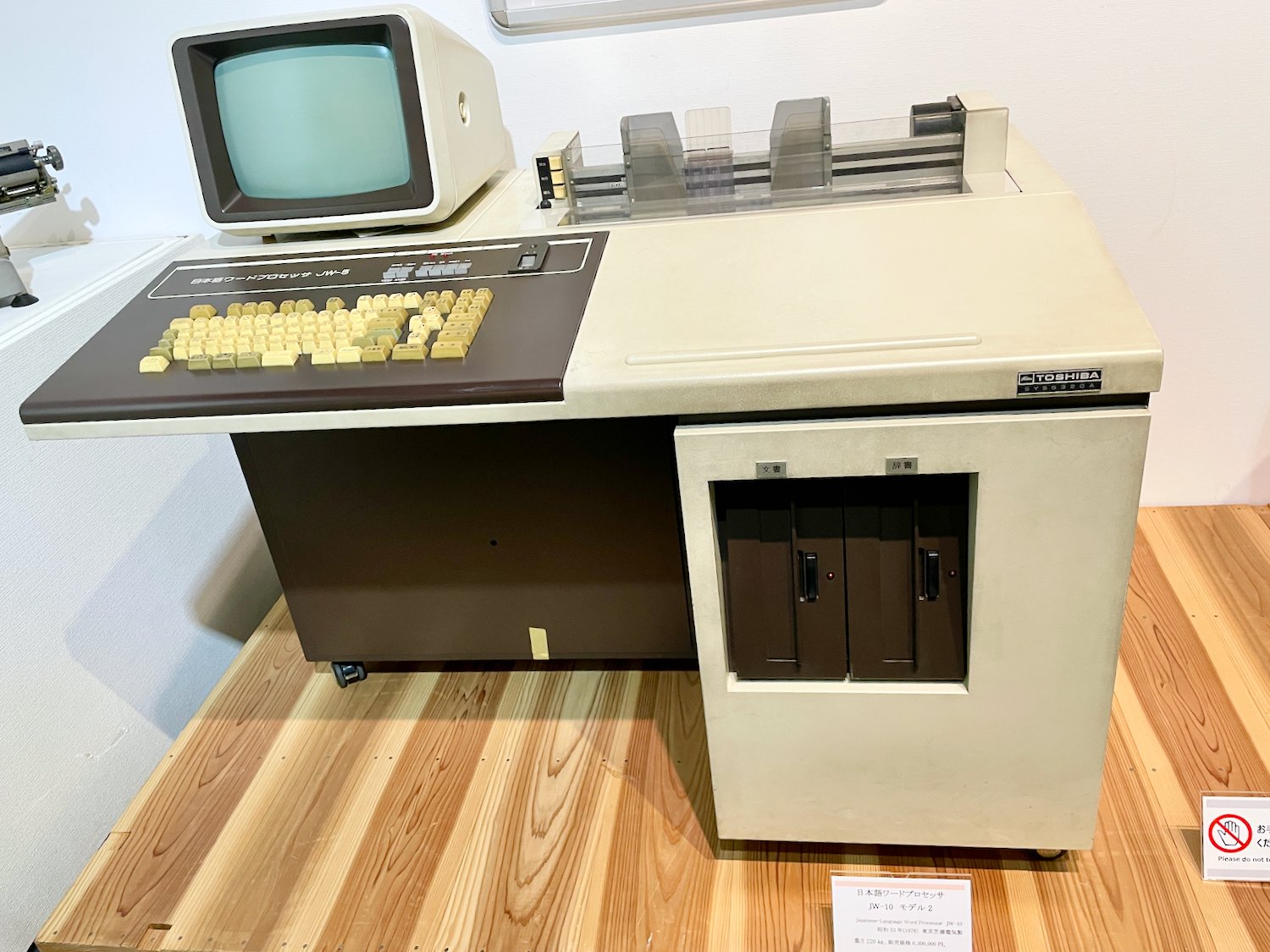 Source: Objaverse 1.0 / Sketchfab
Retrieval Practice for Word Learning for Deaf and Hard of Hearing Children
ClinicalTrials.gov study NCT05512000. IPD Sharing: YES. Countries: 1. Publications: 29.
Retrieval-Based Word Learning in Autistic Children
ClinicalTrials.gov study NCT06466876. IPD Sharing: UNDECIDED. Countries: 1. Publications: 1.
Word-Retrieval Treatment for Aphasia: Semantic Feature Analysis
ClinicalTrials.gov study NCT00125242. IPD Sharing: Not stated. Countries: 1. Publications: 1.
Phonomotor Treatment of Word Retrieval Deficits in Individuals With Aphasia
ClinicalTrials.gov study NCT01163461. IPD Sharing: NO. Countries: 1. Publications: 1.
ScienceDex guides
Understand access before you commit
These curated guides explain access requirements, typical timelines, costs, and reuse considerations for widely used research datasets.
Allen Brain Atlas
Allen Brain Atlas is an Allen Institute collection of brain map atlases, datasets, APIs, and analysis tools covering mouse, human, and non-human primate brain resources.
Annotated Behaviour and Observability Dataset (ABODe)
ABODe is a University of Edinburgh DataShare dataset for behavior classification in group-housed mice using home-cage video, identities, bounding boxes, ground-plate positions, and annotator labels.
DANDI Archive for NWB datasets
DANDI is a BRAIN Initiative archive for publishing and sharing neurophysiology data, including electrophysiology, optophysiology, and behavioral data packaged as NWB and related standards.
International Brain Laboratory public data
The International Brain Laboratory public data releases expose standardized mouse decision-making experiments, including Neuropixels recordings, widefield calcium imaging, behavior, and session metadata accessed through the ONE API.
OpenNeuro
OpenNeuro is a free, open platform for sharing neuroimaging datasets, with public search, dataset pages, and download paths for web, S3, DataLad, and the OpenNeuro CLI.