Acids and Bases Overview
Introduction to Acids and Bases
Acids and bases are two fundamental categories of chemical compounds that participate in a wide range of chemical reactions. Their interactions govern processes from industrial manufacturing to biological functions within living organisms. A solid understanding of acid-base chemistry is foundational for any scientific discipline.
Defining Acids and Bases
Arrhenius Definition
The Arrhenius definition, proposed by Svante Arrhenius in 1884, defines acids as substances that produce hydrogen ions (H+) in aqueous solution and bases as substances that produce hydroxide ions (OH-). While straightforward, this definition is limited to aqueous solutions.
Bronsted-Lowry Definition
The Bronsted-Lowry theory expands the definition: acids are proton donors and bases are proton acceptors. This broader framework accommodates reactions in non-aqueous solvents and gas-phase chemistry.
Lewis Definition
Gilbert N. Lewis further generalized acid-base chemistry by defining acids as electron pair acceptors and bases as electron pair donors. This definition encompasses reactions that do not involve proton transfer at all.
The pH Scale
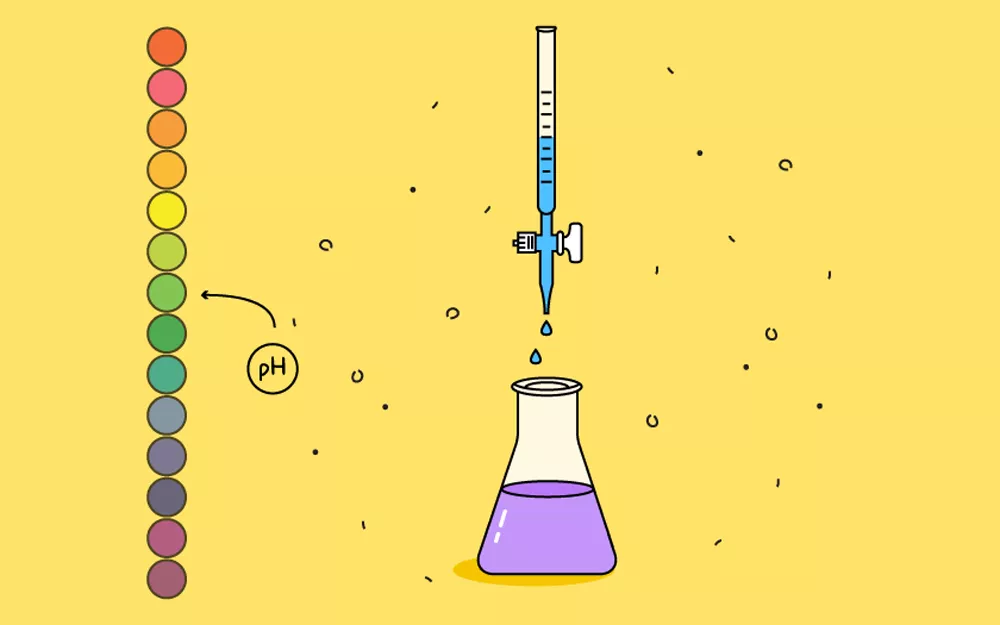
The pH scale quantifies the acidity or basicity of a solution on a logarithmic scale from 0 to 14. Solutions with pH below 7 are acidic, pH 7 is neutral, and pH above 7 is basic. Precise pH measurement is critical in laboratory settings and requires properly calibrated laboratory equipment from trusted suppliers like ConductScience.
Buffer Solutions
Buffer solutions resist changes in pH upon addition of small amounts of acid or base. They are essential in biological research, particularly in cell culture and biochemical assays. Common buffer systems include phosphate buffers, Tris buffers, and HEPES buffers.
Applications in Research
Acid-base chemistry underpins numerous laboratory techniques including titration, electrophoresis, chromatography, and enzymatic assays. Researchers must understand these principles to maintain proper experimental conditions and ensure reproducible results.
References
- Zumdahl, S. S., & Zumdahl, S. A. (2014). Chemistry (9th ed.). Cengage Learning.
- Silberberg, M. S. (2012). Principles of General Chemistry (3rd ed.). McGraw-Hill.
- Chang, R., & Goldsby, K. A. (2015). Chemistry (12th ed.). McGraw-Hill Education.
