Understanding and Using Acids
What Are Acids?
Acids are chemical compounds that donate protons (H+ ions) or accept electron pairs in chemical reactions. They play a fundamental role in chemistry, biology, and numerous industrial processes. Understanding acids is essential for laboratory work, from titration experiments to buffer preparation.
Properties of Acids
Acids share several characteristic properties that distinguish them from other chemical substances. They typically taste sour, turn blue litmus paper red, and have a pH below 7. Strong acids such as hydrochloric acid (HCl), sulfuric acid (H2SO4), and nitric acid (HNO3) dissociate completely in aqueous solution, while weak acids like acetic acid and citric acid only partially dissociate.
The pH Scale and Acid Strength
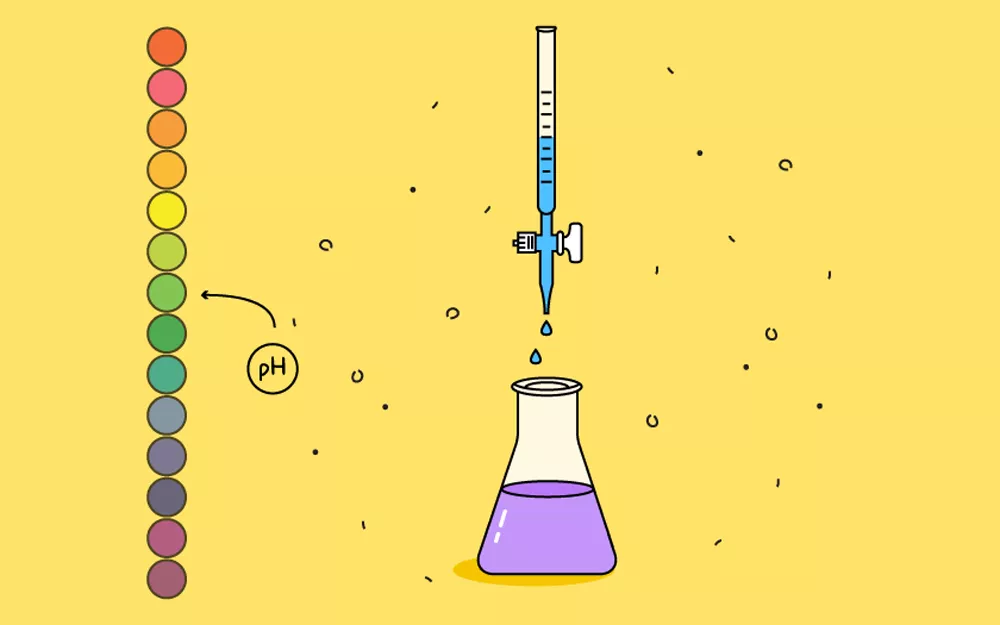
The pH scale measures hydrogen ion concentration in solution, ranging from 0 (most acidic) to 14 (most basic). A thorough understanding of acids and bases is crucial for researchers working with chemical solutions. Accurate pH measurement requires calibrated instruments such as pH meters and electrodes available through ConductScience.
Common Laboratory Acids
Laboratory researchers routinely work with several types of acids. Hydrochloric acid is used for pH adjustment, sulfuric acid serves as a dehydrating agent, and phosphoric acid is essential for buffer preparation in molecular biology. Proper handling requires appropriate personal protective equipment and fume hoods.
Safety Considerations
Working with acids demands strict adherence to safety protocols. Always add acid to water (never the reverse), wear appropriate PPE including chemical-resistant gloves and safety goggles, and maintain proper ventilation. Acid spill kits should be readily available in any laboratory setting.
Applications in Research
Acids are indispensable in scientific research. They are used in sample preparation, cell culture media pH adjustment, and analytical chemistry techniques. Understanding acid-base chemistry enables researchers to design effective experimental protocols and interpret results accurately.
References
- Zumdahl, S. S., & Zumdahl, S. A. (2014). Chemistry (9th ed.). Cengage Learning.
- Atkins, P., & de Paula, J. (2014). Physical Chemistry (10th ed.). Oxford University Press.
- Skoog, D. A., West, D. M., Holler, F. J., & Crouch, S. R. (2013). Fundamentals of Analytical Chemistry (9th ed.). Cengage Learning.
