Ant Double Y-Maze
Specialized double Y-maze apparatus for studying decision-making and lateralized behaviors in ants, featuring four goal arms and optimized dimensions for insect behavioral research.
| maze_arm_length | 10 mm |
| maze_arm_width | 2 mm |
| total_goal_arms | 4 |
| petri_dish_dimensions | 230 x 230 x 19 mm |
| maze_structure | Y-shaped structure with two additional Y-shaped arms |
| entrance_configuration | single longitudinal entrance channel |

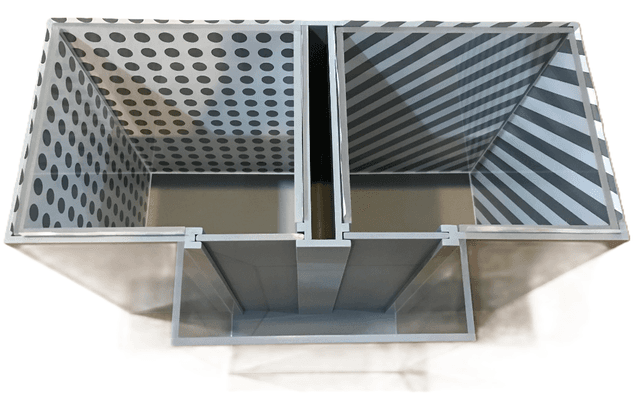
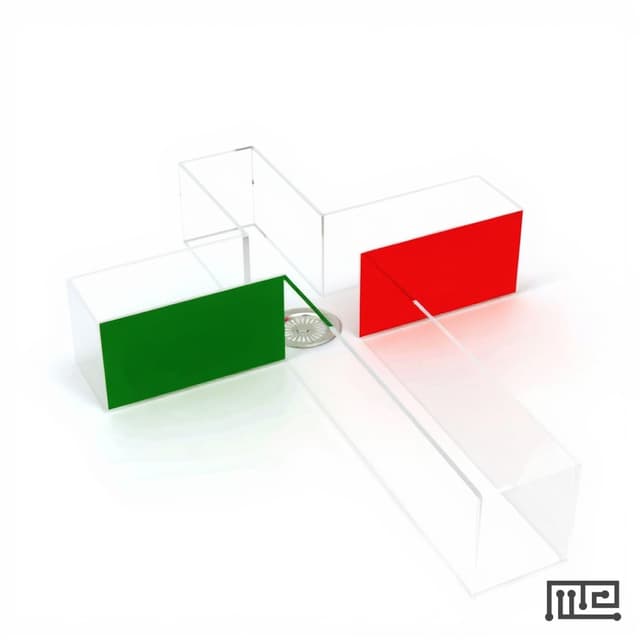
The Ant Double Y-Maze is a specialized behavioral testing apparatus designed for investigating decision-making and lateralized behaviors in ants. This miniaturized maze features a unique double Y-shaped configuration with four goal arms, providing researchers with a sophisticated tool for studying ant cognition and behavioral preferences. The maze structure consists of a single longitudinal entrance channel that branches into two symmetrical Y-shaped arms arranged perpendicular to each other.
Adapted from standard Y-maze protocols used in rodent studies, this apparatus enables researchers to examine how sensory asymmetries and nervous system lateralization influence ant behavior. The compact dimensions (10mm arm length, 2mm arm width) are specifically optimized for ant species, while the integrated petri dish design facilitates observation and data collection. This tool is particularly valuable for investigations into spatial memory, choice behavior, and neurobiological mechanisms underlying decision-making in social insects.
How It Works
The Ant Double Y-Maze operates on the principle of forced choice behavioral testing, where individual ants must make sequential decisions between available pathways. The maze design presents subjects with an initial choice point at the entrance, followed by secondary choice points in each arm, creating a hierarchical decision-making scenario. This configuration allows researchers to assess both initial preferences and subsequent behavioral adaptations.
The apparatus exploits ants' natural exploratory behavior and spatial navigation abilities. As subjects traverse the maze, researchers can record arm entries, time spent in each section, and turning preferences to quantify behavioral patterns. The double Y-configuration provides four distinct goal areas, enabling analysis of choice consistency, preference strength, and potential lateralization effects in ant behavior.
Data collection typically involves tracking individual ant movements through video recording or direct observation, with measurements including latency to first choice, total exploration time, and frequency of visits to each arm. The maze's compact scale and transparent construction facilitate accurate behavioral scoring while maintaining naturalistic movement patterns for the test subjects.
Features & Benefits
maze_arm_length
- 10 mm
maze_arm_width
- 2 mm
total_goal_arms
- 4
petri_dish_dimensions
- 230 x 230 x 19 mm
maze_structure
- Y-shaped structure with two additional Y-shaped arms
entrance_configuration
- single longitudinal entrance channel
branching_configuration
- two symmetrical branching cavities arranged perpendicular to each other
Behavioral Construct
- Decision-making
- Lateralization
- Spatial navigation
- Choice behavior
- Exploratory behavior
Automation Level
- manual
Species
- Ants
Dimensions
- 75 mm x 50 mm x 1.8 mm
Research Domain
- Behavioral Pharmacology
- Developmental Biology
- Environmental Monitoring
- Learning and Memory
- Neuroscience
- Social Behavior
Weight
- 21.0 kg
Dimensions
- L: 43.2 mm
- W: 38.0 mm
- H: 27.9 mm
Comparison Guide
| Feature | This Product | Typical Alternative | Advantage |
|---|---|---|---|
| Number of Choice Arms | 4 goal arms in double Y-configuration | Standard Y-mazes typically offer 2 choice arms | Enables more complex decision-making analysis and improved statistical power for detecting behavioral preferences. |
| Maze Arm Dimensions | 10mm length x 2mm width arms | Many insect mazes use larger dimensions less optimized for ant locomotion | Provides optimal scale for natural ant movement while maintaining controlled choice scenarios. |
| Spatial Configuration | Perpendicular branching arrangement with symmetrical design | Basic Y-mazes often lack perpendicular orientation options | Allows examination of lateralization effects and eliminates spatial bias in choice testing. |
| Overall Footprint | 75 x 50 x 1.8mm compact dimensions | Larger apparatus designs consume more laboratory space | Enables multiple simultaneous testing setups in limited bench space. |
| Integrated Base System | 230 x 230 x 19mm petri dish integration | Many designs require separate containment solutions | Provides complete observation and containment system for streamlined experimental workflow. |
This apparatus combines the behavioral complexity of multi-arm choice testing with the practical advantages of compact design and integrated observation systems. The double Y-configuration offers enhanced analytical capabilities while maintaining ease of use for routine behavioral assessments.
Practical Tips
Test ants during their natural active periods (typically early morning or evening) for optimal behavioral responses.
Why: Circadian activity patterns significantly influence exploration and decision-making behaviors in ants.
Inspect maze junctions regularly for debris or damage that could impede ant movement between arms.
Why: Even small obstructions can alter movement patterns and introduce unwanted behavioral variables.
Record ambient temperature and humidity for each testing session to identify environmental influences on behavior.
Why: Ant activity levels and movement speeds are temperature-dependent, affecting choice latencies and exploration patterns.
Use known ant species with documented behavioral preferences to validate maze function before experimental trials.
Why: Establishes baseline performance and confirms the apparatus is producing expected behavioral responses.
If ants show reluctance to enter arms, verify that cleaning agents have completely evaporated and check for static electricity buildup.
Why: Residual chemicals or electrostatic forces can create invisible barriers that deter natural exploratory behavior.
Mark individual ants with non-toxic paint dots for repeated testing while avoiding interference with sensory organs.
Why: Individual identification enables within-subject analysis and tracking of learning or habituation effects across trials.
Handle ants with soft brushes or gentle aspiration to prevent injury and stress responses that could affect behavior.
Why: Physical stress from rough handling can alter normal behavioral patterns and compromise experimental validity.
Setup Guide
What’s in the Box
- Ant Double Y-Maze apparatus
- Petri dish base (230 x 230 x 19mm)
- User manual with protocol guidelines (typical)
- Cleaning protocol instructions (typical)
Warranty
ConductScience provides a standard one-year manufacturer warranty covering defects in materials and workmanship, with technical support for setup and protocol optimization.
Compliance
References
Background reading relevant to this product:
What ant species are compatible with this maze design?
The 2mm arm width and 10mm arm length accommodate most common laboratory ant species including Lasius niger, Camponotus pennsylvanicus, and Formica species. Consult species-specific literature for optimal maze-to-body-size ratios.
How should trials be structured to minimize carryover effects?
Clean all maze surfaces with ethanol between subjects to eliminate pheromone trails. Allow 2-3 minutes between cleaning and next trial initiation to ensure complete evaporation of cleaning agents.
What behavioral parameters can be reliably measured?
Primary measures include initial choice direction, time to first choice, total exploration time, number of arm entries, and choice reversal frequency. Video analysis enables detailed movement tracking and turning behavior quantification.
How many trials per subject are recommended for statistical power?
Typically 5-10 trials per individual ant with inter-trial intervals of 24-48 hours to prevent habituation effects while maintaining behavioral consistency for within-subject analysis.
What environmental controls are critical for consistent results?
Maintain constant temperature (20-25°C), humidity (50-70%), and lighting conditions. Eliminate vibrations and external visual cues that could influence navigation behavior.
How does this compare to simple Y-maze designs?
The double Y-configuration provides four choice options versus two, enabling analysis of choice consistency and more complex decision-making patterns while maintaining the simplicity of maze navigation tasks.
What data analysis approaches are appropriate for this apparatus?
Binomial tests for choice preferences, repeated measures ANOVA for multiple trials, and chi-square analysis for lateralization patterns. Consider individual variation in mixed-effects models for group comparisons.
Have a question about this product?