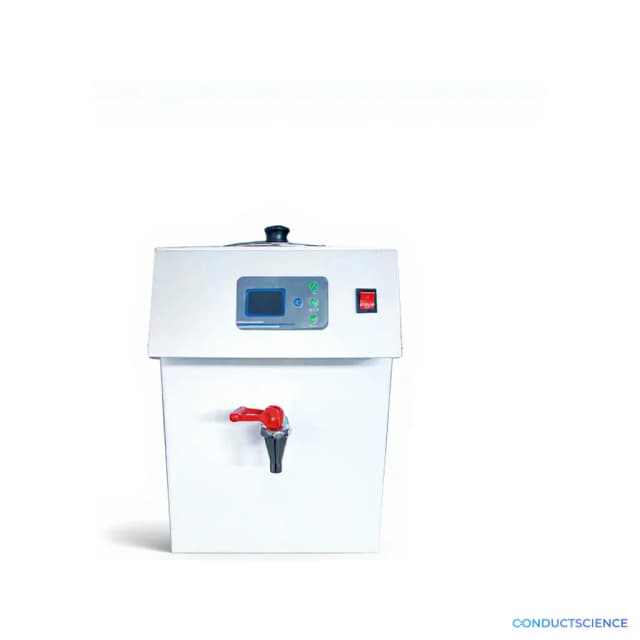
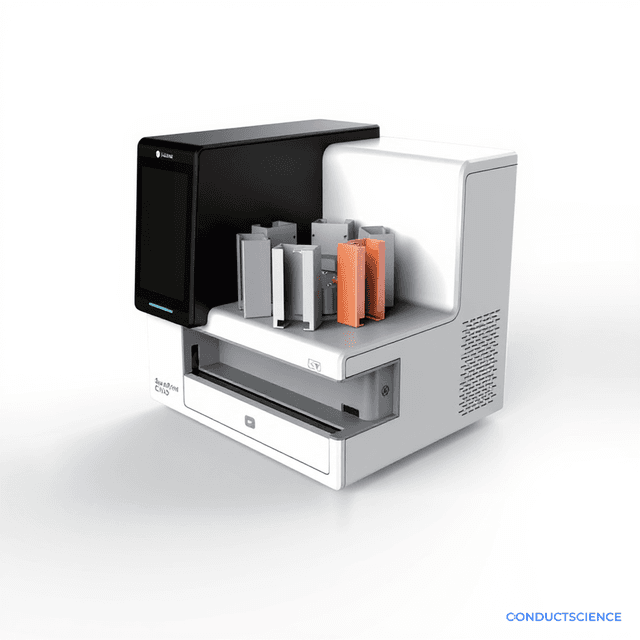
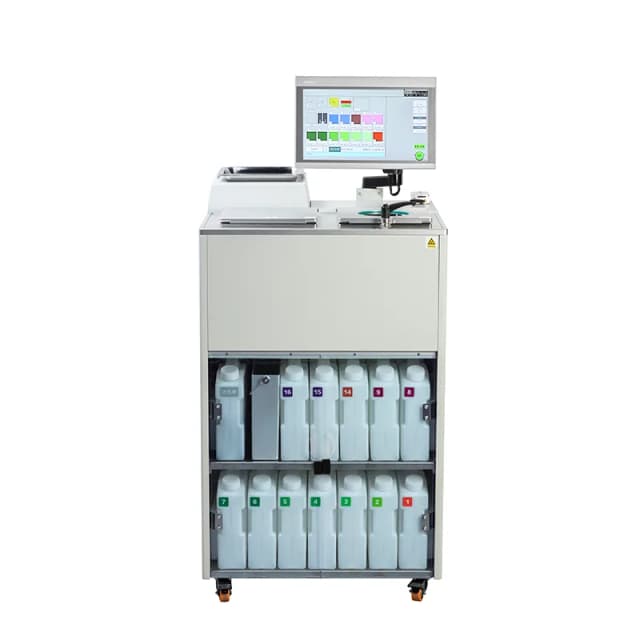
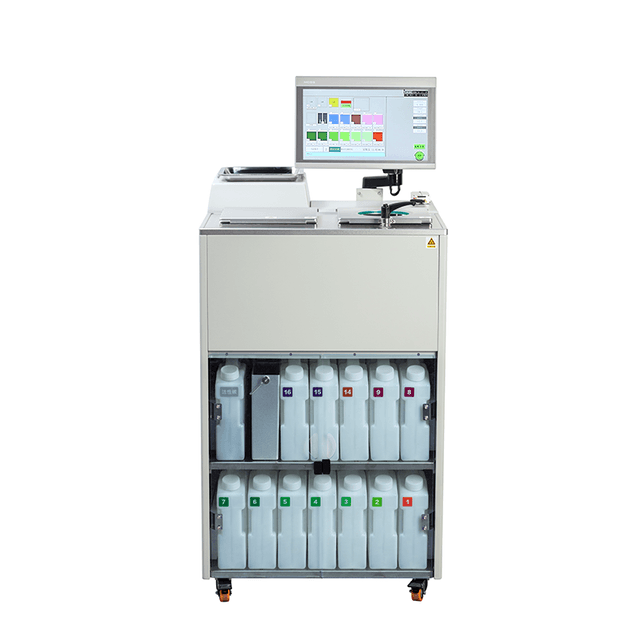
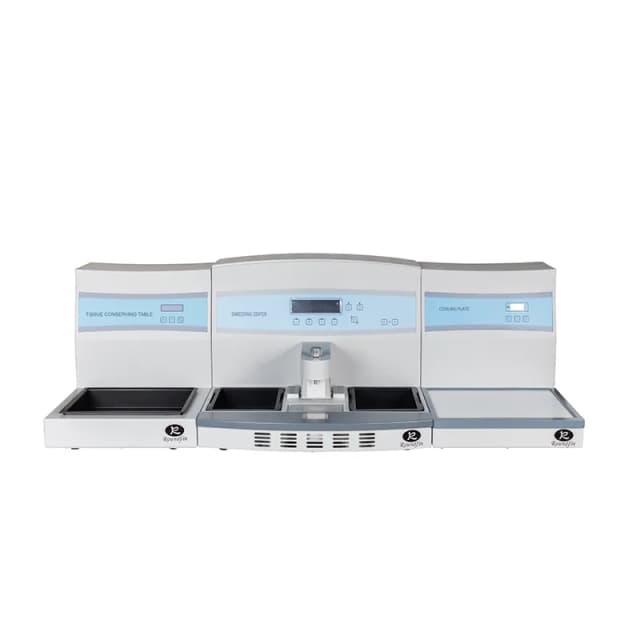
Automated Tissue Processor
Biobase automated tissue processor family covering BIO-0561, BIO-0562, and BIO-0563 configurations for standardized histological tissue processing.

The Automated Tissue Processor Biobase series supports standardized dehydration, clearing, and paraffin infiltration workflows for histological specimen preparation. This family now covers the BIO-0561, BIO-0562, and BIO-0563 configurations only, with different throughput and cup-capacity profiles across the available models.
The current family spans compact and higher-capacity setups for routine tissue processing, while keeping the same general automated workflow of timed reagent transfer, paraffin infiltration, and programmable protocol control.
How It Works
The automated tissue processor operates through sequential immersion of tissue cassettes in graded alcohol solutions, clearing agents, and molten paraffin to replace tissue water with embedding medium. The 12-station carousel moves specimens through each reagent station according to programmed protocols, with timing controls allowing optimization for different tissue types and sizes.
Agitation cycles occur every 5 minutes to enhance reagent penetration and ensure uniform processing throughout the tissue block. The system maintains controlled temperature in paraffin stations to prevent wax crystallization while ensuring complete infiltration. Each reagent cup accommodates 2300ml volume to maintain consistent chemical concentrations throughout the processing cycle.
Twenty stored programs allow standardized protocols for routine processing while accommodating specialized requirements for delicate specimens or research-specific protocols. The automated sequence eliminates manual transfer steps and reduces processing variability between batches.
Features & Benefits
Model
- Automated Tissue Processor - Standard
- Automated Tissue Processor - 50 Cassette
- Automated Tissue Processor - 100 Cassette
Weight
- 75.0 kg
Dimensions
- L: 46.5 mm
- W: 44.0 mm
- H: 35.5 mm
Comparison Guide
| Feature | This Product | Typical Alternative | Advantage |
|---|---|---|---|
| Cassette Capacity | 100 cassettes per run | Entry-level models typically process 50-75 cassettes per batch | Higher throughput reduces the number of processing runs required for large studies and improves laboratory efficiency |
| Processing Stations | 12 stations (9 reagent + 3 paraffin) | Basic processors often provide 8-10 total stations | Additional stations allow more gradual alcohol transitions and dedicated paraffin infiltration steps for superior morphology |
| Programming Flexibility | 20 stored programs with 0-99h59min timing per station | Standard models typically offer 5-10 programs with limited timing ranges | Extensive programming supports diverse research protocols and specialized tissue requirements without manual intervention |
| Reagent Cup Volume | 2300ml reagent cups, 1800ml paraffin cups | Smaller processors often use 1000-1500ml cups | Larger volumes maintain chemical potency throughout extended runs and reduce reagent change frequency |
| Noise Level | ≤60dB(A) operation | Many processors operate at 65-70dB(A) | Quieter operation allows placement in active laboratory areas without disrupting other research activities |
| Agitation System | Automated agitation every 5 minutes | Some models provide manual agitation or fixed timing cycles | Regular automated agitation ensures consistent reagent penetration without requiring technician intervention |
This processor offers high-capacity automated processing with extensive programming flexibility and quiet operation. The 100-cassette capacity and 12-station design support demanding research workflows while 20 stored programs accommodate diverse protocol requirements.
Practical Tips
Verify timing accuracy monthly by monitoring actual station dwell times against programmed values using a stopwatch during routine runs.
Why: Timing accuracy is critical for reproducible processing results and optimal tissue morphology.
Clean carousel tracks weekly with appropriate solvents to prevent buildup that could affect basket positioning or movement.
Why: Clean tracks ensure reliable automated movement and prevent processing interruptions mid-cycle.
Load cassettes with tissue orientation consistent throughout the batch to ensure uniform processing across all specimens.
Why: Consistent orientation promotes even reagent flow and prevents processing artifacts that could affect morphological assessment.
Allow paraffin stations to reach stable operating temperature before initiating processing to prevent infiltration artifacts.
Why: Temperature stability ensures proper wax viscosity for complete tissue infiltration without thermal shock.
If processing artifacts appear, check reagent quality and agitation function before adjusting timing parameters.
Why: Most processing issues stem from reagent depletion or mechanical problems rather than timing inadequacies.
Record reagent change dates and cassette counts to track chemical usage patterns and optimize replacement schedules.
Why: Systematic monitoring prevents processing failures due to reagent depletion and maintains consistent results.
Ensure adequate laboratory ventilation and replace activated carbon filtration media according to usage levels to minimize solvent exposure.
Why: Proper ventilation protects laboratory personnel from organic solvent vapors during extended processing cycles.
Inspect dehydration basket for damage or residue buildup before each use to prevent specimen contamination or processing failures.
Why: Basket integrity directly affects specimen security and processing uniformity throughout the automated cycle.
Setup Guide
What’s in the Box
- Automated Tissue Processor main unit
- Dehydration basket (1 piece)
- Reagent cups (9 pieces)
- Paraffin cups (3 pieces)
- Activated carbon bag (1 piece)
- Power cable (typical)
- User manual and protocols guide (typical)
- Warranty documentation (typical)
Warranty
ConductScience provides a standard one-year manufacturer warranty covering defects in materials and workmanship, with technical support for installation, protocol development, and troubleshooting assistance.
Compliance
References
Background reading relevant to this product:
What tissue thickness and size limitations should be considered for optimal processing?
Optimal processing occurs with tissue sections 2-4mm thick and blocks no larger than 20×15×3mm. Thicker specimens may require extended processing times or specialized protocols to ensure complete dehydration and infiltration.
How frequently should reagents be changed and what monitoring is recommended?
Reagent change frequency depends on throughput and tissue type, typically every 50-100 cassettes for alcohols and every 25-50 cassettes for xylene. Monitor reagent clarity and specific gravity to assess depletion levels.
Can the processor accommodate specialized clearing agents besides xylene?
Yes, the system accommodates alternative clearing agents such as limonene-based solutions or isopropanol protocols. Adjust processing times accordingly as clearing rates vary between solvents.
What maintenance procedures are required for consistent performance?
Daily cleaning of carousel mechanism, weekly reagent cup inspection for residue buildup, and monthly replacement of activated carbon filtration media. Annual calibration of timing mechanisms is recommended.
How does the agitation system affect delicate specimens?
The 5-minute agitation frequency provides gentle mixing sufficient for reagent circulation without mechanical damage to fragile tissues. Agitation can be disabled for extremely delicate specimens if needed.
What data logging capabilities are available for protocol documentation?
Consult product datasheet for specific data logging features. Most tissue processors of this class provide basic run records including start/stop times and program selection for batch tracking.
Can processing protocols be exported or shared between multiple units?
The 20 stored program capacity allows local protocol storage. Consult technical documentation for protocol transfer capabilities between units in multi-instrument laboratories.
Have a question about this product?
Accessories
Enhance your setup with compatible accessories
Upgrade Options