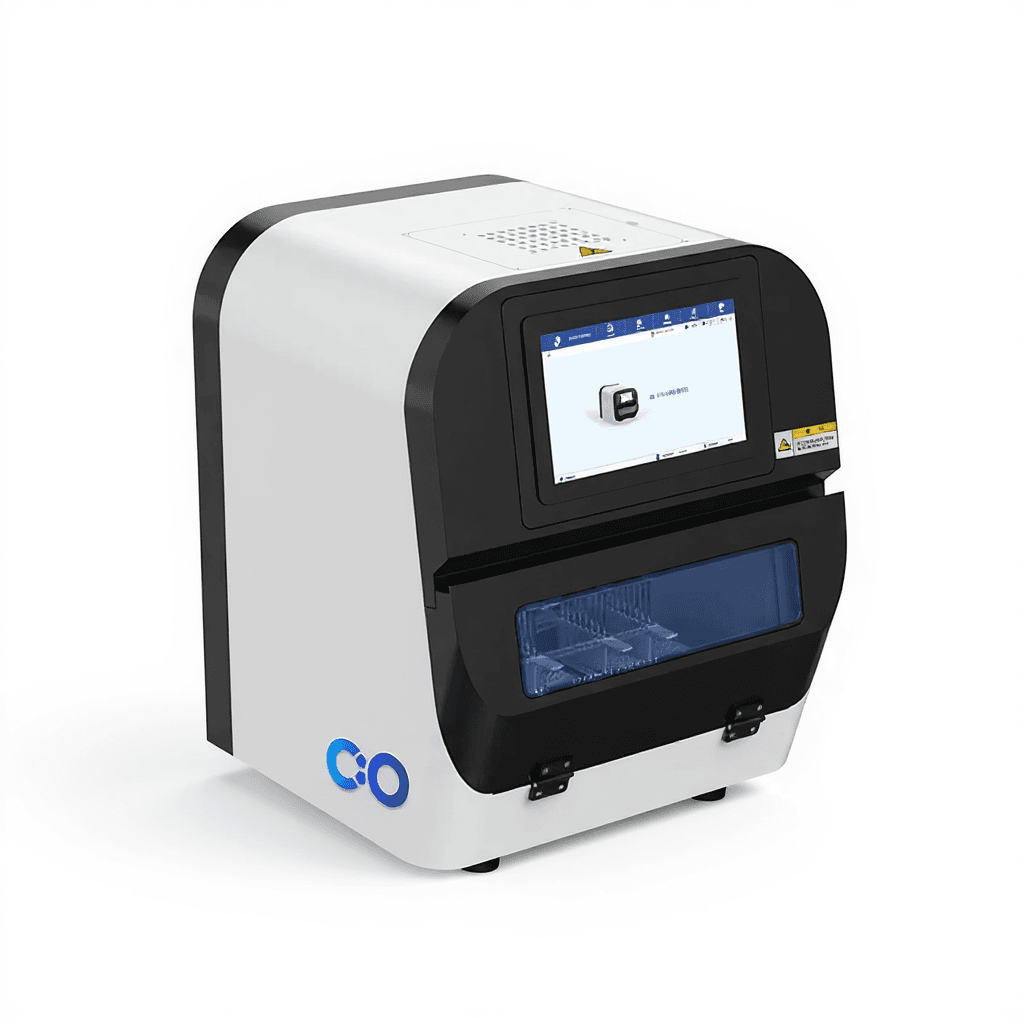
Automatic Nucleic Acid Extraction System
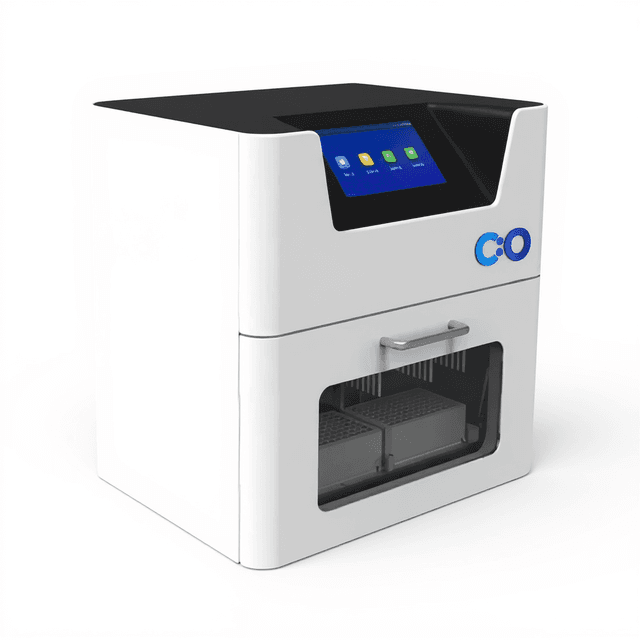
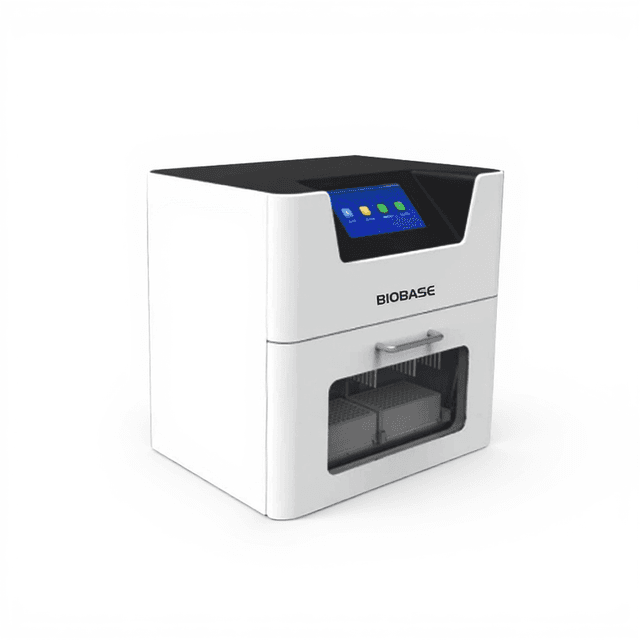
32-sample capacity magnetic bead-based nucleic acid extraction system with automated processing, HEPA filtration, and integrated heating modules for high-throughput DNA/RNA isolation.
| Instrument Type | PCR & Molecular |
| Application Area | Molecular Biology |
| Automation Level | fully-automated |
| screen_size | 10.1 inch |
| operating_system | Windows |
| hepa_filter | High efficiency HEPA filter |
The Automatic Nucleic Acid Extraction System is a 32-sample capacity magnetic bead-based platform designed for high-throughput DNA and RNA isolation in molecular biology laboratories. The system integrates a Windows-based 10.1-inch capacitive touchscreen interface with automated magnetic separation technology, processing sample volumes from 20-1000μl with extraction times of 15-60 minutes. The platform features concave-design heating elements that conform to deep-well tubes, combined with integrated shaking and heating modules for enhanced lysis and elution efficiency.
Contamination control is achieved through high-efficiency HEPA filtration and UV sterilization capabilities, with automated safety door protection and replacement alarm functions. The magnetic rod assembly delivers 4500Gs flux density for efficient bead capture, achieving ≥98% magnetic bead recovery with <3% well-to-well extraction variation. Temperature control ranges from room temperature to 100°C with precise adjustment capabilities for optimized extraction protocols across diverse sample types.
How It Works
The system employs magnetic bead-based separation technology for nucleic acid isolation. Samples are mixed with lysis buffer and magnetic beads functionalized with nucleic acid-binding properties. The integrated shaking and heating modules facilitate cell lysis and optimal binding conditions, with temperature control from room temperature to 100°C ensuring efficient protein denaturation and nucleic acid release.
During the binding phase, nucleic acids adsorb to the magnetic bead surface through electrostatic interactions or specific binding chemistries. The magnetic rod assembly generates 4500Gs flux density to capture bead-nucleic acid complexes, enabling complete separation from lysate components. Sequential washing steps remove proteins, salts, and other contaminants while maintaining nucleic acid integrity. Final elution in low-salt buffer releases purified nucleic acids from the magnetic beads.
The concave heating belt design ensures uniform heat distribution across deep-well tubes, while HEPA filtration and UV sterilization prevent cross-contamination between samples. Automated protocols minimize manual intervention and ensure reproducible extraction across all 32 sample positions.
Features & Benefits
Instrument Type
- PCR & Molecular
Application Area
- Molecular Biology
Automation Level
- fully-automated
screen_size
- 10.1 inch
operating_system
- Windows
hepa_filter
- High efficiency HEPA filter
uv_sterilization
- UV lamp with manual or automatic timing
safety_features
- Auto safety door protection function
heating_module
- Integrated shaking & heating module
heating_belt_design
- Concave design heating belt fits deep hole tube
contamination_prevention
- Zero aerosol contamination
filter_replacement_alarm
- HEPA filter and UV lamp replacement alarm
Extraction Method
- Magnetic beads
Sample Capacity
- 32
Processing Volume
- 20~1000μl
Extraction Time
- 15~60min
Magnetic Bead Recovery
- ≥98%
Extraction Difference Between Wells
- <3%
Magnetic Rod Flux
- 4500Gs
External Size (W×D×H)
- 460×470×480mm
Display Type
- 10.1 inch capacitive touchscreen
Research Domain
- Environmental Monitoring
- Food Science
- Microbiology
- Molecular Biology
- Pharmaceutical QC
Temperature Range
- RT~100°C (adjustable)
Power/Voltage
- AC100~240V, 50/60Hz
Weight
- 48.59 lbs
Dimensions
- L: 18.9 in
- W: 18.5 in
- H: 18.11 in
Comparison Guide
| Feature | This Product | Typical Alternative | Advantage |
|---|---|---|---|
| Sample Capacity | 32 samples per run | Entry-level systems often process 8-16 samples, while high-end platforms may handle 96+ samples | Optimal balance between throughput and laboratory space requirements for mid-scale research operations. |
| Magnetic Flux Density | 4500Gs magnetic rod assembly | Standard magnetic separators typically generate 1000-3000Gs | Higher magnetic field strength ensures more complete bead capture and improved nucleic acid recovery rates. |
| Temperature Range | Room temperature to 100°C with integrated heating | Many systems offer limited temperature control or require external heating blocks | Wide temperature range with integrated heating enables diverse lysis protocols and optimal extraction conditions. |
| User Interface | 10.1-inch Windows-based capacitive touchscreen | Basic systems often feature simple LED displays or small LCD screens | Large touchscreen interface simplifies protocol programming and provides comprehensive system monitoring capabilities. |
| Contamination Control | HEPA filtration and UV sterilization with automated alarms | Basic models may lack integrated contamination control features | Comprehensive contamination prevention reduces false positives and ensures reliable results in sensitive molecular applications. |
| Processing Volume Range | 20-1000μl sample volume flexibility | Fixed volume systems often limited to specific sample sizes | Wide volume range accommodates diverse sample types from small tissue biopsies to larger environmental samples. |
This 32-sample automated extraction system offers high magnetic flux density (4500Gs), integrated temperature control up to 100°C, and comprehensive contamination prevention features. The Windows-based touchscreen interface and flexible sample volume range (20-1000μl) provide versatility for diverse molecular biology applications.
Practical Tips
Verify magnetic rod positioning and temperature calibration monthly using the built-in calibration sequence, especially after heavy use periods.
Why: Regular calibration ensures consistent bead recovery rates and prevents extraction efficiency degradation over time.
Clean magnetic rods with 70% ethanol between different sample types and inspect the concave heating elements for proper tube contact.
Why: Prevents cross-contamination and ensures uniform heat distribution for optimal lysis conditions.
Pre-warm the system to target temperature before loading samples and ensure deep-well plates are properly seated in the concave heating belt.
Why: Temperature equilibration improves lysis efficiency and consistent tube positioning ensures uniform heating across all samples.
Include negative controls in each batch and monitor the <3% well-to-well variation specification using standard reference samples.
Why: Quality control samples verify system performance and help identify potential contamination or efficiency issues early.
If bead recovery drops below 98%, check magnetic rod alignment and ensure proper bead resuspension before magnetic separation.
Why: Optimal magnetic rod positioning and complete bead suspension are critical for achieving specified recovery efficiency.
Always verify the automated safety door function is operational before processing samples at elevated temperatures.
Why: The safety door prevents accidental exposure to high-temperature surfaces and moving magnetic components during operation.
Use the UV sterilization function between sample batches and verify HEPA filter status before processing critical samples.
Why: Routine sterilization and filter monitoring prevent contamination that could compromise downstream molecular assays.
Monitor the replacement alarm system for HEPA filter and UV lamp components, and maintain spare consumables in inventory.
Why: Proactive component replacement prevents system downtime and maintains optimal contamination control performance.
Setup Guide
What’s in the Box
- Automatic nucleic acid extraction system main unit
- Magnetic rod assembly
- HEPA filter cartridge
- UV sterilization lamp
- AC power cord
- USB cable for data transfer (typical)
- Sample tube adapters (typical)
- User manual and protocol guide
- Calibration certificate (typical)
Warranty
ConductScience provides a standard one-year manufacturer warranty covering parts and labor, with comprehensive technical support for installation, calibration, and method development assistance.
Compliance
References
Background reading relevant to this product:
What types of samples can be processed with this extraction system?
The system handles diverse sample types including tissue samples, cultured cells, bacterial colonies, blood, saliva, and environmental samples. Sample volumes from 20-1000μl accommodate various sample matrices with appropriate lysis protocols.
How does the magnetic bead recovery efficiency compare to manual extraction methods?
The automated system achieves ≥98% magnetic bead recovery with <3% well-to-well variation, providing more consistent results than manual pipetting methods which typically show 5-10% variation between samples.
Can extraction protocols be customized for specific sample types?
Yes, the Windows-based interface allows programming of custom protocols with adjustable parameters including extraction time (15-60 minutes), temperature profiles (RT-100°C), and washing cycles for optimal nucleic acid recovery from different sample matrices.
What contamination control measures are built into the system?
The system features high-efficiency HEPA filtration, UV sterilization with manual or automatic timing, zero aerosol contamination design, and automated safety door protection to prevent cross-contamination between samples.
How often does the HEPA filter need replacement?
The system includes an automated replacement alarm for both HEPA filter and UV lamp components. Replacement frequency depends on usage intensity, but typical laboratory use requires filter replacement every 6-12 months.
What data output formats are available for documentation?
Consult the product datasheet for specific data export formats and connectivity options available through the Windows-based operating system and USB interface.
How does this compare to centrifuge-based extraction methods?
Magnetic bead separation eliminates the need for centrifugation steps, reducing extraction time and minimizing sample handling. The automated workflow also reduces the risk of human error and cross-contamination compared to manual centrifuge-based protocols.
What maintenance is required for consistent performance?
Regular maintenance includes HEPA filter replacement when alarms indicate, UV lamp replacement, magnetic rod cleaning between protocols, and periodic calibration verification. The concave heating elements should be inspected for proper contact with tubes.
Have a question about this product?
Accessories
Enhance your setup with compatible accessories
Frequently Bought Together
Upgrade Options