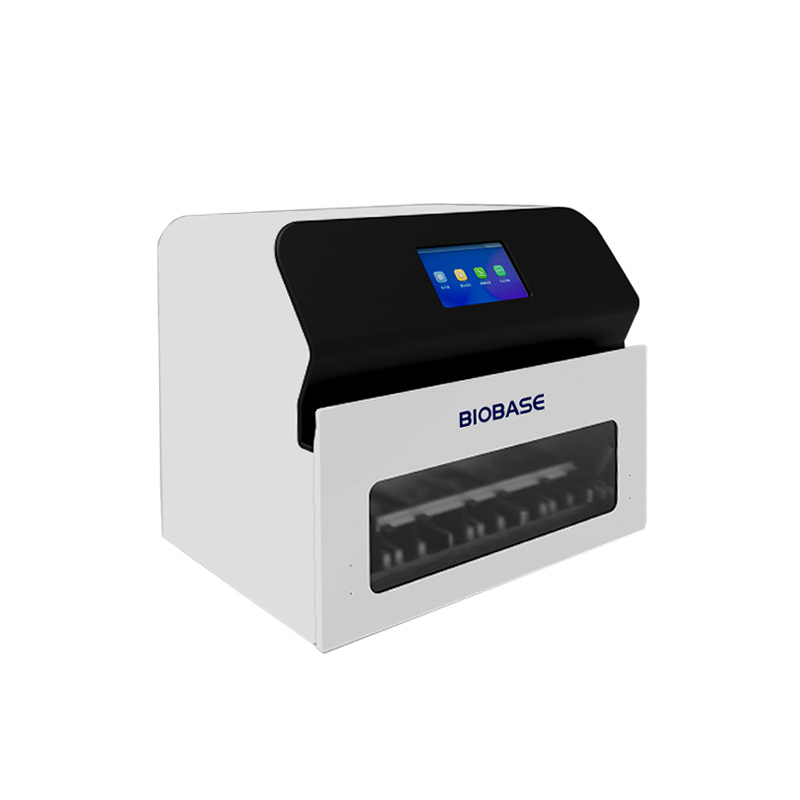
Nucleic Acid Extraction System
Magnetic bead-based automated nucleic acid extraction platform with 32 or 48-sample capacity, featuring programmable protocols, independent heating modules, and >98% magnetic bead recovery for high-throughput molecular workflows.

Louise Corscadden, PhD
Director of Science · ConductScience
Ask Louise about Nucleic Acid Extraction System fit, setup, configuration, or quote prep.
Already working with us? Sign in to connect this with My Scientist.
Key Specifications
Full details →- Model fit
- 2 selectable configurations
- SKU family
- BB-BNP-32/ BB-BNP-48
- Shipping box
- 45.0 x 39.8 x 44.8 cm
- Ordering
- Online checkout and quote request available
- Category
- PCR & Genomics
- Build notes
- Confirm accessories, station layout, and support needs before purchase
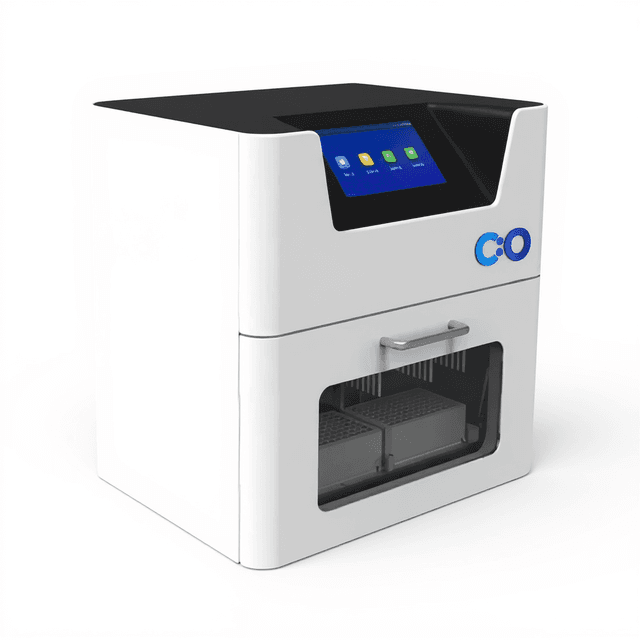
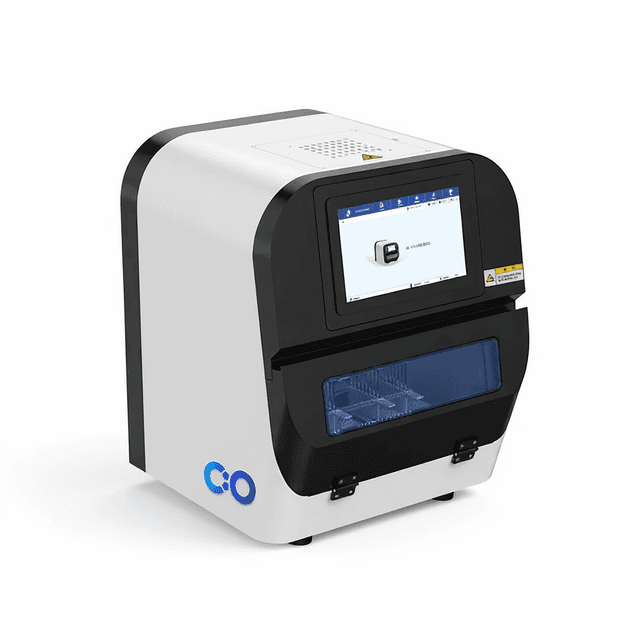
The Nucleic Acid Extraction System is a magnetic bead-based automated platform engineered for high-throughput nucleic acid purification from diverse biological samples. Available in 32-sample (BB-BPN32) and 48-sample (BB-BPN48) configurations, the system processes sample volumes from 20-500µl with processing volumes ranging 60µl-1000µl. The platform features eight independent heating modules for customizable lysis and elution temperatures, three-speed oscillating mixing with volume-adjustable parameters, and achieves >98% magnetic bead recovery with inter-well variability CV≤3%.
Operation is controlled through a 7-inch touchscreen interface with programmable protocol storage (up to 50,000 protocols on the BB-BPN48 model). The open platform design accommodates various magnetic bead reagent systems, with extraction cycles completing in 8-60 minutes depending on the selected protocol. The system includes UV disinfection capabilities with programmable timer settings (1-24 hours) for contamination control between runs, making it suitable for molecular diagnostics, pharmaceutical quality control, and research applications requiring consistent nucleic acid yields.
How It Works
The system employs magnetic bead-based solid-phase extraction, where nucleic acids are selectively bound to paramagnetic particles under specific buffer conditions. During lysis, samples are mixed with chaotropic salts and magnetic beads that carry surface chemistries optimized for nucleic acid binding. The eight independent heating modules provide precise temperature control for enzymatic lysis protocols and thermal denaturation steps, with temperatures adjustable for different sample types and extraction requirements.
Magnetic separation occurs through controlled oscillation at three adjustable speeds, allowing thorough mixing during binding and wash steps while maintaining >98% bead recovery efficiency. The automated liquid handling system performs sequential buffer exchanges using the open platform design, which accommodates various magnetic bead chemistries and extraction kits. Inter-well variability remains ≤3% CV through precise pipetting controls and uniform magnetic field application across all sample positions.
Final elution utilizes low-salt buffers or water at controlled temperatures to release purified nucleic acids from the magnetic beads. The UV disinfection system with programmable timing (1-24 hours) eliminates cross-contamination between runs by sterilizing the work surface and liquid handling components between extraction cycles.
Features & Benefits
sample_capacity_BNP32
- 32 samples
sample_capacity_BNP48
- 48 samples
Extraction Time
- 8-60 minutes
Touchscreen Size
- 7-inch
Heating Modules
- 8 independent heating modules
Protocol Storage
- up to 50,000 protocols
UV Disinfection Timer
- 1-24 hours
Magnetic Bead Recovery Rate
- greater than 98%
Inter Well Variability
- CV ≤ 3%
Extraction Principle
- magnetic bead-based extraction
Automation Level
- fully-automated
Capacity
- 32 samples or 48 samples
Display Type
- Touchscreen
Research Domain
- Analytical Chemistry
- Cancer Research
- Cell Biology
- Clinical Diagnostics
- Environmental Monitoring
- Food Science
- Microbiology
- Pharmaceutical QC
Shipping weight
- 95.0 lb
Shipping box
- L: 45.0 cm
- W: 39.8 cm
- H: 44.8 cm
| Feature | This Product | Typical Alternative | Advantage |
|---|---|---|---|
| Sample Capacity | 32 or 48 samples per run | Entry-level systems often process 8-24 samples while high-end systems may handle 96+ samples | Optimal capacity for most research and clinical laboratories without oversized footprint or excessive reagent consumption. |
| Heating Control | 8 independent heating modules | Many systems use single heating zones or limited temperature control options | Enables simultaneous processing of samples requiring different lysis temperatures or multi-step thermal protocols. |
| Protocol Storage | Up to 50,000 protocols (BB-BPN48 model) | Limited protocol storage ranging from dozens to hundreds of stored methods | Accommodates extensive method libraries for diverse sample types and research applications without memory constraints. |
| Magnetic Bead Recovery | >98% recovery efficiency | Recovery rates vary by model and magnetic field design | Maximizes nucleic acid yield critical for low-input samples and sensitive downstream applications. |
| Processing Time | 8-60 minutes per extraction cycle | Extraction times range from 15 minutes for basic protocols to several hours for complex procedures | Flexible timing accommodates both rapid screening applications and thorough extraction protocols requiring extended processing. |
| Platform Design | Open platform for various magnetic bead systems | Some systems require proprietary reagents or specific vendor partnerships | Provides reagent choice flexibility and cost optimization while maintaining validated performance across different bead chemistries. |
This nucleic acid extraction system combines high-capacity processing with precise environmental controls and open platform flexibility. The independent heating modules and programmable protocol storage enable standardized workflows across diverse sample types, while the >98% magnetic bead recovery ensures consistent nucleic acid yields for downstream molecular applications.
| Model | SKU | Listed price | Status | Shipping box |
|---|---|---|---|---|
| 48 samples | BB-BNP-32/ BB-BNP-48 | $11,650.00 | Available | 45.0 x 39.8 x 44.8 cm |
| 32 samples | BB-BNP-32 | $6,600.00 | Available | 45.0 x 39.8 x 44.8 cm |
Practical Tips
Verify heating module accuracy monthly using certified temperature probes at multiple set points across the working range.
Why: Temperature accuracy directly affects lysis efficiency and nucleic acid yield consistency.
Replace UV disinfection lamps according to manufacturer specifications and log operating hours to ensure effective contamination control.
Why: UV lamp intensity degrades over time, reducing decontamination effectiveness between extraction runs.
Include negative extraction controls and known positive samples in each run to monitor for contamination and extraction efficiency.
Why: Quality controls detect both false-positive results from contamination and false-negative results from extraction failures.
If magnetic bead recovery drops below specification, check for proper plate sealing and verify magnetic module positioning.
Why: Poor sealing causes sample evaporation while magnetic module misalignment reduces bead capture efficiency.
Monitor inter-well CV values across plate positions to identify potential pipetting or magnetic field uniformity issues.
Why: Systematic variations in CV indicate instrument calibration problems that can affect extraction reproducibility.
Pre-warm elution buffers to the programmed elution temperature before loading to ensure consistent nucleic acid release.
Why: Temperature equilibration improves elution efficiency and reduces variability in final nucleic acid concentrations.
Use appropriate personal protective equipment when handling lysis buffers containing chaotropic salts and follow chemical safety protocols.
Why: Chaotropic salts are hazardous chemicals requiring proper handling to prevent exposure and environmental contamination.
Clean the magnetic separation area with appropriate solvents after processing samples with high particulate content.
Why: Accumulated debris can interfere with magnetic bead movement and compromise extraction efficiency.
Setup Guide
What’s in the Box
- Nucleic acid extraction system main unit
- 7-inch touchscreen interface
- Power cord and adapter
- Sample plate carriers for 32 or 48 positions
- Magnetic separation module
- UV disinfection lamp assembly
- User manual and protocol guide
- Initial reagent compatibility chart (typical)
- USB cable for data export (typical)
- Calibration and validation documentation (typical)
Warranty
ConductScience provides a standard one-year manufacturer warranty covering parts and labor, with technical support for protocol optimization and troubleshooting. Extended warranty and service contracts are available for high-volume laboratory installations.
Compliance
References
Background reading relevant to this product:
What types of magnetic bead reagent systems are compatible with the open platform design?
The open platform accommodates various commercial magnetic bead chemistries including silica-based, carboxyl-functionalized, and specialty beads for DNA, RNA, or combined nucleic acid extractions. Consult the reagent compatibility chart for specific vendor validation data.
How is temperature uniformity maintained across the eight heating modules during extraction?
Each heating module operates independently with dedicated temperature sensors and control circuits, allowing different temperatures per sample position or uniform heating across all positions with ±1°C accuracy typically maintained.
What sample types have been validated for the 20-500µl input volume range?
Validated sample types include whole blood, plasma, serum, tissue lysates, bacterial cultures, cell culture samples, and environmental samples. Consult protocol library for specific sample preparation requirements and recommended volumes.
How is the >98% magnetic bead recovery efficiency verified during routine operation?
Bead recovery is monitored through optical density measurements and visual inspection protocols. The system's magnetic field strength and oscillation parameters are factory-calibrated and can be verified using control beads with known magnetic responses.
What data outputs are available for integration with laboratory information systems?
The system generates run logs, protocol parameters, temperature profiles, and timing data exportable via USB or network connection. Data formats include CSV and XML for LIMS integration, with audit trail capabilities for regulated environments.
What maintenance procedures are required to maintain the CV≤3% specification?
Regular maintenance includes daily UV lamp inspection, weekly pipette tip accuracy verification, monthly magnetic field strength testing, and quarterly heating module calibration using certified reference standards.
How does extraction time vary between the 32 and 48-sample configurations?
Extraction time (8-60 minutes) depends primarily on protocol complexity rather than sample number. Both configurations process samples in parallel, with identical timing for equivalent protocols and sample types.
What contamination control measures beyond UV disinfection are recommended?
Implement separate pre-PCR and post-PCR areas, use aerosol-resistant tips, include negative extraction controls in each run, and follow laboratory-specific decontamination protocols for high-sensitivity molecular applications.
Have a question about this product?
Have a question? Just ask.
Send it over and we'll email you a personalized answer — no call, no scheduling.
Prefer to talk it through?
Accessories
Enhance your setup with compatible accessories
Frequently Bought Together