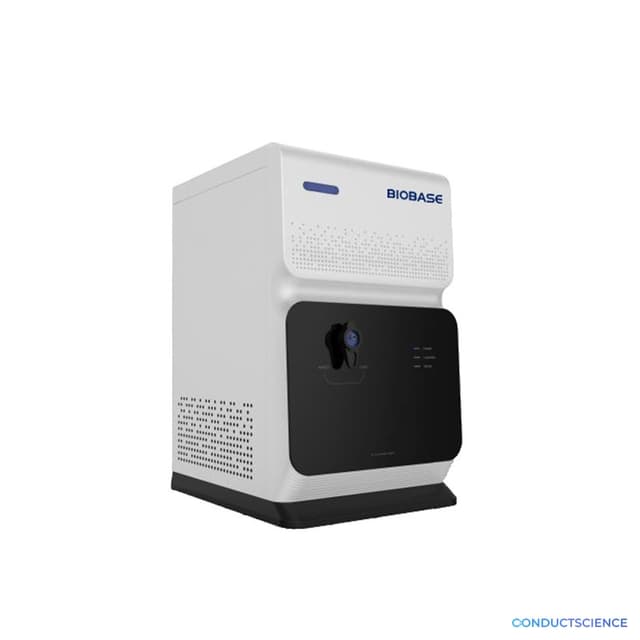
Gene Amplification Instrument TEC01 TEC03
96-well thermal cycler for PCR amplification with precise temperature control (±0.3°C) and rapid heating/cooling rates for genomic research applications.

Louise Corscadden, PhD
Director of Science · ConductScience
Ask Louise about Gene Amplification Instrument TEC01 TEC03 fit, setup, configuration, or quote prep.
Already working with us? Sign in to connect this with My Scientist.
Key Specifications
Full details →- Model fit
- Configured during quote
- SKU family
- BIO-0646
- Shipping box
- 25.7 x 39.8 x 28.0 cm
- Ordering
- Online checkout and quote request available
- Category
- Imaging & Analysis
- Build notes
- Aluminum
The Gene Amplification Instrument TEC01 TEC03 is a thermal cycling system designed for polymerase chain reaction (PCR) applications in molecular biology research. This instrument accommodates 96-well PCR plates with reaction volumes ranging from 10 to 200 μl, supporting standard PCR protocols across diverse genomic applications. The aluminum thermal block provides precise temperature control from 4°C to 105°C with ±0.3°C accuracy and uniformity, enabling consistent amplification results.
The system features rapid thermal transitions with heating rates up to 4.0°C/s and cooling rates up to 3°C/s, reducing total cycle times for time-sensitive experiments. The programmable interface supports complex thermal profiles with up to 30 steps and 99 cycles per program, accommodating multi-step PCR protocols, gradient optimization, and specialized amplification techniques. The heated lid (30-110°C) prevents sample evaporation during extended cycling programs.
How It Works
The thermal cycling process relies on repeated heating and cooling cycles to denature DNA, allow primer annealing, and enable polymerase extension. The aluminum thermal block provides uniform heat distribution across all 96 wells, while the heated lid prevents condensation and sample evaporation. The Peltier-based thermal system enables rapid temperature transitions between denaturation (typically 95°C), annealing (50-65°C), and extension (72°C) phases.
Temperature gradient functionality allows simultaneous optimization of annealing temperatures across the thermal block, with differential ranges up to 42°C. This enables primer optimization and multiplex PCR development in a single run. The 0.1°C display resolution and ±0.3°C accuracy ensure reproducible results across multiple experiments and instruments.
Features & Benefits
Automation Level
- semi-automated
Reaction Volume
- 10~200μl
Tube Type
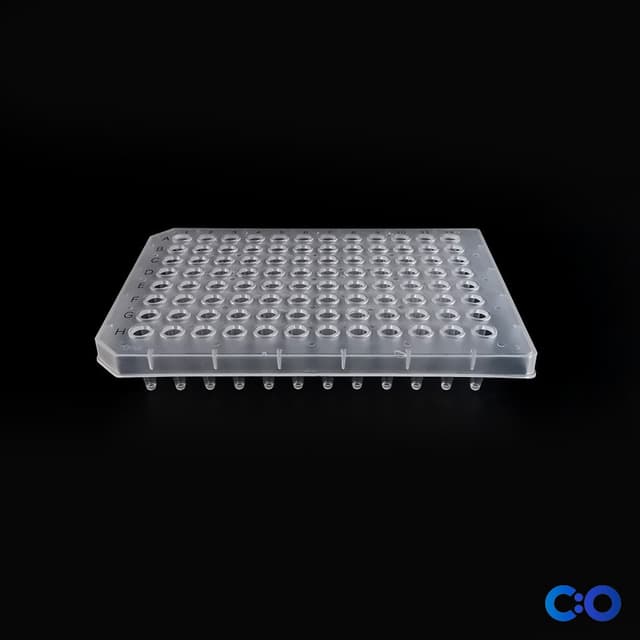
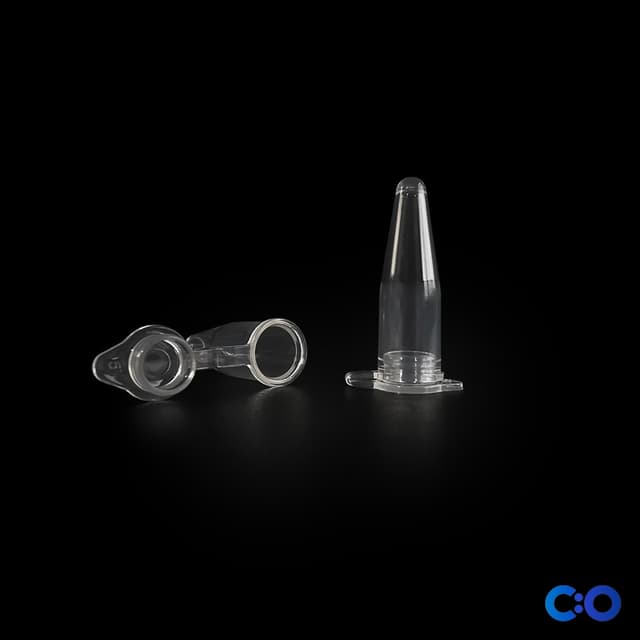
- 96*0.2ml PCR plate; 8*0.2ml PCR tube; 0.2ml single PCR tube
Block Temperature Range
- 4℃~105℃
Heat Lid Temperature Range
- 30℃~110℃
Max Heating Rate
- 4.0℃/s
Max Cooling Rate
- 3℃/s
Display Resolution
- 0.1℃
Temperature Accuracy
- ±0.3℃
Temperature Uniformity
- ±0.3℃
Block Material
- Aluminum
Gradient Range
- 30~99℃
Temperature Differential Range
- 1~42℃
Program
- A single program can be up to 30 steps, 99 cycles
Brand
- ConductScience
Research Domain
- Cancer Research
- Clinical Diagnostics
- Environmental Monitoring
- Microbiology
- Molecular Biology
- Pharmaceutical QC
Capacity
- 96
Shipping weight
- 11.0 lb
Shipping box
- L: 25.7 cm
- W: 39.8 cm
- H: 28.0 cm
| Feature | This Product | Typical Alternative | Advantage |
|---|---|---|---|
| Temperature Accuracy | ±0.3°C accuracy and uniformity | Entry-level models often provide ±0.5°C or lower precision | Improved precision enables more reliable quantitative PCR results and reduces well-to-well variation. |
| Thermal Transition Speed | 4.0°C/s heating, 3°C/s cooling | Standard instruments typically offer 2-3°C/s heating rates | Faster cycling reduces total run time and improves laboratory throughput efficiency. |
| Gradient Capability | 1-42°C temperature differential range | Basic models lack gradient functionality | Enables primer optimization and protocol development in single experiments without multiple runs. |
| Programming Flexibility | 30 steps, 99 cycles per program | Simpler models often limit step numbers and cycle counts | Supports complex multi-step protocols and specialized amplification techniques. |
| Sample Capacity | 96-well capacity with multiple tube formats | Smaller instruments may offer 48 wells or fewer | Higher throughput enables larger experiments and improved cost-effectiveness per sample. |
The TEC01 TEC03 combines precise temperature control with rapid thermal cycling and gradient optimization capabilities. The 96-well capacity and multiple tube format compatibility provide experimental flexibility for diverse PCR applications.
Practical Tips
Perform temperature calibration verification monthly using certified reference thermometers across multiple wells.
Why: Regular calibration ensures continued temperature accuracy and meets quality control requirements.
Clean the aluminum thermal block weekly with isopropanol to remove sample residues and contamination.
Why: Proper cleaning maintains thermal conductivity and prevents cross-contamination between experiments.
Use consistent sample volumes within experiments and avoid overfilling wells beyond 200 μl capacity.
Why: Uniform volumes ensure consistent thermal transfer and prevent sample loss during heating cycles.
Check thermal block contact if experiencing uneven amplification across wells or temperature errors.
Why: Poor contact between tubes and block reduces thermal transfer efficiency and affects reaction consistency.
Include negative controls and use gradient functionality to optimize annealing temperatures for new primer sets.
Why: Proper controls and optimization ensure specific amplification and reliable experimental results.
Allow the heated lid to cool before opening and use appropriate PPE when handling hot samples.
Why: The heated lid reaches 110°C and can cause thermal burns if handled improperly.
Pre-heat the block to reaction temperature before loading temperature-sensitive samples.
Why: Pre-heating prevents thermal shock and ensures immediate temperature control upon sample loading.
Setup Guide
What’s in the Box
- TEC01 TEC03 thermal cycler main unit
- Power adapter and cable
- 96-well plate adapter (typical)
- 8-tube strip adapter (typical)
- Single tube adapter (typical)
- USB communication cable (typical)
- User manual and software CD (typical)
- Calibration certificate (typical)
Warranty
ConductScience provides a one-year manufacturer warranty covering parts and labor, with comprehensive technical support for installation, operation, and maintenance guidance.
Compliance
References
Background reading relevant to this product:
What is the temperature uniformity across the 96-well block?
The aluminum thermal block maintains ±0.3°C temperature uniformity across all wells, ensuring consistent amplification conditions for quantitative PCR applications.
Can this instrument perform gradient PCR for primer optimization?
Yes, the gradient function provides temperature differentials from 1-42°C across the block, enabling simultaneous primer optimization experiments.
What tube formats are compatible with this thermal cycler?
The instrument accepts 96-well PCR plates, 8-tube strips, and individual 0.2 ml PCR tubes with reaction volumes from 10-200 μl.
How fast are the heating and cooling rates?
The system achieves heating rates up to 4.0°C/s and cooling rates up to 3°C/s, reducing total cycle times for time-sensitive protocols.
What is the maximum number of program steps and cycles?
Each program supports up to 30 steps with 99 cycles maximum, accommodating complex multi-step PCR protocols and extended amplification requirements.
Does the heated lid prevent sample evaporation?
The heated lid operates from 30-110°C and effectively prevents condensation and sample evaporation during extended cycling programs.
What is the temperature accuracy of this instrument?
The thermal cycler maintains ±0.3°C temperature accuracy with 0.1°C display resolution for precise temperature control and monitoring.
Have a question about this product?
Have a question? Just ask.
Send it over and we'll email you a personalized answer — no call, no scheduling.
Prefer to talk it through?
Accessories
Enhance your setup with compatible accessories
Frequently Bought Together
Upgrade Options