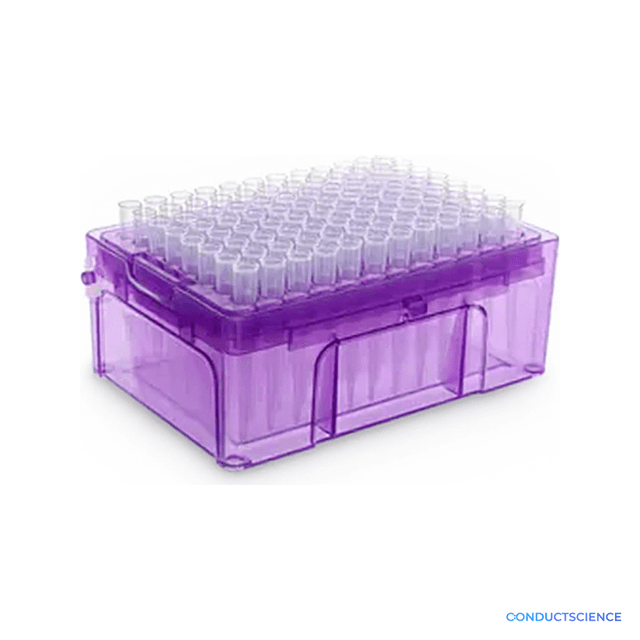
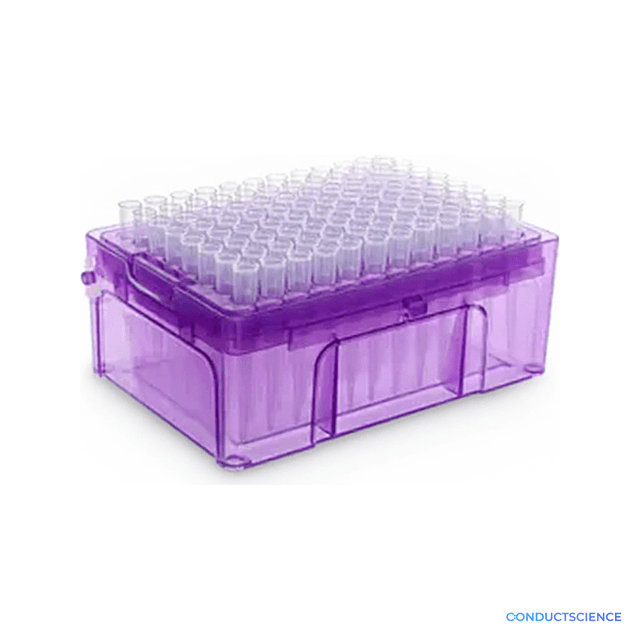
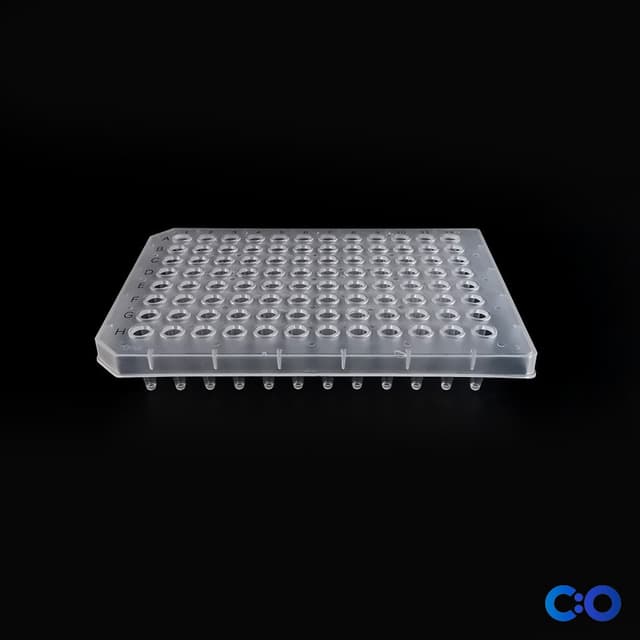
ConductScience 384-Well PCR Plates (Case of 5)
$145.00 per unit | 5 units per pack Bulk pricing: Case of 5 at $725.00 ($145.00 per unit)

Louise Corscadden, PhD
Director of Science · ConductScience
Ask Louise about ConductScience 384-Well PCR Plates (Case of 5) fit, setup, configuration, or quote prep.
Already working with us? Sign in to connect this with My Scientist.
Key Specifications
Full details →- Model fit
- Configured during quote
- SKU family
- CS-PCR-384-25
- Shipping box
- 83.6 x 69.7 x 55.7 cm
- Ordering
- Online checkout and quote request available
- Category
- Lab Supplies
- Build notes
- Confirm accessories, station layout, and support needs before purchase
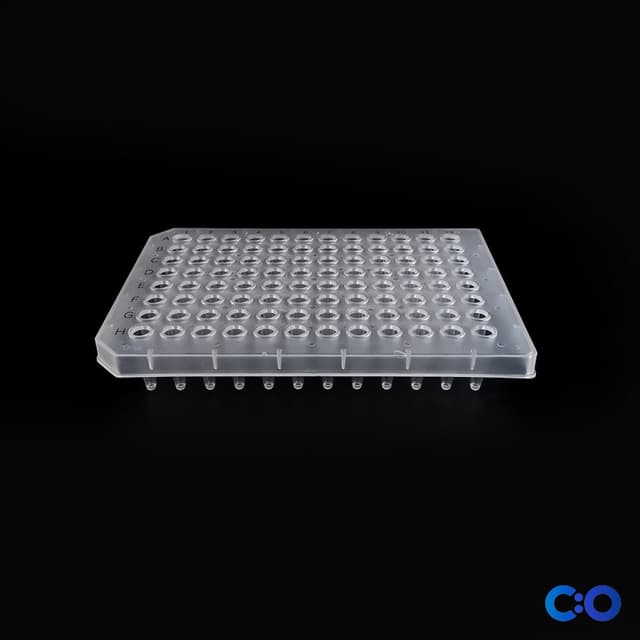
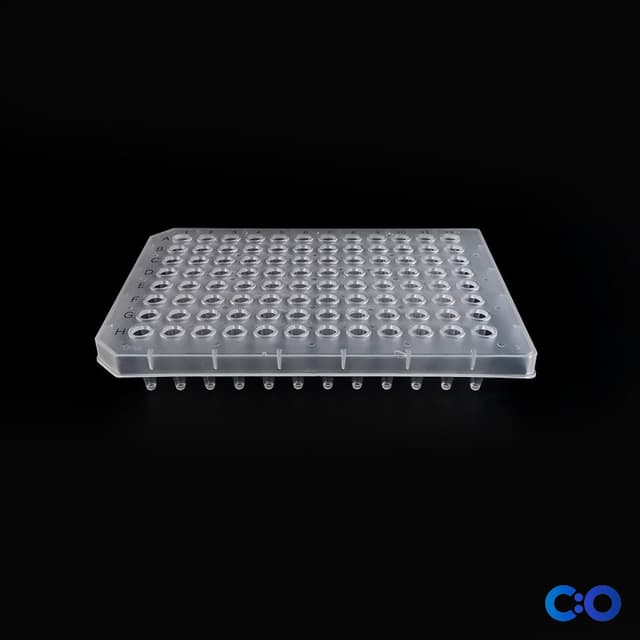
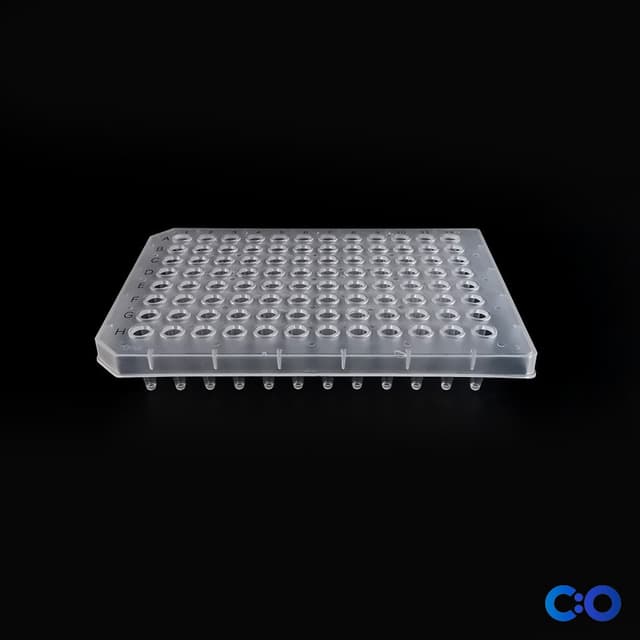
384-well PCR plates designed for high-throughput amplification applications in molecular biology research. Manufactured from ultra-clear polypropylene with DNase and RNase-free surfaces to prevent nucleic acid contamination during thermal cycling processes. Compatible with automated liquid handling systems for scaling PCR workflows to process hundreds of samples simultaneously.
The 384-well format provides 4x the sample capacity of standard 96-well plates while maintaining consistent thermal transfer properties across all wells. Wells are positioned on 4.5mm centers to accommodate standard multichannel pipettes and robotic liquid handlers. Each plate supports reaction volumes from 5-40 μL per well, enabling miniaturization of PCR reactions for cost-effective high-throughput screening applications.
How It Works
PCR (polymerase chain reaction) relies on repeated thermal cycling to denature DNA templates, anneal sequence-specific primers, and extend complementary strands using thermostable DNA polymerase. The 384-well format enables parallel amplification of multiple targets while maintaining precise temperature control across all reaction wells.
Ultra-clear polypropylene construction provides optimal optical clarity for real-time PCR detection while ensuring uniform heat transfer during thermal cycling. The material's low thermal mass and conductivity allow rapid temperature transitions, reducing cycle times and improving amplification efficiency. Wells are designed with thin walls (0.2mm) and flat bottoms to maximize heat exchange with thermal cycler blocks.
DNase and RNase-free manufacturing eliminates nuclease contamination that could degrade template nucleic acids or generate false-negative results. The 4.5mm well spacing accommodates standard multichannel pipettes and automated liquid handlers, enabling precise reagent dispensing across all 384 positions without cross-contamination between adjacent wells.
Features & Benefits
Automation Level
- semi-automated
Research Domain
- Analytical Chemistry
- Cancer Research
- Clinical Diagnostics
- Environmental Monitoring
- Food Science
- Microbiology
- Pharmaceutical QC
Shipping weight
- 223.66 lb
Shipping box
- L: 83.6 cm
- W: 69.7 cm
- H: 55.7 cm
| Feature | This Product | Typical Alternative | Advantage |
|---|---|---|---|
| Well Count | 384 wells per plate | Many standard PCR plates offer 96 wells | Enables 4x higher sample throughput per plate, reducing handling time and reagent costs for large-scale studies |
| Material Construction | Ultra-clear polypropylene | Standard polypropylene or polystyrene construction varies by manufacturer | Provides optimal optical clarity for fluorescence detection while maintaining chemical compatibility with PCR reagents |
| Contamination Control | DNase and RNase-free certified | Nuclease-free status varies by supplier | Ensures reliable amplification results by eliminating nuclease contamination that could degrade template nucleic acids |
| Automation Compatibility | 4.5mm well spacing for liquid handling robots | Standard microplate spacing but compatibility varies | Enables seamless integration with automated liquid handling systems for high-throughput workflow scaling |
| Well Volume Range | 5-40 μL reaction capacity | Volume ranges vary from 10-100 μL depending on well depth | Supports reaction miniaturization for cost savings while accommodating diverse assay requirements |
These 384-well PCR plates offer high-throughput sample processing capabilities with certified nuclease-free surfaces and automation compatibility. The ultra-clear polypropylene construction provides excellent optical properties for both endpoint and real-time PCR applications while supporting reaction volume miniaturization.
Practical Tips
Use consistent pipetting techniques and verify liquid handler calibration regularly when working with 384-well plates to ensure uniform reagent distribution across all wells.
Why: Small volume variations become more significant in high-throughput formats and can affect amplification consistency.
Verify thermal cycler block uniformity across all 384 positions using temperature-sensitive indicators before critical experiments.
Why: Edge effects and thermal gradients can be more pronounced in larger plate formats, affecting amplification efficiency.
Store plates in original packaging with desiccant to prevent moisture absorption that could affect optical clarity and thermal properties.
Why: Polypropylene can absorb moisture over time, potentially compromising well geometry and optical performance.
Include multiple control wells distributed across the plate to monitor for position-dependent effects and contamination.
Why: High-density formats require more extensive quality control monitoring to identify systematic errors or contamination patterns.
If experiencing uneven amplification, check for proper plate sealing and verify thermal cycler block contact across all positions.
Why: Poor plate-to-block contact or inadequate sealing can cause temperature variations and evaporation in individual wells.
Handle plates with clean gloves and use proper lifting techniques to avoid flexing that could compromise well integrity or cause sample spillage.
Why: 384-well plates have more potential contamination points and require careful handling to maintain sample integrity.
Pre-cool plates and reagents when working with temperature-sensitive templates to minimize degradation during setup.
Why: Longer setup times for 384-well formats can expose samples to room temperature conditions that may affect template stability.
Setup Guide
What’s in the Box
- 25 × 384-well PCR plates
- Product specification sheet (typical)
- Certificate of DNase/RNase-free testing (typical)
Warranty
ConductScience provides a standard warranty covering manufacturing defects under normal laboratory use conditions. Technical support is available for product specifications and compatibility questions.
Compliance
References
Background reading relevant to this product:
What reaction volumes are compatible with these 384-well plates?
The wells accommodate reaction volumes from 5-40 μL, with optimal performance typically achieved at 10-20 μL for most PCR applications. Smaller volumes may be affected by evaporation, while larger volumes may compromise heat transfer efficiency.
Are these plates compatible with all thermal cycler brands?
The plates conform to standard 384-well microplate dimensions and are compatible with most thermal cyclers supporting this format. Verify compatibility with your specific instrument model, particularly regarding block design and heating uniformity.
How should unused plates be stored to maintain sterility?
Store unused plates in original packaging at room temperature in a clean, dry environment away from direct sunlight. Avoid temperature fluctuations and contamination sources. Plates maintain DNase/RNase-free status when properly stored.
Can these plates be used for both endpoint and real-time PCR?
Yes, the ultra-clear polypropylene construction provides excellent optical clarity suitable for both endpoint PCR analysis and real-time fluorescence detection. Ensure appropriate sealing films are used based on detection requirements.
What sealing options are recommended for these plates?
Use optical adhesive films for real-time PCR applications requiring fluorescence detection, or heat-sealable aluminum foil for endpoint PCR. Ensure seals are compatible with thermal cycling temperatures and provide complete evaporation prevention.
Are these plates suitable for automated liquid handling systems?
Yes, the 4.5mm well spacing and standard plate dimensions are designed for compatibility with multichannel pipettes and robotic liquid handlers. The rigid polypropylene construction maintains dimensional stability during automated processing.
How do 384-well plates compare to 96-well plates for PCR applications?
384-well plates provide 4x higher sample throughput and enable significant reagent cost savings per sample. However, they require compatible instrumentation and may present challenges for manual pipetting compared to 96-well formats.
What quality control testing is performed on these plates?
Plates undergo DNase and RNase activity testing to verify nuclease-free status. Additional quality controls typically include dimensional verification and optical clarity assessment, though specific testing protocols should be confirmed via product documentation.
Have a question about this product?
Have a question? Just ask.
Send it over and we'll email you a personalized answer — no call, no scheduling.
Prefer to talk it through?
Replacement Parts & Consumables
Upgrade Options
Related Products