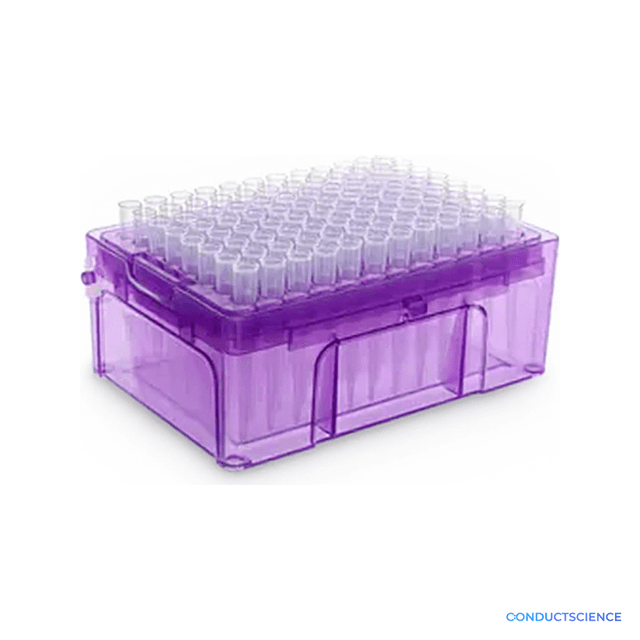
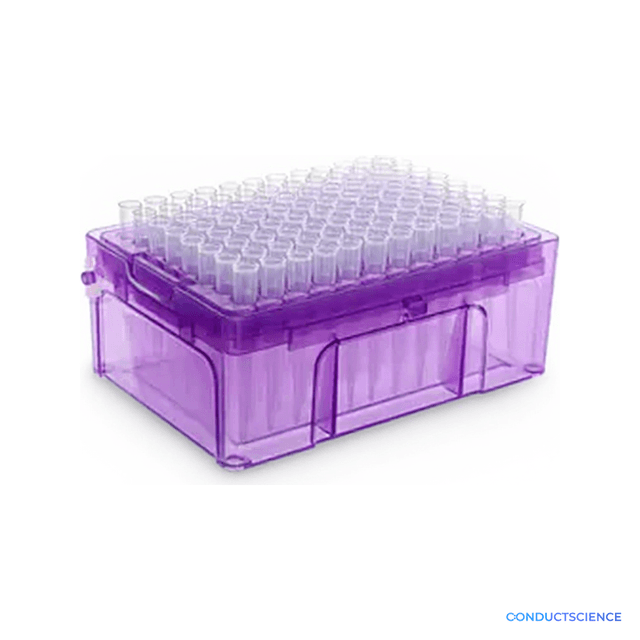
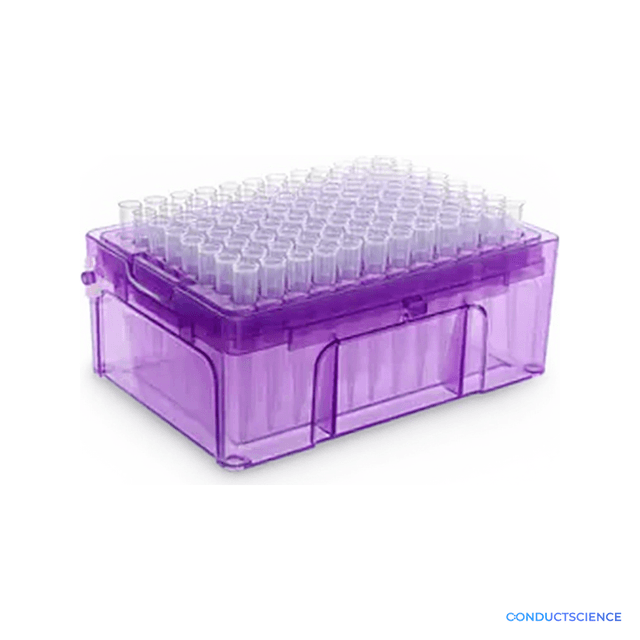
ConductScience PCR Tubes 0.2mL, Domed Cap, Clear (Case of 20)
$32.00 per unit | 20 units per pack Bulk pricing: Case of 20 at $640.00 ($32.00 per unit)

Louise Corscadden, PhD
Director of Science · ConductScience
Ask Louise about ConductScience PCR Tubes 0.2mL, Domed Cap, Clear (Case of 20) fit, setup, configuration, or quote prep.
Already working with us? Sign in to connect this with My Scientist.
Key Specifications
Full details →- Model fit
- Configured during quote
- SKU family
- CS-PCR-02DC-1K
- Shipping box
- 21.1 x 17.6 x 14.1 cm
- Ordering
- Online checkout and quote request available
- Category
- Lab Supplies
- Build notes
- Confirm accessories, station layout, and support needs before purchase
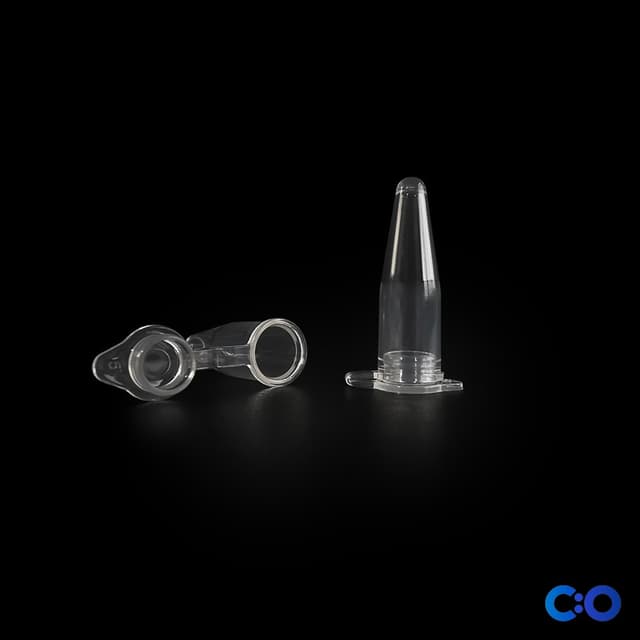
The ConductScience PCR Tubes 0.2mL with domed caps are ultra-clear polypropylene consumables designed for polymerase chain reaction applications. These thin-wall tubes feature a specialized domed cap design that prevents condensation from dripping back into the reaction mixture, maintaining reaction integrity throughout thermal cycling protocols. The tubes are manufactured DNase and RNase-free to eliminate nucleic acid contamination risks.
The 0.2mL volume is optimized for standard PCR thermal cyclers and real-time PCR instruments. The thin-wall construction ensures efficient heat transfer during thermal cycling, while the ultra-clear polypropylene material provides excellent optical clarity for real-time fluorescence detection and visual inspection of reaction components.
How It Works
PCR tubes serve as reaction vessels for the polymerase chain reaction, a thermal cycling process that exponentially amplifies specific DNA sequences. The reaction mixture containing template DNA, primers, DNA polymerase, dNTPs, and buffer is subjected to repeated cycles of denaturation (94-98°C), annealing (50-65°C), and extension (72°C). The thin-wall design of these tubes ensures rapid and uniform heat transfer from the thermal cycler block to the reaction mixture.
The domed cap design prevents condensation that forms during thermal cycling from dripping back into the reaction. During the high-temperature denaturation step, water vapor rises and condenses on the cap surface. The dome shape directs this condensation to the cap walls rather than allowing it to fall back into the reaction volume, which could dilute reactants and reduce amplification efficiency.
The ultra-clear polypropylene construction provides optical transparency necessary for real-time PCR applications, allowing fluorescent signals from DNA-binding dyes or sequence-specific probes to be detected without optical interference.
Features & Benefits
Automation Level
- manual
Research Domain
- Analytical Chemistry
- Clinical Diagnostics
- Environmental Monitoring
- Food Science
- Microbiology
- Pharmaceutical QC
Shipping weight
- 3.62 lb
Shipping box
- L: 21.1 cm
- W: 17.6 cm
- H: 14.1 cm
| Feature | This Product | Typical Alternative | Advantage |
|---|---|---|---|
| Cap Design | Domed cap prevents condensation dripping | Many standard tubes use flat caps | Maintains consistent reaction volume and prevents contamination from condensation |
| Wall Thickness | Thin-wall construction for optimal heat transfer | Some tubes feature thicker walls | Enables more precise temperature control during thermal cycling |
| Optical Clarity | Ultra-clear polypropylene material | Basic tubes may have reduced transparency | Provides better fluorescence detection for real-time PCR applications |
| Contamination Control | DNase and RNase-free manufacturing | Not all tubes guarantee nuclease-free status | Eliminates risk of nucleic acid degradation affecting PCR results |
These PCR tubes combine domed cap condensation control with thin-wall heat transfer optimization and ultra-clear optics. The DNase/RNase-free manufacturing ensures contamination-free amplification reactions.
Practical Tips
Always work on ice when preparing reactions to maintain enzyme stability before thermal cycling.
Why: Heat-sensitive enzymes like Taq polymerase can lose activity at room temperature
Store tubes in original packaging in a clean, dry environment to maintain sterility.
Why: Exposure to laboratory contaminants can introduce DNases or RNases
Ensure complete cap sealing by pressing firmly around the entire cap perimeter.
Why: Incomplete sealing can lead to evaporation and concentration changes during cycling
If condensation appears inside the cap dome, verify thermal cycler heating lid temperature settings.
Why: Insufficient heating lid temperature allows excessive condensation formation
Avoid overfilling tubes beyond 80% capacity to allow for thermal expansion.
Why: Overfilling can cause sample spillage and cross-contamination during cycling
Use appropriate PPE when handling tubes containing amplified genetic material.
Why: PCR products may require biosafety precautions depending on source material
Setup Guide
What’s in the Box
- 1000 × 0.2mL PCR tubes with domed caps
- Product certificate of analysis (typical)
- DNase/RNase-free certification (typical)
Warranty
ConductScience provides quality assurance for manufacturing defects with technical support for proper handling and storage recommendations.
Compliance
References
Background reading relevant to this product:
What thermal cycling temperature range can these tubes withstand?
Consult product datasheet for specific temperature specifications, though standard PCR tubes typically withstand -80°C to +121°C for PCR cycling and sterilization.
Are these tubes compatible with all thermal cycler models?
The 0.2mL format fits standard thermal cycler blocks designed for 0.2mL tubes, but verify block compatibility with your specific instrument model.
How does the domed cap prevent contamination compared to flat caps?
The dome shape directs condensation to cap walls rather than allowing droplets to fall back into the reaction, preventing dilution and maintaining sterility.
Can these tubes be autoclaved for sterilization?
Consult product datasheet for sterilization specifications, as autoclaving may affect tube integrity and optical properties.
What is the optical clarity specification for real-time PCR applications?
The ultra-clear polypropylene provides suitable transparency for fluorescence detection, though specific optical transmission values should be verified in the product datasheet.
Are these tubes RNase-free as well as DNase-free?
Yes, the tubes are manufactured both DNase and RNase-free to prevent nucleic acid degradation during PCR reactions.
Have a question about this product?
Have a question? Just ask.
Send it over and we'll email you a personalized answer — no call, no scheduling.
Prefer to talk it through?
Related Products