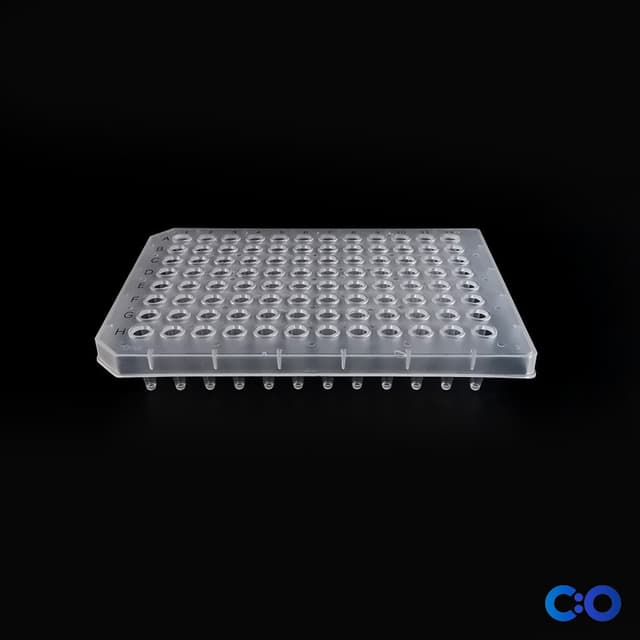
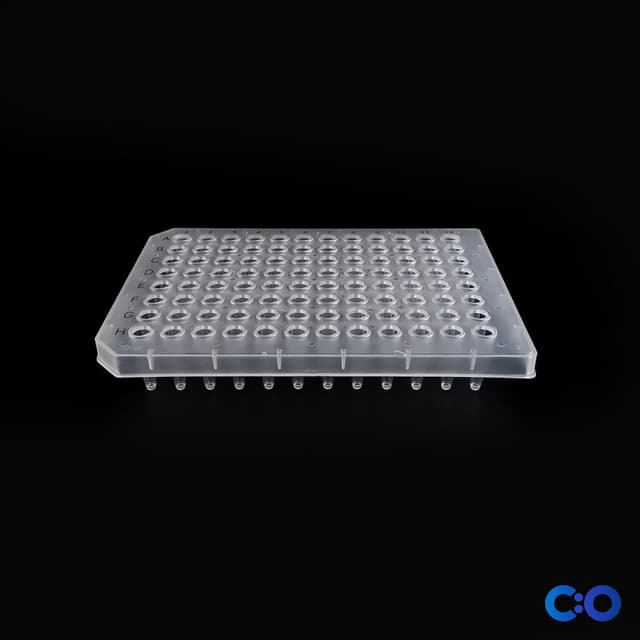
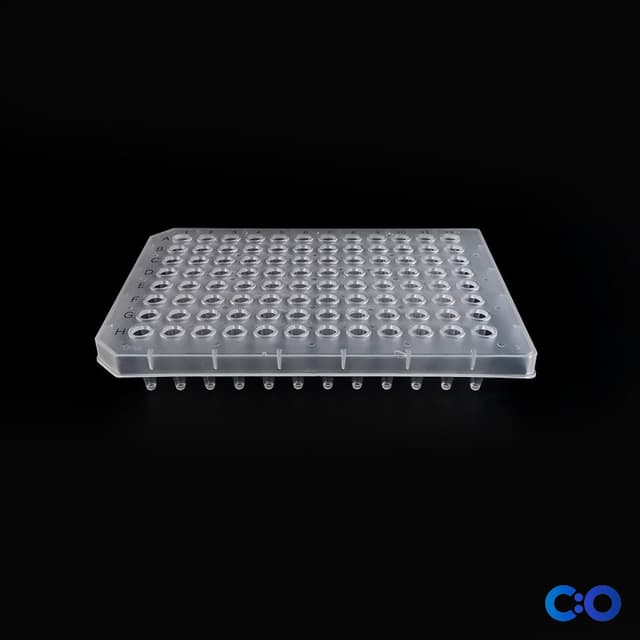
ConductScience 96-Well PCR Plates, Half-Skirted (Case of 5)
$115.00 per unit | 5 units per pack Bulk pricing: Case of 5 at $575.00 ($115.00 per unit)

Louise Corscadden, PhD
Director of Science · ConductScience
Ask Louise about ConductScience 96-Well PCR Plates, Half-Skirted (Case of 5) fit, setup, configuration, or quote prep.
Already working with us? Sign in to connect this with My Scientist.
Key Specifications
Full details →- Model fit
- Configured during quote
- SKU family
- CS-PCR-96HS-50
- Shipping box
- 96.0 x 50.0 x 7.87 cm
- Ordering
- Online checkout and quote request available
- Category
- Lab Supplies
- Build notes
- Confirm accessories, station layout, and support needs before purchase
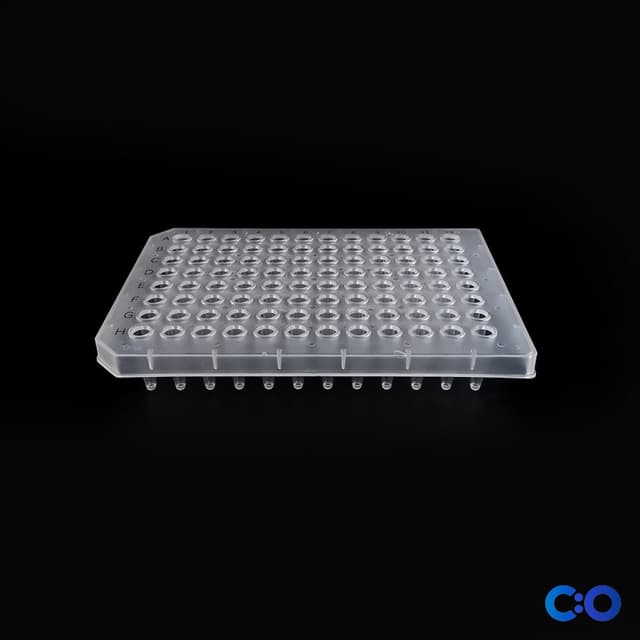
The ConductScience 96-Well PCR Plates (Half-Skirted) provide a reliable foundation for polymerase chain reaction amplification across diverse molecular biology applications. These 0.2mL well volume plates feature ultra-clear polypropylene construction that enables optimal thermal conductivity and visual monitoring of reaction progress. The half-skirted design combines the stability benefits of a reinforced base with improved pipetting access and thermal block contact.
Each plate is manufactured DNase and RNase-free to prevent enzymatic degradation of nucleic acid templates and primers. The ultra-clear polypropylene material ensures minimal interference with fluorescence detection systems while maintaining structural integrity through multiple thermal cycling protocols. Compatible with major thermal cycler platforms including ABI, Bio-Rad, and Roche systems, these plates support standardized workflows across laboratory environments.
How It Works
PCR plates serve as reaction vessels that facilitate the cyclical heating and cooling required for DNA polymerase chain reaction amplification. The ultra-clear polypropylene construction provides optimal thermal conductivity, ensuring uniform temperature distribution across all 96 wells during denaturation (94-98°C), annealing (50-65°C), and extension (68-72°C) phases. The material's low thermal mass enables rapid temperature transitions while maintaining structural integrity through repeated thermal cycling.
The half-skirted design features a reinforced perimeter base that provides mechanical stability during automated handling while allowing individual wells to maintain direct contact with thermal block surfaces. This configuration optimizes heat transfer efficiency compared to full-skirted designs while providing sufficient structural support for robotic pipetting systems. The 0.2mL well volume accommodates standard reaction volumes from 10-100μL while minimizing reagent waste and ensuring adequate mixing through convection currents during thermal cycling.
Features & Benefits
Research Domain
- Analytical Chemistry
- Cancer Research
- Cell Biology
- Clinical Diagnostics
- Environmental Monitoring
- Microbiology
- Molecular Biology
- Pharmaceutical QC
Shipping weight
- 223.66 lb
Shipping box
- L: 96.0 cm
- W: 50.0 cm
- H: 7.87 cm
| Feature | This Product | Typical Alternative | Advantage |
|---|---|---|---|
| Well Volume Capacity | 0.2mL per well | Standard PCR plates typically offer 0.2mL capacity | Accommodates standard reaction volumes while minimizing reagent waste and ensuring proper thermal cycling dynamics |
| Skirt Design | Half-skirted with reinforced base perimeter | Full-skirted designs provide maximum rigidity but may compromise thermal contact | Balances structural stability for automated handling with optimal thermal transfer efficiency |
| Material Clarity | Ultra-clear polypropylene construction | Standard polypropylene may have slight opacity or color tint | Enhanced optical transmission for real-time fluorescence detection and visual reaction monitoring |
| Contamination Control | DNase and RNase-free manufacturing | Basic plates may not guarantee nuclease-free production | Ensures nucleic acid template integrity throughout thermal cycling protocols |
| Platform Compatibility | Compatible with ABI, Bio-Rad, and Roche systems | Some plates are optimized for specific thermal cycler brands | Enables standardized workflows across different laboratory instrument platforms |
These plates combine half-skirted structural design with ultra-clear polypropylene construction and guaranteed nuclease-free manufacturing. The multi-platform compatibility and 0.2mL well capacity support standardized high-throughput PCR workflows across diverse molecular biology applications.
Practical Tips
Allow plates to equilibrate to room temperature before loading reactions to prevent condensation and ensure accurate pipetting.
Why: Temperature differences can cause pipetting errors and condensation that affects reaction setup accuracy.
Use multichannel pipettes when possible to reduce loading time and minimize temperature fluctuations during reaction setup.
Why: Rapid loading prevents primer-dimer formation and ensures consistent starting conditions across all wells.
Include multiple no-template controls distributed across the plate to monitor for contamination patterns.
Why: Spatial distribution of controls helps identify localized contamination sources or thermal gradient issues.
Inspect plates for cracks or warping before use, especially after storage in extreme temperatures.
Why: Physical defects can cause leakage, cross-contamination, or poor thermal contact during cycling.
If experiencing uneven amplification across the plate, verify thermal block cleanliness and proper plate seating.
Why: Debris or improper contact between wells and heating elements causes temperature variations that affect PCR efficiency.
Handle plates with powder-free gloves to prevent contamination and maintain nuclease-free conditions.
Why: Skin oils and residues from powdered gloves can inhibit polymerase activity and contaminate reactions.
Minimize exposure to UV light during setup as prolonged exposure can degrade nucleic acids and fluorescent reporters.
Why: UV radiation causes DNA damage and reduces fluorophore stability, leading to poor amplification and signal quality.
Setup Guide
What’s in the Box
- 50 individual 96-well half-skirted PCR plates
- Product documentation and specifications sheet
Warranty
ConductScience provides a standard warranty covering manufacturing defects, with technical support available for application guidance and troubleshooting.
Compliance
References
Background reading relevant to this product:
What sealing options are compatible with these plates for different thermal cycler models?
The plates accept standard sealing methods including optical caps for real-time PCR, adhesive films for end-point PCR, and heat-sealing mats. Verify compatibility with your specific thermal cycler model's sealing mechanism.
How does the half-skirted design affect thermal transfer compared to full-skirted plates?
Half-skirted design provides better thermal contact between individual wells and thermal block surfaces while maintaining structural stability. This results in more uniform temperature distribution compared to full-skirted plates that can have air gaps.
What is the recommended storage temperature and shelf life for these plates?
Store plates at room temperature in original packaging to prevent dust accumulation and maintain sterility. Properly stored plates maintain integrity indefinitely unless physically damaged or contaminated.
Can these plates be used with mineral oil overlay for long amplification protocols?
Yes, the polypropylene material is compatible with mineral oil overlay to prevent evaporation during extended thermal cycling protocols. Ensure complete sealing to prevent oil contamination between wells.
What is the maximum recommended reaction volume per well to prevent spillover?
Maximum recommended volume is 100μL per well to allow for thermal expansion and vigorous mixing during cycling while preventing cross-contamination between adjacent wells.
Are these plates compatible with automated liquid handling systems?
Yes, the half-skirted design provides sufficient structural rigidity for robotic pipetting while allowing standard SBS footprint compatibility with automated liquid handlers.
How do I verify the plates are truly DNase/RNase free for sensitive applications?
Each lot is tested during manufacturing, but for critical applications, consider running no-template controls or treating plates with RNase inhibitors if working with RNA-based protocols.
Have a question about this product?
Have a question? Just ask.
Send it over and we'll email you a personalized answer — no call, no scheduling.
Prefer to talk it through?
Accessories
Enhance your setup with compatible accessories
Replacement Parts & Consumables
Upgrade Options