Ion Chromatograph
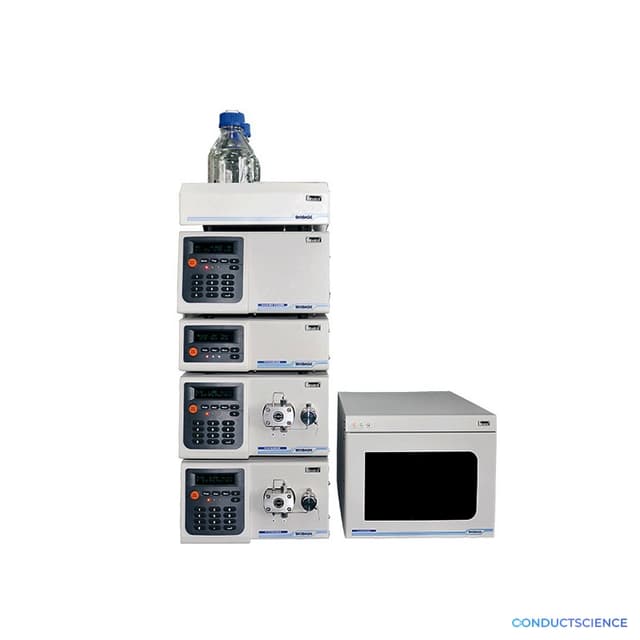
Ion chromatograph for detecting anions, cations, and other polar substances using auto-range conductivity detection and a self-regenerating electrolytic micro-membrane suppressor.

Louise Corscadden, PhD
Director of Science · ConductScience
Ask Louise about Ion Chromatograph fit, setup, configuration, or quote prep.
Already working with us? Sign in to connect this with My Scientist.
Key Specifications
Full details →- Model fit
- Configured during quote
- SKU family
- BIO-0481
- Shipping box
- 83.5 x 73.5 x 72.5 cm
- Ordering
- Online checkout and quote request available
- Category
- Chromatography
- Build notes
- Confirm accessories, station layout, and support needs before purchase
Ion chromatograph for the detection of anions, cations, and other polar substances across a range of sample matrices. It suits laboratories that need ion separation with conductivity detection and suppressor hardware.
Supplier-backed highlights
- Built-in circulating 3D constant-temperature technology.
- Full-range ion chromatographic columns and a self-regenerating electrolytic micro-membrane suppressor.
- Auto-range conductivity detector for ion analysis.
- Intelligent workstation for integrated instrument control and maintenance workflows.
Supplier-backed specifications
| Model | BK-IC100 |
|---|---|
| Pump Type | High-pressure and low-pulse two-piston tandem advection pump |
| Maximum Pressure | 35 MPa |
| Flow Range | 0.001-9.999 mL/min |
| Column Heater Temperature Range | 20-60 C |
| Detector | Constant-temperature auto-range conductivity detector |
| Cell Volume | <=0.8 uL |
| Detection Range | 0-35000 uS/cm |
| Resolution | <=0.0020 nS/cm |
| Linearity | >=0.999 |
| Power Supply | 220V, 50/60Hz standard; 110V optional |
| Power | 150 W |
| External Size | 325 x 400 x 500 mm |
| Net Weight | 21 kg |
How It Works
Gas chromatography operates on the principle of differential partitioning of analytes between a mobile gas phase and a stationary liquid or solid phase within a chromatographic column. Sample compounds are volatilized in the heated injection port and carried by an inert carrier gas through the separation column. As the mobile phase traverses the column, individual compounds interact differently with the stationary phase based on their chemical properties, resulting in characteristic retention times.
The programmable oven temperature profile enables optimization of separation conditions, with compounds eluting in order of increasing boiling point and polarity interactions. The hydrogen flame ionization detector responds to organic compounds by ionizing carbon-containing molecules in a hydrogen-air flame, generating measurable current proportional to analyte concentration. Optional thermal conductivity detection measures changes in carrier gas thermal conductivity as analytes elute, providing universal detection capabilities for both organic and inorganic compounds.
Features & Benefits
Model
- BK-IC100
Shipping weight
- 80.0 lb
Shipping box
- L: 83.5 cm
- W: 73.5 cm
- H: 72.5 cm
| Feature | This Product | Typical Alternative | Advantage |
|---|---|---|---|
| Maximum Oven Temperature | 400°C | Entry-level models often limited to 300-350°C | Higher temperature capability enables analysis of thermally stable compounds and heavy hydrocarbons |
| Temperature Programming Steps | 9 programmable steps | Basic models typically offer 3-5 programming steps | Complex thermal profiles optimize separations for challenging sample matrices |
| Heating Rate | 60°C/min maximum | Standard models often limited to 20-40°C/min | Faster heating reduces analysis time and improves chromatographic efficiency |
| Injector Capacity | Up to 3 injectors | Most GC systems accommodate 1-2 injectors | Multiple injection techniques can be used without hardware reconfiguration |
| Pressure Control Accuracy | 0.1 kPa precision | Entry-level systems often provide 1-5 kPa accuracy | Improved retention time reproducibility and quantitative precision |
This GC system combines high-temperature capability with precise control systems and flexible injection options. The extended programming capabilities and rapid heating rates support both routine analysis and complex method development workflows.
Practical Tips
Verify detector response linearity using certified reference standards across the expected concentration range before quantitative analysis.
Why: Non-linear detector response can introduce systematic errors in quantitative results
Replace FID jet and collector electrode annually or when baseline noise increases significantly.
Why: Contaminated detector components reduce sensitivity and increase background signal
Allow oven temperature to equilibrate for at least 30 minutes after reaching setpoint before beginning analysis.
Why: Temperature stability is critical for reproducible retention times and peak shapes
Check carrier gas flow rates and column connections if peak tailing or broadening occurs unexpectedly.
Why: Flow irregularities and leaks are common causes of chromatographic performance degradation
Monitor retention time drift of internal standards to detect system performance changes over time.
Why: Systematic changes indicate instrument maintenance needs before analytical results are compromised
Ensure proper ventilation and gas leak detection systems are installed before operating with hydrogen carrier gas.
Why: Hydrogen presents explosion hazards that require appropriate safety precautions
Program initial oven temperature 20-30°C below the lowest boiling point compound for optimal peak shape.
Why: Proper initial conditions prevent peak fronting and improve separation efficiency
Setup Guide
What’s in the Box
- Gas chromatograph main unit
- Hydrogen flame ionization detector (FID)
- Power cable and electrical connections
- Gas line fittings and ferrules (typical)
- User manual and operating procedures
- Basic maintenance tools (typical)
- Installation qualification documentation (typical)
Warranty
ConductScience provides standard one-year manufacturer warranty covering parts and labor for instrument defects. Technical support includes method development assistance and troubleshooting guidance.
Compliance
What types of samples can be analyzed with this GC system?
The system analyzes volatile and semi-volatile organic compounds that can be thermally desorbed up to 400°C. Suitable sample types include environmental extracts, pharmaceutical formulations, food matrices, and industrial solvents. Consult product datasheet for specific compound compatibility.
How does the 9-step temperature programming improve separations?
Multi-step programming allows optimization of separation conditions for complex mixtures by varying heating rates and hold times. This enables resolution of early-eluting compounds with slow initial heating while maintaining reasonable analysis times for late-eluting peaks.
What maintenance is required for the FID system?
Regular FID maintenance includes cleaning the jet assembly, replacing worn electrodes, and verifying hydrogen and air flow rates. The logarithmic amplifier may require periodic calibration checks using certified reference standards.
Can this instrument be used for quantitative analysis?
Yes, the precise pressure control (0.1 kPa accuracy) and stable temperature programming support quantitative methods. The FID logarithmic amplifier provides wide dynamic range suitable for both trace and concentrated analyses.
What are the carrier gas requirements?
The system requires high-purity carrier gas (typically helium or nitrogen) with pressure regulation capabilities matching the 0-400 kPa range. Hydrogen supply is required for FID operation with flow control from 0-200 mL/min.
How does the optional TCD detector complement FID analysis?
TCD provides universal detection for compounds that may not respond to FID, including inorganic gases and permanently fixed gases. The 8000 mV·mL/mg sensitivity enables detection of light hydrocarbons and other compounds invisible to flame ionization.
Have a question about this product?
Have a question? Just ask.
Send it over and we'll email you a personalized answer — no call, no scheduling.
Prefer to talk it through?