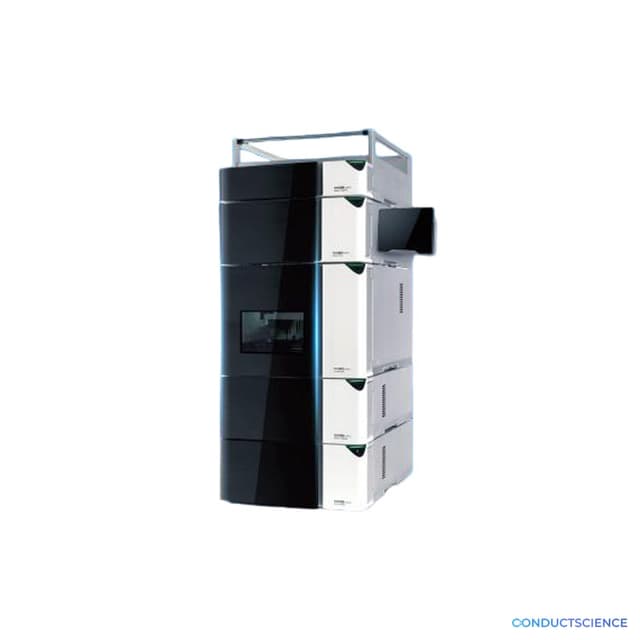
Atomic Absorption Spectrophotometer
Flame atomic absorption spectrophotometer for quantitative metal analysis with 170-900nm wavelength range, photomultiplier tube detection, and deuterium lamp background correction.

Louise Corscadden, PhD
Director of Science · ConductScience
Ask Louise about Atomic Absorption Spectrophotometer fit, setup, configuration, or quote prep.
Already working with us? Sign in to connect this with My Scientist.
Key Specifications
Full details →- Model fit
- Configured during quote
- SKU family
- LH-0002
- Shipping box
- 56.0 x 108.0 x 48.0 cm
- Ordering
- Online checkout and quote request available
- Category
- Imaging & Analysis
- Build notes
- Confirm accessories, station layout, and support needs before purchase
The Atomic Absorption Spectrophotometer (AAS) is a precision analytical instrument designed for quantitative elemental analysis in research and analytical laboratories. This flame-based spectrophotometer utilizes the characteristic absorption of ground-state atoms to determine metal concentrations in solution samples across a wavelength range of 170-900nm. The instrument employs a photomultiplier tube detector and deuterium lamp background correction system to achieve high analytical precision and accuracy.
The system features selectable spectral bandwidths from 0.1 to 2.4nm and maintains wavelength accuracy within ±0.1nm with repeatability ≤0.05nm. An 8-position lamp stand enables simultaneous preheating of 1-4 hollow cathode lamps, supporting multi-element analytical workflows. The instrument includes copper and mercury element lamps as standard accessories along with dedicated software for data acquisition and analysis.
How It Works
Atomic absorption spectroscopy operates on the principle that ground-state atoms absorb electromagnetic radiation at characteristic wavelengths specific to each element. The sample solution is aspirated into an air-acetylene flame where thermal energy atomizes the sample, breaking molecular bonds to produce free atoms in the gas phase. A hollow cathode lamp emits element-specific radiation which passes through the flame containing the atomized sample.
Ground-state atoms in the flame absorb photons at their characteristic wavelengths, reducing the intensity of transmitted light proportionally to the concentration of atoms present. The photomultiplier tube detector measures this attenuation, converting the optical signal to an electrical response. A deuterium lamp provides background correction by measuring non-specific absorption and light scattering, which is automatically subtracted from the analytical signal.
The monochromator system uses a diffraction grating (1800 lines/mm, 250nm blaze wavelength) to isolate the analytical wavelength with selectable spectral bandwidths. Quantitative analysis is achieved by comparing sample absorbance values to calibration standards of known concentration, following Beer's law relationship between absorbance and concentration.
Features & Benefits
Shipping weight
- 70.0 lb
Shipping box
- L: 56.0 cm
- W: 108.0 cm
- H: 48.0 cm
| Feature | This Product | Typical Alternative | Advantage |
|---|---|---|---|
| Wavelength Range | 170-900nm coverage | Entry-level models often provide narrower ranges around 190-900nm | Extended UV range enables analysis of additional elements including phosphorus and sulfur |
| Spectral Bandwidth Selection | Six selectable bandwidths from 0.1-2.4nm | Basic instruments offer fewer bandwidth options or fixed slit widths | Optimizes resolution and sensitivity for specific analytical requirements and matrix conditions |
| Background Correction | Deuterium lamp with 90x correction capability | Lower-cost systems may lack background correction or offer limited correction range | Essential for accurate analysis in complex matrices with high background absorption |
| Lamp Configuration | 8-position stand with simultaneous preheating of 1-4 lamps | Basic models typically accommodate fewer lamps with manual changeover | Reduces analysis time in multi-element methods and improves workflow efficiency |
| Detection Performance | ≤0.002μg/mL detection limit for copper | Performance varies significantly across manufacturers and models | Enables trace-level analysis required for environmental and clinical applications |
| Wavelength Precision | ±0.1nm accuracy with ≤0.05nm repeatability | Lower-cost instruments may have less stringent wavelength specifications | Ensures consistent analytical results and reliable method transfer between laboratories |
This atomic absorption spectrophotometer provides comprehensive analytical capabilities with extended wavelength range, multiple spectral bandwidth options, and effective background correction. The 8-position lamp stand and integrated software support efficient multi-element workflows while maintaining the precision required for trace-level analysis.
Practical Tips
Perform wavelength calibration daily using the built-in calibration lamp before beginning analytical work.
Why: Ensures wavelength accuracy is maintained within ±0.1nm specification for reliable analytical results.
Clean the nebulizer and burner head regularly with appropriate solvents to prevent salt buildup and memory effects.
Why: Maintains consistent sample introduction efficiency and prevents signal drift during analysis.
Allow hollow cathode lamps to warm up for the manufacturer-recommended time before analysis, especially after extended shutdown periods.
Why: Ensures lamp output stability and optimal analytical sensitivity throughout the measurement session.
If background correction appears inadequate, verify deuterium lamp alignment and check for contamination in the flame path.
Why: Proper background correction is critical for accurate analysis in complex sample matrices.
Include certified reference materials and duplicate analyses in each analytical batch to monitor method performance.
Why: Validates analytical accuracy and precision, ensuring results meet quality control requirements.
Match sample and standard matrices as closely as possible to minimize matrix effects on analytical results.
Why: Reduces systematic errors and improves accuracy when analyzing complex or high-ionic-strength samples.
Ensure proper ventilation and gas leak detection systems are in place when operating with flammable gases.
Why: Protects laboratory personnel and prevents accumulation of combustible gas mixtures.
Use fresh calibration standards for each analytical batch and verify standard stability over time.
Why: Prevents systematic bias from degraded standards and ensures calibration curve validity.
Setup Guide
What’s in the Box
- Atomic absorption spectrophotometer main unit
- Copper hollow cathode lamp
- Mercury hollow cathode lamp
- Software workstation package
- Power cable
- User manual and documentation
- Calibration certificate (typical)
- Sample introduction accessories (typical)
Warranty
ConductScience provides a standard one-year manufacturer warranty covering parts and labor, with technical support available for instrument operation, method development, and troubleshooting assistance.
Compliance
What is the detection limit and linear dynamic range for typical elements?
Detection limit for copper is ≤0.002μg/mL with characteristic concentration of ≤0.025μg/mL/1% absorbance. Linear dynamic range varies by element but typically spans 2-3 orders of magnitude. Consult element-specific documentation for other metals.
Can the instrument handle high-salt or complex matrix samples?
The deuterium lamp background correction system provides 90x correction capability to compensate for matrix interferences. Sample dilution or matrix modification may be required for heavily loaded samples.
How many elements can be analyzed simultaneously?
This is a sequential instrument analyzing one element at a time. The 8-position lamp stand allows preheating of 1-4 lamps to reduce changeover time between elements in multi-element methods.
What sample preparation is typically required?
Samples must be in liquid form, typically requiring acid digestion for solid matrices. Sample solutions should be free of particulates and within appropriate concentration ranges for the analytical method.
How often does the instrument require calibration?
Wavelength calibration should be verified daily or before each analytical session. Analytical calibrations depend on method requirements but typically require fresh standards for each batch of samples.
What are the consumable requirements and operating costs?
Primary consumables include hollow cathode lamps, fuel gases (acetylene), and calibration standards. Lamp lifetime varies with usage but typically provides thousands of analyses per lamp.
Can the system be upgraded for graphite furnace atomization?
The standard configuration is flame-based. Consult product specifications regarding compatibility with optional graphite furnace accessories for enhanced sensitivity applications.
What data formats are supported for export and integration with LIMS?
The included software workstation provides data acquisition and reporting capabilities. Consult software documentation for specific export formats and database connectivity options.
Have a question about this product?
Have a question? Just ask.
Send it over and we'll email you a personalized answer — no call, no scheduling.
Prefer to talk it through?
Upgrade Options