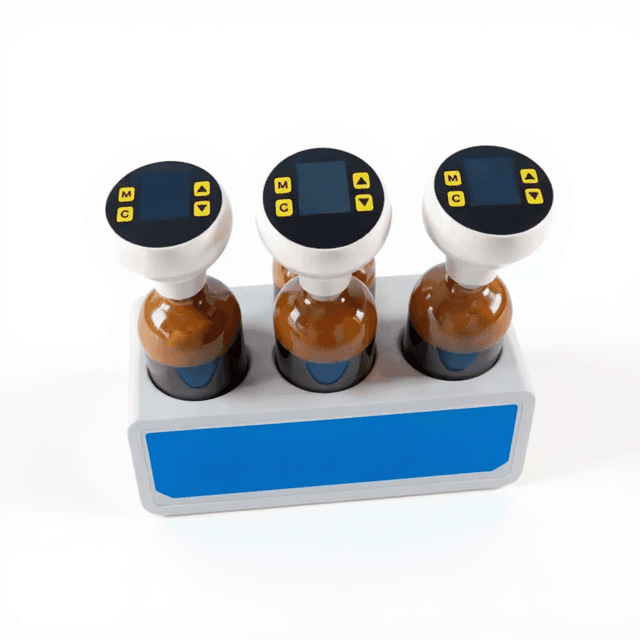
Flame Spectrophotometer - Multi-Channel Series
Multi-channel flame atomic emission spectrophotometer for quantitative analysis of K, Na, Li, Ca, and Ba in solution with optimized detection limits for clinical and analytical applications.

Louise Corscadden, PhD
Neuroscience · ConductScience
Ask Louise about Flame Spectrophotometer - Multi-Channel Series fit, setup, configuration, or quote prep.
Already working with us? Sign in to connect this with My Scientist.
The Flame Spectrophotometer this spectrophotometer provides flame atomic emission spectroscopy for quantitative determination of alkali and alkaline earth metals in solution. This multi-channel instrument simultaneously analyzes potassium, sodium, lithium, calcium, and barium with detection limits optimized for clinical chemistry, environmental monitoring, and analytical chemistry applications.
The system utilizes a controlled flame environment to excite metal ions, measuring characteristic emission wavelengths to determine elemental concentrations. With up to 5-channel capability and linear measurement ranges spanning from 0.1 to 1000 ppm depending on the element, this spectrophotometer supports routine analytical workflows requiring precise alkali and alkaline earth metal quantification.
How It Works
Flame atomic emission spectroscopy operates by introducing sample solutions into a high-temperature flame where thermal energy excites ground-state atoms to higher electronic energy levels. As excited atoms return to their ground state, they emit photons at characteristic wavelengths specific to each element. The instrument measures these emission intensities using photodetectors tuned to the specific wavelengths of interest.
The BK-FP Series employs a controlled flame environment with optimized fuel-to-air ratios to achieve consistent atomization and excitation conditions. Sample solutions are aspirated through a nebulizer system that creates fine droplets for efficient introduction into the flame. Multiple photodetectors simultaneously monitor the emission lines for potassium (766.5 nm), sodium (589.0 nm), lithium (670.8 nm), calcium (422.7 nm), and barium (553.6 nm), enabling multi-element analysis from a single sample introduction.
Quantitative analysis is achieved by comparing measured emission intensities to calibration curves prepared from standard solutions of known concentration. The linear relationship between concentration and emission intensity within the specified ranges allows for accurate determination of elemental concentrations in unknown samples.
Features & Benefits
Automation Level
- semi-automated
BK-FP6440
- BK-FP6431
BK-FP6430
- BK-FP6410
Test Element
- K/Na/Li/Ca/Ba
K/Na/Li/Ca
- K/Na/Ca
K/Na/Li
- K/Na
Channel Qty.
- 5
4
- 3
LOD(ppm)
- K
Na
- 0.18~100
Li
- 0.1~30
/
- /
Ca
- 0.1~1000
Ba
- 0.1~300
Linear Error(ppm)
- K
Brand
- ConductScience
Research Domain
- Analytical Chemistry
- Clinical Diagnostics
- Environmental Monitoring
- Food Science
- Materials Science
- Pharmaceutical QC
Weight
- 119.89 kg
Dimensions
- L: 40.0 mm
- W: 57.0 mm
- H: 53.0 mm
| Feature | This Product | Typical Alternative | Advantage |
|---|---|---|---|
| Channel Quantity | 5-channel simultaneous analysis | Entry-level models often offer 2-3 channels | Enables complete alkali and alkaline earth metal profiling from a single sample introduction, improving analytical efficiency |
| Element Coverage | K, Na, Li, Ca, Ba capability | Basic units may focus on Na/K only | Comprehensive coverage of clinically and environmentally relevant metals without requiring multiple instruments |
| Detection Limits | 0.1 ppm for Li and Ca | Higher detection limits common in basic models | Enables trace-level analysis for environmental monitoring and clinical applications requiring low-level detection |
| Linear Range | Up to 1000 ppm for calcium | Narrower dynamic ranges often require dilutions | Accommodates diverse sample concentrations without extensive sample preparation, improving workflow efficiency |
The BK-FP Series provides 5-channel simultaneous analysis with optimized detection limits for comprehensive alkali and alkaline earth metal determination. The instrument combines multi-element capability with practical linear ranges suitable for clinical, environmental, and analytical chemistry applications.
Practical Tips
Prepare fresh calibration standards daily using high-purity stock solutions and match the acid matrix of your samples.
Why: Standard stability and matrix matching ensure accurate calibration curves and minimize systematic errors.
Clean the nebulizer system with dilute nitric acid between sample sets and flush with deionized water at the end of each day.
Why: Prevents salt buildup and contamination that can affect sample introduction efficiency and cause memory effects.
Allow sufficient warm-up time for flame stabilization and monitor flame appearance throughout the analytical session.
Why: Stable thermal conditions are essential for reproducible atomization and consistent emission intensities.
If emission signals drift, check gas pressures, clean the nebulizer, and verify flame stoichiometry before recalibrating.
Why: Systematic troubleshooting isolates the source of drift and prevents unnecessary recalibration of stable systems.
Run duplicate measurements for critical samples and include quality control standards at regular intervals during analysis.
Why: Statistical validation confirms measurement precision and identifies systematic errors during extended analytical sequences.
Ensure proper ventilation around the flame and maintain emergency gas shut-off procedures readily accessible.
Why: Flame operations require adequate ventilation for combustion products and immediate response capability for gas emergencies.
Setup Guide
What’s in the Box
- BK-FP Series spectrophotometer main unit
- Sample introduction system with nebulizer (typical)
- Gas supply connections and regulators (typical)
- Calibration standard solutions set (typical)
- Power cable and electrical connections
- Operating manual and method protocols (typical)
- USB cable for data transfer (typical)
- Replacement consumables starter kit (typical)
Warranty
ConductScience provides a standard one-year manufacturer warranty covering parts and labor, with comprehensive technical support for method development and troubleshooting. Extended service contracts are available for multi-year coverage and preventive maintenance programs.
Compliance
What sample preparation is required for flame spectroscopy analysis?
Samples must be in liquid form with total dissolved solids typically below 5%. Acid digestion or dilution may be required for solid samples or highly concentrated solutions. Filter samples to remove particulates that could clog the nebulizer system.
How frequently should the instrument be calibrated?
Calibrate daily before analysis or after any maintenance. Run calibration verification standards every 10-20 samples during extended analytical sequences. Recalibrate if drift exceeds acceptable limits or after flame re-ignition.
What are the main sources of interference in flame emission?
Spectral interferences from overlapping emission lines, chemical interferences from sample matrix effects, and ionization interferences at high temperatures. Use appropriate standards matching sample matrix and consider dilution to minimize chemical effects.
Can this instrument analyze elements other than those listed?
The BK-FP Series is optimized for K, Na, Li, Ca, and Ba analysis with dedicated photodetectors. Analysis of other elements would require hardware modifications or different detection systems not included in the standard configuration.
What is the typical sample consumption rate?
Sample consumption depends on nebulizer flow rate and analysis time, typically 2-5 mL per determination. Optimize nebulizer settings to balance sensitivity requirements with sample conservation for precious samples.
How does this compare to ICP-OES for alkali metal analysis?
Flame emission offers simpler operation and lower operating costs for dedicated alkali metal analysis, while ICP-OES provides broader elemental coverage and generally lower detection limits. Choose based on analytical requirements and throughput needs.
Have a question about this product?
Upgrade Options